博客

  • Inside secret police warehouse as Germany targets small boats gangs

    Inside secret police warehouse as Germany targets small boats gangs

    In a landmark enforcement action marking a major shift in cross-border crackdowns on migrant smuggling networks, German authorities have carried out the first-ever raids targeting smuggling groups under a landmark new law designed to disrupt the supply chain for illegal small boat crossings of the English Channel, the BBC has confirmed.

    The joint operation, carried out in spring this year in North Rhine-Westphalia with coordination from UK and French law enforcement, resulted in one of the largest seizures of smuggling equipment to date: more than 9,000 substandard life jackets, dozens of inflatable dinghies, boat engines, and 360 inflation pumps. Law enforcement has stored all seized contraband at an undisclosed secure location, where the BBC was granted exclusive access to document the haul.

    According to estimates from the UK’s National Crime Agency, the seized dinghies and gear would have been enough to smuggle more than 2,000 migrants across the Channel illegally, carrying an average of 65 people per vessel. This aligns with the recent trend of rising passenger numbers per dinghy, falling just below the size of the ‘mega dinghies’ detected in summer crossings this year.

    The new German anti-smuggling law, passed in December 2024, closes a critical legal gap that existed after Brexit. Prior to the legislation, German anti-smuggling statutes only applied to illegal movement between EU Schengen Area member states, and did not cover smuggling operations targeting the UK, a non-EU third country. Previously, German raids on smuggling networks had to rely on arrest warrants issued by French or Belgian authorities, creating delays and legal barriers to enforcement. The legislation was finalized after a 2024 BBC investigation exposed Germany’s central role in the transnational supply chain for small boat crossing equipment, prompting a bilateral agreement between London and Berlin to tighten cross-border rules.

    On inspection at the secret storage facility, the BBC found the haul largely preserved as it was discovered: deflated 9-meter dinghies packed tightly into cardboard boxes, and thousands of bright orange life jackets bundled in plastic wrapping. Experts note the life jackets are dangerously inadequate for the Channel’s rough, unpredictable waters, stuffed only with low-quality poly-foam that provides almost no buoyancy. Many of the life jackets bear Chinese manufacturing markings, consistent with longstanding law enforcement intelligence that most smuggling equipment is produced in China before being shipped to Europe via Turkey, then routed through the EU to smuggling hubs. In a recent separate seizure, Bulgarian customs officials uncovered 20 undeclared inflatable dinghies hidden between mattress pads on a truck bound for Germany at the Turkish-Bulgarian land border, the primary entry point for this contraband into the EU.

    Western Germany has emerged as a key storage hub for smuggling networks for multiple reasons, investigators say. UK and German law enforcement assess that Kurdish criminal organizations hold dominant control over the small boat trade in the region, with many gang leaders and members already resident in Germany. Geographically, western Germany offers an ideal base: it is close enough to northern France’s launch beaches to transport equipment quickly, but far enough from the heavily patrolled French coastline to avoid routine detection. Gangs typically store dinghies and gear in private garages or commercial warehouses before moving the equipment north to France for launch.

    Oxford University’s Migration Observatory says the trend toward larger dinghies carrying more passengers is a direct adaptation by smuggling gangs to increased cross-border enforcement. When supply lines for equipment are disrupted, gangs do not abandon their profitable operations—instead, they maximize profit by packing more migrants into each available vessel, the research body notes.

    Despite the historic raid, legal experts warn that the amended German law remains largely untested. Bernhard Schmeilzl, a lawyer specializing in UK-German cross-border law, notes that the legal framework is still similar to the pre-Brexit era, and that overstretched German law enforcement agencies often prioritize domestic criminal operations over transnational smuggling cases. Even so, he says the new law creates a critical change: it explicitly grants German police the authority to investigate and prosecute these smugglers, requiring agencies to open inquiries when notified of suspicious activity.

    Multiple enforcement and migration sources told the BBC that smuggling networks are facing growing pressure across Europe, including in Germany. Overall, Channel crossing numbers are on track to fall this year, with the UK Home Office reporting a 43% drop in crossings between January 1 and August 8 compared to the same period in 2024. The Home Office attributes the decline to coordinated international action to disrupt smuggling supply chains and increased law enforcement patrolling on French beaches. However, UK opposition politicians argue the drop is primarily due to unfavorable, rough sea conditions in the Channel this year, not government policy.

    Germany’s Interior Ministry confirmed that the spring raid was the first enforcement action carried out under the new anti-smuggling law, but declined to comment on whether the legislation has been used in additional operations since the spring seizure.


  • Leading candidates emerge as Roosters legends receive support for coaching roles

    Leading candidates emerge as Roosters legends receive support for coaching roles

    The Sydney Roosters, one of the National Rugby League’s (NRL) most dominant powerhouse clubs, is bracing for major changes to its senior coaching staff ahead of the 2027 season, with two key assistant positions set to open up by the end of the current calendar year. While much of the recent rugby league media focus has centered on Sam Walker’s future with the club, the impending departures of two top assistants have flown under the radar — and the club already has strong internal candidates ready to step into the gaps.

    Current assistant coach Matt King will depart the Roosters at the end of the year to take on the head coaching role for the NSW Blues, the state’s representative side in the annual State of Origin series. Fellow assistant Michael Cheika is also expected to leave the club to return to his rugby union roots, where he will take the helm of the NSW Waratahs. Their exits will leave two critical vacancies on head coach Trent Robinson’s staff, but the Roosters do not need to conduct a far-reaching external search to find qualified replacements.

    Three former club legends already embedded in the Roosters’ development pathways and youth coaching systems are top contenders for the roles, joining current staff member Tait Barnes on the senior coaching team.

    Boyd Cordner, the Roosters’ former premiership-winning captain, has already claimed back-to-back titles leading the club’s SG Ball under-19 side since retiring from playing. Jake Friend, the club’s veteran former hooker, has spent his post-playing career working closely with the Roosters’ first-grade forward pack and developing young talent through the club’s pathway programs. Brett Morris, a legendary club winger, has also built up extensive coaching experience with the first-grade squad since hanging up his playing boots.

    Current Roosters forward Nat Butcher, speaking to reporters on a sunny Tuesday at Sydney’s Bondi Beach, offered high praise for the three former stars, highlighting how their legacy at the club already commands respect from the current playing group.

    “As a leader, the biggest thing was ‘Boydo’ always led through his actions and not his words. As a player, that’s probably what I remember the most,” Butcher said. “Obviously as a coach, you can’t lead by your actions on the field. But when Boyd speaks, everyone listens and we do what he says because he’s a man that’s done it before. You believe what he says, and if you back that up, you’ll get the result that you’re after.”

    Butcher also emphasized Friend’s deep institutional knowledge of the Roosters’ long-standing playing system, built over decades of working under head coach Trent Robinson. “Jake Friend has lived and breathed Roosters footy and knows our system like the back of his hand,” he said. “Whether they step up into that role as well, that would be great to see. But if not, then I’m sure there’ll be someone else.”

    Cordner, who currently also serves as an assistant coach for the Blues, is widely regarded as one of the greatest modern-era leaders for the Roosters, NSW Blues, and Australian Kangaroos national side. Butcher admitted he never expected Cordner or Friend to transition into full-time senior coaching after their retirements, but said their decades of experience at the club make them ideal candidates. “No I didn’t, just because I was in awe of them so much as a player,” Butcher said. “But like I said, they know our system better than anyone, and being coached under Robbo for so many years, I know they understand what he’s about and would be able to do a great job if they got that gig.”

    Roosters outside back Billy Smith echoed Butcher’s confidence, pointing to the club’s successful track record of developing homegrown coaches who go on to lead top NRL sides, including Craig Fitzgibbon, Jason Ryles and Adam O’Brien, all of whom started as Roosters assistants before taking head coaching roles at rival clubs. Smith said he has observed Cordner and the other candidates’ coaching work over the past several years, and is confident they are prepared to handle the added responsibility of promotion to the NRL first-grade coaching staff.

    “I’m confident that we have an amazing group of young coaches,” Smith said. “I’m sure whoever they put in internally or externally will be the right fit for the job. I think as players, it’s nice to have those guys around the club because they’ve lived it, they’ve walked it. You respect those guys a lot because you’ve seen them do it, and not too long ago either. It’s really nice to have those guys still around the club. If they do that, great. If not, then we’ll respect them equally as well.”

  • Trump threatens to bomb Oman if it gets in way of Iran deal

    Trump threatens to bomb Oman if it gets in way of Iran deal

    In a provocative new escalation of tensions surrounding the six-month-long conflict over the Strait of Hormuz, U.S. President Donald Trump issued an explicit threat Monday to bomb U.S. Gulf ally Oman if the nation interferes with ongoing American efforts to strike a new agreement with Iran over control of the critical global energy chokepoint. The threat, delivered during an interview with Fox News correspondent Trey Yingst, comes as growing political pressure mounts on Trump to end the military stalemate that has sent global fuel prices soaring and sparked widespread public opposition ahead of November’s critical U.S. midterm elections, where Republicans are fighting to retain control of Congress.

    The narrow Strait of Hormuz, which connects major Persian Gulf oil and gas producers to global shipping markets, has been effectively closed to most commercial traffic by Iranian forces since the outbreak of conflict on February 28. The waterway, which carries roughly 20 percent of the world’s daily oil supplies, remains the core sticking point in the deadlocked standoff between Washington and Tehran. Iran controls the strait’s northern coastline, while Oman occupies its southern bank, and Muscat has been engaged in weeks of bilateral negotiations with Tehran to hammer out new navigation arrangements for the passage. As of Monday, Iran’s foreign ministry confirmed the two nations were finalizing a joint declaration outlining their proposed framework – a development that triggered Trump’s aggressive rhetoric.

    “If Oman gets in the way, we’ll bomb the shit out of them,” Trump told Yingst, referencing the ongoing Omani-Iranian talks. As of Tuesday, Omani officials had not issued any public response to the U.S. president’s remarks. The negotiations between Muscat and Tehran follow the collapse of an earlier Pakistan-mediated interim deal between the U.S. and Iran designed to reopen the strait to commercial traffic. Renewed fighting over the waterway immediately derailed that agreement, spreading the conflict to other Gulf nations and disrupting commercial shipping routes across the entire Middle East.

    In addition to threatening Oman, Trump repeated his demand that Iran surrender unconditionally to end the conflict, according to Yingst’s account of the interview posted to the social platform X. The president has repeatedly claimed the U.S. already controls the strait, despite public data showing commercial traffic through the passage remains severely restricted. Just days earlier, Trump sparked a sharp new retaliation from Tehran when he announced he would claim the entire Strait of Hormuz as U.S. territory, a move Iran dismissed by reaffirming the chokepoint “will remain Iranian.”

    The conflict has emerged as a major political liability for Trump and congressional Republicans, with volatile fuel prices and broad public disapproval of the war dragging down poll numbers ahead of the midterm elections. Despite this pressure, Trump insisted Monday he is in no rush to finalize a new agreement, confirming that his administration maintains a direct back-channel communication link with leaders of Iran’s Revolutionary Guard. “They’re good poker players, but they’re dying,” Trump was quoted as saying of the Iranian leadership.

    Tehran has leveraged its control of the strait to push back against U.S.-led efforts to destroy its military capacity and force the country to abandon its contested nuclear power program. Iran’s current demands include formal recognition of its right to control access to the waterway and collect transit fees from passing ships – terms the U.S. has repeatedly rejected outright. Parallel to Iran’s closure of Hormuz, Iran-aligned Houthi forces in Yemen have implemented a separate maritime blockade of Saudi Arabia’s Red Sea ports, the only alternative export route for the kingdom’s oil, amplifying the global supply crunch.

    Trump’s aggressive new rhetoric comes as international allies continue to press for a diplomatic resolution to the crisis. Turkish President Recep Tayyip Erdogan spoke with Trump by phone Monday, according to Turkey’s state-run Anadolu News Agency, and stressed the urgent need to “fully utilize diplomacy” to de-escalate tensions between Washington and Tehran. Erdogan reaffirmed that Ankara would continue supporting all regional and international efforts to secure a peaceful negotiated settlement to the conflict. Major oil-importing nations have repeatedly warned that the ongoing closure of the strait risks long-term global energy market instability and widespread economic damage.

  • Make it rain: Indonesia chases clouds to stem El Nino fires

    Make it rain: Indonesia chases clouds to stem El Nino fires

    On the tarmac of Tjilik Riwit Airport in Palangka Raya, Central Kalimantan, technicians from Indonesia’s National Disaster Management Agency carefully load canisters of sodium chloride into a waiting aircraft. This routine pre-flight preparation is part of a high-stakes gambit: the Southeast Asian nation is turning to cloud seeding to curb an unprecedented wildfire crisis amplified by one of the strongest El Niño events in recent decades.

    Indonesia’s biodiverse Borneo island, a region home to old-growth pristine rainforest and globally protected endangered species, is ablaze this dry season. Official government data confirms more than 100,000 hectares of land have already burned in the first six months of 2024. But independent analysis from deforestation monitoring project Nusantara Atlas paints a far grimmer picture, putting the total burned area through July at over 285,000 hectares—an expanse more than four times the geographic size of Indonesia’s capital Jakarta.

    Cloud seeding, a weather modification technique that disperses silver iodide, salt particles and other nucleating agents into existing clouds to stimulate rain formation, is not a common tool for wildfire suppression across the globe. But for Indonesia, the strategy carries urgent weight: the country is still recovering from the devastating 2015 wildfire season, which was also driven by a strong El Niño, burned millions of hectares of forest and peatland, and sparked a transboundary toxic haze crisis that disrupted daily life across Malaysia, Singapore and southern Thailand.

    Unlike popular misconception, cloud seeding does not create new clouds, explained meteorologist Safillah Anggie Wahyuni, who has accumulated more than 300 flight hours on cloud seeding missions since she carried out her first operation three years ago. Instead, the technique works by maximizing the rainfall potential of existing cloud formations. “Weather modification will only be effective if the conditions are right,” Safillah told AFP during an overflight of fire-stricken Central Kalimantan.

    Data from Indonesia’s national meteorological agency BMKG shows the country has dramatically scaled up cloud seeding operations in recent years: between 2021 and August 2024, crews carried out 252 missions, compared to just 85 operations across the entire preceding decade. While many of these missions have targeted flood reduction by drawing rain away from vulnerable populated areas, a growing share is now focused on dousing active wildfire hotspots and wetting down parched, highly flammable peatland ecosystems. Currently, dozens of helicopters and fixed-wing aircraft are on standby across the country to deploy cloud seeding at short notice, with security officials maintaining round-the-clock monitoring for any formation of rain-bearing clouds.

    Still, the technique remains controversial, and the vast majority of Indonesia’s firefighting work still happens on the ground, where nearly 50,000 frontline firefighters are currently deployed across fire-prone regions. Critics point out that during the peak dry season, when wildfires are most intense and El Niño brings prolonged drought, clouds are often too scarce for cloud seeding to deliver meaningful results.

    “Its effectiveness will be very low because of the lack of clouds,” said I Putu Santikayasa, a hydroclimatology lecturer at IPB University, located south of Jakarta. Beyond the issue of limited cloud cover, researchers have also noted that measuring the actual efficacy of cloud seeding remains methodologically challenging, while concerns have been raised about potential environmental harm from widespread silver iodide use and the high cost of sustained operations.

    BMKG’s weather modification director Budi Harsoyo acknowledged that cloud seeding is only a temporary mitigation measure, not a long-term solution to Indonesia’s wildfire crisis. He also pushed back on safety concerns, noting there is no peer-reviewed evidence of harm from the levels of silver iodide used in current operations. A 2023 study authored by Harsoyo found that a 12-day cloud seeding operation in Central Kalimantan doubled expected rainfall and eliminated all mapped active fire hotspots during the operation period.

    Environmental activists go further, arguing that technical fixes like cloud seeding distract from the root causes of Indonesia’s recurring wildfire crises. A large share of the country’s fire-prone land is made up of tropical peatlands: carbon-dense ecosystems that are highly water-retentive and fire-resistant when intact, but turn extremely flammable when drained for agricultural development, with underground fires that can smolder for months and reignite suddenly when conditions are dry.

    Uli Arta Siagian, campaign coordinator for local environmental advocacy group WALHI, argues the core solution is protecting these vulnerable ecosystems from unsustainable development, rather than relying on emergency interventions after fires break out. “The responsibility for protection lies with the state by not issuing permits in areas that are vulnerable to fire,” she told AFP.

    The 2024 wildfire season has already renewed regional concerns about transboundary haze, a recurring diplomatic and public health issue for Indonesia’s neighbors Malaysia and Singapore. In recent weeks, elevated haze from Borneo fires has pushed air pollution levels far past safe limits in the Malaysian portion of the island, forcing authorities to close hundreds of schools to protect children’s health.

    Beyond cloud seeding, the Indonesian government has deployed a suite of additional response measures: ongoing peatland rewetting projects to restore water levels in drained ecosystems, satellite and ground-based monitoring of fire hotspots, and new enforcement directives for local governments. Large-scale plantation operators are banned from using fire to clear land, though the exemption for small-scale smallholders means the practice remains widespread, and is blamed for igniting the majority of annual wildfires. The country’s environment minister has now ordered local authorities to strengthen preventive patrols and pursue full legal penalties, including fines and criminal prosecution, for anyone caught carrying out illegal burning.

    Climate scientists warn that this year’s extreme fire activity has been supercharged by the powerful El Niño event, a naturally occurring climate pattern that alters global wind, pressure and rainfall patterns, typically bringing severe drought to Indonesia. Already, the total burned area in just the first half of 2024 exceeds the total burned across the whole of 2023, the last year El Niño formed. Climate campaign group 350.org warned this week that human-caused climate change is amplifying the risk of extreme El Niño-driven fire seasons, noting that current El Niño conditions are occurring on top of already elevated global average temperatures that make extreme drought and fire far more likely.

  • Transylvania’s fortified churches face fragile future

    Transylvania’s fortified churches face fragile future

    Nestled among the rolling hills of central Romania, Transylvania’s network of medieval fortified churches stands as a lasting monument to the region’s complex multicultural history. But decades of demographic shift, limited funding, and slow decay have left these iconic heritage sites at risk of disappearing entirely — a threat made starkly visible earlier this June, when an outer wall of the 15th-century fortified church in the small village of Mosna collapsed overnight.

    The Mosna church holds deep personal and cultural meaning for the local community: it was visited by Britain’s King Charles III in 1998, draws roughly 4,000 tourists annually, and has been a cornerstone of village life for generations. For 74-year-old Mariana Rempler, the last remaining German-speaking Saxon resident of Mosna, the collapse was a devastating loss. Baptized and married within the church’s stone walls, she described the incident as a personal blow. “I felt a great pain inside me. It was as if I had collapsed at the same time with that wall,” she told AFP, recalling the night of the collapse through tears.

    More than 160 fortified churches dot the Transylvanian landscape, all constructed between the 13th and 16th centuries by ethnic German Saxon settlers who were invited to populate the region’s disputed borderlands. Designed to double as defensive strongholds, the churches allowed local communities to take shelter from invading Tatar and Ottoman forces, becoming central to both the physical protection and cultural identity of the Saxon minority for centuries.

    Today, that demographic foundation has all but vanished. Before World War II, some 300,000 Saxons called Transylvania home. Decades of outmigration, accelerated by mass escapes from the brutal communist dictatorship of Nicolae Ceausescu in the second half of the 20th century, have left that number at just around 10,000. With few original community members remaining to maintain the sites, many churches have fallen into disrepair, joining hundreds of other historic monuments across Romania — one of the poorest countries in the European Union — that have succumbed to neglect.

    Even sites like Mosna, which received partial renovation after the fall of communism in 1989, remain at severe risk, as securing consistent funding for ongoing upkeep and major repairs has grown increasingly difficult. Cristian Cismaru, manager of the non-profit Fortified Churches Foundation, which partners with Romania’s Evangelical Church to preserve the sites using grants and donations (85% of which come from the EU), estimates that only half of the 160-plus fortified churches — around 80 total, including Mosna — have been restored or are scheduled for repairs over the next five years.

    “I don’t think we’ll be able to address the other half of our heritage in our lifetime. That will be left for future generations,” Cismaru told reporters at a recent community outreach event for tourists in Cincsor, a village 40 miles southeast of Mosna.

    To secure the long-term future of the sites, Cismaru and his team are pushing for a radical new approach to heritage stewardship. No longer able to rely on traditional congregational support, the foundation argues the churches need a “new concept for survival” that repurposes them as active cultural hubs rather than purely religious sites. As part of this strategy, the foundation has launched community tourism programs that direct a third of all ticket revenues to local development projects, tying the preservation of the churches to the economic well-being of the surrounding villages. This year, the annual national festival dedicated to Saxon heritage, centered on the fortified churches, drew a record-breaking 10,000 visitors, a sign that public interest in the sites remains strong.

    In Mosna, the wall collapse has actually drawn a small surge of curious tourists to the village’s main attraction, where hundreds of fallen bricks, covered by a plastic tarp, still sit piled at the base of the church’s remaining unsupported tower. The tower was stabilized with wooden beams back in 2017, and Rempler fears it could be next to fall without immediate intervention. She visits the site almost every day to photograph the growing visible cracks, documenting the decay in the hope of spurring authorities and preservation groups to act quickly.

    Many tourists who visit the site remain optimistic that repairs will eventually move forward. “The blend of Gothic and defensive elements is always interesting. All in all, the concept of a fortified church is quite intriguing,” said Francois Regis, a 53-year-old French tourist visiting with his wife, who praised the church’s overall condition outside of the damaged northern section.

    Rempler shares that hope, saying she prays the collapse of the outer wall will serve as a critical wake-up call for stakeholders to secure funding and save the site. “It would be a shame for us to let it fall into ruin,” she said.

  • Australia drops Weatherald, recalls Renshaw after shock loss to Bangladesh in 1st cricket test

    Australia drops Weatherald, recalls Renshaw after shock loss to Bangladesh in 1st cricket test

    MACKAY, Australia – In the wake of a stunning, historic defeat to Bangladesh in the opening Test of their two-match series, Australia’s men’s cricket selectors have made a targeted shakeup to their batting lineup, dropping opening batter Jake Weatherald and bringing back experienced left-hander Matt Renshaw to shore up the team’s inconsistent top order ahead of the second Test starting Saturday in Mackay, northern Queensland.

    Announced on Tuesday, Australia’s 13-man squad for the crucial series-leveling match features just one change from the group that fell to a nine-wicket defeat in Darwin over the weekend. All-rounder Beau Webster and star batter Marnus Labuschagne retain their places in the squad, despite growing fan and pundit concern over Labuschagne’s recent dip in form – the elite batter scored only 1 run in the first innings and 31 in the second in Darwin.

    Weatherald, the 28-year-old opening batter who earned his recall to the Test side earlier this year, failed to convert opportunities in the opening match. He notched 23 runs in Australia’s first trip to the crease, but was dismissed for a duck in the second innings as Bangladesh chased down a modest target to secure their first ever Test win on Australian soil. Across his 12 Test innings to date, Weatherald has maintained a batting average of just 20.36, a stat that ultimately cost him his spot in the starting XI conversation.

    The 30-year-old Renshaw, who is now set to partner incumbent opener Travis Head at the top of the order if selected, is making his third return to Australia’s Test setup after first making his international debut in 2016. Dropped from the side in 2018 following a two-year run in the squad, Renshaw earned a short-term recall for three Test matches in 2023 but has only featured in Australia’s shorter-format international fixtures since that stint. Across 14 career Test matches, Renshaw holds a batting average of 29.31, including one century, though only one of his most recent 10 Test appearances has come on home Australian soil.

    The historic upset victory in Darwin has sent ripples through Australian cricket, putting significant public pressure on national selectors to implement broader squad changes. But selectors opted for a single adjustment to the lineup, retaining most of the core squad that took the field in the opening match.

    For Bangladesh, the win marked a landmark moment for the nation’s cricket program, with star performers Mehidy Hasan Miraz and Tanzid Hasan leveraging Darwin’s sticky, tropical conditions to outplay the heavily favored Australian side. The achievement was celebrated across Bangladesh, with the entire touring squad receiving a personal congratulatory video call from Bangladesh Prime Minister Sheikh Hasina to honor the historic win.

    Full Australia 13-man squad for the second Test: Pat Cummins (captain), Scott Boland, Alex Carey, Cameron Green, Josh Hazlewood, Travis Head, Josh Inglis, Marnus Labuschagne, Nathan Lyon, Matthew Renshaw, Steve Smith, Mitchell Starc, Beau Webster.

  • A Viking longship in ‘The Odyssey’? It’s a case of history meets Hollywood

    A Viking longship in ‘The Odyssey’? It’s a case of history meets Hollywood

    More than two millennia separate the Bronze Age era of Homer’s *The Odyssey* from the Viking age that gave rise to iconic Nordic longships. Yet this striking chronological gap did not stop one world-famous modern Viking ship replica from taking a key spot in Christopher Nolan’s highly anticipated new blockbuster — all thanks to the director’s relentless commitment to practical, real-world filmmaking and the craft of a team of Norwegian shipbuilders and sailors.

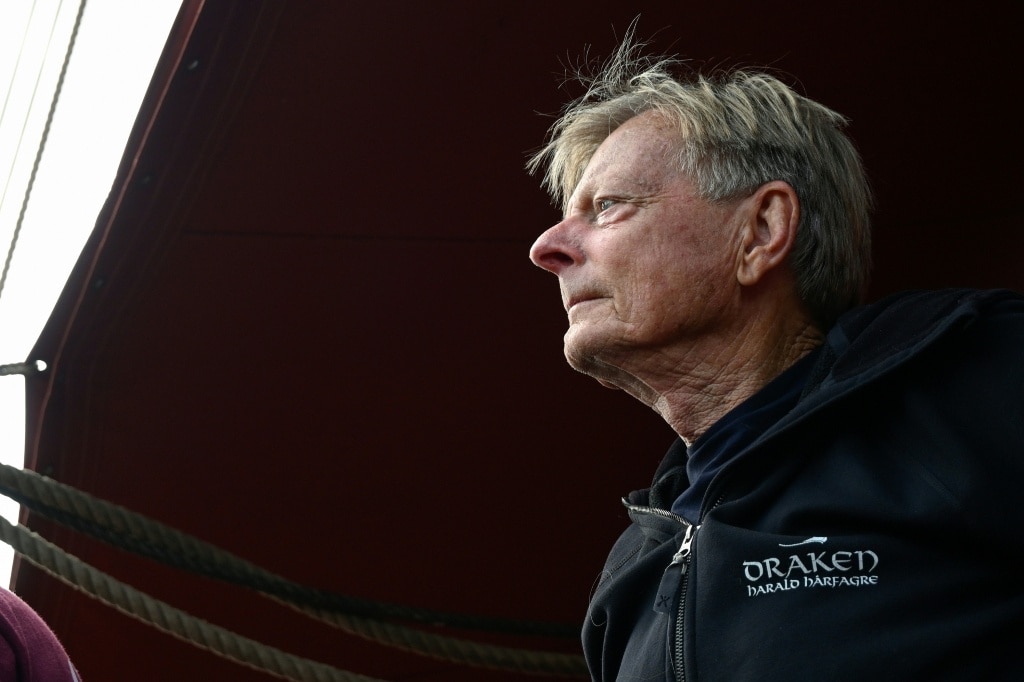
    The vessel in question is Draken Harald Harfagre, the largest functional replica of a Viking longship built in modern history. Fitted with tar-soaked rigging, a weathered solid oak deck, and 50 hand-carved spruce oars, the ship is normally moored as a cultural landmark in Oslo, Norway’s capital. For Nolan, however, its anachronistic Viking origins were irrelevant: the ship’s overall shape, construction, and open-sea capability perfectly matched his vision of a Bronze Age trading vessel fit for Odysseus’ legendary post-Trojan War journey. To fit the film’s ancient Greek setting, the ship only required one small modification: the removal of its traditional dragon figurehead, a signature feature of actual Viking vessels from the 8th to 11th centuries.

    Nolan, long famous for rejecting overreliance on computer-generated imagery (CGI) in favor of practical effects and real locations, explained the choice in a recent US television interview: “We found a Viking ship that had been built exactly according to those ancient specifications. And it was very much the whole shape and the rig that we needed to do a Bronze Age ship.” Unlike digital props that can be perfectly manipulated on a screen, the real vessel demanded that cast and crew learn the practical work of traditional sailing: Nolan’s team integrated the Draken’s own experienced sailors into the film’s production crew, and lead actors — including A-lister Matt Damon, who plays Odysseus — trained alongside them to master sailing skills from raising the sail to rowing in sync.

    For months, the Draken sailed through filming locations off the coasts of Greece, Italy, and Scotland, with the ship’s permanent crew rubbing shoulders with Hollywood’s biggest names. Trammell Hudson, one of the Draken’s regular sailors, recalled a chaotic on-set moment that embodied the unscripted authenticity of practical filming: “There was one day where one of the actors who was sitting in front of me got seasick and threw up over the rail. It blew back on me. I thought that would be my big scene, because the IMAX camera was very focused on him and me in the background dodging the debris. But I didn’t see that particular scene in the film.”

    Nolan’s adaptation follows Odysseus’ treacherous 10-year voyage back to his home island of Ithaca following the end of the Trojan War, a story rooted in 12th century BCE Greek legend. For the Draken’s expedition director Emanuel Persson, the choice to use a real, functional sailing ship rather than a digital or soundstage replica adds an intangible authenticity that audiences can perceive. “Most of the scenes would be completely different if it wasn’t for us being there, doing the real thing with the real ship and the real crew in the real ocean and real weather,” he said during the ship’s recent return to Oslo. “I think the viewers can actually feel the genuine materials. I don’t know if you can really smell the tar, but you can tell it’s really genuine handicraft instead of being a digital creation.”

    Bjorn Ahlander, captain of the Draken, praised the cast for their grit while working in tough open-sea conditions. “Matt Damon was very nice and very good. Never complained. Every one of the actors was out for a long time and it was very cold and sometimes rough,” he said. “No complaints, nothing, never. So that was fantastic to see.” Coordinating up to 100 rowers on the longship was no small feat, Hudson added: with oars measuring several meters long, perfect synchronization is required to avoid tangling, and rough seas brought unexpected jolts. He recalled one incident where a direct collision with an oncoming wave threw him and his rowing partner nearly 1.5 meters into the air.

    Not all behind-the-scenes stories from the production are positive, however. Like Penelope, Odysseus’ faithful wife who waited a decade for his return, the owners of a second Viking ship from neighboring Sweden that also featured in the film have endured a long wait of their own: after the vessel sustained damage during filming, they have waited more than a year for the promised compensation, a sour note amid the otherwise triumphant collaboration between history and Hollywood.

  • Trump threatens to ‘bomb the shit’ out of Oman in Hormuz dispute

    Trump threatens to ‘bomb the shit’ out of Oman in Hormuz dispute

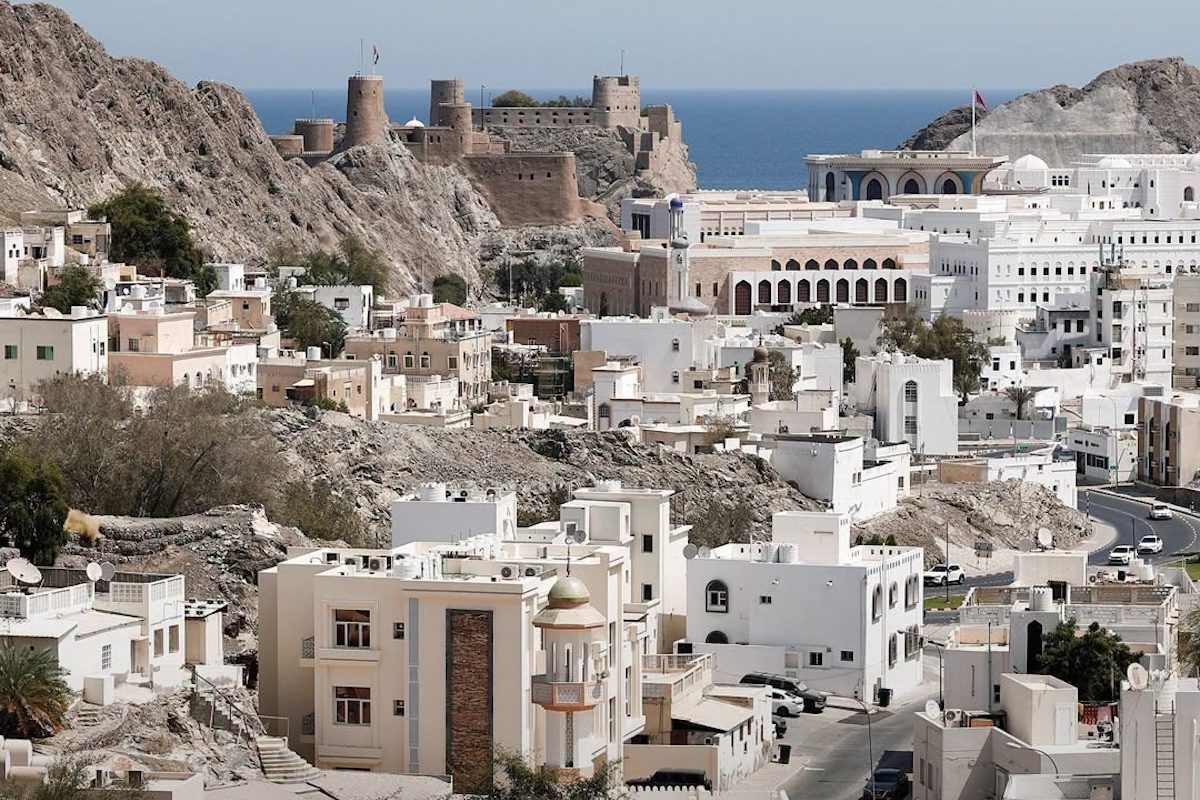
    In a startling public comment made during an interview with Fox News on Monday, former President Donald Trump issued an unprecedented violent threat against Oman, a longstanding U.S. ally in the Middle East, stating that his administration would launch devastating bombing strikes on the country if it obstructs Washington’s efforts to reach a deal with Iran to reopen the critical Strait of Hormuz. The strategic waterway has remained fully closed to most commercial shipping since Trump launched what the original reporting describes as an illegal military campaign against Iran in late February. The threat comes amid ongoing talks between Tehran and Muscat over a potential framework for joint oversight of the strait, a negotiation that has put Oman directly in the crosshairs of U.S. pressure.

    When pressed by the Fox News interviewer about the bilateral Iran-Oman discussions, Trump responded bluntly: “if Oman gets in the way” of reopening the strait, “we’ll bomb the shit out of them.” This is not the first time Trump has targeted Oman over the strait dispute, as Trita Parsi, a senior analyst with the Quincy Institute for Responsible Statecraft, pointed out, noting the U.S. leader previously issued threats against the nation when it put forward compromise proposals for strait governance.

    To date, the U.S. military’s large-scale military operations against Iran have failed to force the reopening of the strait, despite the depletion of massive U.S. munitions stockpiles. Military sources speaking to The Military Times confirmed that the U.S. has deployed nearly its entire inventory of Army Tactical Missile Systems (ATACMS) and Precision Strike Missiles (PrSM) in the campaign, with no breakthrough to show for the expenditure of firepower.

    The ongoing closure of the strait, which accounts for roughly a fifth of global oil trade, has triggered fresh upward pressure on global energy prices. Shipping data compiled by maritime analytics firm Kpler, cited in a Monday Reuters report, shows that commercial traffic through the waterway came to a near-complete halt over the most recent weekend: only five commodity-carrying vessels transited the strait on Saturday, with no transits registered at all on Sunday. Before the start of Trump’s military campaign, an average of 130 vessels passed through the key chokepoint on a daily basis.

    Market reactions have followed swiftly. During trading hours on Monday, Brent crude oil prices climbed above $89 per barrel, while data released by the American Automobile Association (AAA) shows that the average retail price of gasoline across the United States has now risen to $4.06 per gallon, up five cents from the $4.01 average recorded just one week prior.

    Adding to regional tensions, the Wall Street Journal reported over the weekend that Iranian hardline leadership, which has seen the conflict unfold in its favor so far, has developed a confidential strategy to escalate hostilities. According to the report, Iran used a June ceasefire with the U.S. to rebuild its military capabilities and prepare for larger-scale offensive operations. Citing intelligence from Arab sources, the outlet noted that Tehran’s core strategic goal is to impose sufficiently high costs on the U.S. military to deter future large-scale attacks like the 12-day conflict Tehran endured last year and the ongoing current hostilities.

  • Why Indian law students don’t want top judge at their graduation ceremony

    Why Indian law students don’t want top judge at their graduation ceremony

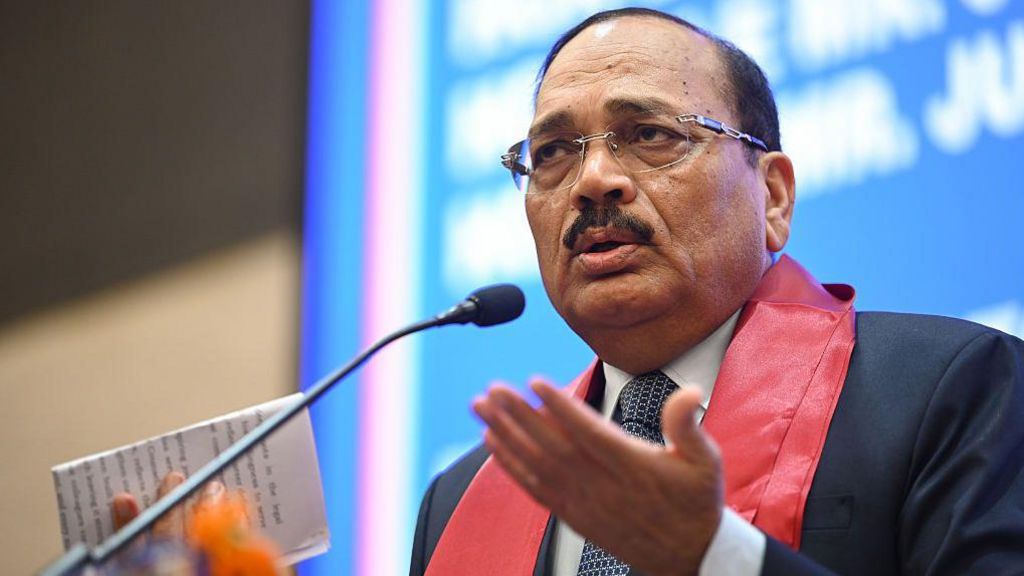
    A simmering controversy surrounding India’s Chief Justice Surya Kant has boiled over into open protest, with students from two of the nation’s most elite legal institutions rejecting his planned appearance as convocation chief guest, following months of growing anger over his reported remarks about unemployed youth and a perceived dismissal of police brutality against student protesters.

    The current standoff traces its roots back to May, when Indian legal outlet LiveLaw published remarks attributed to Kant that labeled certain unemployed young people as “cockroaches” and “parasites” who infiltrate media, social platforms, and activist circles to attack established institutions. Though Kant later clarified the comments were taken out of context, arguing he had only targeted individuals holding fake academic degrees, the damage to his standing among India’s youth was already done. The incendiary remark directly inspired the creation of the Cockroach Janta Party (CJP), a viral satirical online movement that has grown to millions of young supporters and organized weeks of mass protests in central Delhi demanding education reform and accountability for leaked government exam papers.

    Tensions escalated dramatically on July 20, when a CJP-led parliamentary march was met with a harsh crackdown by Delhi police and paramilitary forces. Footage shared widely online showed security officials beating unarmed student protesters with batons and wooden sticks, and dispersing crowds with tear gas. In a historic first for crowd control in India’s capital, at least four protesters sustained pellet gun injuries, shocking the nation and drawing global media attention. The protests ultimately achieved a key victory when Education Minister Dharmendra Pradhan resigned on July 25, as the CJP had demanded he take moral responsibility for repeated exam paper leaks. However, fallout from the crackdown continues to roil the country’s legal and political spheres.

    On July 22, a lawyer brought forward a petition requesting an urgent hearing into allegations of police excesses during the crackdown, sharing video evidence of brutality. Indian media reports claim Kant responded by saying “don’t waste our time” and rejecting the request to review the footage, stating “we don’t have time”. The comment drew immediate backlash from opposition parties, senior legal figures, and youth activists. The following day, outgoing final-year students at Hyderabad’s Nalsar University of Law, one of India’s top-ranked legal institutions, sent an official email to college administration urging them to revoke Kant’s invitation to serve as chief guest at their upcoming convocation. Traditionally, having the nation’s top jurist preside over a law school convocation is considered a high honor for aspiring lawyers, but students argued that accepting degrees from a figure dismissive of police brutality against protesters contradicts the values of justice they were taught during their studies. The demand quickly gained traction, earning support from roughly 450 of the university’s 1,400 total students, including many underclassmen.

    Kant has repeatedly pushed back against media reports, clarifying he never rejected hearing the petition and only requested it be filed through proper legal channels. The Supreme Court has since begun hearing the case, which also includes concerns that police may misuse facial recognition technology to target and harass protest participants. But student anger persisted, and the controversy expanded last week after Manan Kumar Mishra, chairman of the Bar Council of India and a sitting Member of Parliament from the ruling Bharatiya Janata Party, issued a drastic threat: he announced that no graduating Nalsar student would be permitted to enroll with the Bar Council to practice law until further notice, and demanded the university turn over a list of students leading the campaign against Kant.

    The threat triggered an immediate and widespread backlash, including an unprecedented rebuke from Chief Justice Kant himself, who stated that students hold a constitutional right to protest, and that the Bar Council had no authority to interfere in what he described as “a dialogue between law students and me”. Facing mounting pressure, Mishra backtracked within hours, announcing on social media platform X that the Bar Council would close all proceedings against the 2026 Nalsar graduating class, after concluding they had not participated in any disruptive activity. He later issued a public apology to students, writing, “If anything connected with the present controversy, any of my words, or letter, has hurt the feelings of our law students, I sincerely regret and apologise for the same.”

    Mishra’s apology failed to calm tensions, however. Over the weekend, students and alumni from a second leading Indian law school, Bengaluru’s National Law School of India University (NLSIU), released an open letter condemning Mishra’s comments, announcing they would not accept him as a convocation guest, and expressing full solidarity with Nalsar’s demand to uninvite Chief Justice Kant. They added that they also opposed Kant’s planned appearance at their own convocation for the same reasons.

    On Sunday, Kant issued a new clarification, telling The Times of India that he had never formally accepted the Nalsar convocation invitation, so “the question of me attending does not arise”. Even with this latest development, analysts widely agree the controversy is far from over. Student resentment over the chief justice’s reported comments has been building for months, and the ongoing protests at India’s most prestigious legal institutions highlight the deep divide between India’s youth and its established judicial and political leadership. The fallout from the CJP protests continues to reverberate across the country’s highest legal bodies and premier academic institutions, signaling that calls for reform and accountability from India’s younger generation are unlikely to fade.

  • This school teaches Senegal’s brightest girls to push back against patriarchal norms

    This school teaches Senegal’s brightest girls to push back against patriarchal norms

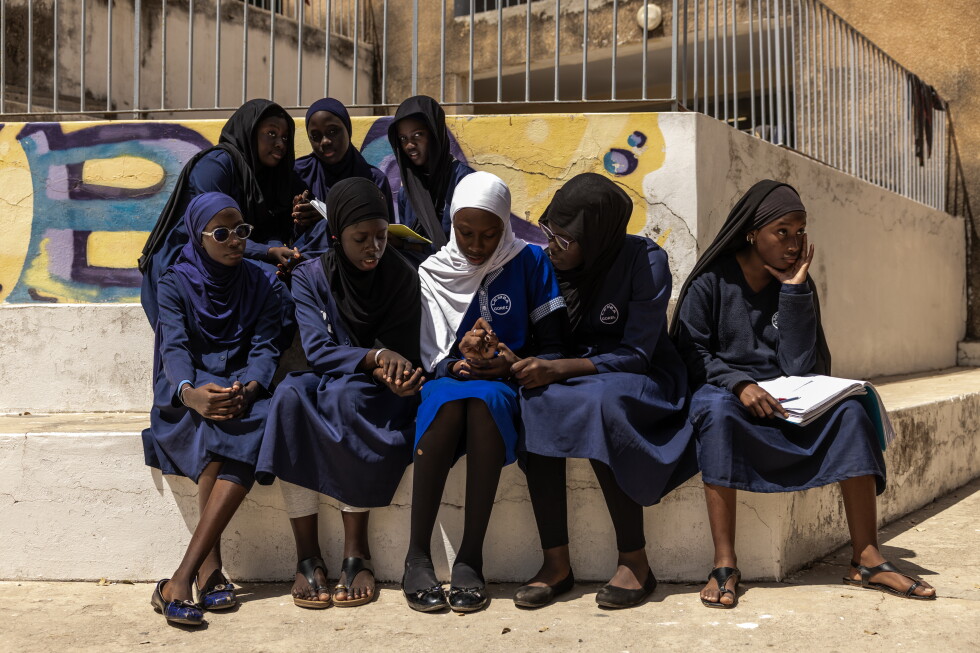
    Nestled on Senegal’s historic Goree Island, just off the capital Dakar’s coast, the Mariama Ba Boarding School stands as a radical experiment in gender empowerment – one that is reshaping the trajectories of a small but growing group of young Senegalese women, even as broader systemic barriers to gender equality persist across the country.

    For Ndeye Awa Diop, admission to the school at age 12 marked a complete reversal of the life she had been raised to expect. Growing up in a rural Senegalese community, Diop was taught the traditional expectations imposed on girls in this majority-Muslim West African nation: remain quiet, defer to elders, and be seen rather than heard. So shy she could not meet others’ eyes, Diop spent her first weeks at the school homesick and too afraid to raise her hand in class. Seven years later, the 19-year-old serves as president of the student body, on the cusp of graduation, and ready to pursue a career as an international business lawyer. “I learned to be a leader,” Diop said, adding that the sisterhood of her classmates carried her through the hardest early days. For Diop, who is the first girl from her village to earn a spot at the school, the shift in mindset has been profound: unlike most young Senegalese women of her age, starting a family is not her immediate priority. “To be a strong woman is not to be afraid to be alone,” she said.

    Senegal has made notable public progress toward gender equity in recent decades. Progressive national legislation requires that women make up half of all political parties’ candidate slates, and formal law guarantees women equal access to land ownership, at least on paper. In primary education, girls’ enrollment rates now outpace those of boys, a major milestone for a region where girls’ access to schooling has long lagged. Yet deep-rooted cultural and economic barriers keep millions of girls from reaching their potential. When household finances are stretched, families almost always prioritize keeping boys in school over girls, even when girls demonstrate stronger academic performance. Girls often miss classes once they reach menstruation due to lack of proper hygiene infrastructure, and early marriage and teenage pregnancy drive many out of school before graduation. Today, fewer than 20% of Senegalese girls complete high school, and national literacy data shows just 84 literate women for every 100 literate men. “The current challenge isn’t access to school for girls, but rather the completion of schooling up to secondary level and, of course, the transition to the job market,” explained Maissa Abdellaoui, a girls’ education specialist with UNICEF.

    Against this backdrop, the Mariama Ba school was founded in 1985 by Senegal’s first president, Leopold Sedar Senghor, named for one of the nation’s most iconic female writers. Mariama Ba, the school’s namesake, was a trailblazing author whose work explored the tension between traditional Senegalese life and modern women’s aspirations, openly criticizing the nation’s widespread practice of polygamy and deeply entrenched patriarchal norms. Though she was a lifelong advocate for gender equality and a three-time divorcee at a time when divorce for women was virtually unheard of, Ba rejected the label of feminist, which she viewed as a Western import.

    The school itself is housed in a former French military barracks on Goree Island, a site of profound historical weight: as Africa’s westernmost point, it was once the largest hub of the trans-Atlantic slave trade. Today, the car-free island is a serene space of cobblestone streets, and the school’s courtyards bloom with bougainvillea, baobabs and palm trees, with the constant sound of ocean waves and birdsong in the background. Selectivity is extreme: each year, just 35 girls are admitted from 150 top-performing applicants who qualify to take the entrance exam, and all tuition and boarding costs are fully covered by the Senegalese government. The school boasts a 100% high school graduation rate, a statistic unheard of across the rest of the nation.

    Over six years of secondary education, students follow a tightly structured daily routine: wake before dawn, shower, prayer, breakfast, classes, study hall, and an early end to the day to prepare for the next. Alongside rigorous academic training, students take art classes, compete in sports, and attend regular talks with prominent female leaders – many of whom are alumni of the school itself. Headmistress Ramatoulaye Diagne Sarr explains that this strict discipline is intentional: the school exists to train the next generation of female leaders that Senegal will depend on in coming years. In one recent humanities class, 15-year-old students led a heated, thoughtful discussion of the history of slavery – a topic that feels deeply personal given the school’s location – guided by teacher Paul Felix Thiao. “Often in society, we see that men tend to dominate women,” Thiao said. But places like the school show that “if we give them more freedom, if we give them more opportunities, they can go far.”

    Despite the school’s transformative impact on its students, challenges to widespread female empowerment remain acute across Senegal. UN data shows that women own just 2% of the nation’s agricultural land, make up the majority of the country’s informal, unprotected workforce, and Senegalese law still formally recognizes only men as heads of household. For 18-year-old student Marie Diop, navigating these cultural norms is a daily struggle. “In Senegal, people’s mentality remains very, very, very strict regarding women’s independence,” she said. “In fact, each day you are fighting a battle to make people understand that … women have the capacity to manage, to be in charge.” Even within the school, structural inequities persist: while every headmistress in the school’s history has been a woman, the majority of teaching staff are still men.

    Alumni of the school say the experience upended the expectations they grew up with, and many now return to serve as mentors to current students. Matel Sow, 27-year-old head of the school’s alumni association, grew up in a small village in eastern Senegal, and had to convince her father to let her attend the school. Today, she holds degrees from Dakar’s prestigious Cheikh Anta Diop University and the University of Texas, and works as an associate at the nonprofit International Budget Partnership. Over time, Sow said her father shifted his perspective, telling her: “You can do what you want, I trust you, as long as you stay true to your core values and roots” of tradition and religion. As a working mother of a two-year-old girl, Sow said she has built an equal partnership with her husband that has helped her navigate the competing pressures of work and family.

    While the Mariama Ba school’s track record is impressive, experts emphasize that it remains the only institution of its kind in Senegal, and that systemic change is needed to extend the same opportunities to all girls. Abdellaoui, the UNICEF specialist, praised the school’s model but noted that the nation’s most vulnerable girls – those from low-income rural communities outside Dakar – still lack access to this level of support. Headmistress Sarr acknowledged that the majority of current students come from the capital region, leaving room to expand access to more girls from across the country. Even so, Sarr said the school serves a critical purpose as a proof of concept: it shows what girls can achieve when given the resources and support to thrive, serving as a model for girls across the nation “who are hesitating, who think it’s impossible to climb the ladder.”