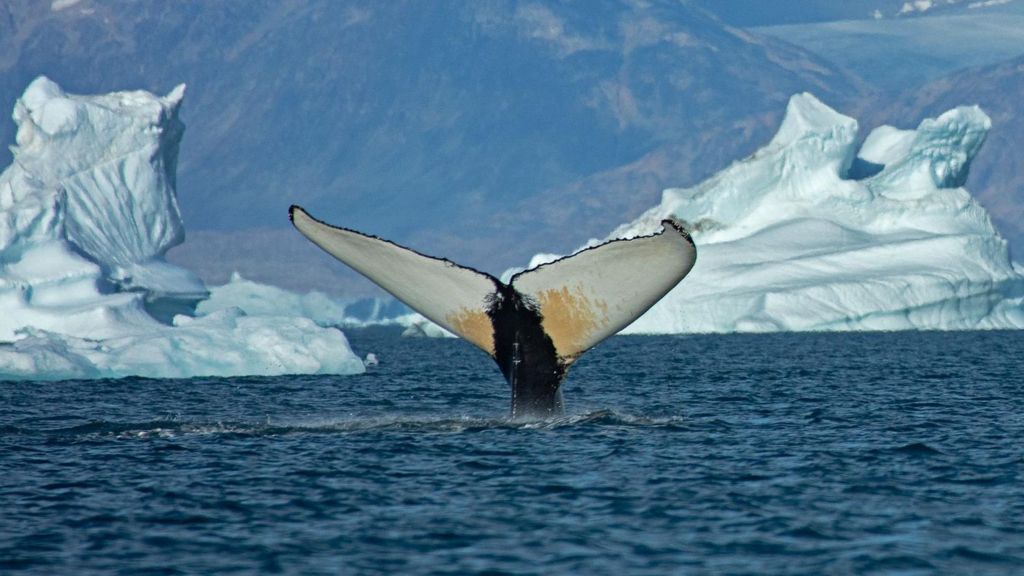
For decades, the thick, year-round sea ice off East Greenland’s coast acted as an impenetrable barrier, locking large baleen whale species out of the nutrient-rich coastal waters. But a landmark, long-term study published in *Frontiers in Marine Science* documents a dramatic ecological transformation: as global warming melts Arctic sea ice, hundreds of humpback, fin, and minke whales are now moving into these newly ice-free areas each summer to feed.
The research, led by Professor Mads Peter Heide-Jørgensen from the Greenland Institute of Natural Resources, combines 40 years of ship-based sighting data, systematic aerial surveys conducted in 2015 and 2024, satellite tracking of 15 tagged whales, and traditional knowledge from Inuit hunters to build a comprehensive picture of this shift. The trend reveals a steep, rapid increase in whale presence in the region: not a single humpback whale was recorded in ship surveys until 2006. Just one year later, seven humpbacks were spotted, and by 2024, that number had climbed to 150 ship-based sightings. Researchers estimate that in the summer of 2024 alone, around 4,000 humpbacks, 6,000 fin whales, and 6,000 minke whales traveled to the ice-free East Greenland coast.
Scientists have labeled the annual arrival of these massive marine mammals seasonal Arctic “feeding frenzies,” describing the change as a major ecological regime shift for the entire East Greenland ocean ecosystem. The shift is driven by rising ocean temperatures, which melt the sea ice and allow fish and krill populations to move into the newly warming coastal waters, creating an abundant food source for migratory baleen whales. Researchers calculate that the three whale species consume a minimum of 800,000 tonnes of fish and krill combined over a single summer feeding season.
While the study confirms the rapid redistribution of baleen whales into the region, it has not yet determined whether the trend reflects an overall growth in these whale populations or simply a shift in their range from other feeding grounds, such as West Greenland. This question carries particular political and cultural sensitivity in Greenland, where subsistence whale hunting is a long-standing practice. Outside experts consulted by the BBC hypothesize the whales are moving from West Greenland waters to the east, but the research team has not confirmed this link.
The findings highlight a stark, uneven impact of climate change on Arctic marine life: opportunistic baleen whale species appear to be adapting successfully to the changing conditions and even benefiting from the new access to food and habitat. But other native Arctic species, including narwhals and belugas, are facing severe pressures. These iconic cold-water species are losing their traditional sea ice habitat, and are now being displaced or outcompeted by the incoming baleen whales.
Professor Heide-Jørgensen emphasized the significance of this transformation, noting that the changes unfolding off East Greenland are likely the most radical ecological shifts observed anywhere in the subarctic. “For some species, climate change is not necessarily a problem – it opens up new opportunities,” he explained. “But other species are losing their habitat.”