博客

  • France: Mosque closure fuels fear of state overreach on Muslim worship

    France: Mosque closure fuels fear of state overreach on Muslim worship

    A recent court ruling upholding the temporary closure of a small working-class mosque in northeastern Paris has reignited fierce national debate over France’s approach to countering radicalism, the practice of secularism, and systemic biases targeting the country’s Muslim community.

    The case centers on Attaqwa Mosque, commonly called Chanteloup Mosque, nestled in a social housing complex in Aulnay-sous-Bois’s majority-immigrant southern neighborhood. Unlike traditional Islamic religious sites, the unassuming space blends into surrounding residential apartment blocks, with no minaret or dome, housing a 50-person prayer hall and offices for Acas, the local cultural association that manages it. Founded by local residents in the early 2010s as an informal prayer room, the site operated for more than a decade without pushback from housing providers or municipal officials.

    In July, the prefecture of Seine-Saint-Denis ordered the mosque shuttered for six months, citing claims that imams at the site had disseminated content inciting violence, hatred and terrorism, both during sermons and on personal social media accounts. Earlier this month, the Montreuil Administrative Court rejected the mosque operator’s appeal to suspend the order, ruling that the temporary closure does not qualify as a clear, illegal violation of religious freedom. The court added that the ruling did not penalize citations of Islamic scripture, noting the order also relied on evidence of radicalized individuals frequenting the space, and that prefectural authorities had not interfered with core religious beliefs or violated France’s principle of state religious neutrality.

    But local residents and legal representatives have pushed back sharply against the decision. For 78-year-old retired bus driver Salah, a regular worshipper who lives within walking distance of the mosque, the closure has stripped him of access to daily sunset prayers he has practiced for years. His poor health makes the longer trip to other mosques in Aulnay impossible, leaving him disconnected from the community space that anchored his daily routine. Twenty-year-old local resident Rayane, who also prays at Attaqwa, said the collective punishment of closing the entire mosque instead of prosecuting individual imams accused of wrongdoing is unfair. Critics argue the decision undermines both religious freedom and the secularism France claims to uphold, by punishing an entire community for the alleged actions of a few individuals.

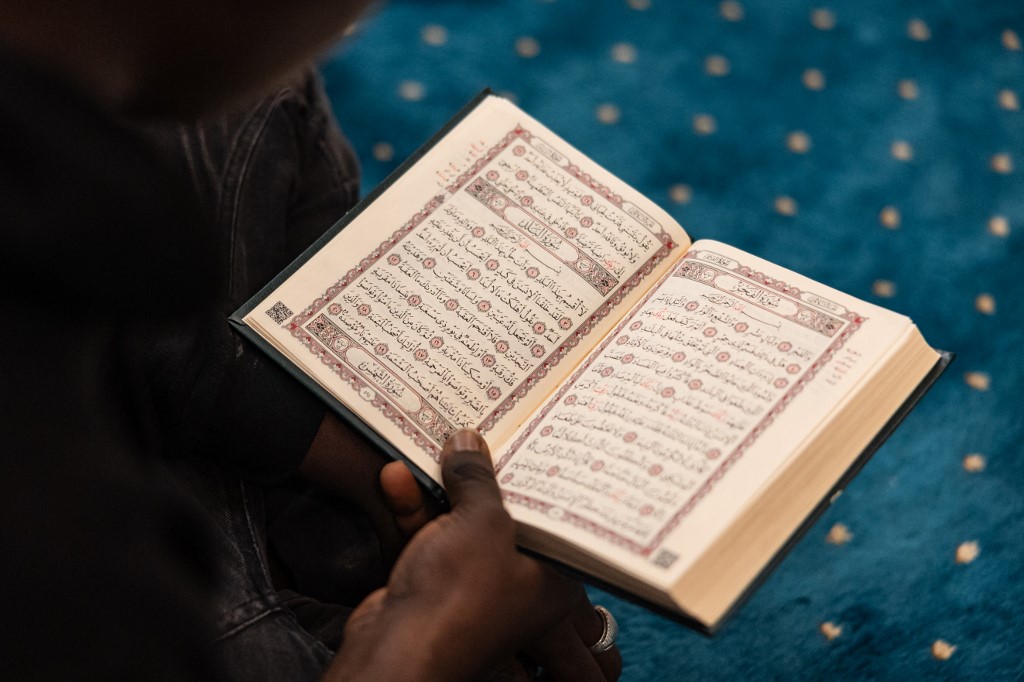
    Rafik Chekkat, the lawyer representing Acas (which has had all its assets frozen in the case), argues key portions of the court ruling run counter to fundamental religious freedom protections. He announced plans to appeal the decision to the Council of State, France’s highest administrative court, noting that authorities built part of their case against the mosque on imams’ citations of seven verses from the Quran and references to foundational works of Islamic tradition, including 13th-century Syrian scholar Imam al-Nawawi’s *The Garden of the Righteous* and *The Forty Hadiths* — works universally recognized as core to mainstream Islamic teaching. The defense also highlighted that the prefecture objected to sermons referencing hell and punishment for non-believers, despite identical theological teachings being common in Christian preaching across the country.

    Veteran French lawyer Sefen Guez Guez, who has successfully won the suspension of three mosque closure orders throughout his career, says the ruling sets a dangerous legal precedent. He argues the court validated the prefecture’s practice of literally interpreting routine citations of core religious texts out of context to justify closing a place of worship. Guez Guez also raised procedural concerns, noting some of the sermons cited in the closure order date back to 2020, raising unanswered questions about how far back authorities can search for evidence to justify shutting down a religious site.

    The Attaqwa case is far from an isolated incident, but rather the latest manifestation of a years-long shift toward stricter state control of Muslim worship in France that began early in Emmanuel Macron’s presidency, when he took office in 2017. In 2021, the French legislature passed the controversial anti-separatism law, formally titled the Law Reinforcing Respect for the Principles of the Republic, which was framed as a tool to root out Islamist radicalism. Critics have long argued the law stigmatizes France’s 5.7 million Muslim residents, the largest Muslim population in Europe, while eroding civil liberties. The legislation expanded the legal powers of regional prefects to order mosque closures, added new mandatory requirements for religious associations, broadened the justifications for closing religious sites, and created a systematic system of state oversight — making closures far more frequent and easier to administer.

    Prominent scholars of religion warn this shift marks a fundamental change to French secularism. In his 2025 book *Governing Islam in France*, CNRS senior researcher and religion specialist Franck Fregosi argues that growing numbers of mosque closures are evidence of an authoritarian turn in France’s long-standing practice of laïcité, or secularism. Fregosi notes the state’s increasingly heavy interference in the internal governance of mosques, including mandatory vetting of imams and worshippers, fits into a centuries-long pattern of state efforts to control and monitor Muslim worship that dates back to France’s colonial era in North Africa.

    In 2024, then-Interior Minister Gerald Darmanin introduced a new official registration system for imams working in France, intended to end the long-standing practice of foreign governments sending clerics to serve French mosques. The stated goal was to block foreign influence and radical ideological currents, allowing imams already working in the country to stay if they were hired by a local religious association and completed mandatory civic training, including coursework on French secularism. But even compliant imams have faced barriers: an Algerian imam hired by Nîmes’ Grand Mosque who completed all required requirements was still denied a residence permit by the prefecture and forced to return to Algeria, according to mosque rector Abdallah Zekri.

    Zekri, who also chairs the French Observatory Against Islamophobia and serves as vice president of the French Council of Muslim Worship (CFCM), the national representative body for French Muslims, argues growing numbers of mosque closures reflect a rising climate of anti-Muslim bias across the country. “When it’s not for radicalisation, mosques are closed under the pretext of non-compliance with urban planning regulations,” he explained, adding that Muslim associations face growing barriers to securing state approval to purchase land for new mosque construction. Guez Guez confirmed this pattern, noting that most closure requests are rooted in political considerations, with municipalities often using minor violations of fire safety or zoning rules as a pretext to shut down Muslim sites.

    Official French Interior Ministry data records only 12 places of worship, almost all mosques, that have been administratively closed for reasons related to radicalization since 2017. But independent journalistic investigations and advocacy group data show the actual number of closed mosques is far higher, with dozens more shut down for technical or regulatory violations. Between 2021 and 2022 alone, roughly 20 mosques were closed as part of a nationwide campaign of expanded administrative inspections. French Muslim advocacy group Trouve Ta Mosquée estimates that 89 mosques have been closed, temporarily or permanently, since 2017, including sites currently facing ongoing investigations.

    Zekri also noted that imams face growing punishment for discussing political topics, with comments on the Israeli military campaign in Gaza routinely mislabeled as hate speech, leading to retaliatory action. In a high-profile 2025 case, Abdourahmane Ridouane, president of a mosque near Bordeaux, was initially sentenced to four months suspended prison and a two-year ban from France on charges of apologizing for terrorism after he denounced Israeli policy in the Palestinian territories. He was ultimately acquitted by the Paris Court of Appeal later that year.

    Efforts to tighten state oversight of Muslim worship continue to move forward through the French legislature. In May 2025, the French Senate adopted a bill introduced by Senator and former Interior Minister Bruno Retailleau, following a June 2024 report on alleged Muslim Brotherhood infiltration in French religious institutions. The bill would further expand prefects’ power to order mosque closures by broadening the legal definition of justifications for closure and allowing for preventive shutdowns before any disturbance of public order has occurred — a change that critics warn would grant state officials far more discretionary power to target sites. A second bill introduced in January 2025 by right-wing Les Républicains lawmakers would require prefectural approval for all new construction or expansion of places of worship, replacing the previous system where the prefect only issued a non-binding advisory opinion. Neither bill has been passed into law as of yet.
  • Boat capsizes in northwestern Nigeria, leaving dozens of people dead

    Boat capsizes in northwestern Nigeria, leaving dozens of people dead

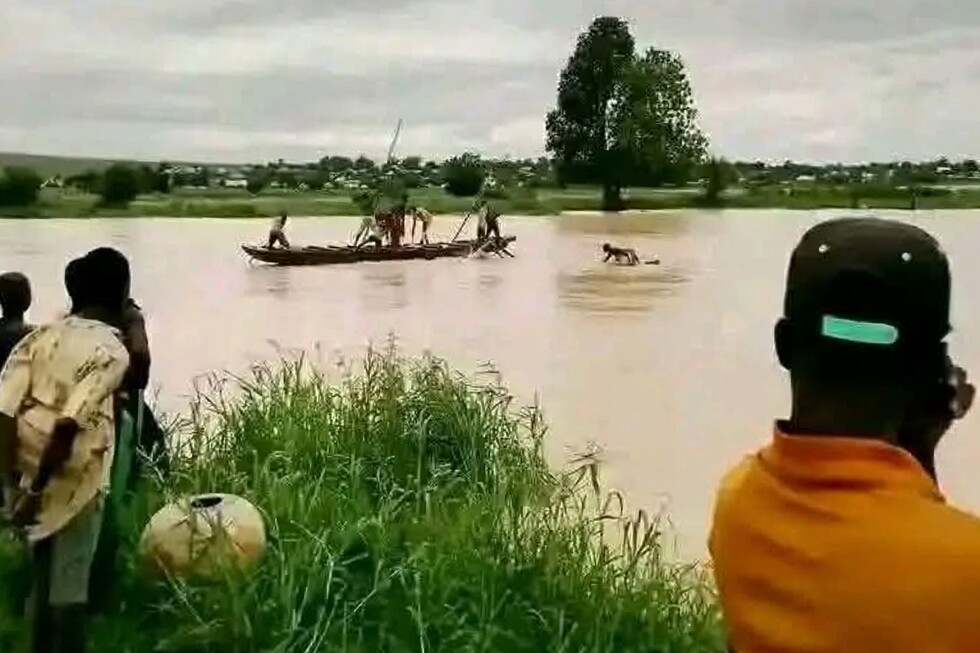
    A deadly boat capsize in northwestern Nigeria’s Sokoto State has left at least 47 people dead, according to local officials and community residents, in what marks another tragic incident in a country plagued by frequent waterway disasters during the annual rainy season. The overloaded vessel was carrying more than 80 passengers when it overturned Thursday on a local river, with the vast majority of travelers heading to agricultural work sites in Gorau town, located within the state’s Goronyo Local Government Area.

    Abdulkadir Yusuf, state manager for Nigeria’s National Inland Waterways Authority, confirmed that the fatality count stood at 47 as of the latest update. For local residents, the disaster has brought devastating personal loss: 55-year-old Samaila Garba told the Associated Press that his 13-year-old granddaughter, Jamila Usman, was among those killed. Garba, who personally counted at least 42 recovered victims’ bodies, noted that most of the dead were women and children — a demographic that routinely travels across the river to reach farmland during the rainy season.

    Another local resident, Aminu Dan Hajiya, who relies on the same river route to access his own farm, said he considered himself extraordinarily fortunate to have avoided boarding the fateful voyage. The tragedy has touched nearly every corner of the small community, he added: “In fact, almost every household in the community has been affected.”

    Usman Yusuf, a leading community figure in Gorau, corroborated the report that more than 80 passengers had been on board the boat when it capsized, adding that 41 victims had already been laid to rest as of initial updates.

    Deadly boating accidents are an all-too-common occurrence across Nigeria, particularly during the annual rainy season when river conditions become turbulent and unpredictable. Systemic failures in regulatory enforcement have created dangerous conditions for informal river travel: weak oversight allows unfit, overloaded vessels to operate without required safety equipment such as life jackets, putting thousands of daily commuters at risk. Just earlier this year in January, a nearly identical incident in northeastern Nigeria’s Yobe State killed at least 25 people, highlighting the ongoing risk to rural communities dependent on waterways for access to work and basic services.

    This report was prepared by Mohammed Ibrahim, reporting from Kaduna, Nigeria, with additional contributions from Tunde Omolehin.

  • Nord Stream bomb suspect arrested while working on movie about attack: media

    Nord Stream bomb suspect arrested while working on movie about attack: media

    In a striking twist that intersects international sabotage investigations and global entertainment, a Ukrainian man suspected of involvement in the 2022 Nord Stream gas pipeline bombing has been taken into custody on the set of a major Hollywood film about the attack, multiple international media outlets reported Thursday.

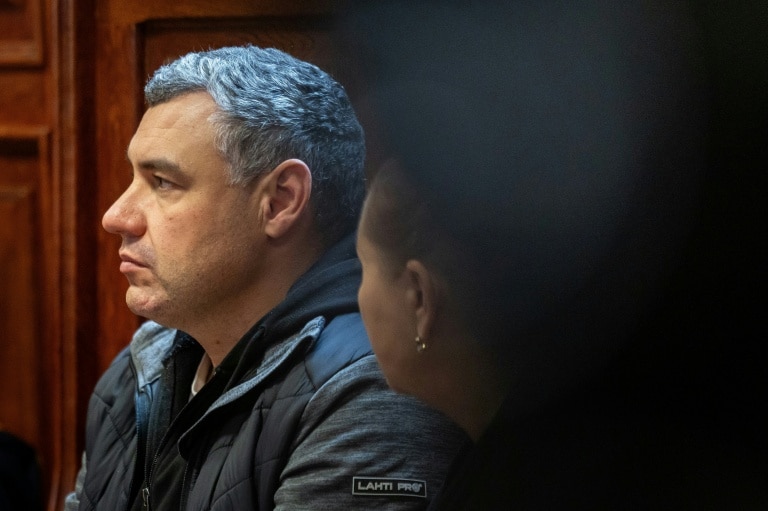
    Croatian law enforcement authorities in the coastal city of Pula detained Volodymyr Zhuravlyov on Wednesday acting on a European Arrest Warrant issued by German judicial authorities, who are now moving forward with proceedings to extradite the suspect to face investigation in Germany. German prosecutors have formally named Zhuravlyov as a trained diver, alleging he played a direct role in assisting with the placement of explosive devices on the four Baltic Sea pipelines that connect Russia to Germany. The September 2022 sabotage left three of the four pipelines completely destroyed, shaking global energy markets and sparking intense international geopolitical debate.

    According to Germany’s *Legal Tribune Online*, Zhuravlyov was arrested while working on the set of *Snake Island*, an upcoming American film directed by Doug Liman — best known for his work on *The Bourne Identity* — which counts Academy Award winners Adrien Brody and Sean Penn among its lead cast. Multiple outlets have reported the suspect served as a special advisor for the production, though AFP has not yet been able to independently confirm this detail with German or Croatian law enforcement.

    This is not the first time Zhuravlyov has been detained in connection with the attack: he was previously held by authorities in Poland over his alleged ties to the sabotage. However, Polish officials ultimately declined to extradite him and ordered his release, ruling that if a Ukrainian actor carried out the attack, it would qualify as a legitimate act of war rather than a criminal offense under Polish law.

    The Nord Stream attack occurred roughly seven months after Russia launched its full-scale invasion of Ukraine in February 2022. German investigative authorities have concluded the operation was ordered by a Ukrainian state intelligence agency, with the stated strategic goal of cutting off future energy export revenues that Russia could use to fund its invasion of Ukraine.

    Zhuravlyov is alleged to have worked in close coordination with another Ukrainian suspect, Sergiy Kuznetsov, who was apprehended by Italian authorities last year and later extradited to Germany to face charges. The investigation has created significant political friction for both Germany and Ukraine: Berlin has been one of Kyiv’s most steadfast international military and diplomatic backers since the start of the full-scale invasion, leaving German officials walking a fine line between judicial independence and diplomatic commitments to Ukraine. When pressed for comment on the latest arrest, German government representatives have repeatedly emphasized that the country’s judiciary operates independently of political interference. For his part, Ukrainian President Volodymyr Zelensky has repeatedly stated that the Ukrainian government had no advance knowledge of or involvement in any plot to destroy the Nord Stream pipelines.

  • Togo charges two French journalists over incorrect documents, rights group says

    Togo charges two French journalists over incorrect documents, rights group says

    Nearly a month after the arrest of two French documentary filmmakers working in northern Togo, new questions are emerging over the arbitrary detention of the journalists, who hold all valid work credentials but still face criminal charges in a case that has reignited international scrutiny of press freedom restrictions in the West African nation.

    According to global media rights organization Reporters Without Borders (RSF), Gaël Mocaër and Sebastian Perez Pezzani were taken into custody on July 27 while filming a documentary project for France Télévisions in the northern Togolese city of Kara. Despite holding legally issued work visas and official filming authorization, the pair have now been formally charged with “false declarations,” a charge RSF calls completely unsubstantiated.

    A third individual, Fred Vedomey, the journalists’ local Togolese fixer, has also been detained alongside the two French citizens. As of the latest update, all three are being held in pre-trial detention at a law enforcement facility near Lomé, Togo’s capital. RSF has also raised urgent alarms over Pezzani’s well-being, confirming he is currently experiencing severe health complications that require immediate access to specialized medical care.

    The production company behind the documentary, Tony Comiti Productions, has issued a formal statement affirming that Mocaër and Pezzani fully complied with all existing Togolese administrative regulations for foreign journalists working in the country. The company emphasized that the two men are seasoned, veteran documentary professionals with decades of experience reporting across the globe, and that their work in Togo had no political agenda, focused solely on documenting the daily experiences of local communities.

    France’s foreign ministry has confirmed the detention of its two nationals, but has not released any additional details on the case. Togolese government officials have so far declined to issue any public comment on the arrest or the charges against the three detained individuals.

    While official explanations for the detention remain undisclosed, independent and local reporting has put forward a controversial hypothesis: the two French journalists are being held as political leverage to push France into extraditing Ferdinand Ayité, a Togolese investigative journalist who has lived in exile in France since 2021. Ayité was arrested in Togo four years ago over online comments that drew criticism from sitting government ministers, before eventually fleeing the country. Neither French nor Togolese authorities have publicly confirmed or denied this speculation.

    This case is the latest in a growing pattern of restricting press freedom in Togo, which already holds a low rank of 97th out of 180 countries on RSF’s annual World Press Freedom Index. Just earlier this year in June 2025, two major French broadcasters — France 24 and Radio France Internationale (RFI) — were suspended from operating in Togo for a three-month period, after Togolese authorities accused them of spreading “inaccurate and biased” coverage of anti-government protests. Both outlets strongly rejected all accusations of improper reporting. In 2024, another French journalist, Thomas Dietrich, was arrested while covering national electoral campaigning in the country and subsequently expelled, per records from the International Press Institute.

    Thibaut Bruttin, RSF’s Director General, said the organization remains deeply alarmed that the unjust detention has stretched on for more than 20 days. “The organization condemns these unjustified and disproportionate proceedings and calls for the immediate release of the French media professionals,” Bruttin said.

    Family members of the two detained French journalists have also released a joint statement, shared via RSF, expressing their ongoing distress over the prolonged uncertainty. “We are devastated by the deprivation of liberty being endured in Togo by our partners, our fathers, our sons and our brothers,” the statement read. The families added that daily uncertainty and anguish have weighed heavily on them since the arrest, and they are holding out hope for a swift resolution to the case. They also emphasized that Mocaër and Pezzani are passionate storytellers dedicated to centering the voices and lived realities of the people they meet in their reporting.

  • Rio de Janeiro’s Maracana Stadium to host opening game and final of 2027 Women’s World Cup

    Rio de Janeiro’s Maracana Stadium to host opening game and final of 2027 Women’s World Cup

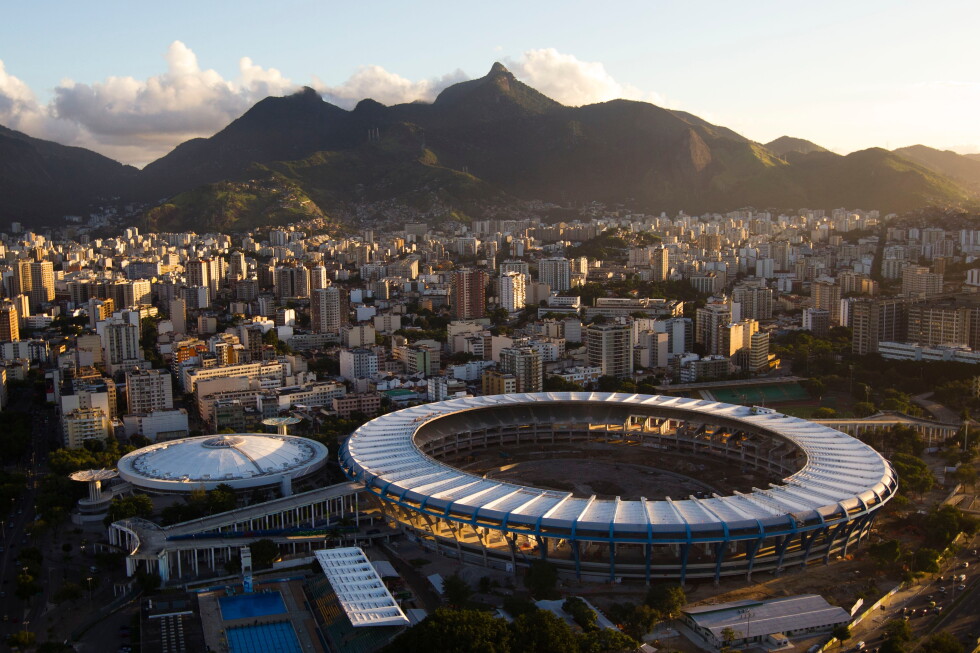
    Global soccer governing body FIFA revealed Thursday that one of the sport’s most legendary venues, Rio de Janeiro’s Maracana Stadium, will claim center stage at next year’s 2027 FIFA Women’s World Cup, playing host to both the tournament’s opening kickoff and its championship decider. As the first South American country ever selected to stage the Women’s World Cup, Brazil will itself feature in the opening match on June 24, with their opponent still to be confirmed when the tournament draw concludes. The 73,000-capacity Maracana, which already holds a decades-long place in World Cup history, will be the home ground for Brazil’s opening group stage fixture. Beyond Rio, the host nation’s group stage campaign will also include matches in two other major Brazilian cities: Sao Paulo and Brasilia. The 32-team tournament will be spread across eight host cities nationwide, with the final of the competition set to take place at Maracana on July 25. Maracana’s legacy in men’s World Cup history stretches back 77 years, when it hosted the decisive 1950 final match that saw Uruguay stun host Brazil 2-1 to claim the world title. More recently, the venue was the site of the 2014 men’s World Cup final, where Germany defeated Argentina led by Lionel Messi 1-0 in extra time to secure their fourth men’s World Cup crown. With this selection for the 2027 Women’s World Cup, Maracana joins an elite group of only two other stadiums that have hosted men’s and women’s World Cup finals: Sweden’s Rasunda Stadium and the Rose Bowl located in Pasadena, California. Entering the tournament, Spain holds the title of defending Women’s World Cup champions, having claimed the top spot at the 2023 edition held in Australia and New Zealand. Brazil, by contrast, has never lifted the Women’s World Cup trophy, and the 2027 tournament on home soil marks a historic chance for the South American side to claim their first title on the global women’s soccer stage.

  • At least 13 workers killed in landslide at Colombian gold mine

    At least 13 workers killed in landslide at Colombian gold mine

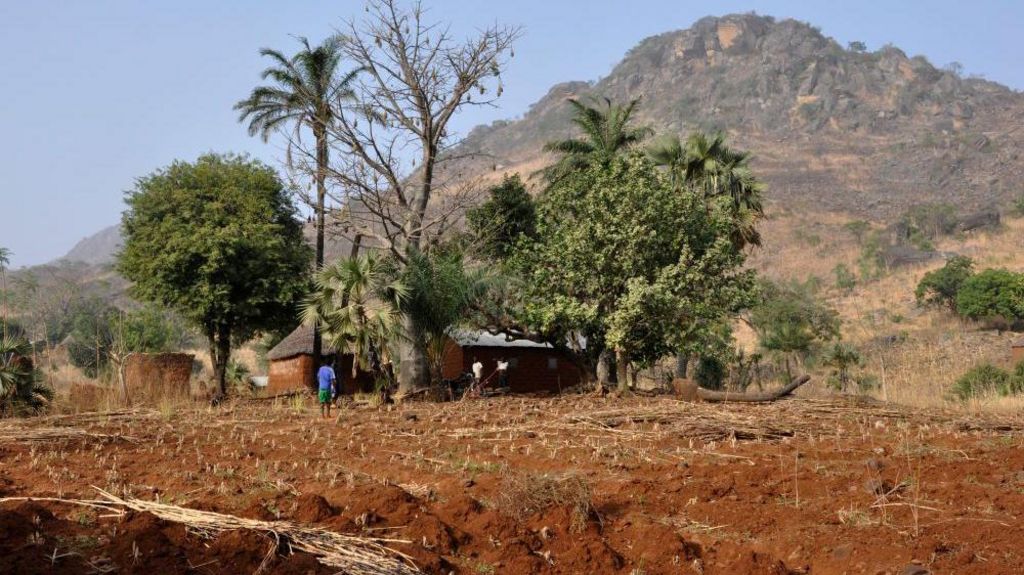
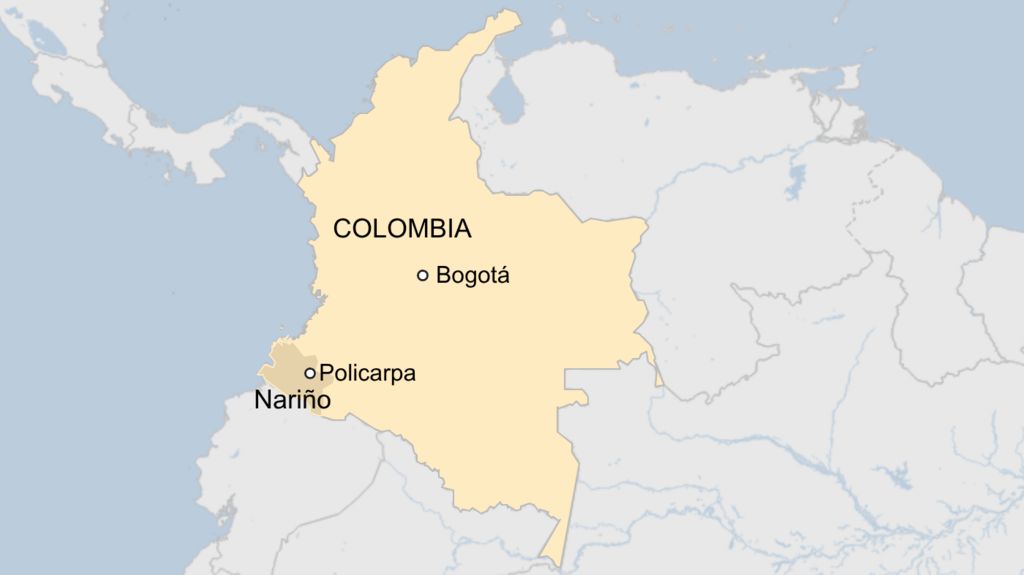
    A devastating landslide at an unregulated artisanal gold mine in southern Colombia has left at least 13 workers dead and seven others wounded, according to announcements from local government authorities. The tragedy unfolded on Wednesday afternoon at the open-air mining site located near the town of Policarpa in Nariño Province, where dozens of local workers, the majority from the indigenous Quillacinga community, harvest small deposits of gold for their livelihoods.

    Eyewitness accounts indicate that a loud explosion echoed through the site just moments before a section of the mine collapsed onto workers operating in the lower area of the excavation, trapping them under tons of earth and rock. First responders from regional emergency services, alongside local community residents, launched an immediate search and recovery operation. With the assistance of heavy excavator equipment, teams were able to recover all 13 deceased victims from the debris. Among the fatalities, four victims came from the same indigenous family, compounding the scale of loss for the local community.

    Deadly industrial accidents are an ongoing, systemic issue in Colombia’s small-scale mining sector, particularly at unlicensed operations that operate outside of national safety and environmental regulations. Without any official government oversight, these informal mining sites lack basic safety infrastructure, emergency response protocols, and regular geotechnical inspections to mitigate landslide or collapse risks. An estimated 200,000 to 400,000 Colombians currently work in artisanal mining across the country, with many low-income and indigenous households relying entirely on income from selling extracted precious metals and gemstones to cover basic living expenses. Around 50 workers regularly accessed this particular unlicensed mine near Policarpa, per local resident estimates.

  • Togo detains French filmmakers over alleged immigration violations, advocacy group says

    Togo detains French filmmakers over alleged immigration violations, advocacy group says

    In a development that has amplified existing tensions between Togo’s government and French media organizations, a prominent press freedom advocacy group confirmed Thursday that two French documentary filmmakers and their local Togolese fixer have been transferred to pretrial detention after more than three weeks of custody in the West African nation.

    Reporters Without Borders, the Paris-based media freedom watchdog widely known by its French acronym RSF, confirmed that filmmakers Gaël Mocaër and Sebastian Perez Pezzani, alongside Togolese fixer Fred Vedomey, were formally remanded into pretrial detention this Monday. The three individuals face charges of submitting false declarations as part of their immigration processing when entering Togo, and RSF has issued an urgent call for their immediate release.

    According to RSF’s account of the incident, the two French filmmakers were on location shooting an installment of a documentary series for France Télévisions, France’s national public television network, when Togolese law enforcement moved in to arrest the full crew on July 27. The arrest took place in Kara, a region in northern Togo, an area that has faced repeated security challenges in recent years from insurgent attacks carried out by armed factions affiliated with al-Qaida and the Islamic State group.

    This detention case unfolds against a shifting geopolitical backdrop in West Africa, as Togo has deepened diplomatic and military ties with Russia in recent months, aligning itself with Mali, Burkina Faso and Niger — three Sahel nations that have expelled French military forces, sidelined French political influence, and built closer strategic partnerships with Moscow. Last year, Togo and Russia signed a formal military cooperation agreement that establishes a framework for joint military training exercises and capacity-building programs between the two countries.

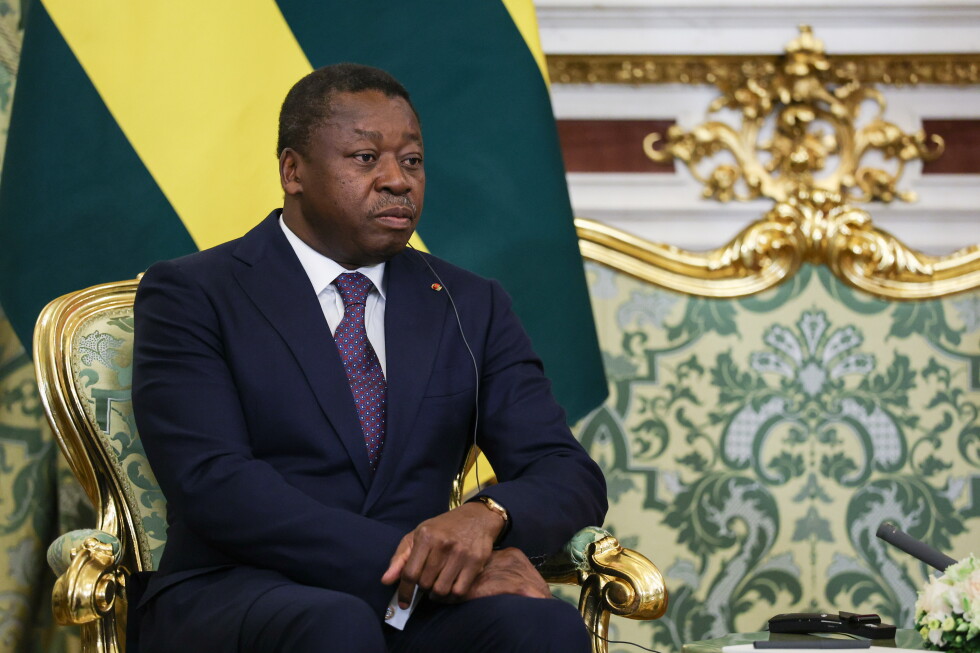
    Tensions between Togolese authorities and French media have been escalating for months. In June 2025, Togolese regulators suspended all domestic broadcasts of two major French international media outlets, Radio France Internationale and France 24, for a three-month period. Officials at the time accused the outlets of publishing inaccurate, biased reporting during their coverage of nationwide public protests against long-time Togolese leader Faure Gnassingbé.

    RSF has pushed back against the government’s charges, confirming that the documentary crew applied for and received official work authorization from Togo’s Ministry of Tourism, Culture and Arts to carry out their filming project. But Togo’s Culture Minister Isaac Tchiakpé has directly refuted that claim, telling The Associated Press that the crew would never have faced detention if they had secured all necessary permits and followed all required administrative protocols.

    Togo’s national media regulator, the High Authority for Audiovisual and Communication (HARC), also stated that it never received a formal accreditation request from either the filmmakers or France Télévisions, and had no advance notification that the crew planned to film in the sensitive northern region.

    RSF’s account of the crew’s detention timeline adds further context: law enforcement seized all of the crew’s filming equipment during the initial arrest, held the three for three days before releasing them briefly on July 30, then moved to re-arrest the group shortly after and transfer them to the capital Lomé to face formal charges.

    The press freedom organization has denounced the legal proceedings against the three as “unjustified” and “disproportionate,” adding an urgent public health note: Perez Pezzani lives with a serious pre-existing chronic health condition that requires immediate, specialized medical attention that RSF says he cannot access properly in Togolese pretrial detention.

  • What do people think of Harry and Meghan returning to the UK?

    What do people think of Harry and Meghan returning to the UK?

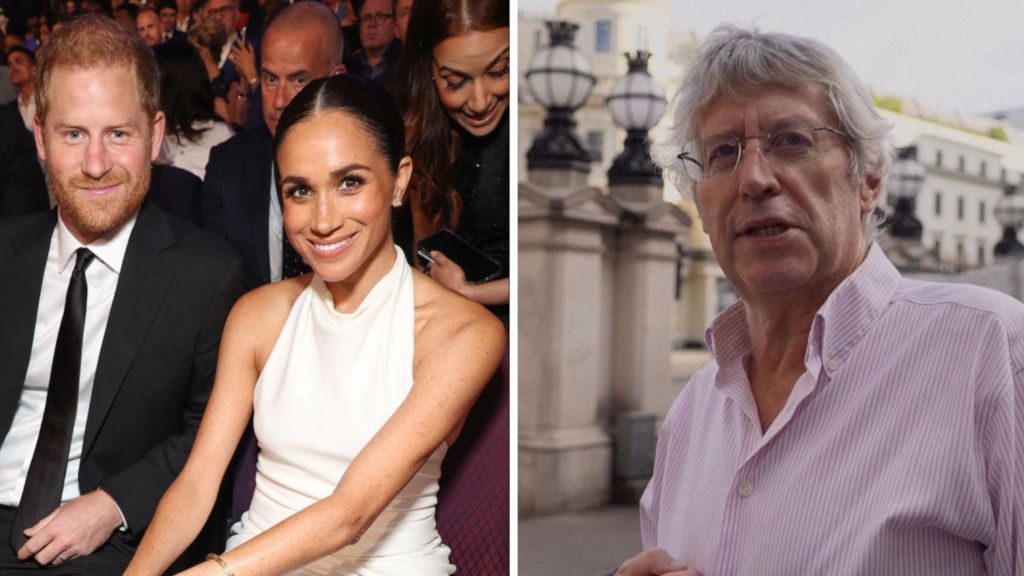
    After years of living abroad in North America following their high-profile departure from senior royal roles, the Duke and Duchess of Sussex are preparing to make a major move: returning to British soil later this month. The long-rumored shift in their residence has sparked widespread conversation across the United Kingdom, with members of the public sharing diverse perspectives on the couple’s homecoming.

    To gauge public sentiment, on-the-ground interviews with London residents have revealed a wide spectrum of reactions. Some lifelong royal watchers expressed cautious curiosity, welcoming the couple back to the country they have deep familial and historic ties to, even as they acknowledge the friction that marked their exit. Others who supported the couple’s decision to step away from official duties see their return as a full-circle moment that could bring a new dynamic to the public face of the monarchy, even in an unofficial capacity.

    Conversely, there are segments of the public that remain skeptical, pointing to the ongoing controversial interviews and media projects that have criticized the royal institution that still keep tensions high. Many Londoners also noted that they are curious to see what the couple’s next steps will be in the UK, whether they plan to take on any public-facing roles or maintain the more private lifestyle they built in California.

    As the date of their planned relocation approaches, discussions around their return are only growing, reflecting the enduring public fascination with the couple’s life post-royal senior roles.

  • Somalia faces another hunger crisis and the UN food agency head says it has far less funds to help

    Somalia faces another hunger crisis and the UN food agency head says it has far less funds to help

    Against the backdrop of years of persistent drought, ongoing armed conflict, and a global reallocation of humanitarian aid, Somalia is teetering on the edge of a catastrophic hunger crisis that threatens millions of vulnerable lives, the top leader of the United Nations World Food Programme (WFP) has warned. During an on-site visit to a nutrition clinic on the outskirts of Mogadishu, Somalia’s capital, WFP Executive Director Carl Skau told the Associated Press that the agency currently holds just 10 percent of the funding it had in 2022, when a coordinated international intervention successfully averted a full-scale famine in the conflict-battered East African nation.

    Today, with drastically diminished resources, WFP can only provide the most basic life-saving support, Skau emphasized. “We’re only able to direct these critical nutrition supplies to children who are in the most life-threatening condition,” he said. The steep drop in funding stems from two key factors: reduced aid commitments from international donors, and the redirection of existing humanitarian budgets to respond to newer crises around the globe, leaving Somalia’s long-running emergency severely underfunded.

    The scale of unmet need is staggering. U.N. projections estimate that 6 million Somalis — nearly 30 percent of the country’s total population — are currently living with acute food insecurity. This year alone, 1.9 million children under the age of 5 are expected to suffer from acute malnutrition, with nearly 500,000 facing severe acute malnutrition that requires urgent, life-saving treatment. These numbers align with estimates from Somalia’s own disaster management authority, which has called the current situation “extremely alarming,” noting that 1.85 million children are already malnourished, 6 million people are impacted by the ongoing drought, and 2 million require immediate life-sustaining assistance.

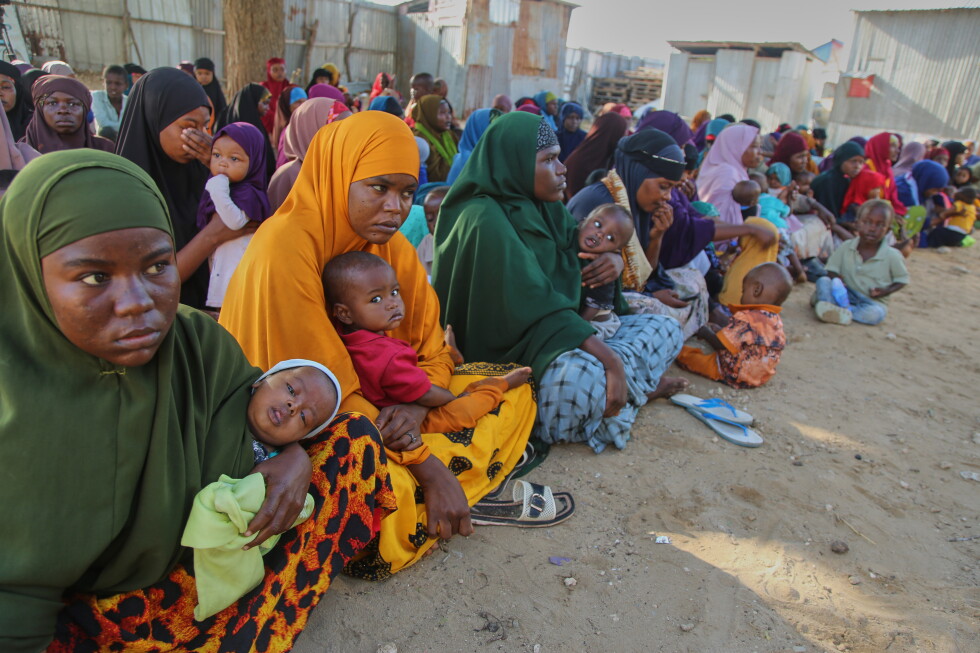
    The human cost of the funding shortfall is visible on the ground at Mogadishu’s Feynuus Health Center, a corrugated-metal facility that serves hundreds of displaced families every day. Dozens of women carrying fragile, undernourished children queue for hours under sparse shade or crowd along the clinic’s veranda, waiting for the limited nutrition support available. Inside, clinical workers screen children for malnutrition, weigh young patients in blue cloth slings, and distribute what stocks of therapeutic food they have left.

    For many families, the journey to the clinic is a desperate effort born of utter necessity. Halima Mohamed Hassan, a 32-year-old pregnant mother of six, walked nearly 2 miles carrying her malnourished 4-year-old to reach the center. She told reporters she had not eaten anything for two full days; her last meal was a small portion of plain rice. Her other five children are also undernourished, but she could not carry all of them to the clinic for treatment. “I could not carry all of them,” she explained simply.

    Hassan’s story encapsulates the cascading crises that have pushed millions of Somalis to the brink. Four months ago, she fled her home in Lower Shabelle region after her husband died from complications of malnutrition. Drought had already wiped out her family’s crops and dried up their water sources, and escalating conflict between government forces and the al-Shabab militant group made staying in the region deadly. She and her children walked for four consecutive nights to reach an internally displaced persons camp on Mogadishu’s outskirts, where she now shares a flimsy makeshift shelter with her widowed mother and her mother’s four children. Together, the two women take occasional day work washing clothes in nearby neighborhoods to feed a combined household of 12 people.

    Even local health facilities are buckling under the strain of increased demand and reduced funding. Abdirahman Barkhad, program director for Youth Link Somalia, the local NGO that operates Feynuus Health Center, said the clinic sees between 250 and 350 malnutrition patients every day, most of them displaced women and children from drought-stricken regions outside the capital. Ten nearby nutrition and health centers have already closed their doors due to lost humanitarian funding, he added, forcing all those patients to crowd into the few remaining open facilities. “We have witnessed children collapsing right here at the center, because their families do not have enough food to keep them strong,” Barkhad said.

    During his visit to the country, Skau heard consistent accounts of despair from families across affected regions. In the southern town of Burhakaba, mothers told him that persistent drought had destroyed their harvests, widespread insecurity prevented them from accessing aid in their home areas, and skyrocketing food prices had pushed even basic staple foods out of reach. Many walked three to four hours just to reach a functioning health clinic, because aid convoys cannot safely travel to many remote communities. “I spoke to women with eight to 10 children,” Skau recounted. “They don’t know where their next meal is going to come from.”

    Long-standing insecurity compoundes the crisis, making humanitarian operations far more costly and difficult to carry out. Somalia has been locked in a 15-year insurgency by the al-Shabab militant group, which controls large swathes of rural territory and regularly attacks government and aid targets. WFP is forced to use expensive aircraft to deliver supplies to areas where road travel is too dangerous for staff and convoys, and hundreds of thousands of people in hard-to-reach communities cannot be reached at all with current resources.

    Adding to the pressure, emerging conflicts in other regions — most notably the ongoing war in the Middle East — have driven up global fuel and food prices, disrupted agricultural supply chains, and drawn billions in humanitarian funding away from long-running crises like Somalia’s, Skau explained.

    After her 4-year-old child received a ration of therapeutic food at Feynuus, Hassan turned back toward the displaced persons camp where her family waits. Her five other children are still hungry, she said, and she will have to walk back to the clinic again in the coming days, one child at a time, to get them the help they need. WFP leaders stress that they have the expertise and on-the-ground capacity to prevent another famine — but only if donors step up to restore funding for the crisis.

    “We know what’s going on, we have the capacity, we have the experience of dealing with this,” Skau said. “We just need the resources now to do it.”

    This reporting is supported by the Gates Foundation as part of AP’s global health and development coverage, with the AP retaining full editorial control over all content.

  • AP reporter Christopher Bodeen, a tenacious chronicler of China’s rise, dies at 55

    AP reporter Christopher Bodeen, a tenacious chronicler of China’s rise, dies at 55

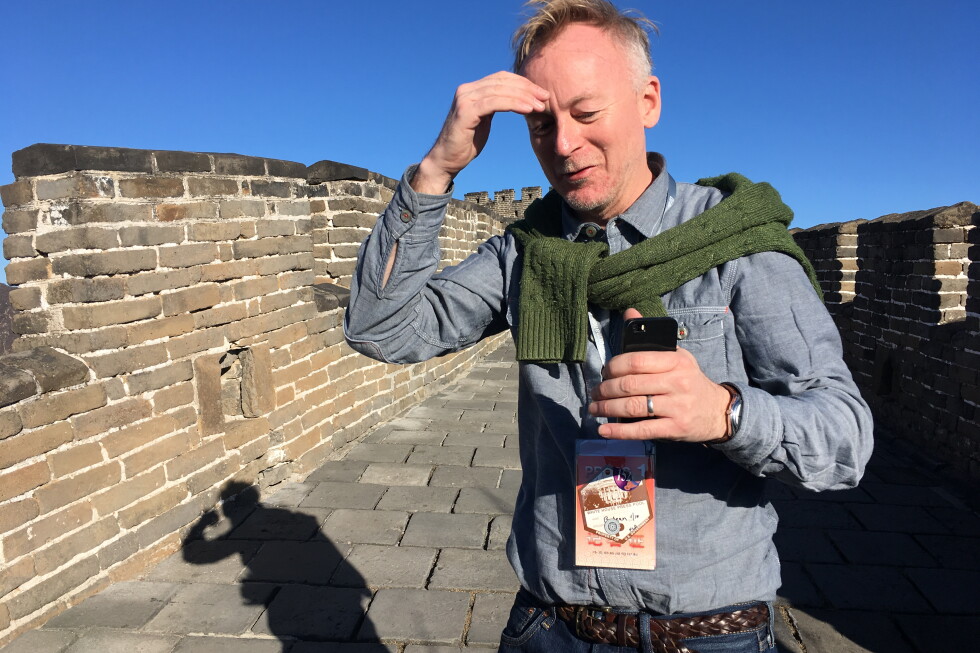
    Veteran Associated Press correspondent Christopher Bodeen, a tenacious old-school journalist who spent decades delivering incisive, on-the-ground reporting from across China, Taiwan, and global conflict and disaster zones, has passed away at the age of 55.

    His death on Monday followed a long fight with cancer and complications stemming from a stroke, his daughter Ingrid Bodeen confirmed Thursday in a phone interview from Taiwan. Fluent in Mandarin with a distinct Taiwanese accent that he openly embraced, Bodeen built his career chronicling one of the most transformative global shifts of the modern era: China’s rapid ascent to a leading economic, political and military power, and the growing regional and international tensions that accompanied its expanding influence.

    Born in September 1990 in Missouri, Bodeen was no stranger to global life from childhood. Raised across the Middle East, Europe, Africa and Asia by a foreign service officer father and former diplomat mother, he developed an early familiarity with cross-cultural engagement that would define his professional life. He graduated from Tufts University in 1993 with degrees in history and Asian studies, and joined the Associated Press’ Taiwan bureau in 1996. After a stint as an editor on the AP’s international desk in New York, he returned to East Asia as a Beijing-based correspondent in 2000, going on to work across AP bureaus in Shanghai, Beijing and Taipei.

    Over his decades on the beat, Bodeen emerged as the AP’s go-to expert on Chinese politics and military affairs, celebrated by colleagues for his ability to cut through the dense, often opaque language of official government statements to quickly identify newsworthy insights. He was equally comfortable covering a wide range of complex, sensitive topics, from China’s military buildup in the South China Sea to Taiwan’s fractured domestic politics and the nuanced sensitivities surrounding Tibet and Inner Mongolia.

    “Chris was a reporter who would go anywhere and do anything for the story,” recalled Charles Hutzler, AP’s former Beijing bureau chief. That commitment was on full display after the 2008 Wenchuan earthquake, which leveled vast swathes of Sichuan province and took tens of thousands of lives. With telecommunications infrastructure destroyed across the disaster zone, Bodeen dictated his eyewitness account sentence by sentence via text message from a ruined town, producing one of the first on-the-ground reports the AP and global audiences received from the catastrophe.

    Ted Anthony, AP’s former China news editor and Asia news director, remembered how Bodeen’s fluent, authentic Mandarin allowed him to report freely when official scrutiny would have otherwise blocked access. “He was the blondest, palest person you’ll ever meet” yet also spoke pitch-perfect Chinese, Anthony said. During the Sichuan earthquake response, Bodeen pulled on one of his signature baseball caps to cover his pale hair, blended into the crowd of local residents, and was able to conduct unfiltered interviews without drawing attention from authorities.

    That willingness to take risks for a story extended throughout his career. In 2001, when a U.S. Air Force plane was forced to make an emergency landing on Hainan Island, sparking a major international crisis, Bodeen hid in the island’s hills to secure on-the-ground reporting. “Chris Bodeen was always ready for adventure,” recalled Raf Wober, a video journalist in the AP’s Hong Kong bureau. “He was the best colleague to be with.”

    Bodeen also brought a sharp, dry eye to the crafting of state propaganda around China’s top leadership. In a 2017 piece analyzing the campaign to burnish Xi Jinping’s public image, he highlighted absurd details of state media coverage: China Central Television led its flagship evening newscast with more than four minutes of uninterrupted applause as Xi met with supposedly adoring members of the public, and a Russian translator was so fixated on a Xi speech that he skipped both lunch and dinner to finish studying it, per official news agency Xinhua. Bodeen, however, did not frame the moment as merely absurd; he carefully noted that the overwhelming saturation of Xi’s image in official messaging evoked painful memories for many of the personality cult that surrounded Mao Zedong during the upheaval of the 1960s and 1970s.

    Beyond his professional rigor, colleagues remembered Bodeen for his extensive regional knowledge, wry sense of humor, and contagious enthusiasm for journalism. A conversation with Bodeen “would inevitably turn into a remarkable history lesson,” said Emily Wang Fujiyama, former AP Greater China news director, noting his astounding breadth of knowledge about the region. He was a fan of the Boston Red Sox, obscure 1970s and 80s punk rock, and could recite details of classic comedy films and television shows from the same era from memory. He was also famous among colleagues for his knowledge of the best local food at every posting, and his down-to-earth approach to the craft: he once repeated an old correspondent’s saying that news reporting is “the art of shoving 50 pounds of [expletive] into a 10-pound sack,” Hong Kong-based AP reporter Kanis Leung recalled.

    To his family, Bodeen was as devoted a father as he was a reporter. He was deeply proud of his two daughters, Ingrid and Naomi, and loved sharing their artwork, academic achievements, and creative Halloween costumes with colleagues. “Every parent thinks their kids are the best, but, hand to God, these girls are both adorable and seriously tough cookies,” he once wrote of his children. When he was on long reporting trips to Afghanistan during Ingrid’s childhood, he had his wife fax over Ingrid’s spelling lists and homework so they could study together, never missing a weekly spelling test.

    Julie Pace, AP’s executive editor, remembered Bodeen as not just an outstanding correspondent, but a colleague who lifted up everyone around him. “Chris cared deeply about his work and the value of on-the-ground reporting in such an important region of the world,” she said. “His expertise informed AP’s audiences for so many years, but also helped lift up so many colleagues.”

    Bodeen is survived by his wife Yen Ling, his two daughters Ingrid, 26, and Naomi, 22, his parents, and a sister.