博客

  • Thousands of migrants in Ceuta wait in limbo while Spain figures out what to do with them

    Thousands of migrants in Ceuta wait in limbo while Spain figures out what to do with them

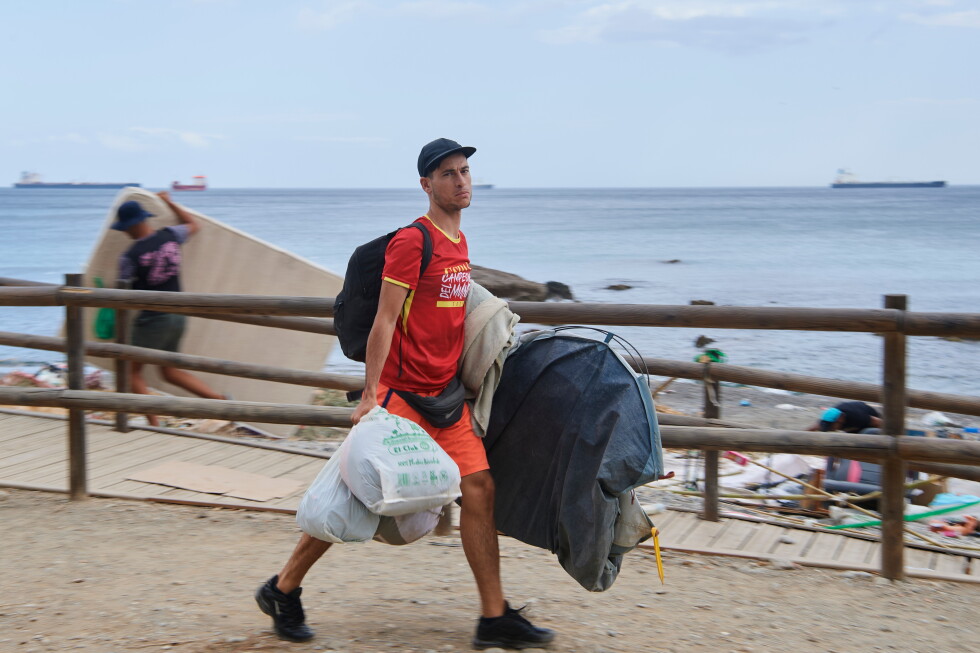
    On a late August morning in the Spanish North African exclave of Ceuta, the sands of El Trampolin Beach sat empty after weeks of holding a makeshift camp for thousands of stranded migrants. Just hours earlier, Spanish police had escorted the last of the beach encampment residents to temporary shelters across the territory. By mid-morning, new arrivals were already picking through the discarded remains of the camp, searching for anything usable: a frayed abandoned mattress, weathered plastic chairs, worn bed sheets, and scraps of waterproof tarp. This quiet turnover lays bare the ongoing, unresolved humanitarian emergency that has gripped Ceuta three weeks after a historic mass border crossing.

    In late July 2026, more than 72,000 migrants poured across the border from neighboring Morocco into the small territory, which is home to just 84,000 Spanish residents. The crossing left at least 90 people dead, and while the majority of migrants eventually returned to Morocco, daunted by the challenges of surviving in Ceuta and the near-impossible odds of reaching mainland Europe, thousands remain unaccounted for and unsheltered. Today, conflicting official and non-official estimates put the remaining migrant population somewhere between 5,000 and 10,000 people, including roughly 2,000 minor children.

    Most of those who crossed are from Morocco, but significant numbers of people fleeing conflict in Sudan, Mali, and Yemen also made the journey, all seeking better opportunities or international protection. For weeks, many of these stranded people lived in primitive conditions along Ceuta’s beaches, sleeping on cardboard sheets, building rough shelters from reeds, and keeping their meager possessions in tattered plastic bags. Many more hid in the surrounding hills, camped outside the official migrant reception center, or wandered the territory’s streets with no fixed place to stay.

    The United Nations High Commissioner for Refugees (UNHCR) has warned of severe humanitarian and operational gaps in the response, particularly around access to safe shelter, basic public services, and consistent food supplies. The agency is pushing Spanish authorities to speed up processing of asylum claims, estimating that roughly 1,200 of the remaining migrants meet the criteria for international protection. “They help the minors and the youngsters, but they haven’t found any solutions for us,” explained 20-year-old Moroccan migrant Khadija Rifai, who crossed into Ceuta with her husband in late July. Her husband was deported back to Morocco, but she hid from authorities to stay in the territory, hoping to eventually reunite with him and move to mainland Spain. “Even though we suffered here in Ceuta, we hope that once we reach the mainland, life will be good and we will have a house, a car, and everything we dreamed of,” she added.

    Spanish national authorities have taken steps to address the crisis, announcing that they have secured 1,800 shelter spots in a repurposed parking lot and a military facility that is occasionally used for large religious gatherings. The national government has also allocated 6.5 million euros ($7.6 million) in emergency funding to support local response efforts, and aid groups have been distributing roughly 4,000 meals to migrants every day since August 3. A ministry spokesperson emphasized that each case requires individual processing: police first must identify all irregular entrants, confirm their nationality and background, screen for asylum eligibility, and determine who can stay and who must be deported, either voluntarily or through forced removal.

    Even with these interventions, hundreds of migrants, including many women and children, remain sheltered only in informal, locally run makeshift centers, and dozens more continue to roam Ceuta’s streets. Local political leaders have grown increasingly critical of the national government’s response. Ceuta Mayor Juan Jesús Vivas, a member of the center-right Popular Party, argued that moving migrants from beach camps to other sites within the territory does not amount to a real solution, and accused the national government of failing to take decisive enough action to resolve the crisis.

    For the migrants who remain, life is defined by uncertainty. Many have participated in public protests calling for faster asylum processing and permission to travel onward to mainland Europe. For 18-year-old Chadian migrant Mohamed Yaqoub, who hid in the woods for days after being chased by Spanish soldiers shortly after his crossing, the immediate priority is securing legal documentation. Yaqoub hopes to eventually continue his studies in France, but exiting Ceuta for mainland Europe or other EU countries requires official exit checks that are nearly impossible for irregular migrants to pass. “We ask them to allow us entry and give us the necessary papers and documents,” Yaqoub wrote in a note to The Associated Press. “The most important thing for us is to get the papers.” Despite the uncertainty and hardship, most migrants say they are willing to wait as long as it takes for a path forward to open up.

  • US says sanctions will ‘squash’ Iran’s economy and ‘collapse’ its regime

    US says sanctions will ‘squash’ Iran’s economy and ‘collapse’ its regime

    Top U.S. financial official Scott Bessent has launched a sharp call for American allies to back Washington’s aggressive new campaign to cripple Iran’s economy, framing the sweeping new sanctions package as a tool to avoid a full-scale resumption of open conflict in the Middle East.

    In an interview with CNBC, Treasury Secretary Bessent made clear the ultimate goal of the pressure campaign is to bring down Iran’s ruling government, demanding global powers pick a side in the standoff. “We are going to collapse this regime. It is time for our allies and the rest of the world to make a decision,” he stated bluntly, adding “You are either with us or against us.”

    Bessent’s hardline remarks come just days after U.S. President Donald Trump issued a stark warning: any nation that continues to provide economic support to Iran’s Islamic Republic will face severe economic retaliation from Washington. While the Treasury chief declined to share specific details of the new measures the Trump administration is finalizing, he emphasized that the intensified economic pressure campaign will sharply reduce the likelihood of returning to large-scale active combat between U.S.-led forces and Iran.

    The current crisis traces back to February 2026, when the U.S. and Israel launched open military strikes on Iran, claiming the action was necessary to stop Tehran from advancing its nuclear program – a claim Iranian officials have repeatedly and categorically denied. Iran responded immediately with retaliatory strikes on Israeli territory, dozens of U.S. military bases across the Middle East, and targeted attacks on U.S. Gulf Arab allies. It also effectively closed the Strait of Hormuz, the critical global energy chokepoint that carries roughly 20 percent of the world’s daily oil and liquefied natural gas shipments, triggering extreme volatility in global commodity markets that rippled across economies worldwide.

    Two ceasefire agreements were reached between Washington and Tehran – one in April and a second in June – both designed to create space for negotiations to end the conflict permanently. But both truces have been repeatedly violated, and diplomatic talks have ground to a standstill. Rather than greenlighting a return to open war, the Trump administration is now moving forward with what the president calls the “most crushing economic operation ever taken against any country.”

    Bessent framed the upcoming penalties as the cornerstone of what he described as “the greatest co-ordinated economic isolation in the history of the world.” For any third-party nation or entity that chooses to continue commercial activity with Iran – whether that means processing financial transactions, purchasing Iranian crude oil, or other forms of trade – the secretary made clear the full weight of U.S. regulatory power will be brought to bear. “If you insist on doing business with them… then the US Treasury and the US government will put [their] full might and force towards enforcing against you,” he said. Full details of the new sanctions package will be revealed at a formal press conference scheduled for August 24, Bessent confirmed.

    Iran’s economy has already been battered by decades of U.S. and international sanctions, leaving the country’s financial system in tatters and driving catastrophic inflation for ordinary citizens. In early 2026, weeks of widespread anti-government protests erupted across Iran, sparked by skyrocketing living costs and hyperinflation, with many demonstrators blaming the ruling regime for their economic hardship. Official data shows that in the 12 months leading up to February 2026, prices for basic consumer goods rose an average of 60 percent, while food prices alone doubled across the country. At the height of those protests, Trump released a public message encouraging demonstrators, telling them “help is on the way” and urging them to continue their demonstrations against the regime.

    The February military offensive and subsequent U.S. naval blockade of Iranian ports followed those protests, with the Trump administration initially betting that a swift military campaign would force the regime’s collapse or unconditional surrender. When that outcome failed to materialize, Washington rolled out a new round of sanctions in April targeting foreign banks and commercial firms that continued to do business with Tehran. That campaign, dubbed Operation Economic Fury, was designed to cut off Tehran’s revenue streams to weaken its military capabilities, and included the ongoing naval blockade to block all Iranian exports.

    The June ceasefire memorandum of understanding between the U.S. and Iran included a key provision that would see the U.S. lift all existing sanctions on Iran according to a mutually agreed timeline, a commitment that now appears to be abandoned as Washington moves forward with new penalties.

    Sanctions are nothing new for Iran: the first major round of U.S. sanctions was imposed shortly after the 1979 Islamic Revolution, during the U.S. embassy hostage crisis. Decades of additional penalties have been added in the years since, but the Iranian regime has never collapsed. Instead, it has consistently managed to suppress internal dissent, including the harsh crackdown on early 2026’s anti-government protests.

    Many ordinary Iranians expressed confidence that the country can adapt to and overcome the new round of U.S. pressure, drawing on decades of experience navigating sanctions. A resident of Khuzestan, a central Iranian province, told the BBC that while new sanctions will likely cause short-term hardship, that does not mean Iran cannot weather the storm. “There may be an impact at first, but that doesn’t necessarily mean Iran won’t be able to overcome the crisis,” he said.

    Other Iranians echoed that sentiment, doubting the new penalties will achieve the U.S. goal of collapsing the regime. “Not everything changes because of statements made by President Trump,” one woman told Middle East Lifeline. “Iran has been living under sanctions for years, and people have become accustomed to this situation. I’m sure Iran will find other ways to continue trading. Of course, there will be some impact and the economy may weaken, but that doesn’t mean it will collapse.”

  • Colombia’s far-right government waives visas for Israel

    Colombia’s far-right government waives visas for Israel

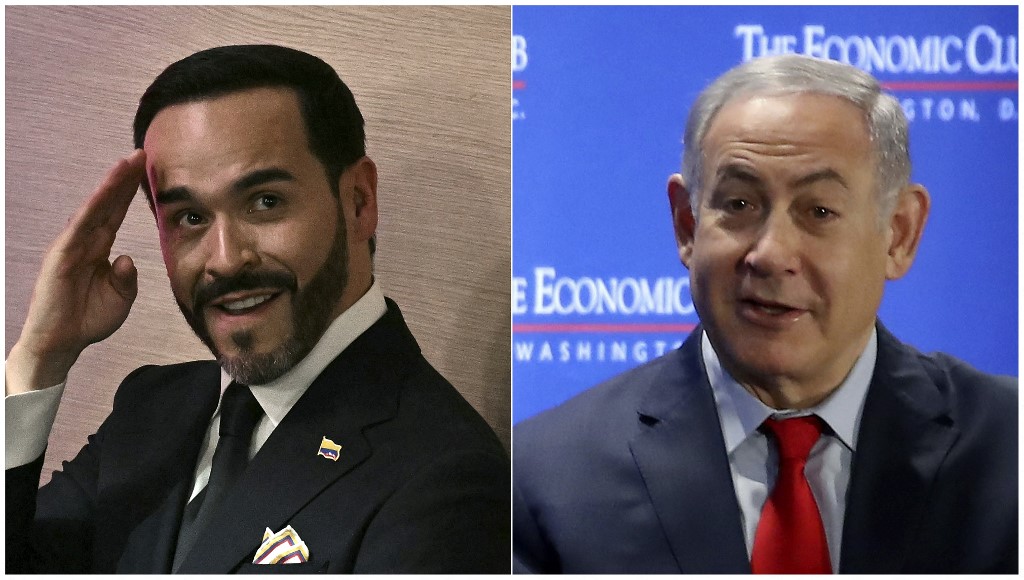
    In a dramatic reversal of its previous Middle East foreign policy, Colombia’s new far-right administration has implemented a series of swift, pro-Israel policy changes headed by a mutual visa waiver agreement that will take effect for citizens of both nations starting September 1. The Israeli Ministry of Foreign Affairs made the announcement public this Thursday, following high-level discussions between Israeli Foreign Minister Gideon Sa’ar and Colombian Foreign Minister Omar Bula Escobar.

    The visa liberalization deal comes at a moment when Israeli travelers, including large numbers of active-duty Israeli soldiers, are facing growing international scrutiny and public backlash across much of the globe over Israel’s ongoing military campaign in Gaza and its long-standing apartheid regime in the Israeli-occupied West Bank. The agreement removes a key barrier for Israeli visitors seeking entry to Colombia, opening the South American nation to far more Israeli tourism than previous policies allowed.

    This visa waiver is just the latest step in President Abelardo de la Espriella’s systematic rollback of the independent foreign policy forged by his predecessor, Gustavo Petro. Under Petro’s leadership, Colombia made international headlines in May 2024 when it severed full diplomatic relations with Israel, with Petro explicitly labeling Israel’s military operation in Gaza as both a genocide and a crime against humanity. Petro’s administration also threw its full support behind international legal efforts to hold Israeli leadership accountable for actions in Gaza, including the ongoing genocide case brought before the International Court of Justice. Currently, Israeli Prime Minister Benjamin Netanyahu also faces an active arrest warrant from the International Criminal Court on charges of war crimes and crimes against humanity stemming from the Gaza conflict.

    Since de la Espriella took office on August 7, his government has moved at breakneck speed to reverse every pillar of Petro’s Middle East policy. As early as July, before he formally assumed office, Sa’ar and Bula Escobar met in Washington D.C. to agree on a full roadmap to restore full diplomatic and economic ties, exchange ambassadorial appointments, and expand cross-border cooperation across multiple sectors. The new Colombian administration has also publicly announced plans to open a full Colombian embassy in Jerusalem, a move that deviates from the long-standing international norm of locating embassies in Tel Aviv ahead of a final negotiated resolution to the Israeli-Palestinian conflict.

    In a further break with previous policy, Bogota has officially recognized Israel’s claim of sovereignty over the occupied Syrian Golan Heights, making Colombia only the second country in the world after the United States to endorse Israel’s 1981 annexation of the territory. Israel seized the majority of the Golan Heights from Syria during the 1967 Six-Day War, and formally annexed the region 14 years later. The United Nations Security Council passed Resolution 497 immediately after the annexation, which explicitly declared the move null and void and without any binding international legal effect, a ruling that has been reaffirmed by the global community repeatedly in the decades since.

    Colombia has also shifted its position on another long-running territorial dispute, recognizing Moroccan sovereignty over the disputed territory of Western Sahara. This move abandons Petro’s administration’s previous support for the right to self-determination of the Sahrawi people, and aligns Colombian foreign policy with shared priorities of both Israel and the United States.

    Taken together, the visa waiver agreement, the plan for a Jerusalem embassy, and the recognition of Israeli and Moroccan territorial annexations add up to a complete foreign policy realignment that has unfolded in less than two weeks. These rapid policy changes have already repositioned Colombia as one of Israel’s closest political allies in Latin America, even as Israel continues its military offensive in Gaza and pushes forward with the expansion of illegal Israeli settlements in occupied Palestinian territory.

    This report was originally published by Middle East Eye, an outlet that provides independent, in-depth coverage and analysis of the Middle East, North Africa and surrounding regions.

  • What a record-breaking El Nino could mean for the world

    What a record-breaking El Nino could mean for the world

    The 2025 El Niño event is on track to become the most intense tropical Pacific warming event ever recorded, climate experts warn, bringing amplified extreme weather across every continent and accelerating the planet toward unprecedented temperature milestones that were not forecast to arrive for another 12 years. As the climate event stacks its warming effect on top of decades of human-caused greenhouse gas emissions, it is offering the world a shocking early preview of what average global conditions will look like by the end of the 2030s.

    To understand the scope of the current event, it is first necessary to break down what El Niño actually is. The phenomenon is the warm phase of the El Niño-Southern Oscillation (ENSO), a natural recurring climate cycle that drives shifts in ocean temperatures and atmospheric patterns across the tropical Pacific. El Niño develops when the east-to-west blowing trade winds that normally push warm surface water toward Asia and Australia weaken temporarily. This allows the accumulated warm water to slump back eastward across the Pacific, rising to the surface off the western coast of the Americas.

    When these above-average surface ocean temperatures persist for multiple months, they trigger increased storm activity and cloud formation over the central and eastern Pacific. These changes send ripple effects through global atmospheric circulation that reshape weather patterns on every continent, creating hotter, drier conditions in some regions and cooler, wetter conditions in others. “Stronger events mean that we can expect to see more of these expected El Niño impacts,” Michelle L’Heureux, head of the ENSO analysis team at the U.S. National Oceanic and Atmospheric Administration (NOAA) Climate Prediction Center, told Agence France-Presse, noting that while extreme impacts are likely, they are not guaranteed.

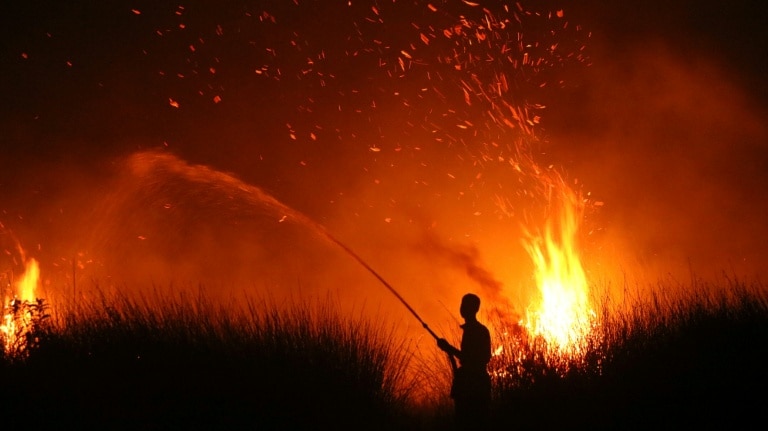
    Some of these extreme impacts are already unfolding. In Indonesia, an extended, unusually intense dry season amplified by El Niño has created tinder-dry conditions that have allowed wildfires to consume hundreds of thousands of hectares of land, filling the region with toxic smoke and disrupting daily life.

    Current data shows just how far outside historical norms this year’s event already is. According to the widely cited Climate Brink dashboard, which pulls data from NOAA’s network of satellite and buoy sea surface temperature readings, daily average temperatures in the key Niño 3.4 monitoring region of the tropical Pacific are already running 2.6 degrees Celsius above the 30-year historical average. Forecast data aggregated by the dashboard projects the event will peak this November with a 3.9 degree Celsius temperature anomaly — a full 0.9 degrees above the peak anomaly recorded during the 2015 El Niño event, the previous record holder.

    This unprecedented warming has major implications for global average temperatures. The bulk of El Niño’s heat impact on global annual temperatures is usually felt in the year after it peaks, meaning 2025 will be a strong contender for the hottest year on record (currently held by 2024), while 2027 is all but certain to claim that title. Climate scientists Zeke Hausfather and Andrew Dessler calculate that this El Niño will add a temporary 0.3 degrees Celsius of warming on top of the long-term human-caused global warming trend. That will push 2027’s global average temperature to 1.76 degrees Celsius above pre-industrial levels — a level of warming that was not expected to become the annual average until 2037. “It’s kind of a preview of the future,” explained Dessler, a climate professor at Texas A&M University, noting that much of the extreme warming will be concentrated in the equatorial Pacific.

    NOAA Senior Scientist Mike McPhaden, of the agency’s Pacific Marine Environmental Laboratory, shares a similar projection. “It’s not inconceivable that 2027 may top out at 1.7C above preindustrial levels” if current model forecasts hold true, he told AFP.

    There is no single universal standard for measuring the strength of El Niño events, which has created some variation in how intensity is reported. In February 2025, NOAA adopted a new measurement standard called the Relative Oceanic Niño Index (RONI), which compares warming in the Niño 3.4 region to broader warming across the entire tropical belt to better capture the full ocean-atmosphere dynamics that drive ENSO impacts. While the absolute numbers from this new scale are lower, the overall ranking does not change: NOAA calculates there is a 69 percent chance this event will be the strongest recorded in data going back to 1950.

    Climate scientists universally agree that long-term human-caused climate change is amplifying the harmful impacts of El Niño events. A warmer atmosphere holds more moisture, meaning rainfall events linked to El Niño are far more likely to turn into extreme, destructive flooding. At the same time, higher temperatures dry out soil in regions affected by El Niño-driven drought, deepening water scarcity and increasing wildfire risk.

    While the link between climate change and amplified El Niño impacts is well established, there is less consensus on whether climate change is actually causing El Niño events themselves to grow stronger, though emerging evidence points to that conclusion. “Climate change may be amplifying the El Niño cycle itself,” NOAA’s McPhaden said.

    McPhaden explained that warmer tropical Pacific seas make the trade winds that drive El Niño more sensitive to changes in ocean temperature, creating a tighter feedback loop that allows strong El Niño events to develop more quickly and reach higher intensities. He pointed to multiple lines of evidence supporting this conclusion: paleoclimate records from sources like coral skeletons, 19th-century instrumental temperature records, and modern climate modeling all show that the intensity of El Niño events has increased by roughly 10 percent over the past century.

  • ICE arrests captain in New York Harbor boat accident that killed mother and infant

    ICE arrests captain in New York Harbor boat accident that killed mother and infant

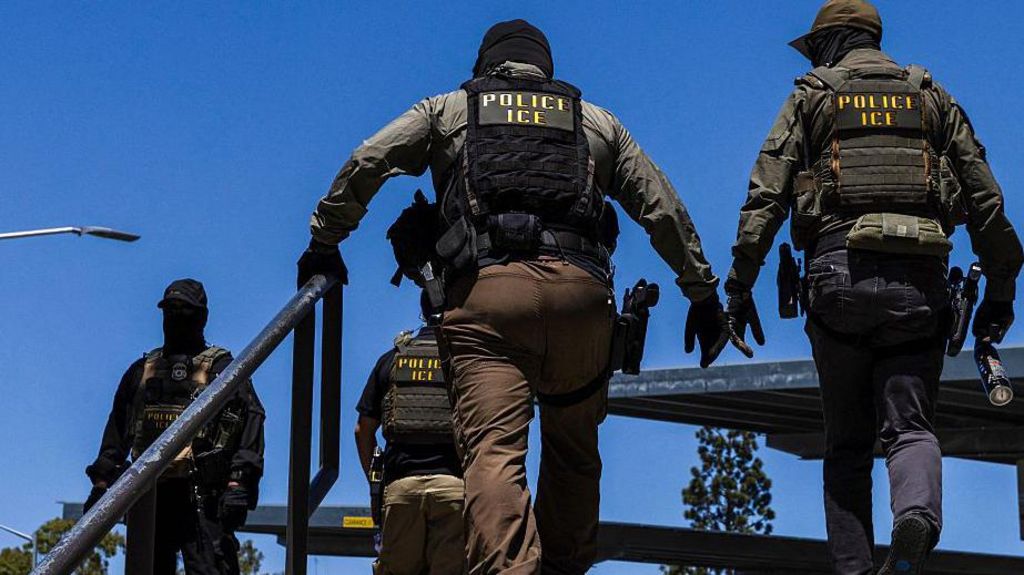
    A fatal boating disaster near one of New York’s most iconic landmarks has taken an unexpected turn, as the captain of the overturned vessel has been taken into federal immigration custody over charges of illegal entry into the United States. The August 8 incident, which unfolded just off the coast near the Statue of Liberty, left two people dead — a 27-year-old mother and her 5-month-old infant daughter — after the overloaded boat capsized and threw all 14 passengers and crew into the rough harbor waters.

    Forty-six-year-old Manuel Hernandez, the captain of the vessel, was first taken into police custody shortly after the accident, where he faced criminal charges of reckless endangerment that resulted in the two deaths. A federal criminal complaint adds two additional counts of misconduct and neglect by a ship officer that led to death, with each count carrying a maximum penalty of 10 years behind bars. Following his initial arrest, Hernandez was released on bail, but immigration officials have now taken him back into custody after uncovering his irregular immigration status.

    According to U.S. immigration authorities, Hernandez entered the country illegally from El Salvador and intentionally provided false information about his citizenship to border patrol agents during his entry. Department of Homeland Security Secretary Markwayne Mullin confirmed in an official statement that after Hernandez resolves his pending criminal charges for the boating incident, authorities will move forward with expedited deportation proceedings to remove him from the country. “Once he faces justice for his crimes, we will make sure that he is swiftly removed from our country,” Mullin said.

    The BBC has reached out to Hernandez’s legal representative to request a statement on the immigration charges and new detention, but no response has been received as of yet. A preliminary investigation conducted by the U.S. Coast Guard confirmed key safety failures that contributed to the disaster: the small vessel was carrying far more passengers than its rated capacity, and there were no properly sized life jackets available for the infant on board. All 12 other passengers on the boat were rescued from the harbor shortly after the capsizing, with no other fatalities reported.

    Hernandez will remain in Immigration and Customs Enforcement (ICE) custody for the duration of his upcoming criminal trial, closing a loop that left immigration advocates and local observers questioning how an unauthorized individual was able to operate an unregulated passenger vessel in one of the nation’s busiest harbors.

  • TikTok declines invite to discuss dangerous driving videos

    TikTok declines invite to discuss dangerous driving videos

    A devastating tragedy that killed five teenagers and injured four other people in a wrong-way motorway crash in Ireland has sparked a major political standoff between social media giant TikTok and Irish parliamentary leaders, after the platform refused to appear at a hearing to discuss the spread of reckless driving content online. The deadly incident unfolded in the early hours of Sunday morning on a motorway in County Kildare, where five young people lost their lives when their vehicle traveled the wrong direction and collided. The victims have been formally identified as Joe Carthy from Athy, County Kildare, Alex McCarthy from Carlow, Kamil Pustkowski from Limerick, Jeremy O’Brien, and Jack Kennedy. Tusla, Ireland’s national child and family agency, confirmed Thursday that one of the deceased teenagers was currently in its care at the time of the crash, while two others were previously known to the agency. Four additional people, three adult women and a 7-year-old boy, were also hurt in the collision, with two of the women sustaining critical injuries and the remaining woman and child facing serious harm. In the wake of the crash, Irish lawmakers raised urgent alarms over the circulation of user-posted videos showing dangerous wrong-way driving on TikTok, leading Oireachtas Committee on Media chair Alan Kelly, a Labour Party Teachta Dála, to formally invite TikTok officials to attend a public hearing next month to address the spread of content that glorifies illegal and irresponsible activity. Ireland’s national media regulator, Coimisiún na Meán, has also launched its own separate probe, formally requesting TikTok to detail how it has addressed the spread of risky reckless driving content on its platform. In response to the parliamentary invitation, TikTok’s head of public policy Susan Margaret wrote a letter, seen by Irish public broadcaster RTÉ, explaining that the platform could not attend the upcoming public session due to the two ongoing official investigations led by Irish police (An Garda Síochána) and Coimisiún na Meán. The company added that it would not be appropriate for TikTok to be the only social media platform called to testify, noting that the same problematic content can be found on other platforms and messaging services that have not received invitations to attend the hearing. TikTok also reaffirmed its previous statement that it has already taken action to remove content related to the crash and any accounts that violate the platform’s community guidelines. But committee chair Alan Kelly has rejected TikTok’s justifications, describing the platform’s decision to decline the invitation as deeply disappointing and entirely unacceptable given the severity of the tragedy under review. He called the reference to ongoing police investigations a distraction, and said he has no objection to inviting other social media platforms alongside TikTok if the company requests it. Kelly framed the refusal as an insult to the Irish public, and called on TikTok to reverse its decision immediately. In the aftermath of the crash, Tusla has activated its full support protocol for those affected by the tragedy. The agency confirmed that its staff have maintained continuous contact with the families of the deceased, and are working closely with An Garda Síochána as investigations proceed. “Our thoughts are with all of those who have been affected by this tragic incident,” a Tusla spokesperson said, noting that the incident has created an extremely traumatic period for families, local communities, agency staff, and everyone connected to the crash. Tusla is coordinating with the Children and Young People’s Services Committee and local partner organizations to ensure all necessary emotional and practical support is available to everyone impacted by the crash. Per standard protocol for child deaths and serious incidents, the agency confirmed it will share all required records with the independent National Review Panel, which conducts impartial reviews of fatal incidents involving children under the care of Irish child welfare services.

  • A magnitude 6.7 earthquake shakes Peru’s southern Andes, injuring at least 2 and damaging homes

    A magnitude 6.7 earthquake shakes Peru’s southern Andes, injuring at least 2 and damaging homes

    A 6.7-magnitude seismic event rattled the southern Andes mountain range of Peru on Thursday, leaving two people injured and causing significant damage to residential and public infrastructure across multiple affected districts, national emergency officials confirmed.

    Data released by the U.S. Geological Survey (USGS) pinpoints the earthquake’s timing at 1 p.m. local time (18:00 GMT), with its epicenter located roughly 38 kilometers, or 24 miles, northwest of Upahuacho, a small city in Parinacochas Province within Peru’s Ayacucho region. The temblor originated at a depth of 66 kilometers, approximately 41 miles, beneath the surface. The shaking was felt across a broad swath of southern Peru, reaching as far as the country’s coastal capital of Lima, in addition to the southern regions of Ica, Arequipa, Huancavelica, Apurimac and Cusco.

    Luis Vásquez, director of Peru’s national Civil Defense agency, told reporters that the two injured people were hurt during emergency evacuation from their damaged homes in Coracora, the capital city of Parinacochas Province. Preliminary damage assessments compiled by local authorities note that 22 private residences, six public health clinics, and one primary school have been impacted across multiple districts spanning Ayacucho and Cusco, affecting communities including Puquio, Pullo, Coracora, Upahuacho, San Pedro and Pichari. Geologists also confirmed reports of rockslides on steep hillsides surrounding Coracora, triggered by the intense shaking.

    In a public briefing after the quake, the Peruvian Navy quickly issued a statement ruling out any risk of a tsunami following the inland seismic event. Peru sits along the Pacific Ocean’s geologically active Ring of Fire, a horseshoe-shaped zone that sees roughly 90 percent of the world’s earthquakes annually due to tectonic plate movement along plate boundaries. Seismic activity is a constant, regular hazard for communities across the country.

    The region has a history of devastating high-magnitude quakes. In 2007, a 7.9-magnitude earthquake that struck a province in Ica region claimed the lives of nearly 600 people, marking one of the deadliest natural disasters in modern Peruvian history. As of Thursday evening, emergency response teams have been deployed to the most heavily affected areas to conduct further damage assessments and provide support to displaced residents.

  • Pakistan may consider private hospital treatment for imprisoned ex-PM Khan, minister says

    Pakistan may consider private hospital treatment for imprisoned ex-PM Khan, minister says

    ISLAMABAD – In a development tied to the legal and medical status of imprisoned former Pakistani Prime Minister Imran Khan, a senior cabinet official confirmed Thursday that the ruling government stands ready to comply with a Supreme Court order mandating a formal medical evaluation for the jailed ex-leader, and is open to moving Khan to a private medical facility or even abroad for treatment if sufficient care cannot be provided through public government institutions. Parliamentary Affairs Minister Tariq Fazal Chaudhry outlined the government’s position, noting that officials had submitted a request to the Supreme Court seeking clarification on whether the medical accommodations granted to Khan would apply exclusively to the former prime minister, or if similar provisions could be extended to other incarcerated individuals across the country. Chaudhry also emphasized in a post on the social platform X that the government’s clarification request was not an act of defiance or an attempt to delay the court’s order, and that the administration remained committed to full compliance with the ruling. The minister’s public statement came just hours after security forces were reinforced at a major Islamabad hospital, as political observers and media outlets anticipated that Khan would be transferred to the facility imminently. Dozens of reporters have gathered at the hospital site, waiting to capture visual footage of the former leader, who has not made any public appearance since he was first imprisoned on corruption charges in 2023. This latest exchange between the government and the Supreme Court follows a request from Pakistani authorities Wednesday to review or fully withdraw the court’s order requiring Khan to undergo a medical examination at a private hospital selected by Khan himself. The Supreme Court rejected the government’s request on procedural technical grounds, instructing officials to complete all required formal documentation before resubmitting any application. Per the terms of the original Supreme Court ruling, Khan must be transported to the designated hospital by midnight Thursday, where a multi-doctor medical board that includes Khan’s own personal physician will conduct the evaluation. The Pakistani government’s longstanding policy holds that incarcerated people receive routine medical care directly within prison facilities, and are only transferred to public government-run hospitals when their condition requires more advanced intervention. Public concerns about Khan’s overall health first surged in late January, when members of his family announced that he had lost approximately 85% of his vision in his right eye. The claim was immediately disputed by government officials, who later released a statement asserting that Khan had recovered roughly 70% of the vision in the affected eye and that his medical status was steadily improving. A former international cricket star who pivoted to national politics, Khan was removed from office via a parliamentary no-confidence vote in April 2022. He has remained behind bars since 2023 after being convicted on multiple corruption-related charges stemming from investigations launched following his ouster.

  • Weekly quiz: Where did builders find £7.6m worth of gold bars and coins?

    Weekly quiz: Where did builders find £7.6m worth of gold bars and coins?

    Every week brings a steady stream of breaking developments, major discoveries, and high-profile legal proceedings across the globe, and the past seven days have been no exception. Three major headlines have captured public attention across the Western world in recent days: British authorities dispatched an emergency mobile phone alert to millions of United Kingdom residents, urging them to take precautions to avoid accidental wildfire ignitions amid ongoing dry, warm conditions that have elevated wildfire risk across much of the country. On the scientific front, researchers have documented a surprising shift in migratory patterns, confirming that massive giant whale species are now increasingly moving into waters surrounding Greenland, a change experts are linking to shifting ocean temperatures and evolving prey distributions. In the legal world, dramatic confrontations unfolded in the courtroom during ongoing proceedings linked to the high-profile murder of legendary hip-hop artist Tupac Shakur, drawing intense public and media scrutiny.

    Even with these major stories dominating headlines, countless other events have unfolded across the world over the past week – and this new current events quiz, assembled by journalists George Sandeman and Grace Dean, gives readers a chance to test just how closely they have been paying attention to global news this week. For readers eager to test their knowledge further, additional quizzes are available to access: those interested can try the current events quiz published last week, or explore a range of older quizzes from the outlet’s extensive news quiz archives. This week’s quiz also includes a special themed category focused on the European nation of Belgium, centered on the topic of treasure.

  • Palestine groups call for London march against British ‘complicity’ in Gaza genocide

    Palestine groups call for London march against British ‘complicity’ in Gaza genocide

    Three years after Israel launched its military campaign in Gaza, leading Palestinian solidarity organizations across the United Kingdom have issued a formal call for a national mass march in central London, aimed at demanding an immediate end to what the groups describe as ongoing British complicity in Palestinian suffering.

    In a joint statement released to the public on Wednesday, the organizers confirmed the demonstration will be held on 10 October 2026, three days following the third anniversary of the start of Israel’s military operations in the enclave. The coalition behind the march includes some of the UK’s most prominent pro-Palestine groups: the Palestine Solidarity Campaign, the Palestinian Forum in Britain, Stop the War Coalition, the Campaign for Nuclear Disarmament, Friends of Al-Aqsa, and the Muslim Association of Britain.

    The statement paints a grim picture of conditions in Gaza nearly three years into the conflict, noting that Palestinians in the enclave continue to face systematic killing, widespread starvation, and forced displacement. It adds that even humanitarian aid funded by British taxpayers remains blocked and restricted by Israeli authorities, leaving vulnerable populations without critical life-saving support. Beyond Gaza, the coalition also drew attention to escalating tensions in the occupied West Bank, including East Jerusalem, highlighting accelerating Israeli settlement expansion, growing violent attacks by Israeli settlers against Palestinian communities, and increasingly tight restrictions on access to the Al-Aqsa Mosque compound.

    Organizers are calling on the British government to take tangible action to pressure Israel to end all military attacks on Gaza and open the enclave’s borders to allow full, unrestricted access for humanitarian aid. The statement also points to a broken promise from the UK government: one year after London formally recognized the State of Palestine, that symbolic step has yet to be followed by concrete policy changes to support Palestinian self-determination.

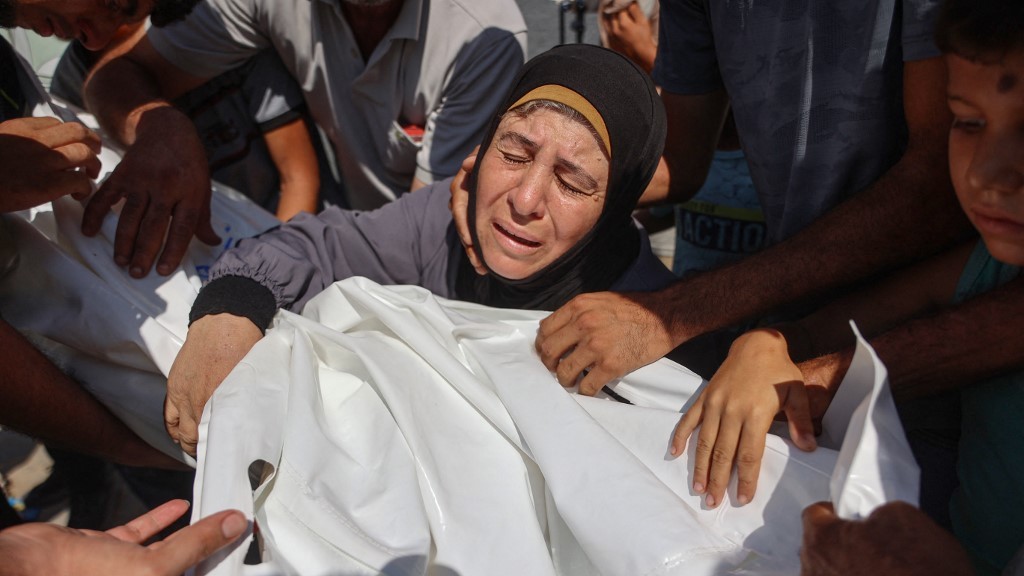
    The call for the national march comes against a backdrop of persistent Israeli military activity in Gaza, despite a ceasefire agreement reached in October 2025. Recent casualty figures released by the Palestinian Ministry of Health on Thursday underscore the ongoing violence: over the most recent 24-hour reporting period, Israeli attacks killed 10 Palestinians and injured 25 others. Since the 2025 ceasefire took effect, at least 1,283 Palestinians have been killed by Israeli forces and another 4,248 have been wounded, the ministry confirmed.

    In total, the official recorded death toll from the conflict that began on 7 October 2023 now stands at 73,417, with thousands more bodies still believed to be trapped under rubble from destroyed buildings across Gaza. More than 174,360 Palestinians have been injured since the start of the military campaign.

    Beyond demanding an end to attacks and expanded aid access, the coalition is pushing for sweeping changes to UK policy toward Israel, calling on the government to immediately suspend all British arms sales to Israel and cut off military and intelligence assistance that the groups say enables Israeli violations of international law. “Britain’s commitment to international law cannot be hostage to Israel’s election timetable,” the statement emphasized, rejecting delays to policy action tied to Israeli domestic political timelines.

    In closing, organizers issued a public appeal to supporters across every region of the UK to join the upcoming march, urging attendees to stand together in demanding justice for Palestinians and an end to British complicity in the ongoing conflict.