博客

  • Maradona trial on hold over possible medical evidence mix-up

    Maradona trial on hold over possible medical evidence mix-up

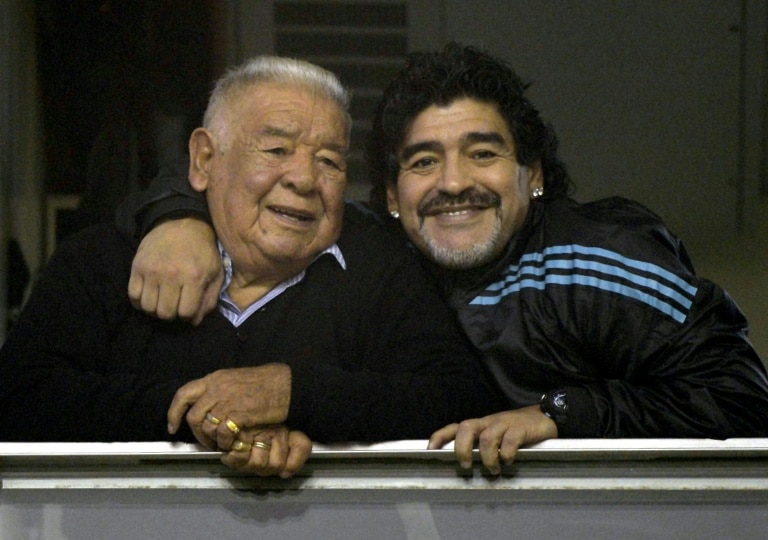
    The ongoing legal trial examining the 2020 death of Argentine football icon Diego Maradona has been halted temporarily, after defense teams uncovered claims that critical kidney test evidence submitted by prosecutors actually belongs to Maradona’s late father, who shared the same name. This latest development marks the second high-profile disruption to the case, which has gripped global football fans since the sporting legend passed away aged 60, two weeks after undergoing emergency brain surgery to remove a blood clot.

    Seven medical professionals are currently standing trial on charges of criminal negligence, accused of failing to provide adequate post-operative care to Maradona during his at-home recovery in a rented property in Tigre, a Buenos Aires suburb. Maradona’s official cause of death was recorded as heart failure and acute pulmonary edema, a dangerous condition that causes fluid to build up in the lungs. All seven defendants have repeatedly denied the allegations against them.

    The first attempt to hold this trial was fully annulled in 2023, after 2.5 months of court hearings, when it was revealed that one of the presiding judges had secretly participated in filming a documentary about the Maradona case, creating an unacceptable conflict of interest. A second retrial launched in April 2024, and was approaching its final stages when the new evidence controversy derailed proceedings.

    Defense legal teams have alleged that the kidney test results entered into the court record do not belong to the 1986 World Cup-winning captain, but to his father Diego Salustiano Maradona, who passed away in 2015. Defense attorney Agustin Varela, representing accused nurse Nancy Forlini, pointed out that some of the test documents are dated to 2015 – a year when Maradona spent most of his time living in Dubai, and was not present in Argentina to undergo the tests. He died later that year after traveling back to Argentina to be with his ailing father.

    Presiding judge Alberto Gaig announced Thursday that the court has adjourned all proceedings until August 27 to allow time for a full investigation into whether the tests match the younger Maradona or another individual. If the defense’s claims are confirmed, the mistake could seriously undermine the credibility of the independent medical commission appointed by the court to assess the circumstances of Maradona’s death. That commission has issued harsh criticism of the level of care the football star received in his final days, and its findings have formed a core part of the prosecution’s case.

    Earlier this week, a nephrology specialist testifying for the prosecution told the court that Maradona, who had a long history of cocaine abuse, lived with chronic kidney disease that should have prompted urgent, close monitoring from his care team. The specialist added that standard medical practice would have required daily blood tests to track Maradona’s kidney function during his recovery, but no evidence exists that any blood samples were collected throughout the two weeks he spent at home after surgery.

    Prosecutors have pushed back against the defense’s claims, arguing that the alleged documentation error does not threaten the strength of their overall case against the medical workers. “They (the defense) will not succeed in bringing down the trial,” lead prosecutor Patricio Ferrari told reporters Thursday. Even so, a confirmed mix-up would significantly strengthen the defense’s position. Forlini’s legal team has said it has no intention of pushing for another full mistrial, however. “I want this case to end so that my client knows her judicial fate,” said Nicolas D’Albora, another of Forlini’s defense attorneys.

  • Jailed Pakistan ex-PM Khan moved to hospital on court order: party

    Jailed Pakistan ex-PM Khan moved to hospital on court order: party

    In a significant court-ordered development that has rippled across Pakistan’s charged political landscape, imprisoned former Prime Minister Imran Khan has been transferred to a leading private hospital in Islamabad for urgent medical assessment and treatment, his political party has confirmed. The transfer, which came in compliance with a Supreme Court directive issued earlier this week, has sparked visible displays of support from Khan’s backers across the capital.

    Pakistan’s top judicial body ordered that the 73-year-old founder of the Pakistan Tehreek-e-Insaf (PTI) be moved to Shifa International Hospital within 48 hours of his legal team submitting a petition highlighting his declining health. By early Friday, PTI spokesperson Zulfi Bukhari confirmed to Agence France-Presse that the transfer had been completed, and that authorities had fully adhered to the Supreme Court’s ruling.

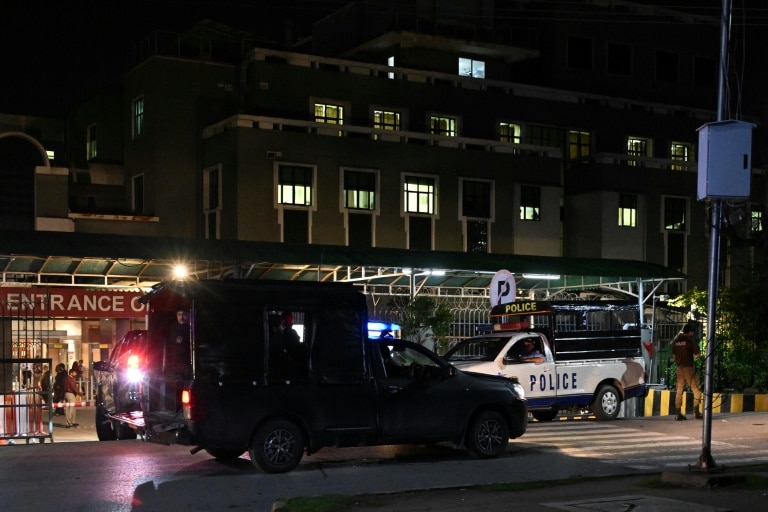
    Heavy security arrangements were put in place around the hospital ahead of Khan’s arrival: hundreds of police officers, many equipped with batons, were deployed to secure the perimeter, and all access roads leading to the facility were cordoned off. Despite the security presence, dozens of Khan’s supporters gathered near the hospital grounds to show solidarity, with some throwing handfuls of red rose petals at passing vehicles in a symbolic gesture of affection for the former leader.

    “It’s confirmed that he has arrived at Shifa International Hospital, the Supreme Court’s order has been complied with,” Bukhari told AFP. Arif Alvi, a former Pakistani president and senior PTI figure, echoed the confirmation in a post on X, writing that the entire nation was “happy and dancing with joy” at the court’s decision.

    The court’s ruling went beyond approving medical care: it also granted Khan new access rights to his family, requiring authorities to allow weekly in-person meetings and twice-weekly telephone calls with his sons. A multi-specialist medical panel will be assembled to oversee Khan’s treatment, and the court ruled that the former PM’s sister Uzma Khan, a practicing physician, will be permitted to participate in the care process.

    This is not the first time health concerns have been raised over Khan’s condition in custody. Earlier this year, Khan received outpatient eye treatment, with his family reporting at the time that he had lost most of his vision in his right eye. His legal team had repeatedly warned that his underlying health issues required urgent, specialized evaluation that could not be adequately provided in a prison setting.

    Khan, who led Pakistan from 2018 until he was removed from office via a parliamentary no-confidence vote in 2022 amid escalating tensions with the country’s powerful military establishment, has been behind bars since 2023. Late last year, he and his wife Bushra Bibi were sentenced to a combined 17 years in prison on charges of corruption and other offenses, allegations Khan has repeatedly dismissed as politically motivated fabrications designed to remove him from the country’s political arena.

    The 73-year-old leader, who previously led Pakistan to victory in the 1992 Cricket World Cup, remains the country’s most popular political figure, according to multiple public opinion polls. His arrest in May 2023 triggered mass nationwide protests that rattled the sitting government, and his base has remained active in organizing displays of support even amid widespread crackdowns on PTI activists.

    For his supporters gathered outside the hospital Friday, the transfer is a small but long-awaited win. “I came here to show my support for the man who has made so many sacrifices for Pakistan,” 69-year-old Younus Qureshi told reporters. Another supporter, 52-year-old Bilal, echoed that sentiment, saying he hoped Khan would receive the quality medical care he needed. “Our love and affiliation will remain with Mr Khan, no matter what,” Bilal added.

  • Broken toilets, leaking roofs: Why India’s ‘cockroach’ party wants to fix schools

    Broken toilets, leaking roofs: Why India’s ‘cockroach’ party wants to fix schools

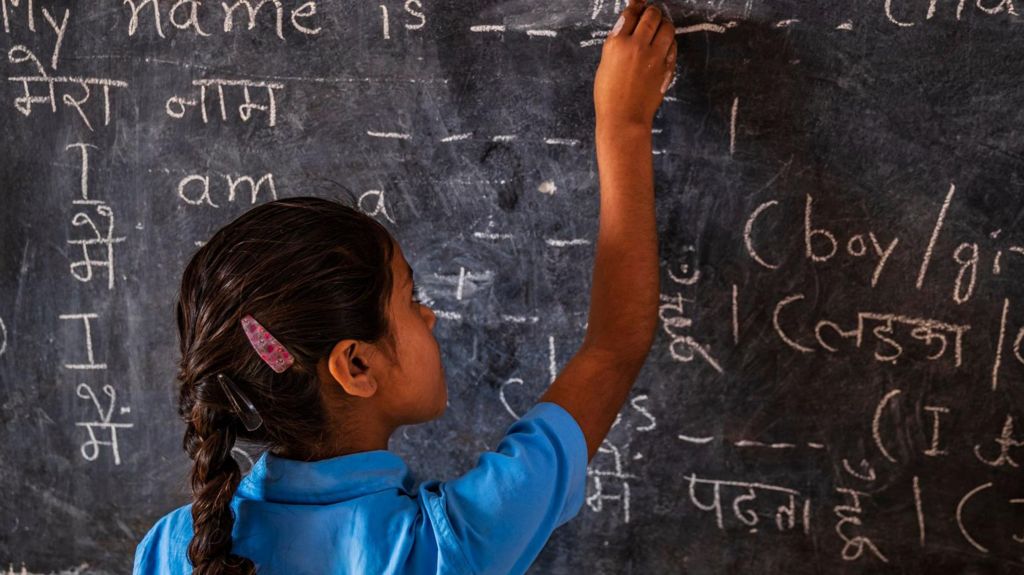
    On the outskirts of India’s capital New Delhi, a freshly painted single-story girls’ government primary school in Faridabad’s Khedi Kalan village presents a deceptively respectable face from the road. Up close, however, the decay is impossible to miss: the access road is pocked with potholes brimming with contaminated water, crumbling plaster peels from classroom ceilings, half of the school’s eight toilets are clogged with garbage and unusable, and four of its nine classrooms have been shuttered entirely, deemed too structurally dangerous to host children. During monsoon season, local social worker Satpal Narwat explains, the remaining occupied rooms flood regularly, leaving children with no dry space to sit and learn.

    This dilapidated campus is far from an anomaly across India. Decades of chronic underfunding, chronic understaffing, and systemic neglect have left most rural government schools in a state of catastrophic disrepair, laying bare deep inequities in access to quality education for low-income and marginalized communities across the country.

    Currently, India allocates just 4.1% of its total GDP to public education – a figure that only meets UNESCO’s minimum 4% threshold, and lags far behind peer nations. France, Germany, Australia, Brazil, and the United States all invest more than 5% of GDP in education, while Belgium and Sweden commit even higher shares. Both independent education experts and the Indian government’s own National Education Policy (NEP) have long recommended raising national education investment to 6% of GDP, a target that has yet to be met.

    Official data underscores the scale of the crisis: between the 2014-15 and 2024-25 academic years, more than 94,000 government schools across India have closed permanently. A report from government policy think tank Niti Aayog notes that some closures came from administrative mergers intended to streamline the public education system, but acknowledges that falling enrollment has also driven the trend, as families abandon under-resourced government schools for private alternatives when they can afford to do so.

    The crumbling state of India’s public education system has become the target of a new grassroots campaign launched by the Cockroach Janta Party (CJP), an online satirical activist movement that grabbed global headlines earlier this year for a weeks-long protest in Delhi that ended with the resignation of federal Education Minister Dharmendra Pradhan. That earlier demonstration was sparked by the May 2025 leak of the NEET medical entrance exam, which forced nearly 2 million students to retake the high-stakes test. More than 20 students died by suicide in the wake of the scandal, with their families blaming systemic government negligence for the chaos.

    CJP’s latest campaign, branded #SchoolThikKaro or #FixTheSchool, aims to draw national attention to the failing infrastructure of rural government schools and pressure authorities to implement urgent reforms. In an interview with the BBC, CJP founder Abhijeet Dipke explained the core mission of the movement: rural government schools have been sidelined for generations, leaving children from low-income village households locked out of the equal educational opportunities available to their peers in big cities. Without access to functional learning facilities, many rural youth are forced into low-wage agricultural, construction, or daily labor work simply because they never had the chance to pursue a quality education. Dipke says the campaign is working to close that gap.

    After visiting more than 20 rural government schools across the country in recent weeks, Dipke told reporters he did not find a single campus that met basic standards for student safety and learning. “There were no benches, no bathrooms, no drinking water, no facilities at all. Even animals would not be kept in such a place,” he said, describing the experience as deeply heartbreaking. Dipke noted that the conditions he observed are identical to what he saw visiting his own childhood village 20 years ago – and that nothing has improved in the intervening decades.

    Dipke and other CJP leaders have shared dozens of user-generated videos with the movement’s 26 million Instagram followers, showing leaking roofs, overflowing dirty toilets, students sitting on dirt floors, and frustrated young people speaking out about the lack of basic resources. The group’s demands are straightforward: functional desks, clean working restrooms, safe drinking water, and upgraded digital smart classrooms that give rural students the same quality of learning as students in elite urban private schools.

    As of yet, Prime Minister Narendra Modi’s Bharatiya Janata Party (BJP) has not issued a public comment on the #FixTheSchool campaign, and the federal education ministry has not responded to requests for comment from the BBC. Still, the CJP’s activism has already emboldened students across the country to speak out, sparking a wave of local protests and viral social media posts that have forced officials to act on longstanding complaints. In Raigad, Maharashtra, a viral video of schoolgirls mocking the unusable, muddy road leading to their campus prompted local authorities to complete repairs within days. In Uttar Pradesh, students marched to the district magistrate’s office to demand a new access road, while another viral clip showed female students challenging a local official to send his own children to a school in such poor condition.

    Senior journalist and political analyst Nilanjan Mukhopadhyay says the CJP’s earlier protest over the NEET leak quickly expanded beyond demands for a minister’s resignation to a broader reckoning with systemic failures in India’s public education system. The #FixTheSchool campaign, he notes, is a natural next step for the movement. The flood of user-submitted videos documenting poor infrastructure, he says, is clear evidence that the campaign is gaining widespread public support. “It can’t be Jantar Mantar 2.0 as it will be much slower and a long-lasting movement,” Mukhopadhyay explains. “But the CJP will get a lot of support for the campaign because there’s plenty to talk about that’s wrong with the schools.”

    Beyond crumbling infrastructure, a chronic shortage of teaching and support staff is one of the most crippling issues facing public schools, according to Chatar Singh, treasurer of the Primary Teachers’ Association in Haryana (the state where Faridabad is located) and head teacher of a primary school in Atmadpur village. Singh’s school is widely considered one of the better-resourced campuses in the region, with a new building funded by a private corporate social responsibility grant and a collection of student academic trophies. Even so, basic services regularly break down: during a BBC visit, a strong stench emanated from the school’s toilets, which had not been cleaned in two days after the part-time government-appointed cleaner called out sick.

    For Singh, however, understaffing is a far larger crisis than dirty restrooms. His campus serves 910 students with a roster of 40 full-time teachers – but during the BBC’s visit, 30 of those teachers had been reassigned to non-teaching government work updating voter rolls, four more were out sick, leaving just six teachers to supervise all 910 students. “Teachers are hired to teach, but across India, government deploys them to do a lot of non-teaching assignments. They are used for election duty and to conduct Census. Most of my teachers have been on voters’ list revision duty since July. It’s affecting the quality of education,” Singh explained. When asked why government schools remain chronically underfunded and neglected, he put the blame squarely on the disconnect between political leaders and public education: the children of bureaucrats, MPs, and senior politicians almost never attend government schools – nearly all send their own kids to elite private institutions that they can afford. Most students at rural government schools are children of low-wage migrant laborers, and the vast majority come from historically marginalized lower castes and communities. Anyone who can scrape together the money to pay private school tuition moves their children out, Singh says.

    That pattern has played out for decades in Khedi Kalan village, where Narwat, the 62-year-old local social worker, attended the now-dilapidated girls’ primary school himself between 1968 and 1973. When he was a student, the building was new, all eight rooms were in use, and it was the only school available for all boys and girls in the village. Flooding became a permanent problem 15 years ago, when local officials raised the level of the adjacent road, leaving the entire school campus below road level and prone to collecting rainwater. Narwat sent his own children to the same government school initially, but eventually transferred them to a private school because of the better facilities. Today, he sends his grandchildren to private school as well – the tuition is a heavy expense, he says, but the local government schools lack libraries, laboratories, and consistent teaching because so many staff are pulled away for non-teaching work.

    Just a few hundred meters from the girls’ school, Narwat showed the BBC the village’s boys’ primary school, where classes are currently held in just two small rooms and an outdoor veranda. A second building that once housed three classrooms was condemned as structurally unsafe and demolished five years ago, with official promises that a new, upgraded building would be built in its place. Today, the empty lot is used as a parking stand for student bicycles.

    Over decades of advocacy, Narwat has petitioned the state chief minister, local members of parliament, district officials, and even the National Human Rights Commission to demand upgrades for both village schools. He says almost nothing has changed in all that time. The #FixTheSchool campaign, however, has given him cautious new hope that the issue will finally get the national attention it deserves. “I think the CJP can be a force for good. They’ve taught people to fight, to not be afraid,” Narwat says. “The government has all the power and resources. And now they have to perform.”
  • Why Nigeria’s one-time political giant may face extinction

    Why Nigeria’s one-time political giant may face extinction

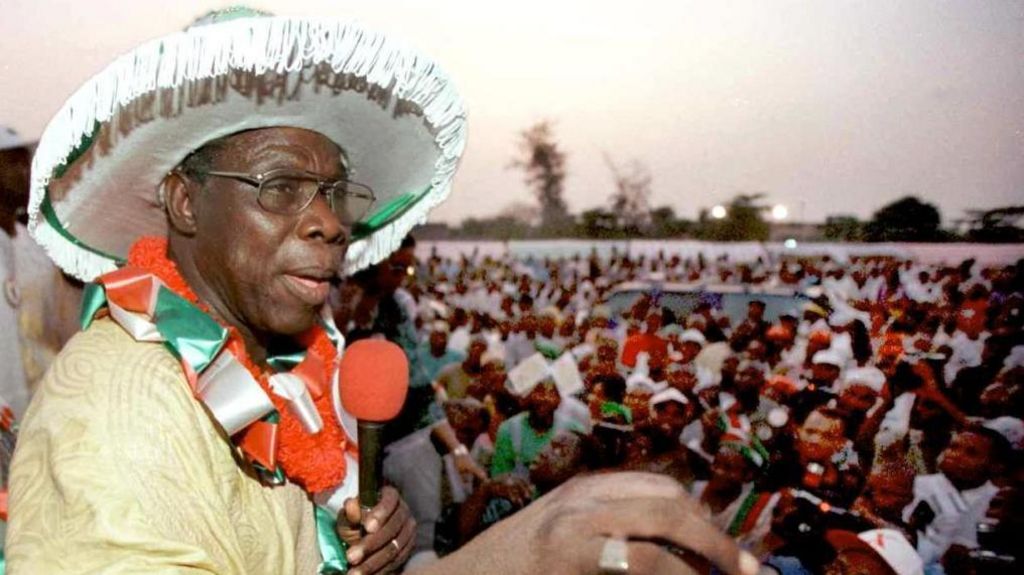
    When Nigeria emerged from decades of military rule in 1999, the Peoples Democratic Party (PDP) stood as the undisputed architect of the country’s new democratic era. Founded just a year earlier, the party swept its founding presidential candidate Olusegun Obasanjo into office, cementing a grip on national power that seemed unbreakable. For 16 consecutive years, the PDP controlled the presidency and held sway over 35 of Nigeria’s 36 states, with its chairperson famously boasting in 2008 that the party would rule for 60 years. Today, that once unassailable political giant teeters on the edge of collapse, its future hanging in the balance as Nigeria prepares for January’s general election, which officially kicked off this month.

    The PDP’s slow unraveling began with a political earthquake in 2015, when the party lost its hold on the presidency to Muhammadu Buhari and the newly formed All Progressives Congress (APC), a coalition of opposition factions and disaffected former PDP members. The transfer of power from PDP incumbent Goodluck Jonathan to Buhari marked the end of an era, and thrust the PDP into unfamiliar territory as an opposition party. Political analyst Ishaq Buhari notes that the party, long accustomed to the perks and structures of federal power, never adapted to life outside government. “They were a party that was so used to power, being in opposition was a new challenge they struggled with from the start,” he explained.

    If 2015 delivered a crippling blow, 2025 shattered the PDP’s foundational structures entirely. A tidal wave of high-profile defections and bitter internal infighting tore through the party’s ranks, with sitting state governors leading the exit. At the start of 2025, the PDP still held eight state governorships. By year’s end, five governors – from Delta, Akwa Ibom, Enugu, Bayelsa, and Rivers – had defected to the ruling APC, citing the PDP’s fading political relevance and a desire for closer collaboration with the federal government. By late 2025, the PDP lost its last remaining governorship in Oyo State, leaving the once-dominant party with no executive control at the state level. Top party talent has also fled, including former Vice-President Atiku Abubakar, the PDP’s 2019 presidential candidate, who left the party in 2025.

    Compounding these losses is a paralyzing leadership dispute that has split the party in two and locked it out of the upcoming election ballot for all major offices. The conflict centers on Nyesom Wike, a founding PDP member who now serves in President Bola Tinubu’s APC-led government. Wike was controversially expelled from the party in November 2025, when a faction claiming to represent the majority of PDP members held a national convention in Ibadan, Oyo State, defying court injunctions to stop the gathering. The expulsion followed widespread accusations that Wike betrayed the PDP by secretly aiding the APC’s victory in Rivers State during the last presidential election. Yet despite the expulsion, Nigerian courts have ruled that Wike’s rival faction is the legally recognized PDP. As a result, only Wike-aligned candidates have been approved to appear on the electoral commission’s ballot for January’s presidential and parliamentary races, leaving the anti-Wike faction with no official representation.

    For a party that defined Nigerian democracy for a generation, the rapid collapse has stunned political observers. Still, a small cohort of die-hard PDP loyalists holds out hope for a comeback. Aminu Adamu, a PDP politician aligned with the anti-Wike faction, argues that the party can rebuild if it resolves its internal disputes, pointing to precedents of collapsed political parties in Thailand and Argentina that returned to power after years in the political wilderness. “All we need to do is put our house in order and start to build from there,” Adamu said. “If we make all the necessary corrections, by 2032 I really think PDP can be a major force again.” Other loyalists point to the party’s still intact grassroots network, which includes local offices, seasoned activists, and a longstanding base of historic supporters, as a foundation for rebuilding.

    Most political analysts, however, argue that the PDP cannot survive on its own. Analyst Deji Olarenwaju says the only path to survival for the party is a formal alliance with either the African Democratic Congress, Nigeria’s current largest opposition party, or Peter Obi’s Nigeria Democratic Congress. With the PDP in open disarray and only Wike-aligned candidates on the ballot, voters are deeply unlikely to trust the party’s brand this election cycle. Without a major strategic shift, the PDP that ushered in Nigeria’s democratic transition will likely fade into political irrelevance, marking one of the most dramatic downfalls in modern African political history.

  • British activist Anas Altikriti questions UAE surveillance operation

    British activist Anas Altikriti questions UAE surveillance operation

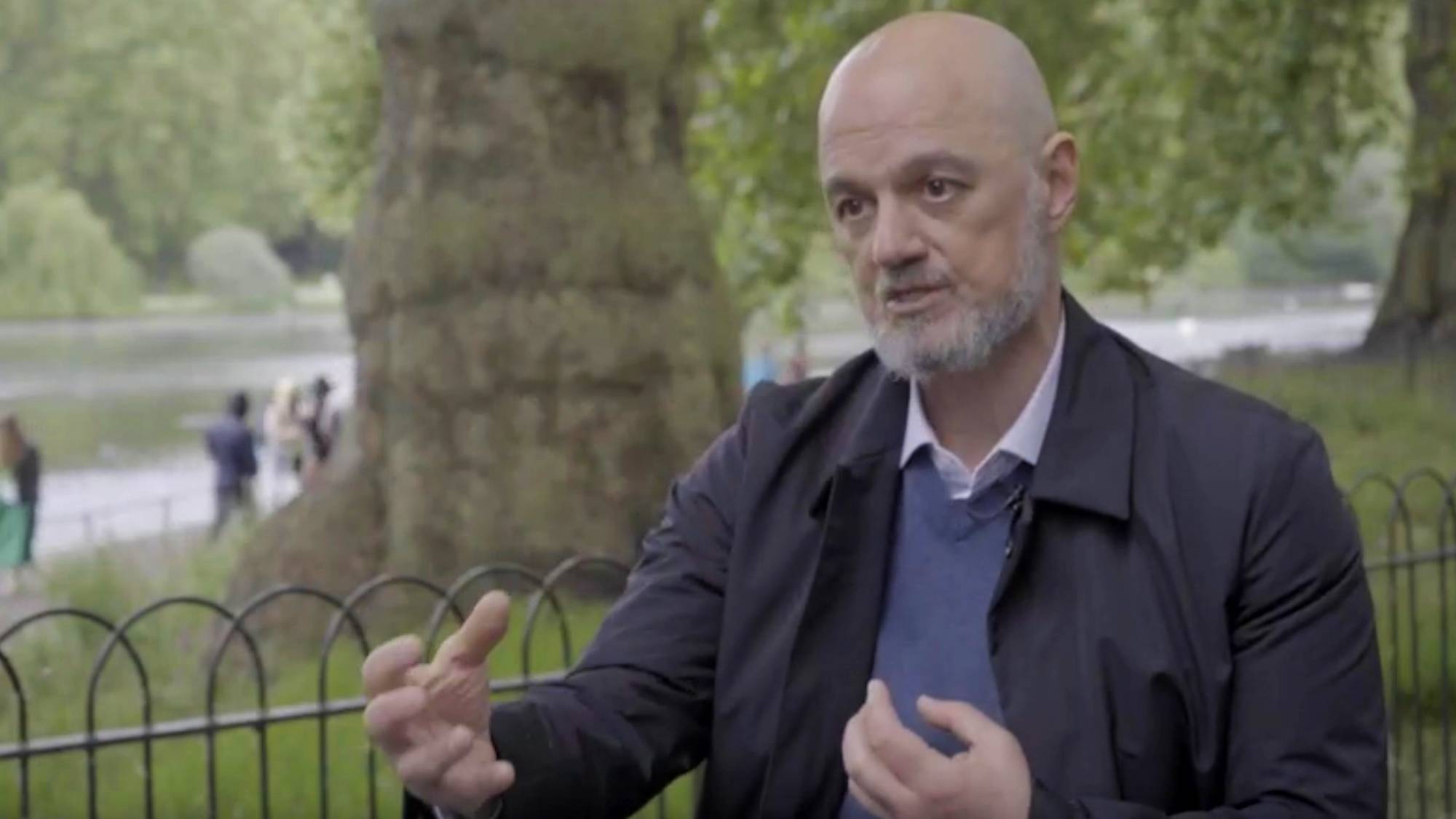
    On a frigid winter morning years ago, officers from London’s Metropolitan Police arrived at the West London home of Anas Altikriti, a veteran Iraqi-born British anti-war and pro-reform activist. Altikriti was traveling abroad at the time, and only learned of the visit when one of his sons called to alert him that police were searching for him. The seasoned political activist, confused by the unexpected visit, initially brushed off the news—until officers returned two days later, this time with far more insistence.

    When Altikriti followed up and called the police back, he received a chilling revelation: the force had issued him an Osman Notice, a formal alert to individuals when authorities judge their life is at imminent risk. Shaken by the news, he pressed for critical details: should he move his family to safety? Was he facing a targeted plot? Who was behind the threat? To every question, police had no answer. They told Altikriti they could share no further information, leaving him only with an ominous, unsubstantiated warning and no official protection.

    It would take a full decade for Altikriti to uncover the full scope of what was happening. A British news team showed him a leaked dossier that laid bare a prolonged, granular foreign intelligence surveillance operation tracking his every movement. The files included photographs of his London home, his personal vehicle, and detailed internal WhatsApp messages from the surveillance team documenting his daily routine: from his daily commutes and school runs with his children to his scheduled lectures at a local mosque. The foreign government behind the operation, the documents confirmed, was the United Arab Emirates (UAE).

    For Altikriti, the UAE’s hostility toward him came as no surprise. A prominent public voice who founded the London-based Cordoba Foundation think tank, formerly led the Muslim Association of Britain, and served as a senior official with the Muslim Council of Britain, Altikriti has long been an outspoken critic of authoritarian rule across the Gulf region. He publicly supported the 2011 Arab Spring uprisings, condemned autocratic governance in Gulf states, and repeatedly advocated for imprisoned Emirati political reformers, stoking official anger in Abu Dhabi.

    While suspicion of UAE interest had lingered for years, seeing concrete evidence of a sustained surveillance operation on British soil hit Altikriti with unexpected force, he told Middle East Eye in an interview. As the initial shock faded, one overriding question pushed to the forefront of his concerns: what did British authorities know about this operation?

    Altikriti says he has no trouble accepting that the UAE would target him for his political views. What he cannot reconcile is how a foreign government could run an extensive surveillance campaign inside the United Kingdom without British knowledge—or with British knowledge that was kept hidden from him. “If they knew, why is it that they didn’t tell me or at least warn me or protect me?” he asked. “Or if they didn’t know, that in itself would be a catastrophe in its own right.”

    As a British citizen who has never been charged with a crime, questioned by authorities, or broken UK law, Altikriti says he holds a clear expectation that the British state will protect his basic rights. “I expect that my civil liberties would be protected, my freedom would be guaranteed,” he said. That core freedom, he argues, includes the right to criticize foreign governments and voice political opinions without being targeted by a foreign power on UK soil. “I would be guaranteed safety, at least, if nothing else, to air my views, to criticize whomever I wish to criticize whilst constantly throughout my entire life abiding by the law.”

    The alleged surveillance, he argues, raises far broader questions about the unregulated scope of foreign influence in British public life. “A rogue, dictatorial, authoritarian regime such as the United Arab Emirates could actually reach into our society and infringe upon the civil liberties and freedoms and rights of citizens as well as organisations,” he said. Altikriti notes that the UAE has also targeted other British organizations, including his own Cordoba Foundation, through defamation and coordinated attacks, meaning his experience is not an isolated incident. The core systemic question, he says, is whether foreign governments can freely target British citizens and groups inside the UK—and what accountability the British state will demand in response.

    Looking back to the 2010s Osman Notice he received, Altikriti says the vague, incomplete warning was deeply inadequate, particularly when he was raising two young children at the time. Police told him his life was at risk, but offered zero details about the source of the threat or what precautions he could take to stay safe. “Besides just handing me this Osman notice, as though this is a box that we’ve ticked, nothing whatsoever,” he said. That experience has gained new gravity in light of the leaked surveillance documents, he says, noting it is now clear British police were aware some threat was active. If the threat was severe enough to issue an Osman Notice, he argues, it is unacceptable that he was given no further context or protection. “The police not telling me that there is an actual threat, there is someone who is actually plotting against my life, I think is just absolutely unbelievable.”

    Altikriti says he has never doubted why he drew the UAE’s attention: his long-held political views put him in direct conflict with the Gulf state’s ruling leadership. When the Arab Spring swept the Middle East and North Africa in 2011, Altikriti emerged as a high-profile supporter of pro-democracy movements across Egypt, Tunisia and other regional states, a stance that represented a direct threat to the political standing of Gulf monarchies including the UAE. “They found that extremely threatening to their own standing,” he said. The UAE made its displeasure clear in the years that followed, withdrawing invitations for Altikriti to visit and having embassy officials warn him against returning to the country. “So the fact that I’m in their bad books is of no surprise to me.”

    What did shock him, he says, was the extreme extent of the UAE’s alleged actions on UK soil. For more than a decade, dozens of Emirati pro-democracy reformers have remained imprisoned in the UAE, and Altikriti’s public advocacy for their freedom further angered Abu Dhabi. “The fact that I have stood by them, the fact that I’ve spoken up for them as much as I can has angered the United Arab Emirates,” he said. “And apparently they want to silence me at any particular cost.”

    Altikriti’s concerns ultimately circle back to the deep existing alliance between the UK and the UAE. The two countries maintain extensive economic, political and security ties, and the UAE has built a substantial public and economic footprint across the UK, with major investments in British football clubs, major sporting events, cultural institutions, financial markets and banking. Altikriti argues the question is not whether the UK should cut ties entirely with the UAE, but whether Britain should set clear boundaries for that relationship that protect the rights of its own citizens.

    “The fact that the United Arab Emirates is one of our strongest allies is unbecoming of our own government, of our own society,” he said. He argues that the UK’s close relationship with Abu Dhabi should not come at the cost of British citizens’ fundamental rights. “If the government truly believes in freedom and civil liberties and human rights and the like, then they should take a different stand.”

    That different stand, he says, must start with a full public investigation—one that examines not just the specific surveillance operation targeting him, but the full extent of UAE influence over British politics and foreign policy. Altikriti acknowledges his own experience is minor when compared to far more severe human rights abuses the UAE has been accused of committing against dissidents at home and abroad. “My story… pales in comparison to the crimes committed by the UAE regime,” he said. But that, he insists, is no reason to dismiss what happened on UK soil; it is all the more reason to examine the case closely.

    Altikriti says he hopes UK political leadership will confront the issue head-on, and he has specifically called on Prime Minister Keir Starmer to challenge the status quo of the bilateral relationship. “We could be friends,” Altikriti said. “But friends do not come without conditions.” Those conditions, he argues, are straightforward: the UAE must respect British citizens’ fundamental rights and freedoms, and end all covert interference in British domestic life.

    For years, claims that the UAE targeted Altikriti could be dismissed or debunked, he says. But the leaked documents, which include direct photographs, internal correspondence, and surveillance team communications, have proven the operation was real. The reason for the targeting is no longer a mystery; Altikriti already understands why he was in the UAE’s crosshairs. The only question that remains unanswered is what the British government knew—and what it will do now. “Either they support the United Arab Emirates in its dictatorial ways, and as such they should come forth and say so,” he said. “Or if they truly believe in freedom and civil liberties and human rights and the like, then they should take a different stand.”

  • How much could Trump’s ‘economic D-Day’ hurt Iran?

    How much could Trump’s ‘economic D-Day’ hurt Iran?

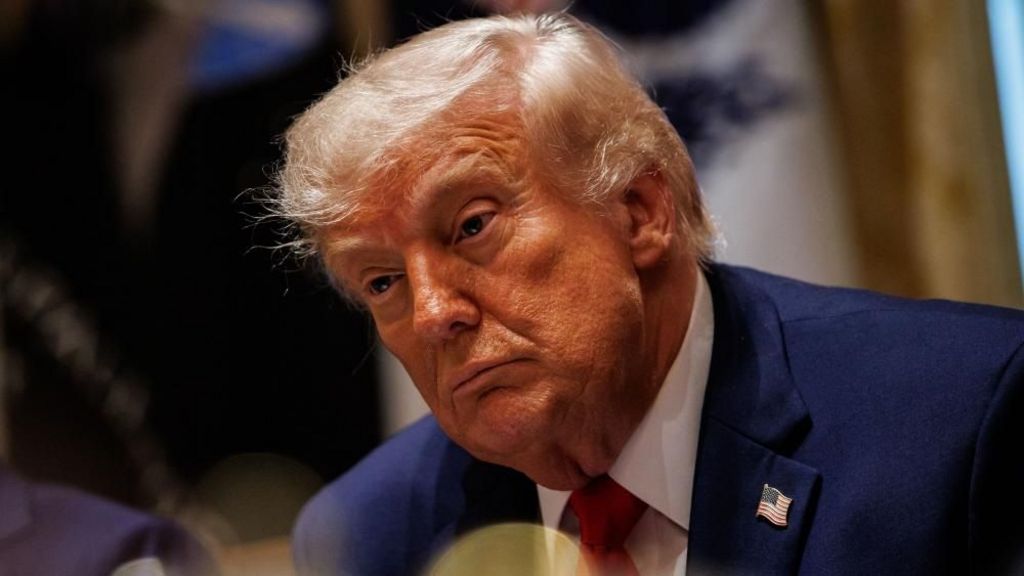
    Nearly half a year has passed since U.S. President Donald Trump first promised a rapid resolution to the escalating standoff with Iran. Today, the confrontation between the two nations remains locked in a stalemate, with neither a clear military breakthrough nor a viable negotiated settlement on the horizon.

    In a bid to break this impasse, the Trump administration has announced a sweeping new pressure campaign it has dubbed “economic D-Day.” Under the proposed framework, any nation that continues to maintain commercial ties with Iran will face severe, far-reaching economic penalties from the United States. This escalated move comes as the White House doubles down on economic coercion after other tactics failed to deliver the desired outcome.

    For decades, Iran has weathered successive waves of U.S. sanctions, and as the current conflict drags on, the country has repeatedly demonstrated its ability to withstand severe economic strain and adapt to intense pressure. That track record leaves a critical open question: can this new round of sanctions succeed where all prior U.S. strategies have fallen short?

    Full details of the new U.S. economic pressure campaign have not yet been made public. Treasury Secretary Scott Bessent has confirmed that the full framework will be unveiled during a scheduled press conference on August 24. Speaking in an interview with CNBC, however, he made clear that Washington’s crackdown will extend to all nations—whether traditional U.S. allies or geopolitical rivals—that the administration accuses of propping up Iran’s economy. “You are either with us or against us,” Bessent stated, adding that if any nation insists on engaging in business with Iran, from facilitating money transfers to purchasing Iranian oil or conducting maritime trade transfers, the full weight of the U.S. Treasury and the entire U.S. government will be brought to bear to enforce penalties against them.

    Vice President JD Vance has framed the new sanctions as a defining “new phase” of the confrontation, arguing that economic pressure represents the most effective tool currently available to the U.S. Appearing on the *Clay Travis and Buck Sexton Show*, Vance claimed that “They’re going to try to apply economic pressure to us, but what has been true over the last couple of weeks is that they felt a lot more pressure than we have. We’re going to keep that going because we think that’s the best way to ultimately achieve the final objective.”

    U.S. sanctions against Iran date back to the founding of the Islamic Republic in 1979. The pressure campaign intensified dramatically after the first Trump administration withdrew the U.S. from the Joint Comprehensive Plan of Action (JCPOA), the 2015 nuclear agreement reached between world powers and Tehran to limit Iran’s nuclear program. Since the start of the current conflict, the administration has already rolled out Operation Economic Fury, a two-pronged initiative that combines Treasury-coordinated sanctions targeting the Iranian regime’s financial flows with a naval blockade of Iranian ports.

    Geostrategy experts say the latest announcement of “economic D-Day” stems directly from the White House’s growing frustration that existing tactics have not achieved Trump’s goals. “This is really a recognition that the U.S. is almost stuck in this war,” explained Imran Bayoumi, a geostrategy expert at the Washington-based Atlantic Council and a former policy advisor to the U.S. Department of Defense, in an interview with the BBC. “It’s another try at economic pressure. We’ve not seen a clear strategy laid out by the administration with either military or economic tools. The question of what the U.S. is trying to achieve is still unanswered.”

    Michael Parker, an eight-year veteran of the U.S. Treasury’s Office of Foreign Assets Control (OFAC) and a leading expert on economic sanctions, noted that the new strategy is designed to expand the scope of existing sanctions by targeting third countries that still trade with Iran and rely on access to the U.S. dollar. “Thus far, the U.S. has largely used the threat of these secondary sanctions against foreign financial institutions to encourage compliance with sanctions policy,” Parker said. “But this is a lever that is sort of unexplored insofar as targeting anything touching the U.S. dollar that is also touching Iran.” He pointed to foreign financial institutions that facilitate sanctions evasion by Iran or channel funds directly to the Iranian government as key potential targets.

    While it remains unclear how Iran will respond to the latest round of sanctions, sanctions specialists have noted that Iran has a long track record of adapting quickly to circumvent restrictions. Iranian actors have honed sophisticated workarounds, including the use of unregistered “shadow” oil tankers and front companies that do not appear on U.S. sanctions blacklists. “You keep seeing new names popping up, because Iran is adapting really quickly,” said Mohammed Hammouda, an export control and sanctions manager at the London Stock Exchange. “Whatever sanctions one does, they find a new road around it. Sanctions are all on paper, but the hard work is behind the scenes. There are teams worldwide trying to impose sanctions and identify those parties involved, which is why Iran has to try to adapt.” Hammouda added that Iran’s adaptive tactics often leave sanctions enforcement teams constantly playing catch-up to the country’s workarounds.

    The ultimate effectiveness of the new sanctions will depend largely on how targeted third countries respond. Potential targets include U.S. allies such as Turkey and Iraq, as well as major economic power China. “Some of this is out of Iran’s hands,” Parker explained. “Iran’s ability to evade or avoid sanctions is, in large part, contingent on other countries and financial institution’s willingness to give them access to the formal banking system. Sanctions are only as powerful as the willingness of targeted countries to comply with American foreign policy objectives, or face potentially painful sanctions on trade involving the U.S. dollar.”

    Many experts question whether major powers will agree to comply with the U.S. crackdown. “I can’t really see China agreeing to that, for example,” Bayoumi noted, adding that “These states have all been able to navigate their own interests with the Trump administration. The underlying point is that this is just another tool. But the broader question of strategy remains. Absent that, I’m not sure this is going to change anything long term.”

  • Why the US economy is ringing alarm bells

    Why the US economy is ringing alarm bells

    This summer, Americans have been distracted by a slate of major cultural and sporting events: the 250th anniversary of the United States, Taylor Swift’s high-profile wedding, and the men’s football World Cup. But beneath the fanfare, mounting economic pressures have been bubbling to the surface, culminating this week in a sobering milestone that has drawn alarm from policymakers and economists at home and abroad: America’s gross national debt has officially surpassed the $40 trillion mark.

    Maya MacGuineas, president of the nonpartisan Committee for a Responsible Federal Budget, notes that the nation’s journey from zero to its first $1 trillion in debt stretched nearly 200 years, with that 1981 milestone prompting a public warning from then-President Ronald Reagan. In a televised address to the nation, Reagan framed the $1 trillion threshold as a critical wake-up call for fiscal responsibility. Today, 45 years later, the U.S. spends more than $1 trillion annually just on interest payments for its accumulated debt, a stark shift that underscores how rapidly federal borrowing has grown.

    The $40 trillion threshold was widely anticipated by analysts, who trace the rapid expansion of the national debt back to consecutive spending surges under both the Donald Trump and Joe Biden administrations. Decades of ballooning costs for social safety net programs and other federal expenditures have outpaced government revenue, which has been eroded by successive rounds of major tax cuts. Large-scale emergency borrowing to respond to systemic crises, including the 2008 global financial crash and the 2020 COVID-19 pandemic, added trillions more to the national balance sheet. More recently, steep interest rate hikes implemented to tame post-pandemic inflation have drastically increased the cost of servicing existing debt, turning a gradual rise into an accelerating crisis.

    When Trump first took office in 2016, the national debt stood just below $20 trillion, meaning the total has doubled in less than a decade. Data from the Congress Joint Economic Committee puts the current rate of growth at roughly $90,000 per second, or $7.8 billion per day.

    Eric Swanson, an economics professor at the University of California, Irvine and former senior Federal Reserve economist, explains that today’s debt landscape is far more precarious than it was 10 years ago, largely due to the current interest rate environment. U.S. long-term interest rates are now at multi-decade highs, a shift driven in part by persistent inflation concerns and in part by investor anxiety over the unprecedented scale of federal government borrowing.

    Competition for investor capital has also tightened: major technology firms are borrowing massive sums to fund artificial intelligence development, directly competing with the U.S. government for bond buyers. This has forced the Treasury to offer higher yields to attract investment, further increasing borrowing costs.

    Wharton School economist and former global investment chief Mohamed A. El-Erian points out that higher interest rates make deficit funding exponentially more expensive. Year-over-year, federal interest payments on the national debt have risen 15%, and now account for nearly 20% of total federal tax revenue — a larger share than the entire U.S. defense budget.

    The nation is also rapidly approaching the statutory $41.1 trillion debt ceiling, and the nonpartisan Congressional Budget Office projects total national debt will climb to roughly $64 trillion by 2036 if current spending and revenue patterns hold.

    Despite the alarming numbers, economists emphasize the situation is not yet at a critical breaking point. As the world’s largest economy and with the U.S. dollar retaining its status as the global reserve currency, the U.S. has far more fiscal breathing room than other nations facing high debt levels, El-Erian says. Right now, he describes the moment as a flashing yellow warning light, not a flashing red crisis signal.

    Swanson adds that other advanced economies currently carry higher debt-to-GDP ratios than the U.S. America’s current debt equals 126% of its annual gross domestic product, a share lower than G7 peers Japan and Italy. Even so, Swanson warns that investor appetite for U.S. government bonds is diminishing, creating a vicious cycle: the government must offer ever-higher yields to attract buyers, which in turn increases overall debt and servicing costs.

    The ripple effects of America’s debt crisis do not stop at the U.S. border. Higher U.S. borrowing costs inevitably push up borrowing costs for governments, businesses and households across the globe. “What happens in the US never stays in the US,” El-Erian notes.

    For American households, the impact will hit directly in the form of higher interest rates for mortgages, auto loans and credit card balances, with low-income households bearing the brunt of the burden. There is also a secondary inflationary effect: businesses pass their own higher borrowing costs on to consumers via elevated prices for goods and services. Ultimately, MacGuineas says, “the impact of the debt finds its way to the pocketbooks of people one way or another.”

    Recent U.S. economic data shows growth has slowed in recent months but remains solid, a positive sign for fiscal stability. El-Erian explains that stronger economic growth generates higher tax revenue, which can cover government spending and interest payments, gradually easing the long-term debt burden if growth holds. If growth stalls, however, the U.S. will be forced to consider more difficult policy adjustments, including tax system reform, spending cuts, or in a worst-case scenario, debt restructuring.

    So far, the federal government has relied on targeted financial engineering to calm bond markets: on Wednesday, the Treasury Department launched a debt buyback program intended to boost bond demand and push down long-term borrowing costs. The effect was short-lived, however, with long-term yields climbing back to recent highs just one day later.

    With upcoming congressional midterm elections, the White House is under intense pressure to demonstrate progress on economic issues, with affordability ranking as the top concern for U.S. voters. Yet major structural reforms remain politically unappealing, and El-Erian says he is skeptical that policymakers will take meaningful action to address the deficit in the near term. “I don’t see anything happening that is going to significantly lower the deficit over the next two to three years,” he says. “If you look at the political talk, it’s about tax cuts.”

  • US closure bill costs GYG, business posts $26m annual loss

    US closure bill costs GYG, business posts $26m annual loss

    Australian-born Mexican-inspired fast food chain Guzman Y Gomez (GYG) has formally pulled the plug on its high-risk ambition to break into the highly competitive U.S. restaurant market, revealing the failed venture has left the business with a $26.7 million full-year statutory net loss after accounting for exit costs. The Sydney-founded chain released its full-year 2024-2025 financial results on Friday, which showed the U.S. exit dragged the company into the red, with $67.3 million in total costs tied to winding down its eight Chicago locations.

  • Australian spending defies cost-of-living crisis, stoking RBA rate hike fears

    Australian spending defies cost-of-living crisis, stoking RBA rate hike fears

    Against a backdrop of cooling national property prices and broad cost-of-living pressures that have squeezed household budgets across Australia, new consumer spending data has revealed an unexpected resilience in discretionary spending that is putting the Reserve Bank of Australia’s (RBA) rate cut outlook to the test.

    Data compiled by Commonwealth Bank of Australia (CBA), drawn from transaction records of more than 7 million of its retail customers, shows overall household spending climbed 0.6% in July, marking the second consecutive monthly gain. Ten of the 12 tracked spending categories recorded growth, with non-essential discretionary spending driving most of the uptick. Recreation spending led all categories with a 1.1% monthly increase, followed closely by hospitality spending which rose 1.0% over the same period.

    CBA economists attribute this surprise growth in discretionary outlays to a sustained shift among Australian households toward prioritizing experience-based spending, a trend that held strong even in the face of broader budget pressures. July’s packed calendar of major global and domestic events, including the men’s FIFA World Cup and the wide release of the blockbuster film *The Odyssey*, gave an extra boost to spending on leisure and hospitality. Household goods spending also saw solid gains, supported by targeted promotional campaigns across major Australian e-commerce marketplaces.

    “Despite ongoing pressure on household balance sheets, families continue to carve out space in their budgets for discretionary experiences,” explained Ashwin Clarke, CBA’s senior economist. “This strength in non-essential spending signals that households are still willing to open their wallets rather than hunker down and build up savings. That definitely raises the risk that consumer spending will not cool as quickly as the RBA has projected.”

    Even with the current uptick in consumption, year-to-date spending growth remains weaker than the pace recorded in 2025. Clarke noted that while near-term spending has held up better than expected, long-term headwinds including slowing wage growth, declining property values, and still-elevated inflation are expected to drag on consumption growth in the coming quarters. “We still expect household spending to slow, it just may take longer than initially projected,” he said. “The underlying fundamentals for household consumption are fairly weak. But if spending fails to decelerate over the next six months in line with the RBA’s forecasts, it will leave the central bank uncomfortable and could prompt it to consider another interest rate hike to dampen demand.”

    Clarke added that the current strength in discretionary spending has been partially enabled by temporary easing in costs for essential goods and services: “We’ve also seen a growing number of listed consumer firms note in recent earnings outlooks that more shoppers are becoming value-conscious, hunting for discounts and trading down to cheaper alternatives. On top of that, weaker spending on essentials, particularly utilities, plus temporary lower fuel prices in recent months, have freed up small amounts of room in household budgets for leisure spending.”

    The surprise spending surge comes as Australia’s property market continues to cool faster than most analysts predicted. National home prices fell 0.7% in July, the steepest monthly decline recorded nationwide since December 2022. ANZ economists Madeline Dunk and Adam Boyton project that capital city property values will drop 4.3% across the 2026 calendar year, followed by a further 3.4% decline in 2027. Sydney, Australia’s largest property market, is forecast to see prices drop as much as 14.5% from their recent peak.

    Clarke said falling property values are one of the key factors that will likely drag consumer spending lower moving forward. “Income growth has been slowing for the last several quarters, and we expect that trend to continue, especially with persistent inflation and the lagged economic impacts of global conflicts,” he said. “History shows that when housing prices decline, households tend to pull back on spending. Falling equity in their biggest asset makes consumers feel less wealthy, and lower transaction volumes in the property market also cut related spending on moving, renovations and new household goods. Combined, these factors will almost certainly slow consumption.”

    The latest CBA spending data aligns with recent commentary from RBA deputy governor Andrew Hauser, who warned this week that inflation remains well above the central bank’s 2-3% target band, and demand across the economy needs to cool further to bring price growth under control. The RBA has raised interest rates three times already in 2026 to dampen excess demand.

    “Monetary policy needs to bring inflation down, which is why we have raised rates three times this year, but it can only achieve that by reducing pressure on capacity and demand across the economy,” Hauser told the Queensland Futures Institute Annual Regions Summit in Brisbane. “That means slightly slower growth in consumption, slightly slower growth in employment. We’ve seen a little bit of that progress so far, but we are going to need to see more to get inflation back to target. This is not a slump, not a depression, but it will be slower growth than we have seen in the past.”

    Hauser reiterated the RBA’s dual mandate to keep inflation between 2 and 3% while maintaining full employment, adding that domestic demand remains a key contributor to ongoing price pressures. “Inflation is too high,” he said. “Everywhere you look people say prices are too high, cost pressures are too strong. While some of that is driven by global factors, some of it does come from domestic demand here in Australia.”

  • AFL 2026: Gold Coast Suns coach Damien Hardwick on Ben King’s potential exit

    AFL 2026: Gold Coast Suns coach Damien Hardwick on Ben King’s potential exit

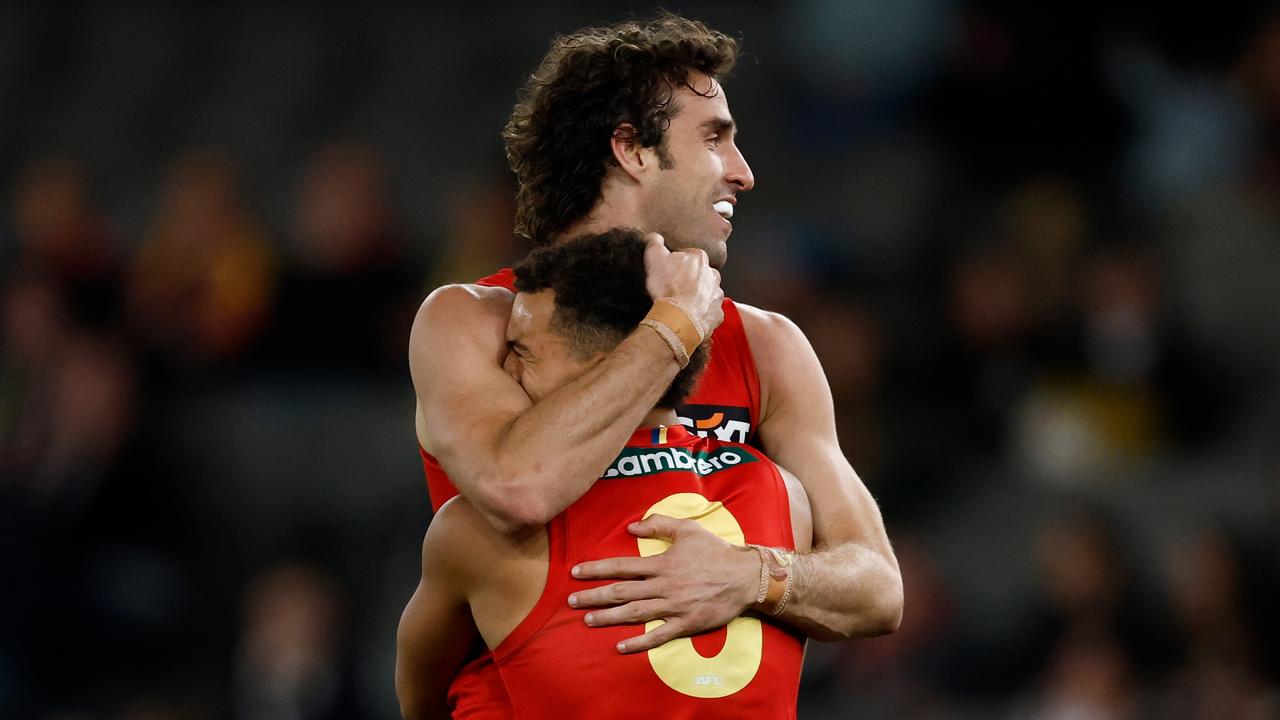
    Uncertainty continues to swirl around the future of star Gold Coast Suns forward Ben King, with Suns head coach Damien Hardwick confirming the club is prepared to explore trade options if the restricted free agent confirms his intention to depart in the coming weeks. King’s emotional post-match celebration following the Suns’ 16-point victory over St Kilda at Marvel Stadium on Thursday night has fueled widespread speculation that his seven-season tenure on the Gold Coast is drawing to a close. After kicking the match-winning goal and finishing the game with three total majors, the 24-year-old spearhead was visibly tearful as the team sang their club song, a moment widely interpreted as a farewell to the club that drafted him in 2018. Over his seven seasons with the Suns, King has scored 315 career goals, establishing himself as one of the league’s most reliable young key forwards. But the Victorian native has long been tipped to request a move back to his home state, and recent reporting indicates Hawthorn has emerged as the leading suitor, after early speculation linked him to Collingwood. Under AFL free agency rules, the Suns hold the right of first refusal on any contract King signs with a rival club: if the Suns choose to match the competing offer, King will be forced to move via trade, rather than leaving as an unrestricted free agent. Hardwick acknowledged the situation in his post-match press conference, framing the impending decision as a standard part of the league’s current free agency system. “Look, it is what it is, that’s free agency, that is what our game is, we have the last right of refusal, so that’s obviously something we will consider,” Hardwick told reporters. “He was obviously quite emotional post game, so it might possibly be his last game, we’re not quite exactly sure. Once I know, you guys will know – he will make his thoughts clear.” While the club waits for King to formalize his decision, Hardwick said the Suns’ list management team has already begun preparing for a potential departure, pointing to the club’s existing pipeline of young attacking talent as a solid foundation to build on. “But obviously we’ve got some younger players, we’re really excited about Ethan Read, we’re really excited about Jed Walter. We’ve got Jamarra Ugle-Hagan who’s had a pivot year, he’ll be better when he comes back,” Hardwick said. The coach also openly acknowledged that a King exit would leave the Suns needing to add experienced attacking depth, even issuing a public call for available veteran forwards. “We probably need another experienced player, so if there’s any experienced forward out there that wants to come to our footy club, give me a call,” he said. When asked specifically about the possibility of targeting out-of-favour GWS Giants goalkicker Jesse Hogan as a replacement for King, Hardwick declined to comment on any specific targets, noting the club’s priority remains on the current 2025 season. “Oh, look, we’ll make list management decisions throughout the year sort of thing. We’ll work our way through that process, once again, head is firmly in this year. We know what we need moving forward, so we’ll discuss that,” he said.