
For years, Prince Harry and Meghan Markle framed their departure from the British royal family as a bold gamble to chase privacy, financial independence, and a new version of the American dream on the sun-soaked outskirts of Los Angeles. Now, that carefully constructed chapter is drawing to a close, prompting a close examination of the life the high-profile couple built in the heart of Hollywood. As BBC correspondent Shaimaa Khalil explores, the pair’s experience in Southern California reveals a complicated gap between the promise of their cross-Atlantic move and the reality of life as globally recognized public figures operating outside royal structures. When the couple stepped back as working royals in 2020, they traded the strict protocols and constant media scrutiny of palace life for a gated mansion in Montecito, a quiet, upscale enclave nestled between Santa Barbara and Los Angeles. Their stated goal was clear: escape the intrusive British tabloid culture that had plagued their relationship, build their own commercial brand independently, and carve out a normal life for their two young children. For a time, that vision appeared to be taking shape. They landed lucrative multi-year deals with streaming giant Netflix and podcast platform Spotify, launched their nonprofit Archewell, and positioned themselves as outspoken advocates for mental health, racial justice, and gender equity. But in recent months, cracks in that foundation have become impossible to ignore. Their Spotify deal ended early in 2023 after just one season of their flagship podcast, and their Netflix projects have failed to deliver the breakout cultural impact both sides initially anticipated. At the same time, the couple has been unable to escape the relentless public attention they sought to leave behind. Every personal detail, from their family dynamics to their public appearances to their internal disagreements, remains a staple of global media coverage. Even in their secluded Montecito compound, privacy has remained elusive. As they wind down the operations and public profile they built in Southern California over the past four years, analysts and commentators are reassessing whether the “American dream” they set out to achieve was ever truly attainable for two of the most famous people in the world. Khalil’s reporting delves into the shifting priorities of the couple, the missteps that derailed their initial Hollywood ambitions, and what the end of this chapter means for their public legacy and personal futures going forward.
博客
-
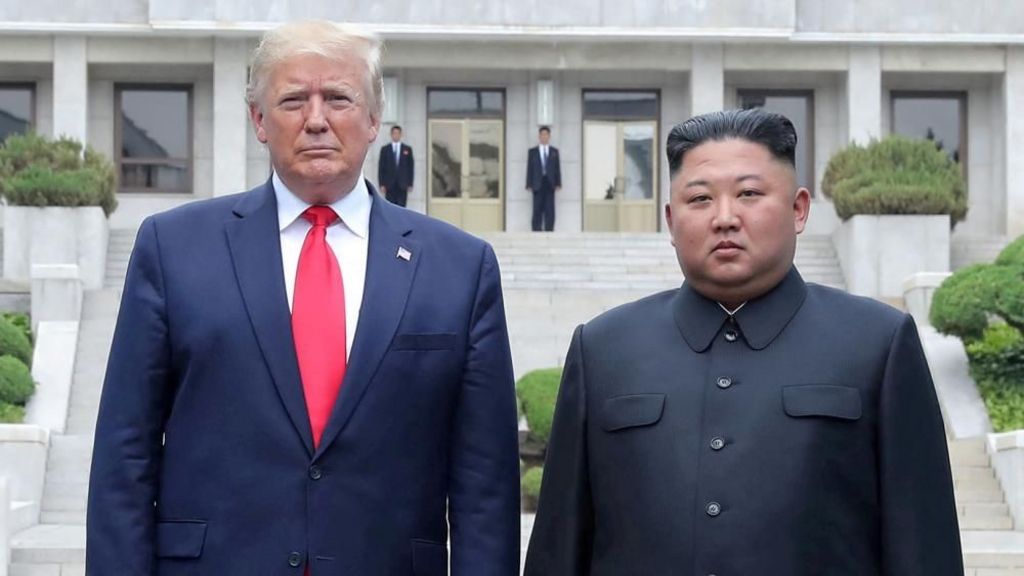
Trump wants to be friends with Kim – but South Korea could pay the price
The annual Ulchi Freedom Shield joint military exercises between South Korea and the United States, which included participation from 18,000 South Korean troops and 11 additional allied nations, came to an abrupt and unplanned end on Friday, with only half of the scheduled maneuvers completed. The halt came just days after former U.S. President Donald Trump made a surprise announcement that he had ordered the Pentagon to slash the size of the drills dramatically. Trump’s decision, which framed the annual exercises as “inappropriate and hostile” to North Korea and an unnecessary financial drain on the United States, caught key U.S. allies completely off guard.
South Korean Foreign Minister Cho Hyun attempted to frame the early termination as a joint, mutually agreed-upon call, but publicly admitted that Seoul officials had no advance warning of Trump’s plan to scale back the drills. For Seoul, the joint exercises have long been viewed as a core pillar of the U.S.-South Korea alliance, a tangible demonstration of American commitment to defending South Korea against potential aggression from Pyongyang. While South Korea has voluntarily agreed to pause or scale down drills in the past to create space for diplomatic outreach to North Korea, Trump’s sudden, unilateral decision has severely eroded Seoul’s confidence in Washington as a reliable security partner, according to Jo Bee-yun, Senior Research Fellow at the Atlantic Council.
The unilateral move has also sparked anxiety among other U.S. regional allies including Taiwan and Japan, both of which rely heavily on American security guarantees to counter growing regional threats. Experts warn there is now widespread fear that Trump could go even further: drawing down the 27,000 U.S. troops permanently stationed in South Korea, or even abandoning the decades-long U.S. policy goal of complete denuclearization of the Korean Peninsula, all without consulting the South Korean government.
The Korean Peninsula remains technically in a state of war, as no formal peace treaty was signed following the 1950–1953 Korean War. Until 2024, North Korean ideology centered reunification with the South as a core goal, a goal that leader Kim Jong Un formally abandoned that year. Despite the shift in reunification policy, Pyongyang has not eased its threats against Seoul. Just days before this year’s exercises began, North Korea launched ballistic missiles toward Japanese territory, repeated warnings that it would exercise its right to use nuclear weapons if threatened, and launched additional missile tests on Thursday, just one day before the drills were halted early.
Beyond security disagreements, the Trump administration has increasingly tangled South Korea in overlapping trade and foreign policy disputes. Trump has openly criticized Seoul for refusing to join U.S. military action against Iran, and has repeatedly complained that the $1 billion annual contribution South Korea makes to cover the cost of hosting U.S. troops is insufficient. Additional grievances include claims that Seoul has dragged its feet on fulfilling a pledged $350 billion investment in the U.S. and discriminates against American companies operating in South Korea. The merging of trade disputes and national security concerns has led growing numbers of analysts and policymakers in Seoul to call for South Korea to reduce its long-standing dependence on the U.S. for security.
Cheong Seong-chang, vice president of the Seoul-based Sejong Institute think tank and a prominent advocate for South Korea developing its own independent nuclear deterrent, argues that while Seoul should maintain its alliance with the U.S., it must “take steps to acquire its own nuclear deterrence” to counter growing North Korean threats. While a majority of the South Korean public now supports developing an independent nuclear arsenal, the current South Korean government has maintained that acquiring nuclear weapons is unnecessary, and would damage the country’s existing network of security alliances. That position could shift rapidly if the U.S. continues to reduce its security footprint in East Asia, analysts note.
South Korean President Lee Jae Myung, who has prioritized repairing inter-Korean relations, has sought to frame Trump’s decision as a positive step for regional diplomacy. In a post on X, Lee praised the move, writing, “I believe this was a bold decision that is the result of your deep consideration to achieve peace.” Lee also pledged to increase South Korea’s defense spending, and said he “fully agrees” with Trump’s position that South Korea should take greater responsibility for its own national security.
This is not the first time Trump has taken unexpected unilateral action on Korean Peninsula diplomacy during his presidency. Back in 2018, Seoul worked behind the scenes to facilitate the first ever meeting between a sitting U.S. president and Kim Jong Un, viewing Trump’s unorthodox approach to diplomacy as both a risk and an opportunity. Immediately after that 2018 summit, Trump suddenly announced a full suspension of joint U.S.-South Korea drills. A second planned summit in 2019 collapsed without any agreement after Kim refused to dismantle all of North Korea’s nuclear facilities. While Trump and Kim held a brief, widely publicized photo-op meeting at Panmunjom in the Demilitarized Zone later that year, no substantive nuclear negotiations have taken place between the two sides since.
It was South Korea that bore the worst consequences of the failed 2019 diplomatic push. North Korea demolished the inter-Korean liaison office on its territory, cut off all official communication with Seoul, passed a new law punishing the distribution of South Korean media with the death penalty, and formally codified the right to use nuclear weapons in its national constitution.
Trump has repeatedly insisted he shares a warm “great relationship” with Kim, telling reporters Wednesday, “He likes me.” But Kim Yo Jong, Kim Jong Un’s powerful sister and top advisor, issued a public statement casting doubt on that claim. She said North Korea had no knowledge of any recent contact between Kim and Trump, adding that the claim “must be the only thing I am unaware of in our foreign policy.” She also reaffirmed North Korea’s long-held position that it will never abandon its nuclear arsenal, arguing that the country’s nuclear program maintains regional military balance and stability. On the scaling back of the joint drills, Kim Yo Jong said the move “doesn’t merit our country’s interest nor comment,” and added that it does nothing to change the exercises’ “hostile and offensive nature,” according to state media reports.
While Trump has announced he expects to meet Kim Jong Un again later this year, few regional experts believe another summit will produce any meaningful progress. Kim has strengthened strategic ties with both Moscow and Beijing in recent years, with North Korea now supplying billions of dollars worth of artillery shells and missiles to Russia for its war in Ukraine, as well as an estimated 13,000 combat troops. Though North Korean troops have suffered thousands of casualties in Ukraine, they have gained substantial frontline combat experience, particularly in drone warfare, that has strengthened the country’s overall military capability. North Korea’s key non-negotiable demand for any new summit is that the U.S. formally accepts it as a nuclear-armed state, a concession Trump has not publicly indicated he is willing to make, leaving little incentive for Pyongyang to negotiate.
The early halt to the drills is already a major strategic concession for North Korea, and also aligns with long-held Chinese objections to the exercises, which Beijing views as a threat to its own regional security. Analysts warn the move could open the door to further demands from Pyongyang at a time when North Korea is militarily stronger than ever. North Korea has conducted six nuclear tests, and has developed intercontinental ballistic missiles capable of reaching the continental United States. For South Korea, which faces a persistent and growing threat from the North, the U.S. alliance remains a matter of survival. “There isn’t much South Korea can do to defend itself against the North on its own,” Jo Bee-yun notes, making the U.S. alliance “a matter of life-and-death.”
-
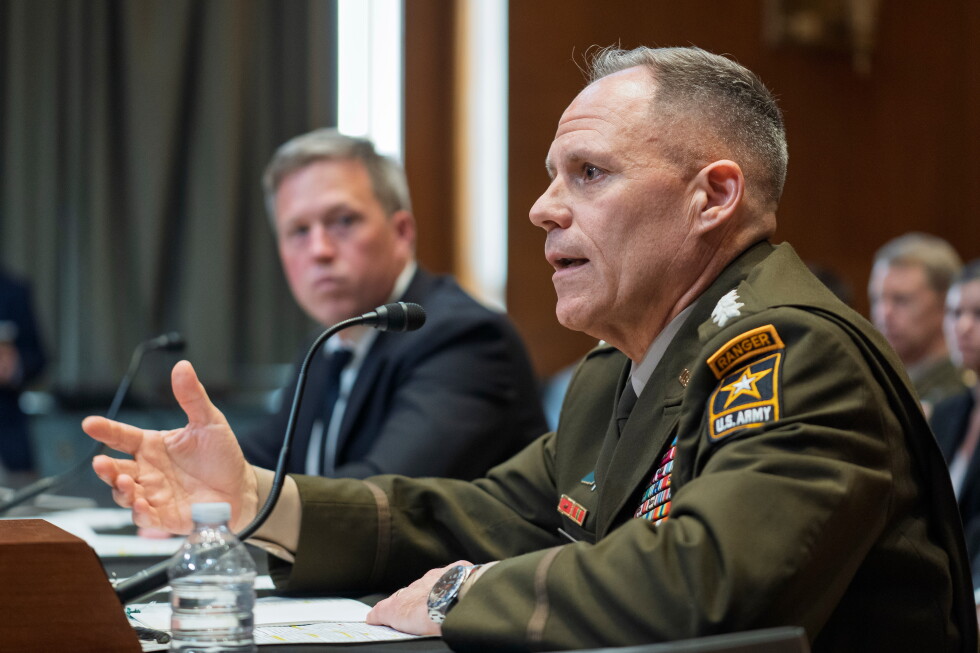
Army will shut down a unit in Europe focused on learning drone warfare
In a move that follows a sudden leadership shakeup at the top of the U.S. Army, a specialized drone warfare battalion based in Europe has been ordered to abandon its experimental unmanned warfare mission and return to its roots as a traditional airborne infantry unit, multiple anonymous defense officials confirmed Thursday. The unit, part of the 173rd Airborne Brigade with installations across Italy and Germany, had spent nearly a year refining drone tactics pioneered by Ukrainian forces in their ongoing conflict with Russia, building a reputation as the service’s leading test bed for frontline unmanned technology.
The specialized battalion was first stood up last November, bringing together 600 trained soldiers to operate as a dedicated deployable drone unit that could support any theater of operations where unmanned capabilities were needed. As recently as May 2025, Army public affairs highlighted the brigade’s work at its custom first-person view (FPV) drone lab at Italy’s Caserma Del Din, where soldiers designed and built their own attack drones, adapted systems to resist electronic jamming, and even experimented with artificial intelligence integration — a priority championed by current Defense Secretary Pete Hegseth. At the time, brigade commander Col. Joshua Gaspard noted troops were eager to leverage the lessons widely visible from Ukraine’s battlefields, saying service members “see videos of FPV drones in Ukraine all over Instagram and the news media” and were excited to deploy these cutting-edge systems themselves.
The order to disband the unit came from Gen. Christopher LaNeve, the Army’s current acting chief of staff, who took the top uniformed role in April after Hegseth abruptly fired his predecessor, Gen. Randy George. The decision marks a shift from the priorities George set during his tenure, when the former service chief made widespread integration of unmanned systems a core pillar of Army modernization through the Army Transformation Initiative, which sought to get new drone capabilities into the hands of all frontline troops, not just specialized detachments.
The disbanding order comes even as ongoing conflict in the Middle East has underscored the urgent need for the U.S. military to expand its own drone warfare expertise, drawn from Ukraine’s experience. Iranian-made low-cost Shahed drones have been used to attack commercial and military shipping, strike regional bases, kill U.S. troops, down an Army helicopter, and force American forces to expend large stockpiles of expensive advanced air defense interceptors to counter the cheap, numerous unmanned threats. As of March this year, Ukrainian President Volodymyr Zelenskyy confirmed Kyiv was already sharing its drone countermeasure and tactical expertise with five nations in the Middle East and Gulf region, with the U.S. and European states also requesting Ukrainian support.
In the weeks before George’s ouster, Army insiders widely expected the drone battalion to continue its experimental work after completing two planned major exercises in Germany scheduled for this month and next. A senior official familiar with internal deliberations noted that while the exercises had always been framed as a culminating evaluation event for the unit, most defense planners under George anticipated the battalion’s mission would be extended following the drills.
In an official statement, the Army clarified that the drone unit will wrap up its scheduled exercises as planned, then compile all findings from its year-long experimentation to share with Army force design planners to inform future unmanned systems development. “The unit was tasked to study and absorb lessons from dedicated unmanned systems forces, including those developed by the Ukrainian armed forces, and to provide that feedback to the Army in support of the Department’s direction to accelerate U.S. military drone dominance,” the service said in its statement.
LaNeve, who saw a rapid career advancement after Hegseth took office, previously served as George’s deputy before ascending to the top role. He was commanding U.S. Eighth Army in South Korea when he publicly welcomed President Donald Trump back to office at the 2025 inauguration Commander in Chief Ball, and was tapped for the vice chief of staff role by Trump last October before being elevated to acting chief in April. In a strategic guidance memo published Wednesday, LaNeve argued that “the next war will not look like our last” and called for faster innovation that pairs troop ingenuity with advanced technologies including autonomy and artificial intelligence. Notably, however, the memo makes no mention of drone development, and closes by emphasizing “timeless truths in war,” framing the ideal future Army as a force “disciplined, lethal, and relentless — an Army that closes with and destroys the enemy, leaving no doubt about the will and power of the United States.”
-

‘We are starving’: Palestinians besieged by settlers in West Bank homes run out of food
As the siege on three Palestinian homes in the occupied West Bank town of Qusra stretches into its 12th day, 15 trapped civilians including young children face rapidly dwindling food supplies, with growing evidence that Israeli soldiers are aiding settler efforts to seize the properties.
-

FBI arrests woman over alleged plot to bomb New York capitol building
U.S. law enforcement agencies have foiled a planned terrorist attack targeting New York’s state capitol building in Albany, arresting a local woman who federal prosecutors say had pledged allegiance to the Islamic State (IS) and intended to kill state lawmakers in the assault.
The Federal Bureau of Investigation took 35-year-old Jessica Bowie, a resident of Albany, into custody this week following a months-long undercover investigation that involved confidential informants and agents posing as IS operatives, according to court documents. Prosecutors outline that Bowie spent weeks refining her attack plot, ultimately selecting the Albany statehouse as her target because she viewed it as a softer target than the White House, with her end goal being to inflict systemic damage to U.S. governing institutions.
Court records detail that Bowie conducted pre-attack reconnaissance at least five times, taking photos of the building’s layout and security protocols to prepare for the strike. She mapped out a plan to conceal an explosive device inside a DoorDash food delivery bag — a photo of which is included in the official charging documents — and intended to use large nails as shrapnel to maximize casualties.
As the investigation progressed, undercover agents provided Bowie with $200 to purchase bomb-making components from a local Home Depot hardware store, driving her to the location for the purchase. Law enforcement has released surveillance images showing Bowie pushing a shopping cart through the store while selecting the materials needed to build her explosive device. After completing her purchase, investigators quote Bowie as asking the undercover operatives, “I hope the nails are big enough… because the nails work as shrapnel, right?”
When Bowie was taken into custody on Wednesday, agents found she was carrying multiple knives, a written oath of allegiance to IS, and a fake explosive device and non-functional firearm that had been provided to her by the undercover agents as part of the sting operation.
Federal charging documents additionally note that Bowie was an active social media user who regularly spread anti-American rhetoric on public platforms. She was banned from multiple platforms for violating terms of service, and had used her accounts to praise the al-Qaeda 9/11 terror attacks. In conversations with investigators, Bowie shared that she converted to Islam approximately five years ago, and had shifted her ideology from being a patriotic child waving an American flag in the aftermath of 9/11 to displaying stickers of the collapsing World Trade Center towers to show support for terror attacks.
It currently remains unclear whether Bowie intends to enter a guilty plea or challenge the charges brought against her, which include one count of providing material support and resources to a designated foreign terrorist organization.
New York Governor Kathy Hochul issued a public statement thanking the FBI and New York State Police for their work disrupting the plot and taking Bowie into custody. She noted that the foiled plot comes as the U.S. has seen a rise in political violence and targeted threats against public officials, adding that her administration had already implemented new security upgrades at the Albany statehouse and across all state government facilities earlier this year to mitigate these risks.
-

New York Jets owner Woody Johnson acquires stake in F1 team Aston Martin
SILVERSTONE, England — The Formula 1 landscape gained a high-profile new stakeholder this week, as New York Jets principal owner Woody Johnson has secured a minority shareholding in British-based racing outfit Aston Martin F1. The team has not released any details regarding the financial value of the transaction, but confirmed Johnson, who previously served as the United States Ambassador to the United Kingdom, will direct his work toward accelerating the squad’s commercial expansion, with a particular focus on the growing North American market.
Johnson already holds major sports investments across two top transatlantic leagues: he maintains controlling ownership of the National Football League’s New York Jets, and also holds an existing stake in English Premier League soccer side Crystal Palace. Following the completion of the deal, Johnson will join Aston Martin’s board of directors in the role of vice chairman, though the team confirmed he will not take on any daily operational or management responsibilities. Current executive chairman and controlling shareholder Lawrence Stroll will remain at the helm of the organization, retaining full day-to-day management and overall control of the team.
In a statement welcoming Johnson to the Aston Martin fold, Stroll emphasized the strategic value of the new partnership. He noted that Johnson’s proven track record in sports business, long-standing passion for motorsport, and new capital investment will significantly bolster the team’s position as it enters the next competitive phase of its growth trajectory. “His deep appreciation for our brand, combined with his commitment to innovation and unlocking new commercial opportunities, makes him an ideal partner as we look to the future,” Stroll added.
Aston Martin’s official announcement also highlighted Johnson’s extensive global network of high-level industry and political relationships, which the team expects will support its ongoing expansion efforts. For his part, Johnson said his time serving as U.S. Ambassador to the U.K. during the first presidential term of Donald Trump fostered a deep respect for Aston Martin’s decades-long heritage in automotive and motorsport, as well as alignment with Stroll’s long-term vision for the F1 team.
“ We also share a commitment to growing the fanbase in the United States and introducing even more fans to the excitement of Formula 1,” Johnson said in the prepared statement. The investment comes amid a period of rapid growth for Formula 1 in the U.S. market, which has seen surging broadcast viewership, packed grandstands for the annual United States Grand Prix in Austin, and the addition of two new races in Miami and Las Vegas in recent years, making North America one of the sport’s most important regions for long-term growth.
-

Watch: Fishermen rescued after five days adrift in cool box
A dramatic maritime rescue operation has concluded with the safe recovery of two fishermen who spent five days adrift in a makeshift cool box vessel off Mexico’s Pacific coastline, according to Mexican maritime authorities. The pair, a 53-year-old adult and a 32-year-old younger man, first lost all scheduled communication with their home fishing cooperative on August 14, when they were operating roughly 75 nautical miles from the Mexican shore. When the fishermen failed to return to port at their expected time and did not check in via radio as required, cooperative leaders raised the alarm with search and rescue teams, who launched an extensive sweep of the offshore area where the men had been working.
Search crews faced challenging conditions over the five-day search period, scanning vast stretches of open ocean before finally locating the two men clinging to their small cool box craft, which they had used to stay afloat after their original fishing vessel experienced catastrophic failure. The details of what caused their initial vessel to sink or become disabled have not yet been released by authorities, but initial reports indicate the men survived on limited stored water and the cool sea temperatures helped prevent severe dehydration during their drift. Once located, rescuers pulled the pair from the water and transferred them to a medical facility for evaluation, where they are reported to be in stable condition with only minor exposure-related ailments.
The incident has drawn attention to the risks that small-scale commercial fishermen face along Mexico’s long coastline, where many operate small vessels far from shore with limited emergency communication equipment. Local fishing cooperatives have announced they will review their safety check-in protocols in the wake of the rescue to prevent future prolonged search events for missing crews.
-
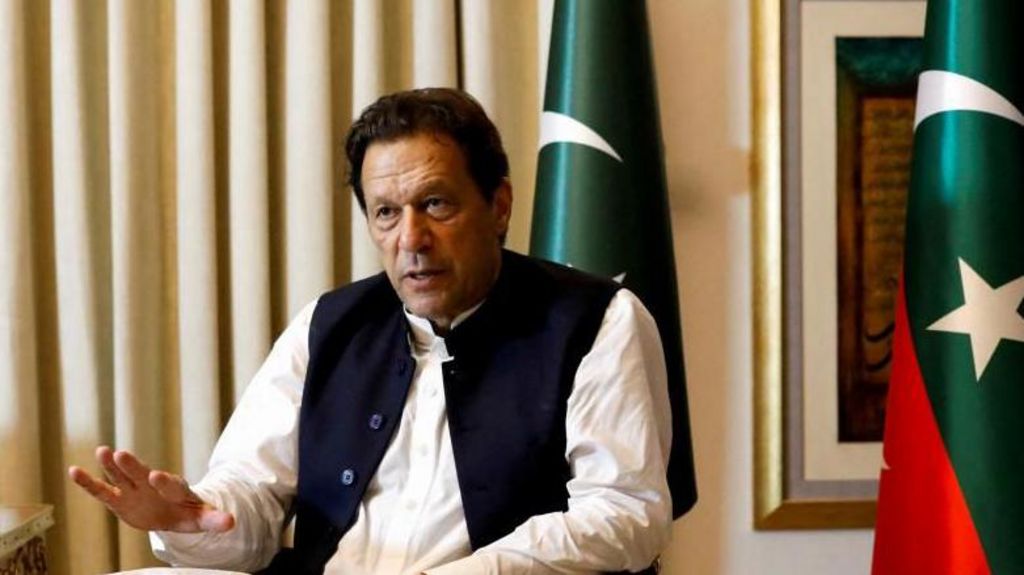
Jailed Pakistan ex-PM Imran Khan taken to hospital for treatment
Former Pakistani Prime Minister and legendary cricket captain Imran Khan, who has remained behind bars on politically disputed charges since August 2023, has been transferred to a leading private hospital in Islamabad’s capital city to receive long-delayed medical care, following a binding order from the country’s Supreme Court.
Local Pakistani media outlets confirmed that Khan was moved from Adiala Jail, located in Punjab’s Rawalpindi, to Shifa International Hospital early this week, escorted by a heavy contingent of security personnel to maintain order and prevent unauthorized gatherings. The transfer was carried out in strict compliance with a 48-hour deadline issued by a three-judge Supreme Court panel, which mandated that the 73-year-old opposition leader receive a comprehensive medical evaluation from independent specialists.
Khan, who has been at the center of Pakistan’s political turmoil since he was removed from office via a no-confidence vote in 2022, has faced more than 100 separate legal charges since his ousting, ranging from corruption and illegal sale of state gifts to leaking classified state information. All charges have been consistently dismissed by Khan and his legal team as coordinated political retribution designed to remove him from the country’s political landscape. Most recently, late last year, both Khan and his wife Bushra Bibi were sentenced to 17 years of imprisonment in a separate corruption case related to state gifts.
For months, Khan’s legal team has raised urgent alarms over his declining health behind bars, claiming that prison authorities have repeatedly blocked him from accessing specialized medical care that he requires. The most pressing concern has been severe deterioration of Khan’s eyesight: in February, his legal team told the court that Khan only retains 15% of his vision in his right eye, a decline that was preventable if authorities had approved a specialist examination in a timely manner. Pakistani government officials have disputed these allegations, claiming that Khan has been provided appropriate care while in custody.
In its written ruling, the three-judge panel emphasized its core constitutional and legal duty to protect the fundamental rights of all prisoners, regardless of their charges. “We are mindful of the constitutional and legal obligation… to safeguard the life, health, dignity and security of the prisoner,” the order read. The court also specified that a qualified eye specialist must lead the medical evaluation and any subsequent treatment for Khan during his hospital stay.
In a joint appeal to avoid unrest, both the Supreme Court judges and leaders of Khan’s political party, Pakistan Tehreek-e-Insaf (PTI), have warned Khan’s supporters against gathering in large groups outside Shifa International Hospital. Both parties noted that any unapproved public assembly would constitute a direct breach of the Supreme Court’s order, and could put Khan’s access to care at risk.
Khan’s imprisonment in August 2023 sparked massive nationwide protests across Pakistan by his thousands of supporters, which were ultimately met with a harsh crackdown by incumbent government authorities. Even more than a year after being jailed, Khan remains one of the most influential and popular political figures in Pakistan, with a large, dedicated base of supporters that cuts across regional and demographic lines.
-

Dozens dead after boat capsizes in north-western Nigeria
A devastating maritime accident has left at least 46 people dead after a passenger boat capsized in Nigeria’s northwestern Sokoto State, marking another deadly entry in the country’s long history of fatal waterway incidents. Local authorities confirm that the vessel was carrying more than 70 passengers, a majority of whom were children, and search efforts to locate remaining missing people are still ongoing in the remote affected area.
Ahmad Rufai, spokesperson for the Sokoto State Police, confirmed to the BBC on Thursday that 46 bodies have been recovered near the Gorau community in Gorony Local Government Area. Sixteen passengers were pulled from the water alive, but 15 people remain unaccounted for as of the latest update. Rufai noted that the accident site sits in a hard-to-access region, so security forces and emergency response teams have been dispatched to the location to support search and recovery operations.
A witness who spoke to Reuters shared that the children on board were traveling alongside farm owners and agricultural laborers en route to rice harvest fields. The witness added that they saw roughly 50 bodies prepared for burial, wrapped in mats and traditional woven cloth, arranged outside the local community mosque awaiting funeral rites.
Ezekiel Manzo, spokesperson for Nigeria’s National Emergency Management Agency (Nema), echoed the challenge of the site’s remoteness, confirming that emergency teams had already deployed to Gorau to lead the response effort.
Fatal boat accidents are an all-too-common occurrence across Nigeria, a pattern experts and officials attribute to consistent overcrowding of vessels, poorly maintained aging wooden craft, and widespread failure to enforce existing water safety regulations. This latest disaster follows a string of similar deadly incidents across the country in recent months: just one month prior, five people drowned when a boat overturned in neighboring Jigawa State. In January of this year, 26 people lost their lives when a boat carrying farmers and fishermen capsized traveling between Jigawa and Yobe States. In December 2024, rescue workers recovered 54 bodies from the River Niger after a vessel carrying potentially more than 200 passengers overturned.
Nigerian authorities have previously outlined a set of targeted measures to reduce preventable deaths on the country’s waterways, including mandating safer boat construction, requiring accessible life jackets for all passengers, systematic dredging of high-traffic waterways, posting dedicated safety guards at major jetties and terminals, and enforcing requirements that all boat operators hold formal training and valid operating licenses. However, infrastructure gaps and limited regulatory capacity have left most of these recommendations unimplemented or unevenly enforced across rural areas.
For millions of Nigerians, especially those living in rural and riverine communities, waterways serve as a critical primary transportation route. Many rural villages are situated along riverbanks, while widespread poor road conditions and a chronic lack of bridge infrastructure make overland travel impractical or impossible for most daily trips. Wooden vessels remain the default option for moving people and goods to markets, neighboring communities, and work sites including agricultural plots like the rice fields where this latest group was heading.
-
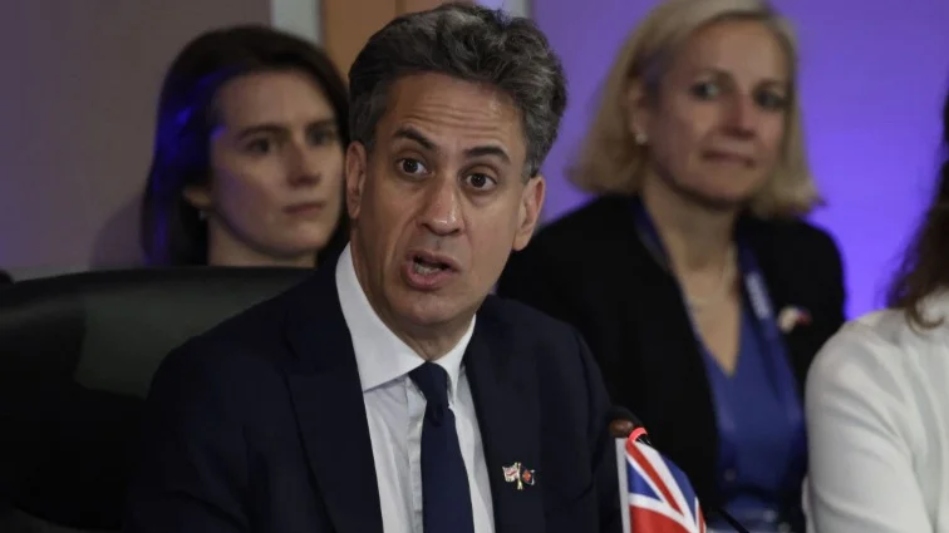
Exclusive: UK condemns ‘abhorrent’ Ben Gvir comments on killing Palestinians
The United Kingdom has issued a sharp rebuke of extreme, violence-inciting comments from Israeli National Security Minister Itamar Ben Gvir, labeling his calls for the nightly targeted killing of 30 to 40 Palestinians in Gaza as “abhorrent” and “dehumanizing” in an exclusive statement to independent news outlet Middle East Eye (MEE).
In public remarks made earlier this week, Ben Gvir not only advocated for mass nightly assassinations in Gaza, he expanded the scope of his call to include Palestinians who do not pose an immediate security threat. “There are people there who are not worthy of life. They shouldn’t live. They’re not even people,” the far-right Israeli cabinet minister added. He also openly boasted about constructing a purpose-built facility to execute Palestinian prisoners held by Israel, claims MEE brought to the attention of the British Foreign Office for comment.
A senior Foreign Office spokesperson responded to MEE’s inquiry making clear that the UK views language that dehumanizes an entire people and open calls for violence from a sitting Israeli government minister as completely unacceptable. “These remarks… serve only to further inflame an already catastrophic situation,” the spokesperson added. The UK is calling on the Israeli government to take formal action against ministers who use rhetoric that fuels intercommunal violence, and to crack down on rising violence perpetrated by Israeli settlers against Palestinian communities in the occupied territories.
This is not the first time Ben Gvir has faced British repercussions for his anti-Palestinian incitement: he is already one of two sitting Israeli cabinet ministers, alongside far-right Finance Minister Bezalel Smotrich, to be sanctioned by the UK for inciting violence against Palestinians. The spokesperson reaffirmed the UK’s ongoing commitment to working toward a long-term sustainable peace between Israelis and Palestinians, including an urgent end to the widespread humanitarian catastrophe unfolding in Gaza and equal security for all people living in the region.
The condemnation of Ben Gvir comes as the UK government prepares to roll out a package of new policy measures targeting Israeli settlement activity in September, MEE has previously reported. Senior UK officials, particularly Foreign Secretary Ed Miliband, are pushing for stronger punitive action, and Miliband has held extensive consultations with civil society groups to shape the upcoming policies. One of the most anticipated measures is a ban on imports of goods produced in illegal Israeli settlements built on occupied Palestinian land.
Miliband publicly confirmed this week that the UK will announce formal measures against Israel over its latest settlement expansion plan in the E1 corridor, a strategically sensitive area east of Jerusalem that, if fully developed, would cut the occupied West Bank geographically in half and make the creation of a contiguous, independent Palestinian state impossible.
On Tuesday, Israeli authorities opened public tenders for the construction of 1,234 new settlement housing units in the southern portion of the E1 plan, moving one of the most controversial and long-delayed settlement projects out of the planning phase and into active implementation. Miliband said he directly conveyed to Israeli Foreign Minister Gideon Sa’ar that the Israeli government must immediately halt the E1 development, withdraw the construction tender, and end all settlement expansion across the occupied West Bank.
“The impact of settler violence and terrorism has been catastrophic for Palestinian communities. Settlement expansion and attempts to create irreversible divisions on the ground threaten peace, security and the prospects for a viable Palestinian state,” Miliband said.