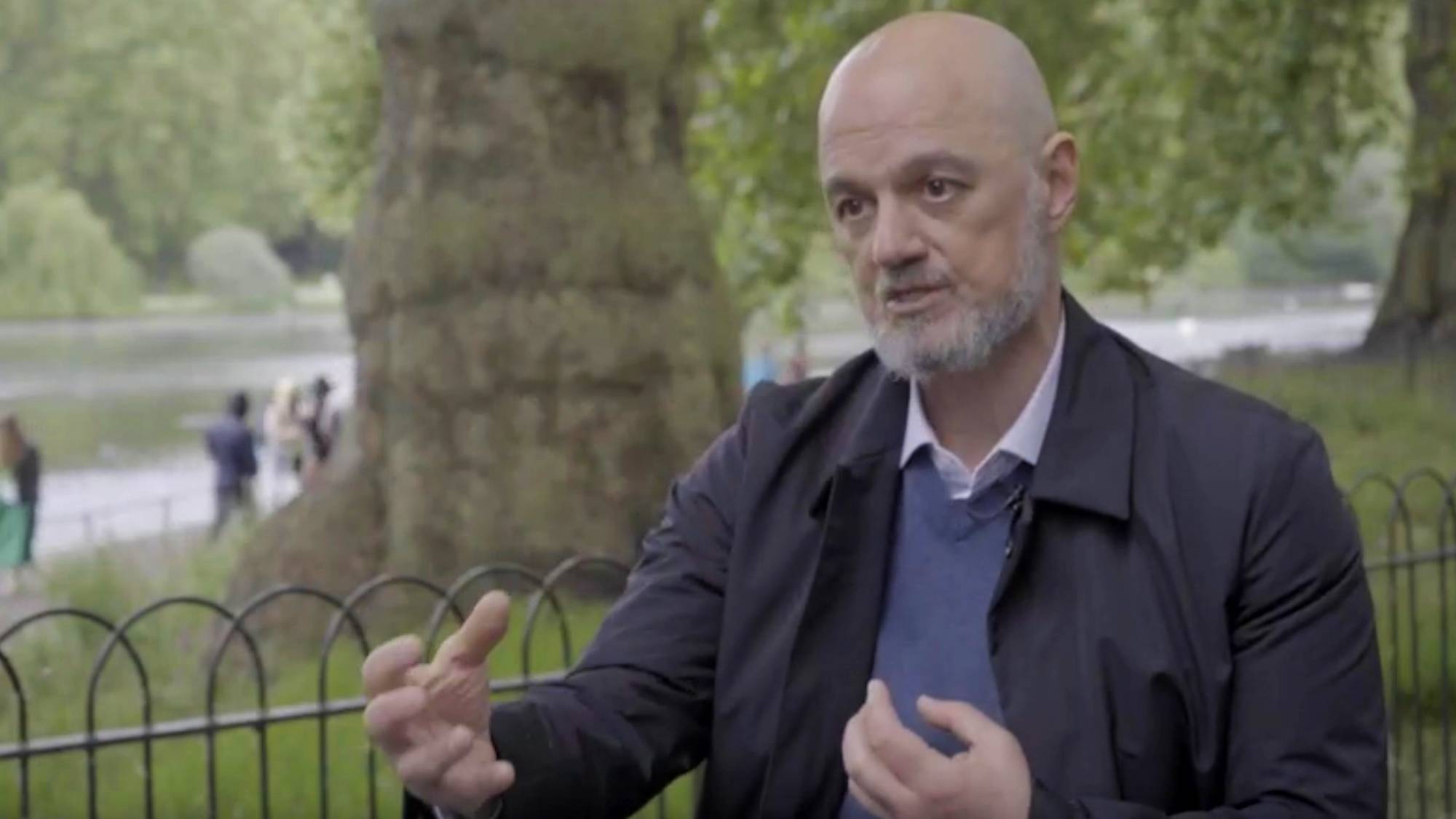
On a frigid winter morning years ago, officers from London’s Metropolitan Police arrived at the West London home of Anas Altikriti, a veteran Iraqi-born British anti-war and pro-reform activist. Altikriti was traveling abroad at the time, and only learned of the visit when one of his sons called to alert him that police were searching for him. The seasoned political activist, confused by the unexpected visit, initially brushed off the news—until officers returned two days later, this time with far more insistence.
When Altikriti followed up and called the police back, he received a chilling revelation: the force had issued him an Osman Notice, a formal alert to individuals when authorities judge their life is at imminent risk. Shaken by the news, he pressed for critical details: should he move his family to safety? Was he facing a targeted plot? Who was behind the threat? To every question, police had no answer. They told Altikriti they could share no further information, leaving him only with an ominous, unsubstantiated warning and no official protection.
It would take a full decade for Altikriti to uncover the full scope of what was happening. A British news team showed him a leaked dossier that laid bare a prolonged, granular foreign intelligence surveillance operation tracking his every movement. The files included photographs of his London home, his personal vehicle, and detailed internal WhatsApp messages from the surveillance team documenting his daily routine: from his daily commutes and school runs with his children to his scheduled lectures at a local mosque. The foreign government behind the operation, the documents confirmed, was the United Arab Emirates (UAE).
For Altikriti, the UAE’s hostility toward him came as no surprise. A prominent public voice who founded the London-based Cordoba Foundation think tank, formerly led the Muslim Association of Britain, and served as a senior official with the Muslim Council of Britain, Altikriti has long been an outspoken critic of authoritarian rule across the Gulf region. He publicly supported the 2011 Arab Spring uprisings, condemned autocratic governance in Gulf states, and repeatedly advocated for imprisoned Emirati political reformers, stoking official anger in Abu Dhabi.
While suspicion of UAE interest had lingered for years, seeing concrete evidence of a sustained surveillance operation on British soil hit Altikriti with unexpected force, he told Middle East Eye in an interview. As the initial shock faded, one overriding question pushed to the forefront of his concerns: what did British authorities know about this operation?
Altikriti says he has no trouble accepting that the UAE would target him for his political views. What he cannot reconcile is how a foreign government could run an extensive surveillance campaign inside the United Kingdom without British knowledge—or with British knowledge that was kept hidden from him. “If they knew, why is it that they didn’t tell me or at least warn me or protect me?” he asked. “Or if they didn’t know, that in itself would be a catastrophe in its own right.”
As a British citizen who has never been charged with a crime, questioned by authorities, or broken UK law, Altikriti says he holds a clear expectation that the British state will protect his basic rights. “I expect that my civil liberties would be protected, my freedom would be guaranteed,” he said. That core freedom, he argues, includes the right to criticize foreign governments and voice political opinions without being targeted by a foreign power on UK soil. “I would be guaranteed safety, at least, if nothing else, to air my views, to criticize whomever I wish to criticize whilst constantly throughout my entire life abiding by the law.”
The alleged surveillance, he argues, raises far broader questions about the unregulated scope of foreign influence in British public life. “A rogue, dictatorial, authoritarian regime such as the United Arab Emirates could actually reach into our society and infringe upon the civil liberties and freedoms and rights of citizens as well as organisations,” he said. Altikriti notes that the UAE has also targeted other British organizations, including his own Cordoba Foundation, through defamation and coordinated attacks, meaning his experience is not an isolated incident. The core systemic question, he says, is whether foreign governments can freely target British citizens and groups inside the UK—and what accountability the British state will demand in response.
Looking back to the 2010s Osman Notice he received, Altikriti says the vague, incomplete warning was deeply inadequate, particularly when he was raising two young children at the time. Police told him his life was at risk, but offered zero details about the source of the threat or what precautions he could take to stay safe. “Besides just handing me this Osman notice, as though this is a box that we’ve ticked, nothing whatsoever,” he said. That experience has gained new gravity in light of the leaked surveillance documents, he says, noting it is now clear British police were aware some threat was active. If the threat was severe enough to issue an Osman Notice, he argues, it is unacceptable that he was given no further context or protection. “The police not telling me that there is an actual threat, there is someone who is actually plotting against my life, I think is just absolutely unbelievable.”
Altikriti says he has never doubted why he drew the UAE’s attention: his long-held political views put him in direct conflict with the Gulf state’s ruling leadership. When the Arab Spring swept the Middle East and North Africa in 2011, Altikriti emerged as a high-profile supporter of pro-democracy movements across Egypt, Tunisia and other regional states, a stance that represented a direct threat to the political standing of Gulf monarchies including the UAE. “They found that extremely threatening to their own standing,” he said. The UAE made its displeasure clear in the years that followed, withdrawing invitations for Altikriti to visit and having embassy officials warn him against returning to the country. “So the fact that I’m in their bad books is of no surprise to me.”
What did shock him, he says, was the extreme extent of the UAE’s alleged actions on UK soil. For more than a decade, dozens of Emirati pro-democracy reformers have remained imprisoned in the UAE, and Altikriti’s public advocacy for their freedom further angered Abu Dhabi. “The fact that I have stood by them, the fact that I’ve spoken up for them as much as I can has angered the United Arab Emirates,” he said. “And apparently they want to silence me at any particular cost.”
Altikriti’s concerns ultimately circle back to the deep existing alliance between the UK and the UAE. The two countries maintain extensive economic, political and security ties, and the UAE has built a substantial public and economic footprint across the UK, with major investments in British football clubs, major sporting events, cultural institutions, financial markets and banking. Altikriti argues the question is not whether the UK should cut ties entirely with the UAE, but whether Britain should set clear boundaries for that relationship that protect the rights of its own citizens.
“The fact that the United Arab Emirates is one of our strongest allies is unbecoming of our own government, of our own society,” he said. He argues that the UK’s close relationship with Abu Dhabi should not come at the cost of British citizens’ fundamental rights. “If the government truly believes in freedom and civil liberties and human rights and the like, then they should take a different stand.”
That different stand, he says, must start with a full public investigation—one that examines not just the specific surveillance operation targeting him, but the full extent of UAE influence over British politics and foreign policy. Altikriti acknowledges his own experience is minor when compared to far more severe human rights abuses the UAE has been accused of committing against dissidents at home and abroad. “My story… pales in comparison to the crimes committed by the UAE regime,” he said. But that, he insists, is no reason to dismiss what happened on UK soil; it is all the more reason to examine the case closely.
Altikriti says he hopes UK political leadership will confront the issue head-on, and he has specifically called on Prime Minister Keir Starmer to challenge the status quo of the bilateral relationship. “We could be friends,” Altikriti said. “But friends do not come without conditions.” Those conditions, he argues, are straightforward: the UAE must respect British citizens’ fundamental rights and freedoms, and end all covert interference in British domestic life.
For years, claims that the UAE targeted Altikriti could be dismissed or debunked, he says. But the leaked documents, which include direct photographs, internal correspondence, and surveillance team communications, have proven the operation was real. The reason for the targeting is no longer a mystery; Altikriti already understands why he was in the UAE’s crosshairs. The only question that remains unanswered is what the British government knew—and what it will do now. “Either they support the United Arab Emirates in its dictatorial ways, and as such they should come forth and say so,” he said. “Or if they truly believe in freedom and civil liberties and human rights and the like, then they should take a different stand.”