博客

  • Searching for dignified model of ‘being there’

    Searching for dignified model of ‘being there’

    The global rise of Alzheimer’s disease presents profound challenges for aging populations, with the United States and China developing fundamentally different care paradigms rooted in their distinct healthcare infrastructures and cultural values. This divergence reflects deeper societal beliefs about responsibility, dignity, and the very nature of caregiving.

    American dementia care operates primarily through institutional frameworks where professional caregivers, specialized memory-care facilities, insurance systems, and legal protocols structure patient support. This model distributes responsibility through formal arrangements, enabling family members to maintain decision-making roles while reducing their direct hands-on care burden. The system prioritizes safety, efficiency, and liability management within regulated environments.

    Conversely, China’s approach remains predominantly family-centered, with adult children or elderly spouses providing most daily care within home settings. This tradition stems from deeply embedded cultural expectations rather than mere resource limitations. Medical sociologist Jing Jun of Tsinghua University notes this represents contrasting moral assumptions about where caregiving responsibility rightfully belongs.

    The American framework conceptualizes care as a professional service delivered by trained specialists, where families typically experience minimal social condemnation for utilizing institutional support. Chinese society, however, views care as an inherent kinship obligation, where nursing home placement often carries moral stigma associated with abandonment or unfilial conduct.

    Professor Jing observes that traditional filial piety concepts now face intense pressure from demographic shifts and medicalization trends. As medical technologies advance, families increasingly face difficult decisions about invasive interventions, where treatment refusal becomes emotionally synonymous with care abandonment.

    Dignity perceptions further differentiate these models. American care emphasizes autonomy and risk avoidance, sometimes at the expense of spontaneity and familiarity. Chinese care prioritizes relational presence and continuous familial engagement.

    Gerontology scholar Yin Shushan from Peking University identifies hidden costs in both systems: “The US approach reduces family burden but may distance care from daily life, while Chinese families preserve intimacy often at the expense of caregivers’ wellbeing.”

    Experts caution against wholesale adoption of Western institutional models in China’s rapid aging context, noting that large-scale facilities might erode relational care foundations while romanticizing family sacrifice ignores practical limitations like smaller households and geographic mobility.

    The future of Chinese dementia care, researchers suggest, depends on developing supportive institutions that complement rather than replace families—through caregiver training, community services, and cultural reframing that recognizes comfort-focused care as equally ethical as medical intervention.

  • Fudan advances VLEO satellite tech

    Fudan advances VLEO satellite tech

    Shanghai’s prestigious Fudan University has announced groundbreaking advancements in Very Low Earth Orbit (VLEO) satellite technology, positioning China to challenge United States dominance in space infrastructure. The university revealed on Thursday that it has achieved critical technological breakthroughs and expects to unveil a prototype satellite imminently, with an engineering model anticipated by late 2026 or early 2027.

    The development comes as the US maintains overwhelming space infrastructure superiority with over 11,000 satellites in orbit—representing more than 70% of global assets. SpaceX’s Starlink constellation alone operates approximately 10,000 satellites, creating substantial first-mover advantages. Experts identify VLEO technology as a strategic opportunity for China to leapfrog existing space capabilities.

    VLEO satellites operate at altitudes of 150-300 kilometers, significantly lower than traditional low-Earth orbit satellites that function at 350-2,000 kilometers. This proximity to Earth provides exceptional advantages including reduced launch costs (90% lower than conventional satellites), minimal radiation exposure, rapid deorbiting capabilities, and negligible space debris accumulation. Performance metrics are equally impressive: Earth observation resolution reaches 0.1-0.5 meters (comparable to aerial drones), while signal latency drops to just 5 milliseconds with communication speeds exceeding traditional LEO satellites by tenfold.

    The primary technical challenge has been atmospheric drag at such low altitudes. Fudan’s research team has innovated air-breathing plasma propulsion technology that captures nitrogen and oxygen molecules from the thin upper atmosphere to use as propellant. This breakthrough enables continuous thrust-drag balance, allowing indefinite orbital maintenance with a design life exceeding two years.

    According to Zhao Qiang, Party Secretary of Fudan’s Institute of Modern Physics, the university is committed to ‘advancing core technologies and promoting industry-academia-research integration to establish VLEO as a strategic advantage for China.’

    The program’s next phase involves launching a joint research initiative for civilian applications across the Lancang-Mekong region. Associate Professor Yang Yang revealed plans for a six-satellite constellation capable of revisiting the same ground location within one hour, significantly enhancing regional economic development and public welfare applications.

    Concurrently, Fudan announced its ‘Lancang-Mekong Future Satellite’ has operated successfully for eighteen months, producing landmark scientific achievements including China’s first satellite-based ‘front view’ solar image using Mg II k spectra. These observations enable unprecedented high-resolution (better than 0.1 nanometer) extreme ultraviolet spectral analysis of magnesium ion lines, contributing to improved understanding of solar activity mechanisms and enhanced space weather forecasting capabilities.

    Some research outcomes have already been integrated into Fudan’s space weather prediction models, demonstrating preliminary effectiveness in ionospheric weather forecasting.

  • SMILE mission to be launched on April 9

    SMILE mission to be launched on April 9

    In a landmark display of international space collaboration, the Solar wind Magnetosphere Ionosphere Link Explorer (SMILE) mission is officially scheduled for launch on April 9 from Europe’s Spaceport in French Guiana. The National Space Science Center of the Chinese Academy of Sciences confirmed the completion of all prelaunch activities, marking the final countdown for this groundbreaking China-Europe joint venture.

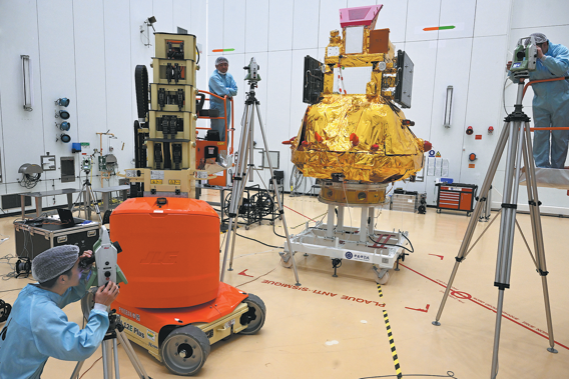
    The SMILE satellite represents the first comprehensive mission-level space science partnership between the Chinese Academy of Sciences and the European Space Agency. Currently integrated onto a Vega-C rocket, the spacecraft will pioneer innovative observation techniques to study solar-terrestrial interactions. Its primary instrument, a wide-field soft X-ray imager, will achieve unprecedented global imaging of Earth’s magnetospheric boundaries—a technological first in space weather research.

    Solar wind, composed of high-speed plasma flows emanating from the sun, interacts with Earth’s magnetosphere to create space weather events that pose significant threats to orbital satellites, navigation systems, communication networks, and power infrastructure in high-latitude regions. The SMILE mission aims to provide critical insights into these interactions, potentially revolutionizing our ability to predict and mitigate space weather hazards.

    The mission’s preparation followed rigorous qualification and flight acceptance reviews completed on October 28. Critical components underwent meticulous transportation logistics, with satellite propellant shipped from Shanghai in November arriving in French Guiana by early February. The flight model and testing equipment departed from the European Space Research and Technology Centre in the Netherlands on February 11, arriving via cargo vessel Colibri on February 26.

    At the Guiana Space Centre, a joint China-Europe team conducted intensive verification campaigns, confirming all systems operate within specified parameters and maintain stability. The successful physical and functional integration with the payload launch adapter has met all preparatory milestones. With the launch window confirmed, final checks are underway regarding weather conditions and vehicle integration to ensure optimal conditions for liftoff.

  • Trump tells aides he’s willing to end war with Iran even if Hormuz Strait remains closed: report

    Trump tells aides he’s willing to end war with Iran even if Hormuz Strait remains closed: report

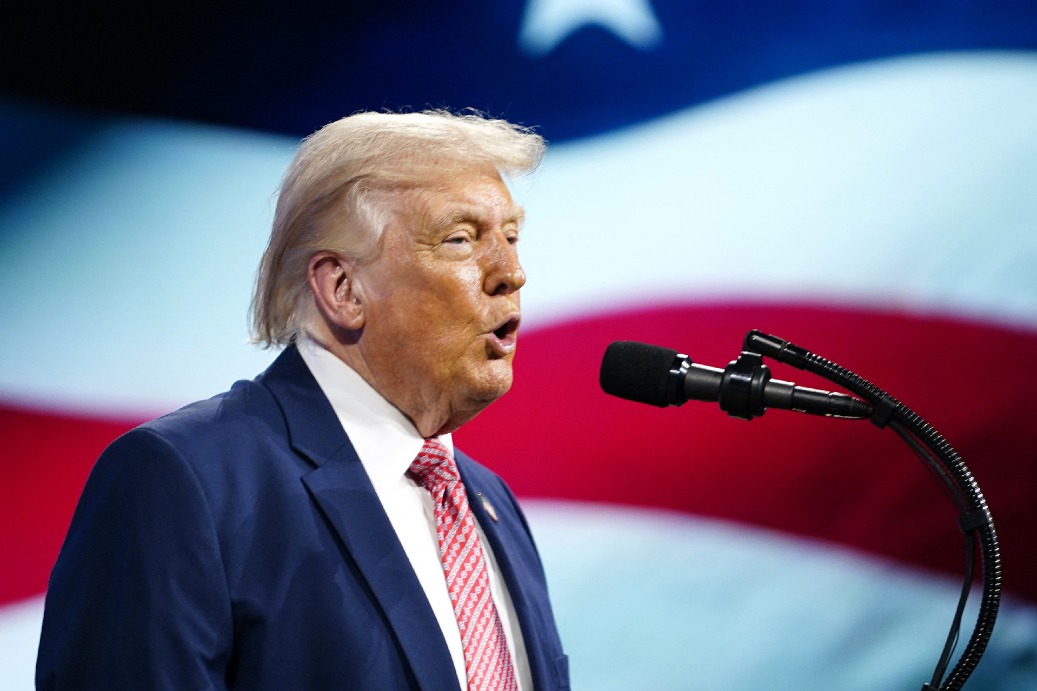
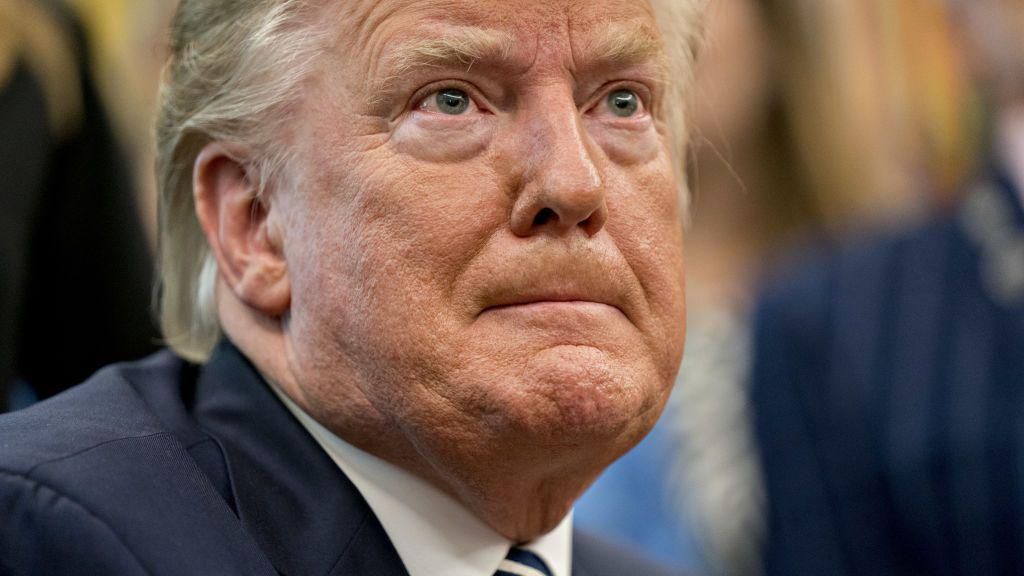
    WASHINGTON — In a surprising shift in US policy framing around the ongoing US-Israeli conflict with Iran, former president and current White House incumbent Donald Trump has privately told his senior aides he is prepared to conclude the military campaign even if the Strait of Hormuz, the world’s most critical chokepoint for global energy trade, remains mostly closed to commercial shipping, multiple senior Trump administration sources told The Wall Street Journal in a report published Monday evening.

    The report, which carried a publication date aligned with the March 31, 2026 update of the original Xinhua News Agency item, outlines that Trump and his inner circle recently completed a strategic assessment of military options. That evaluation found that a large-scale dedicated military mission to fully reopen the strategic waterway would extend the duration of the conflict well beyond the four-to-six week timeline Trump has publicly and privately committed to for the campaign. The need to stick to that truncated timeline has overridden the longstanding US policy priority of keeping Hormuz open to all commercial traffic, according to the sources cited by the Journal.

    The Strait of Hormuz, which sits between the Persian Gulf and the Gulf of Oman, carries roughly one-fifth of the world’s daily crude oil and natural gas shipments, making its continued operation a core pillar of global energy market stability. A prolonged partial closure would likely put sustained upward pressure on global energy prices, raising inflationary pressures across major economies worldwide. This new reported position from Trump marks a notable departure from decades of US foreign policy that has treated unimpeded access to the strait as a non-negotiable national security interest.

  • Trump sees ‘America First’ opportunity in Nasa mission to Moon

    Trump sees ‘America First’ opportunity in Nasa mission to Moon

    As NASA prepares to launch the Artemis II mission—marking humanity’s first return to deep space since 1972—the endeavor carries profound geopolitical implications for the Trump administration and broader US strategic interests. This historic flight, carrying three American and one Canadian astronaut, represents more than technological achievement; it symbolizes a critical juncture in global space dominance competitions.

    The mission’s timing coincides with heightened domestic divisions within the United States regarding foreign policy, economic concerns, and immigration. A successful lunar operation could provide the Trump administration with substantial political capital, potentially fostering rare national unity while demonstrating American technological prowess.

    President Trump’s space policy evolution reveals strategic recalibration. Initially focused on Martian exploration during his first term, his administration now prioritizes lunar presence through Executive Order 12102, mandating US return to the Moon by 2028 and establishing permanent lunar infrastructure by 2030. The order explicitly frames space superiority as reflecting national vision and willpower, directly linking cosmic exploration to terrestrial power dynamics.

    NASA Administrator Jared Isaacman contextualizes the mission within contemporary geopolitical realities: ‘We face a genuine geopolitical rival challenging American leadership in space. This endeavor transcends symbolic planting of flags; it represents permanent establishment of presence. America will never again relinquish the Moon.’

    The modern space race differs fundamentally from Cold War competitions with the Soviet Union. Whereas the Apollo program primarily served ideological demonstration, Artemis incorporates substantial economic considerations. Lunar resources including helium-3 (valued exceeding $20,000/kg), water ice for propulsion, and rare earth minerals like lithium and platinum present unprecedented economic opportunities.

    Former NASA Administrator Sean O’Keefe emphasizes the resource dimension: ‘After decades considering the Moon a mere dust bowl, we now recognize its substantial helium-3 deposits, potentially enabling compact nuclear fusion reactors with extended operational lifetimes.’

    Space policy experts draw historical parallels to nineteenth-century western expansion. Clayton Swope, former CIA Directorate of Science and Technology veteran, compares lunar exploration to the Lewis and Clark expedition: ‘We cannot precisely quantify the Moon’s value, but we recognize its strategic necessity amidst competition with China.’

    The White House explicitly connects space achievement to national identity. Spokesperson Liz Huston states: ‘Through President Trump’s America-First policies, the United States will lead humanity into space, inaugurating unprecedented achievements in cosmic exploration.’

    Historical precedent suggests space exploration’s unifying potential. The Apollo 11 mission captivated 125-150 million Americans during the tumultuous Vietnam War era, providing collective pride amid social fragmentation. Experts like Council on Foreign Relations senior fellow Esther Brimmer note: ‘Space remains among the few domains transcending political polarization, representing shared national pride for most Americans.’

    As astrophysicist David Gerdes—who witnessed the Apollo landing as a child—reflects: ‘The technological boldness and astronaut spirit inspired generations across political spectra. A diverse contemporary crew returning to the Moon could potentially reunite the nation amidst current divisions.’

  • Inflation increases to 2.5% in Europe as Iran war boosts energy prices

    Inflation increases to 2.5% in Europe as Iran war boosts energy prices

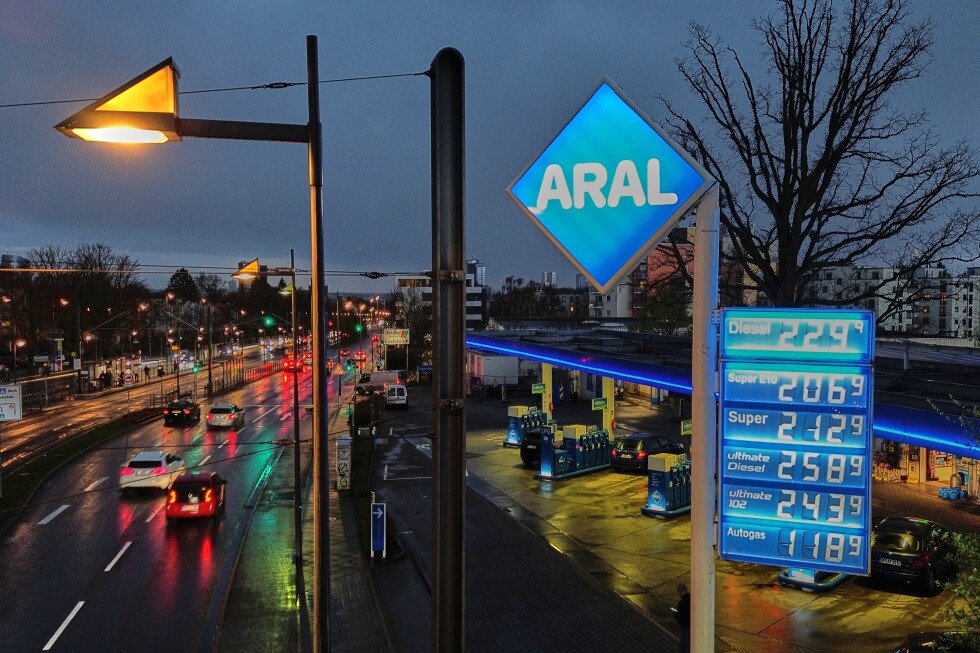
    FRANKFURT, Germany — Escalating geopolitical tensions in the Middle East have triggered a significant surge in European inflation, with official data revealing a jump to 2.5% in March from February’s 1.9%. The conflict involving Iran has severely disrupted energy supplies, precipitating a sharp increase in fuel costs that is now permeating the broader economy.

    The statistical office of the European Union, Eurostat, reported a dramatic reversal in energy price trends, with March witnessing a 4.9% increase compared to February’s 3.1% decline. This energy shock has created immediate ripple effects across consumer markets, particularly affecting transportation and agricultural sectors.

    At Rome’s Trionfale market, vendors are experiencing firsthand the economic consequences of the conflict. Anna Caruso, a vegetable stand operator, explained the direct correlation between fuel costs and produce pricing. “When transportation expenses rise, these increases are inevitably passed along to consumers through higher prices for vegetables like zucchini, eggplant, and seasonal fruits,” she noted, adding that customers are increasingly opting for more affordable alternatives.

    Market merchant Paola Ianzi confirmed that while seasonal factors contribute to some price increases, the conflict has significantly exacerbated the situation through its impact on diesel and transportation costs that suppliers must recoup.

    Beyond energy, the inflation picture shows varied sector performance with food prices rising at a relatively moderate 2.4% while services—encompassing healthcare to personal services—increased by 3.2%.

    European Central Bank President Christine Lagarde has expressed concern that businesses might be quicker to implement price increases during this inflationary episode, drawing from recent memories of the 2022 inflation crisis when prices reached double digits following Russia’s energy supply reductions.

    The current crisis stems from Iran’s obstruction of tanker traffic through the Strait of Hormuz, a critical maritime passage for approximately 20% of global oil and gas shipments. This blockade has created expectations of substantially tighter fuel markets in the coming months.

    Financial analysts are now anticipating monetary policy responses, with many predicting the ECB will implement interest rate increases to prevent inflationary expectations from becoming entrenched in the economy. ABM AMRO’s Head of Macro Research Bill Diviney stated: “We expect the ECB to raise rates already at the April and June governing council meetings to pre-empt any de-anchoring of inflation expectations.” This sentiment is echoed by Oxford Economics analysts, who similarly forecast two rate increases this year. The ECB maintained its key rate at 2% during its most recent meeting on March 19, with rate hikes remaining the central bank’s primary anti-inflation instrument.

  • Experts hail China’s role in Asian energy security

    Experts hail China’s role in Asian energy security

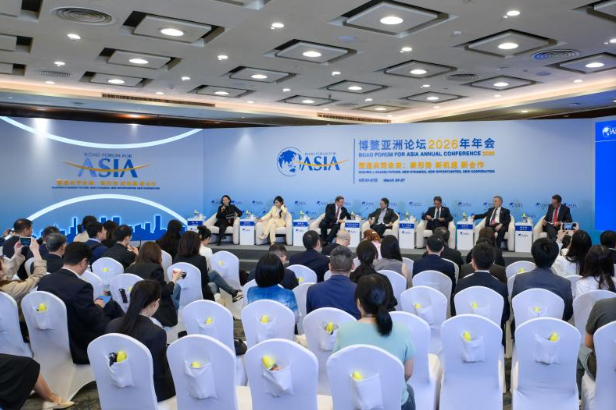
    At the 2026 Boao Forum for Asia Annual Conference held in Hainan last week, regional and international experts united in highlighting China’s decades-long investments in renewable energy development as a game-changing asset to buffer Asian economies against growing global energy volatility, triggered by recent U.S.-Israeli strikes on Iran that have disrupted critical Middle Eastern supply routes.

    The conflict has effectively closed the Strait of Hormuz, a chokepoint that underpins a large share of Asia’s energy imports. According to 2025 data from the International Energy Agency, nearly 90 percent of all liquefied natural gas (LNG) exported through the strait was destined for Asian markets, accounting for more than a quarter of the continent’s total annual LNG imports. This sudden disruption has laid bare Asia’s longstanding structural vulnerability: decades of reliance on fossil fuel imports from the Middle East have left most regional nations exposed to sudden price swings and supply cutoffs driven by geopolitical conflict.

    Mohd Faiz Abdullah, executive chairman of Malaysia’s Institute of Strategic and International Studies, framed the current energy turmoil not as a standalone crisis, but as a symptom of broader systemic instability in the global economy. He noted that China’s advanced research and development in alternative energy positions it uniquely to lead a regional transition away from fossil fuel dependence. “This is where China can come in… to further advocate for the implementation of alternative energy resources,” Faiz explained, adding that China can set a critical example for other nations looking to reorient their national energy strategies.

    Li Xing, a Yunshan Leading Scholar at the Guangdong Institute for International Strategies and adjunct professor at Denmark’s Aalborg University, echoed this assessment, emphasizing that the ongoing crisis has created unexpected new opportunities to deepen energy collaboration across Asia. China made a strategic pivot to renewable energy more than a decade ago, Li pointed out, leaving it far less vulnerable to Middle Eastern supply shocks than most other regional economies. He cited the country’s 15 consecutive years of global leadership in installed wind power capacity as a clear demonstration of this successful transition. “Asian countries should step up their cooperation with China to address infrastructure challenges in renewable energy,” Li said. “In this way, they will not need to rely so heavily on oil imports from the Middle East.”

    Building regional energy resilience through the transition away from volatile fossil fuels emerged as a central topic of discussion across forum panels. Armida Salsiah Alisjahbana, executive secretary of the United Nations Economic and Social Commission for Asia and the Pacific (UNESCAP), framed the current crisis as a catalyst for long-term systemic change. She noted that the turmoil creates a urgent opening to build more resilient regional energy systems and reduce exposure to wild swings in global fossil fuel prices.

    Alisjahbana highlighted China’s outsized capacity to support this transition, from creating new market opportunities and connecting regional business ecosystems to driving inclusive economic growth and job creation through the expansion of clean energy infrastructure. Still, she cautioned that meaningful regional progress requires addressing disparities in development across Asian nations, particularly for smaller, lower-income economies that face greater barriers to scaling renewable energy. Ensuring that energy diversification and regional cooperation help narrow these development gaps, she said, must be a core priority.

    Gao Haichun, co-chair of Jiangsu-based global renewable energy firm Trina Solar Co, added that China has already demonstrated that a large-scale transition to renewable energy is achievable. Today, she noted, 100 percent of China’s annual new electricity demand is met by renewable energy sources, setting a clear benchmark for other Asian nations to follow. Echoing the traditional Chinese proverb that “it is better to teach a person to fish than to give them a fish,” Gao framed renewable energy cooperation as a sustainable model for long-term energy independence. Renewable energy infrastructure such as solar power stations can operate for more than 30 years, she explained, enabling energy self-sufficiency not just for entire countries, but for individual cities, industrial parks, and even households. “If we want to develop renewable energy, especially for Asia, we must form closer cooperation,” Gao emphasized.

  • Family last safety net in dementia care

    Family last safety net in dementia care

    As China confronts an escalating Alzheimer’s epidemic, families across the nation are becoming de facto nursing homes for their loved ones, operating without professional support or institutional respite. The country’s rapidly aging population has created a healthcare crisis where familial devotion has become the primary defense against a disease affecting nearly 17 million citizens.

    Wei Qiang’s morning ritual exemplifies this national challenge. Each day at dawn, he assists his 80-year-old mother—once celebrated for her sharp memory—through the meticulous routine of feeding, bathing, and positioning that dementia care demands. His home has transformed into a full-time medical facility, operating without nursing shifts or professional assistance.

    The recently published China Alzheimer’s Disease Report 2024, a collaborative study led by Renji Hospital of Shanghai Jiaotong University School of Medicine, reveals the staggering scale of this health emergency. With formal care options remaining severely limited, culturally stigmatized, and unevenly distributed, the burden of long-term dementia care falls overwhelmingly on family members.

    Adult children and elderly spouses now serve as frontline healthcare providers, undertaking complex medical decisions, emotional labor, and moral responsibilities with minimal institutional support. This care model reflects China’s deep-rooted filial ethics, which dictate that children should provide comprehensive care for aging parents regardless of personal sacrifice.

    The situation represents a collision between traditional values and modern demographic realities. As China’s population ages at an unprecedented rate, the healthcare system struggles to adapt, leaving families to navigate the physically and emotionally exhausting journey of dementia care largely alone. The crisis highlights the urgent need for expanded institutional support, professional training for family caregivers, and destigmatization of external care options.

  • AI dispute reveals US hegemony

    AI dispute reveals US hegemony

    A high-stakes legal clash between leading American artificial intelligence firm Anthropic and the U.S. federal government has pulled back the curtain on the hegemonic logic that shapes Washington’s approach to AI development and global governance, according to international policy experts. The confrontation began earlier this month when the Biden administration labeled Anthropic a “national security supply chain risk” after the company refused to grant U.S. government agencies unfettered, unrestricted access to its proprietary large language models—access Anthropic argued could enable dangerous misuse of the technology in autonomous weapons systems and mass surveillance programs.

    Last Thursday, federal Judge Rita Lin of the U.S. District Court for the Northern District of California issued a preliminary injunction temporarily blocking the administration’s actions, pausing both the supply chain risk designation and a White House order forcing all federal agencies to discontinue use of Anthropic’s AI tools. The ruling delays enforcement of the government’s ban for seven days to give the Biden administration time to file an appeal, while the court weighs the full merits of Anthropic’s lawsuit against the federal government. In her decision, Lin explicitly ruled that punishing Anthropic for drawing public attention to the government’s contracting demands amounted to unlawful retaliation against the company’s First Amendment rights. Anthropic welcomed the court’s ruling, saying in a statement that it was grateful for the court’s swift action and confident it would ultimately prevail on the full legal claims brought against the government.

    The AI safety-focused firm’s co-founder and CEO Dario Amodei has long warned of the risks of concentrating advanced AI power in the hands of a small, unaccountable group of decision-makers, noting in a January blog post that he sees major danger in allowing a small cohort of actors to gain control over an autonomous army of drone systems.

    Chinese policy experts who study global technology governance say the dispute lays bare a troubling expansion of U.S. national security framing that weaponizes economic and technological competition to advance geopolitical goals. He Yun, a researcher at Tsinghua University’s Belt and Road Institute and associate professor of public administration at Hunan University, argues that the U.S. government’s use of the “supply chain risk” label to pressure a private company over its ethical stances reflects a deliberate trend of expanding and instrumentalizing the concept of national security. In recent years, Washington has fully integrated economic competition and technological dominance into its national security strategy, meaning any corporate action that deviates from its military or geopolitical priorities can be instantly reclassified as a threat, He explained. “When the so-called principle of American freedom clashes with Washington’s geopolitical hegemonic objectives, it is readily sacrificed in favor of the latter,” she added.

    Lang Ping, head of security studies at the Chinese Academy of Social Sciences’ Institute of World Economics and Politics, notes that the conflict underscores the U.S. government’s increasingly assertive unilateral posture in the global AI space. As a leading global AI power, the U.S. frames competition in this sector as a winner-takes-all economic and geopolitical race, Lang explained. “The US has persistently pursued a monopoly position in the global AI sector, rallying allies to develop a coordinated technological ecosystem while promoting the export of full-stack systems, with the aim of shaping a market structure centered on its own leadership,” she said.

    In contrast to the U.S.’s unilateral, monopoly-seeking approach, experts highlight the inclusive governance framework China has put forward for the global AI sector. As the world’s second-largest economy and a major leader in AI innovation, China has actively worked to shape multilateral cooperative AI governance, launching the Global Initiative on AI Governance and the Global Action Plan on AI Governance to offer an inclusive alternative that centers shared benefits rather than great power competition.

    China adheres to a people-centered approach and the core principle of “AI for good”, seeking to balance technological innovation, regulatory oversight and power distribution to deliver stable, inclusive AI development that benefits the entire global community. All nations, regardless of size or economic power, hold an equal right to develop and access AI technology, He Yun emphasized. China advocates building an inclusive, equitable global AI governance system under the framework of the United Nations, with a specific focus on expanding representation and capacity-building for developing nations to close the global digital divide.

    By comparison, U.S. AI policy is marked by a heavy shift toward securitization and bloc-based exclusionary strategies, He noted. This reliance on unilateral action and geopolitical division risks fragmenting global AI supply chains and splitting global innovation ecosystems, exacerbating global technological inequality and raising the risk of great power confrontation over the future of AI development.

  • Czech police arrest a man who claimed responsibility for attack on a Russian center in Prague

    Czech police arrest a man who claimed responsibility for attack on a Russian center in Prague

    PRAGUE — Czech law enforcement authorities have apprehended a foreign citizen who voluntarily surrendered and confessed to orchestrating a Molotov cocktail assault against the Russian House cultural center in Prague. The suspect, whose identity and nationality remain undisclosed by police, turned himself in on Monday.

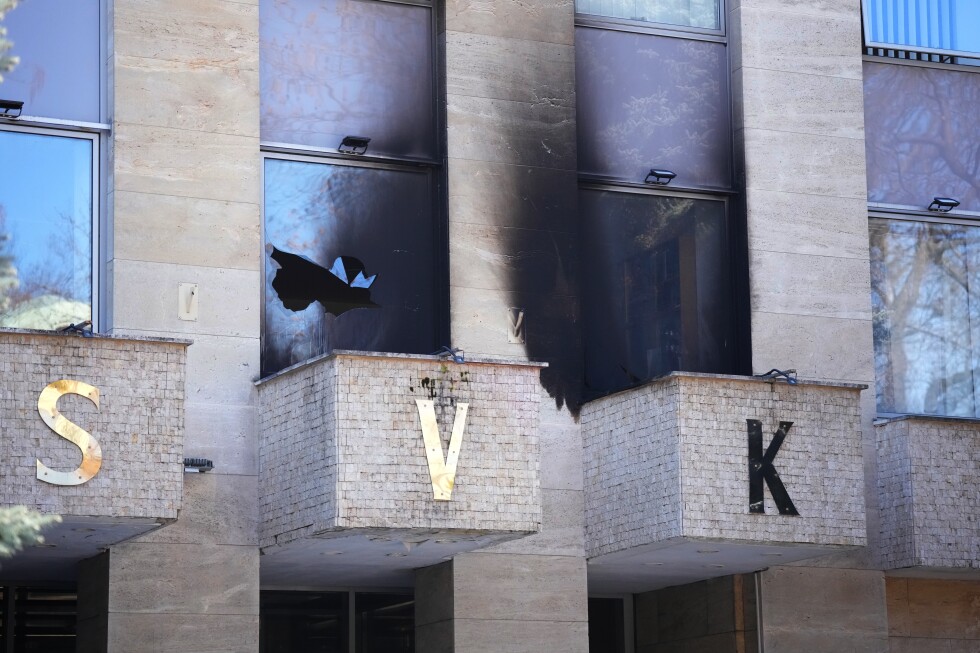
    According to official statements, the individual admitted to planning the attack since summer 2023. The incident occurred last Thursday evening when multiple incendiary devices were launched at the Russian-state-funded facility. While photographic evidence shows significant window damage and smoke residue on the building’s exterior, the structure avoided catching fire.

    Igor Girenko, director of the cultural center, provided details to Russian state media, indicating that six Molotov cocktails were deployed during the attack, with three failing to detonate. The center, which organizes cultural, educational, and scientific programs while offering Russian language courses, does not hold diplomatic status despite its Russian government funding.

    The incident has triggered diplomatic responses from both nations. Russian Foreign Ministry spokeswoman Maria Zakharova characterized the assault as “barbaric,” while Russia’s embassy in Prague formally requested enhanced security measures for Russian institutions and personnel within the Czech Republic. The Czech Foreign Ministry has simultaneously issued condemnation of the violent act.

    Investigation into the motives and precise circumstances surrounding the attack continues as authorities process evidence and evaluate potential security implications.