博客

  • Nigeria warns its citizens in South Africa to be cautious after march turns violent

    Nigeria warns its citizens in South Africa to be cautious after march turns violent

    The port city of KuGompo (formerly East London) in South Africa’s Eastern Cape province became the epicenter of violent unrest this week, triggered by tensions surrounding the ceremonial installation of a Nigerian community leader. What began as a peaceful anti-illegal immigration protest organized by civil society groups escalated dramatically when a demonstrator claimed to be assaulted by a foreign national. The incident ignited widespread disorder, resulting in ten vehicles set ablaze and numerous shops—both foreign and locally owned—being looted.

    The underlying tension stems from the recent recognition of Solomon Ogbonna Eziko as ‘Eze Ndi Igbo East London’ by the local Igbo diaspora community. This traditional title, translating to ‘king of the Igbo people in East London,’ is a common cultural practice among Igbos living outside their Nigerian homeland. However, some South African residents misinterpreted this ceremonial designation as an attempt to establish parallel political authority, despite having no legal standing beyond cultural recognition.

    South African authorities, including KuGompo Mayor Princess Faku of the African National Congress, condemned the violence while acknowledging the right to peaceful protest. ‘We supported the march as part of defending our sovereignty but cannot condone violence,’ stated Faku. ‘It’s profoundly disappointing that such significant civic engagement devolved into chaos.’

    The Nigerian High Commission promptly issued safety advisories, urging its citizens to restrict movement and avoid public gatherings amid heightened tensions. Meanwhile, Igbo community representatives emphasized the purely ceremonial nature of the title. Dr. ABC Okokoh, a leader within South Africa’s Igbo community, clarified to SABC that the installation was a ‘private event’ with no intention of establishing sovereignty, adding an apology for ‘the consequences that played out.’

    Cultural experts and provincial authorities have denounced the installation as potentially violating customary protocols and South African laws. The Eastern Cape’s cooperative governance department explicitly distanced itself from the event while calling for respect of national legislation. Diplomatic apologies were subsequently extended during a picket at Nigeria’s high commission in Pretoria, underscoring the incident’s transnational implications.

  • Nasa Apollo missions: Stories of the last Moon men

    Nasa Apollo missions: Stories of the last Moon men

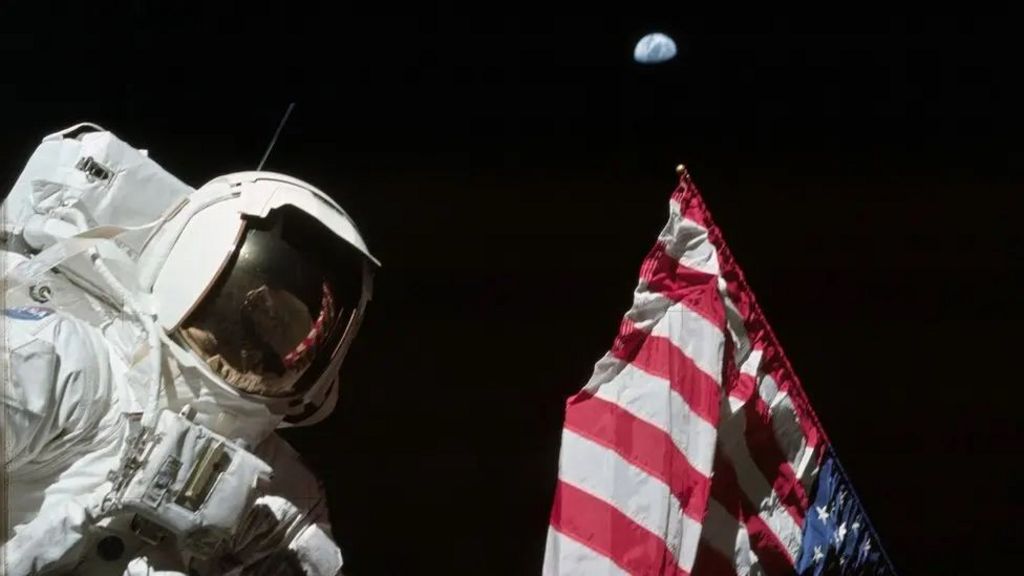
    The recent passing of Apollo 13 commander Jim Lovell marks a significant moment in space exploration history, leaving only five surviving astronauts who have ventured beyond Earth’s orbit to the Moon. These pioneers, part of NASA’s Apollo missions in the 1960s and 1970s, represent a dwindling generation of space explorers as humanity stands on the brink of a new lunar era.

    With more than five decades elapsed since the last human footprint was left on the lunar surface, the international competition to return to the Moon has intensified dramatically. NASA’s Artemis program, initially scheduled for a 2025 crewed launch, has encountered delays pushing the mission to 2026. Simultaneously, China has emerged as a formidable contender in the new space race, targeting a 2030 lunar landing following their successful far-side Moon probe landing in June 2024.

    The commercial space sector presents a mixed landscape of ambition and challenge. Private enterprises have attempted lunar scientific missions with varying outcomes, where technical difficulties have frequently overshadowed successes. Boeing’s Starliner complications, which recently stranded astronauts aboard the International Space Station, and SpaceX’s recurrent Starship prototype failures demonstrate the persistent complexities of space travel.

    The five remaining Apollo veterans each carry unique historical significance:

    Edwin ‘Buzz’ Aldrin, the second man to walk on the Moon during Apollo 11, has evolved into an enduring advocate for Mars exploration. Now 93, Aldrin continues to champion ambitious space goals, stating, ‘I don’t think we should just go there and come back – we did that with Apollo.’

    Charlie Duke, who became the youngest lunar walker at 36 during Apollo 16, served as capsule communicator during Armstrong’s historic landing. Now residing in Texas, Duke acknowledges the challenges awaiting Artemis astronauts: ‘They’ve picked near the South Pole for the landing… it’s really rough down there. But we’ll pull it off.’

    Fred Haise, part of the nearly catastrophic Apollo 13 mission, never achieved his lunar landing due to subsequent mission cancellations. Following NASA service, he transitioned to the aerospace industry, embodying the generation that bridged early space exploration with modern advancements.

    Harrison Schmitt, the first scientist-astronaut on Apollo 17, represented a new breed of space explorer. The geologist turned senator continues to contribute to academic and consulting work while maintaining his unique perspective on space science.

    David Scott, Apollo 15 commander, pioneered lunar driving with the Lunar Roving Vehicle. His post-NASA career has included film consulting, helping preserve the historical accuracy of space exploration narratives for new generations.

    As these lunar pioneers age, their legacy fuels inspiration for the next generation of space explorers preparing to write new chapters in humanity’s cosmic journey.

  • Russian oil tanker docks in Cuba ending near-total blockade

    Russian oil tanker docks in Cuba ending near-total blockade

    In a significant development that alleviates a severe energy crisis, the Russian-owned oil tanker Anatoly Kolodkin has successfully docked at the port of Matanzas, Cuba. The vessel carried an estimated 730,000 barrels of crude oil, marking the first such delivery to reach the island nation since the United States imposed a near-total fuel blockade in January.

    The blockade was initiated following the U.S. capture of Venezuela’s socialist leader Nicolás Maduro, Cuba’s primary regional ally. President Donald Trump had threatened tariffs on any country supplying oil to Cuba, effectively severing its main energy supply and plunging the country into a dire humanitarian situation. This led to nationwide blackouts, crippled medical services in most hospitals, and forced the closure of schools and government offices.

    A notable shift in rhetoric emerged last weekend when President Trump stated he had “no problem” with other nations sending fuel to Cuba, clarifying that the Cuban people “have to survive.” This was followed by White House Press Secretary Karoline Leavitt’s announcement on Monday, explaining that the specific shipment was permitted on a “case-by-case basis” to address urgent humanitarian needs. However, she emphasized that there has been no overarching change in U.S. policy, and the broader oil embargo remains firmly in place.

    Despite the arrival of the crude, challenges persist. The oil must be processed at an aging refinery in Havana, a procedure that could take over a week. Furthermore, the island’s more immediate need is for diesel, which is essential for powering backup generators and sustaining transportation systems. Current rationing remains extreme; drivers are limited to purchasing a maximum of 20 liters of fuel, for which they must join a weeks-long waiting list via a state-run app and pay in U.S. dollars.

    Analysts, including Jorge Piñón, an energy expert at the University of Texas at Austin, caution that this Russian shipment will provide only a temporary respite, sustaining the Cuban economy for a mere few weeks. The event underscores the complex geopolitical interplay between the U.S., Russia, and Cuba, with the island’s population caught in the middle of a prolonged economic and energy struggle.

  • China’s top court highlights key cases to boost northeast economic revival

    China’s top court highlights key cases to boost northeast economic revival

    In a significant move to bolster economic transformation, China’s Supreme People’s Court has publicly released eight pivotal judicial cases designed to accelerate the revitalization of the northeastern region. This initiative underscores the judiciary’s proactive role in creating a stable and predictable legal environment conducive to business growth and innovation.

    The northeastern provinces of Liaoning, Jilin, and Heilongjiang, traditionally the nation’s industrial core, are undergoing an ambitious modernization drive. This strategic shift aims to overcome historical economic stagnation by upgrading traditional industries, attracting new investments, and enhancing regional infrastructure. The Supreme Court’s intervention aligns with the central government’s broader 15th Five-Year Plan (2026-2030) objectives for regional development, emphasizing judicial support for building a modern industrial system.

    Among the highlighted cases, a landmark intellectual property dispute from Jilin province demonstrates the court’s approach. The case involved an individual surnamed Wei who attempted to register a design patent strikingly similar to existing packaging owned by a local rice company. When the China National Intellectual Property Administration invalidated Wei’s patent, he initiated multiple lawsuits against the legitimate patent holder. The company counter-sued, alleging malicious litigation and rights infringement.

    The Jilin High People’s Court delivered a decisive ruling, establishing that the company had secured its packaging patent at least five years prior to Wei’s application. The court determined that Wei’s actions constituted improper patent filing and abusive litigation, ultimately ordering him to pay 60,000 yuan ($8,688) in compensation. This judgment reinforced critical principles of intellectual property protection while condemning the misuse of legal processes to damage business reputations and disrupt market秩序.

    The Supreme Court specifically endorsed this case as exemplary jurisprudence for the agricultural sector, noting its importance in protecting brand integrity, ensuring fair market competition, and ultimately safeguarding national food security. By providing clear legal standards to distinguish between legitimate rights protection and rights abuse, the judiciary offers valuable guidance for balancing innovation incentives with competitive fairness across Northeast China’s transforming economy.

  • China calls for global alliance against telecom and online fraud

    China calls for global alliance against telecom and online fraud

    At the forefront of global cybersecurity efforts, China has formally proposed the establishment of an international alliance dedicated to combating the escalating threat of telecom and online fraud. The initiative was unveiled by China’s Ministry of Public Security during the 2026 Global Fraud Summit in Vienna, Austria, held from March 16-17.

    The Chinese delegation, comprising officials from the Ministry of Public Security, police authorities from Hong Kong and Macao special administrative regions, and China’s permanent mission in Vienna, presented the country’s substantial achievements in international law enforcement collaboration. The representative detailed China’s successful track record in dismantling transnational fraud operations and expressed Beijing’s commitment to enhancing multilateral cooperation mechanisms.

    The summit, co-hosted by the United Nations Office on Drugs and Crime and Interpol, served as a critical platform for global dialogue on fraud prevention. With participation from over 1,300 representatives across 124 countries, regions, and international organizations, the event featured comprehensive discussions on fraud’s devastating societal impact, successful case studies of cross-border law enforcement, evidence collection methodologies, and electronic evidence extraction techniques.

    China further amplified its proposal through a dedicated side event focusing specifically on the architecture of an international anti-fraud alliance, complemented by an exhibition showcasing China’s innovative approaches to combating digital fraud. The gathering included 10 plenary sessions, 15 special events, and more than 70 side events and exhibitions, culminating in the anticipated release of two significant outcome documents: a global call to action against fraud and a framework for public-private anti-fraud cooperation.

  • Researchers develop wearable microsystem for accurate long-term blood pressure monitoring

    Researchers develop wearable microsystem for accurate long-term blood pressure monitoring

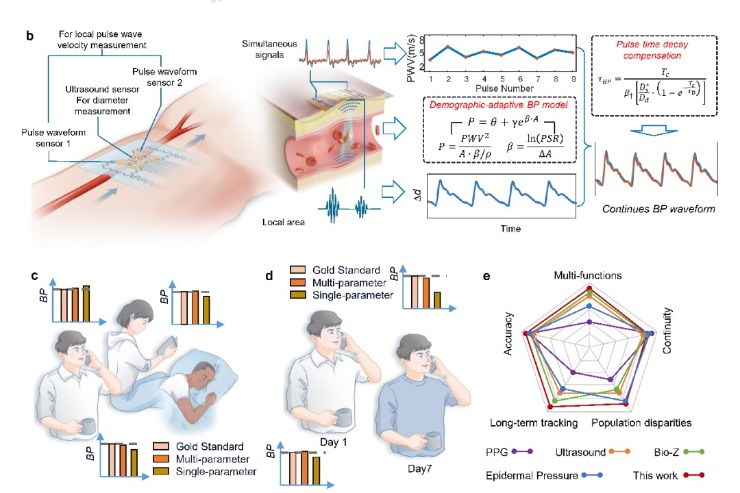
    A multinational research consortium has unveiled a groundbreaking conformal and stretchable piezoelectric microsystem (CSPM) that promises to revolutionize cardiovascular health monitoring through unprecedented accuracy in long-term blood pressure tracking without requiring recalibration.

    The innovation, detailed in Nature Communications, addresses the critical limitation of current cuffless devices that suffer from accuracy degradation during extended use. Developed through collaboration between Tianjin University, the Chinese University of Hong Kong, City University of Hong Kong, and the Hong Kong Centre for Cerebro-cardiovascular Health Engineering, the CSPM integrates advanced hardware design with sophisticated algorithmic processing.

    At the core of the system are two specialized sensing modules that operate simultaneously within the same vascular region, achieving sensitivity levels far surpassing conventional designs. The device captures pulse wave signals with remarkable precision while measuring vascular diameter and its dynamic changes in real time at resolutions up to 4.928 micrometers. This dual-sensing capability enables synchronous measurement of pulse wave velocity and vascular dimensions, providing comprehensive hemodynamic parameters essential for accurate blood pressure calculation.

    The microsystem’s engineering breakthroughs extend to its wearability profile. At under 450 micrometers thick and weighing less than one gram, the device features low-stiffness silicone rubber encapsulation that allows up to 40% stretch capacity, ensuring perfect conformity to curved skin surfaces like the wrist. Its hydrophobic, sweat-resistant properties combined with exceptional biocompatibility enable stable thermal performance during continuous operation for three-hour intervals, meeting rigorous long-term monitoring requirements.

    Complementing the hardware advances, the research team developed a demographics-based adaptive blood pressure model that eliminates individual calibration needs. A novel time-decay compensation strategy counteracts measurement deviations caused by minor sensor slippage, ensuring sustained accuracy throughout extended wear periods.

    Clinical validation involving 45 subjects demonstrated consistent performance across diverse demographics including variations in gender, age, and skin tone. The system successfully tracked blood pressure fluctuations during daily activities over seven consecutive days while maintaining accuracy comparable to professional cuff-based medical devices.

    This technological advancement overcomes two fundamental challenges that have hindered cuffless blood pressure monitoring: frequent calibration requirements and limited population adaptability. The innovation holds significant potential for hypertension screening, cardiovascular disease early warning systems, and long-term chronic disease management applications.

  • Azaleas burst into bloom at Qingdao scenic area

    Azaleas burst into bloom at Qingdao scenic area

    The Dazhu Mountain Scenic Area in Qingdao West Coast New Area, Shandong province, has undergone a spectacular transformation as vast expanses of azaleas have erupted in full bloom, creating a breathtaking tapestry of color across the mountainous landscape. This annual floral spectacle has drawn visitors from across the region to witness the hillsides blanketed in vibrant hues of pink, purple, and red.

    The flowering season, which began in late March, is projected to continue through early May, with various azalea varieties blooming in sequential patterns to extend the visual display. Botanical experts note that the staggered blooming periods of different species create an evolving color panorama that changes throughout the spring season.

    Local tourism authorities have capitalized on this natural phenomenon by orchestrating an array of visitor experiences. The programming includes family-oriented activities, artificial intelligence-enhanced interactive installations, and curated fitness programs set against the stunning floral backdrop. These initiatives form part of a broader strategy to boost cultural tourism and stimulate economic activity in the Qingdao West Coast New Area.

    The convergence of natural beauty and technological innovation represents a new direction for scenic areas seeking to enhance visitor engagement while preserving ecological integrity. The AI components allow for educational interactions that explain the botanical characteristics of the azaleas and the region’s unique microclimate that supports such vibrant growth.

  • Russian tanker brings oil to Cuba as US eases blockade

    Russian tanker brings oil to Cuba as US eases blockade

    In a significant geopolitical development, a Russian-flagged oil tanker arrived at the port of Matanzas, Cuba, on Tuesday morning, delivering 730,000 barrels of crude oil. This shipment marks the first major oil delivery to the island nation since January, following a temporary humanitarian reprieve granted by the United States from its stringent sanctions regime.

    The vessel, identified as the Anatoly Kolodkin—itself under U.S. sanctions—entered the port at sunrise as observed by AFP correspondents. The delivery comes as Cuba grapples with severe energy shortages, characterized by recurrent nationwide blackouts, stringent fuel rationing, and a near-paralyzed public transportation system.

    U.S. President Donald Trump authorized the Russian shipment, stating that he did not object to such humanitarian deliveries so Cubans ‘have to survive.’ However, the White House was quick to clarify that this does not signify a shift in overall policy toward Cuba. Press Secretary Karoline Leavitt emphasized, ‘We allowed this ship to reach Cuba to provide for humanitarian needs. These decisions are being made on a case-by-case basis.’

    While the arrival of the tanker was met with relief by some local residents, economists and energy analysts caution that the shipment offers only a fleeting solution. Ricardo Torres, an economist at American University, noted that Cuba’s energy crisis is ‘structural rather than episodic,’ and the oil provides ‘temporary breathing room’ but falls far short of resolving the nation’s significant deficit.

    The context of this delivery is rooted in heightened U.S. pressure on Cuba and its primary regional ally, Venezuela. Since January, Cuba has been largely cut off from oil supplies after the U.S. intensified efforts to oust Venezuelan leader Nicolás Maduro and threatened tariffs on any country supplying crude to Cuba.

    Policy analysts like Ricardo Herrero of the Cuba Study Group interpret the U.S. strategy as one designed to ‘drive the system to the brink’ to force Havana into making substantial concessions at the negotiating table, without intending to trigger a full societal collapse.

    Energy experts estimate that the crude will take approximately a month to refine into diesel, which is critically needed for backup generators and transportation. The resulting diesel is projected to meet the country’s demand for only about two weeks. This shipment is viewed by many as a stopgap humanitarian measure rather than a step toward economic recovery, with doubts lingering about Russia’s long-term willingness to subsidize the Cuban economy.

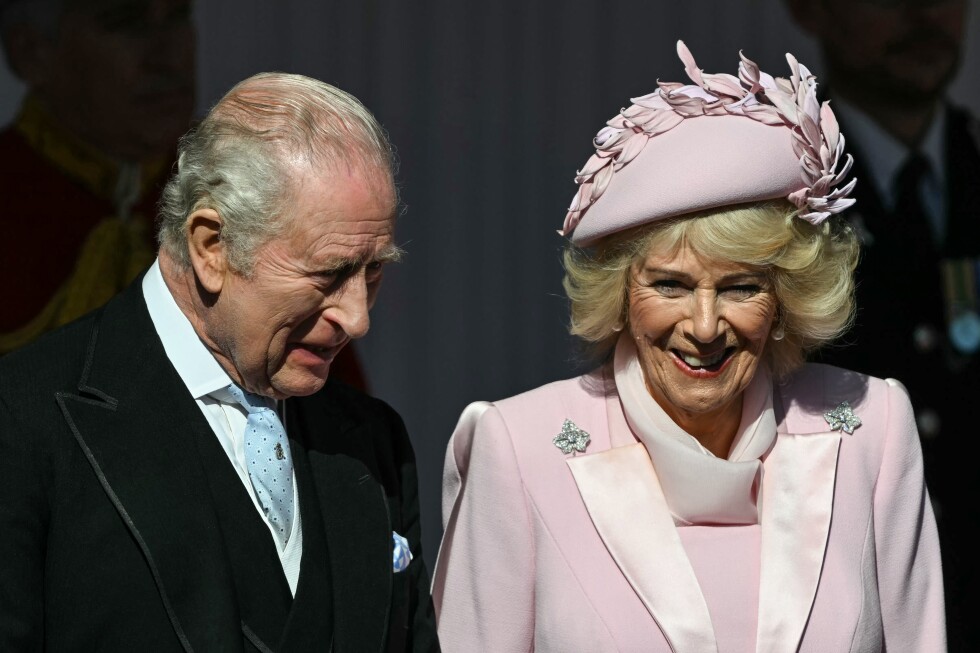
  • King Charles III will undertake state visit to the United States and Bermuda in late April

    King Charles III will undertake state visit to the United States and Bermuda in late April

    Buckingham Palace announced on Tuesday that King Charles III will embark on his inaugural state visit to the United States in late April, commemorating the 250th anniversary of American independence while reinforcing the enduring alliance between the two nations. This diplomatic milestone follows former President Donald Trump’s elaborate state visit to the United Kingdom in September, which featured ceremonial grandeur including ceremonial tiaras, military brass bands, and an opulent banquet served on centuries-old silverware. Such meticulously orchestrated state visits serve as crucial diplomatic instruments for strengthening international bonds, particularly during periods of geopolitical complexity.

    The upcoming visit carries additional significance given the monarch’s previous 19 trips to American soil, though none carried the formal status of a state visit. By comparison, his late mother Queen Elizabeth II conducted four official state visits to the United States during her historic reign. The journey will also include His Majesty’s first official trip to Bermuda as sovereign, marking another milestone in his reign.

    Political dynamics add nuanced layers to this diplomatic engagement. While former President Trump maintained well-documented admiration for the British royal family, his relationship with Prime Minister Keir Starmer remained notably strained, particularly regarding Britain’s cautious support of American military strategy in Iran. This backdrop emphasizes how royal diplomacy often transcends political administrations to preserve foundational international partnerships.

  • At least 16 killed, thousands displaced by gang attack in rural Haiti

    At least 16 killed, thousands displaced by gang attack in rural Haiti

    Haiti’s escalating gang violence has intensified with a series of coordinated assaults in the rural Artibonite region, leaving communities devastated and raising critical questions about security forces’ effectiveness. According to official reports, at least 16 individuals lost their lives during weekend attacks, though local journalists and human rights organizations estimate the death toll could reach 70 victims.

    The Gran Grif gang, designated as a Foreign Terrorist Organization by the United States in May 2023, is believed responsible for the systematic violence that forced approximately 6,000 residents to flee their homes. Witnesses described horrifying scenes as armed assailants descended upon Jean-Denis near Petite-Rivière de l’Artibonite, setting dwellings ablaze and opening fire on civilians attempting to escape the inferno.

    Romain Le Cour Grandmaison, director of the Haiti Observatory at Global Initiative, revealed the attacks demonstrated sophisticated coordination with roadblocks preventing police intervention. Most alarmingly, the violence appears to have been led by a commander known as “Ti Kenken”—a former vigilante leader who switched allegiances to join the criminal organization he once opposed.

    This development exposes the dangerous fluidity between vigilante groups, criminal organizations, and law enforcement in Haiti’s security landscape. The ombudsman’s office confirmed at least 19 individuals sustained gunshot wounds, with many victims remaining unclaimed due to ongoing gang presence in the area.

    The recent violence echoes October 2024’s Pont-Sondé massacre where Gran Grif killed over 100 residents, indicating an expanding pattern of rural terror campaigns. Despite the deployment of a multinational police force (MSS) in 2024, security forces have struggled against better-armed gang elements controlling significant territories.

    A new UN-backed Gang Suppression Force (GSF) is scheduled to replace the underfunded MSS with initial deployments expected in April, though experts warn that without addressing underlying governance issues and allegiances shifting within armed groups, sustainable security remains elusive.