博客

  • King Charles and Queen Camilla to visit US for state visit in April

    King Charles and Queen Camilla to visit US for state visit in April

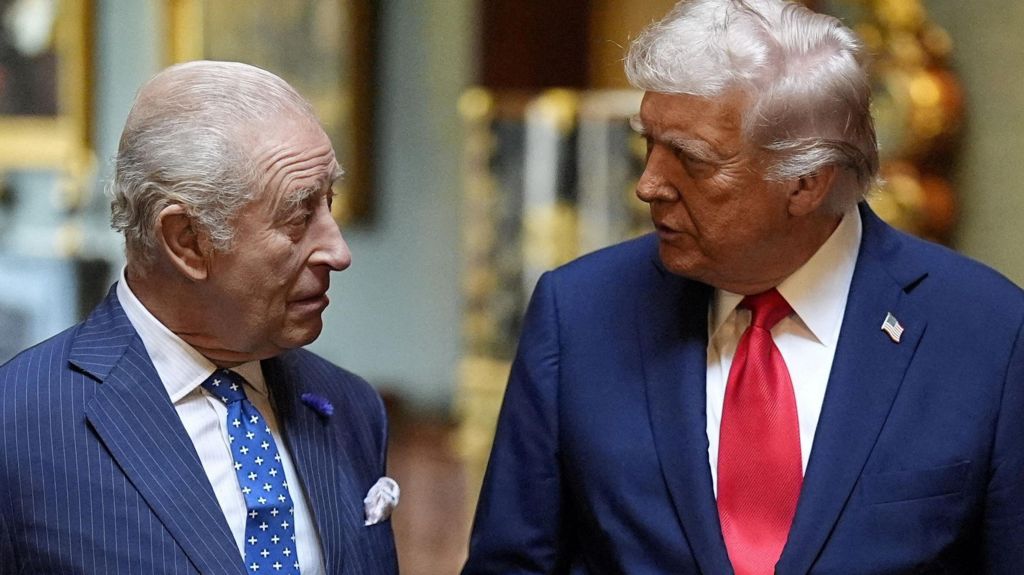
    Buckingham Palace has formally announced King Charles III and Queen Camilla’s state visit to the United States in late April, marking the first British monarch’s official trip to America since Queen Elizabeth II’s 2007 visit. The highly anticipated diplomatic mission will include Washington D.C. as a primary destination, featuring a White House state dinner and an address to Congress.

    The timing coincides with America’s 250th independence anniversary celebrations, with palace officials emphasizing the visit will “celebrate historic connections and modern bilateral relations” between the two nations. Following the U.S. engagements, the royal couple will visit Bermuda, a British Overseas Territory in the North Atlantic.

    This diplomatic undertaking occurs against a complex backdrop of transatlantic tensions. Just prior to the announcement, President Trump escalated rhetoric regarding the Iran conflict, urging allied nations to “go get your own oil” from the Strait of Hormuz while declaring reduced American military support. These comments followed previous diplomatic spats, including Trump’s criticism of UK Prime Minister Sir Keir Starmer’s leadership compared to Winston Churchill and controversies surrounding the UK’s military contributions in Afghanistan.

    Despite these challenges, both leaders have publicly emphasized their positive personal relationship. President Trump recalled his Windsor Castle reception last September as “honorable” and described their time together as “amazing,” expressing particular enthusiasm for hosting the King at the state banquet. Polling data from YouGov indicates British public opinion remains divided, with 49% opposing the visit and only 33% supporting it.

    Additional complexities include calls from U.S. Congressman Ro Khanna for the King to meet with survivors of Jeffrey Epstein during the visit, referencing the ongoing controversies surrounding Prince Andrew, who has consistently denied wrongdoing regarding his Epstein associations.

    The UK government has maintained that the state visit proceeds as a diplomatic necessity, with the monarch traveling on behalf of the Foreign Office. Observers note the administration appears to be leveraging Trump’s well-documented fascination with the monarchy to ease diplomatic tensions and strengthen bilateral relations.

  • Vice-chairman of securities regulator charged for bribery

    Vice-chairman of securities regulator charged for bribery

    Wang Jianjun, the former vice-chairman of China’s Securities Regulatory Commission (CSRC), has been formally indicted on bribery charges following a comprehensive investigation by the National Commission of Supervision. The Supreme People’s Procuratorate announced the development, marking a significant escalation in China’s ongoing anti-corruption campaign within its financial regulatory system.

    According to judicial authorities, the case has been transferred to the People’s Procuratorate of Weifang in Shandong province for examination and prosecution. The Weifang Intermediate People’s Court will adjudicate the matter through a public prosecution process.

    Prosecutors allege that Wang exploited his influential positions spanning multiple CSRC departments—including his roles as deputy director of the Yunnan office, deputy director of the general office, and director of the market supervision department—to provide unlawful advantages to various entities and individuals. The indictment further specifies that Wang leveraged his authority and coordinated with other state functionaries to secure benefits for third parties, accepting substantial monetary bribes and valuable assets in return. Judicial authorities characterized the involved amount as ‘especially huge,’ warranting criminal liability for bribery.

    Wang’s professional trajectory reveals a decades-long career in securities regulation. The 58-year-old Sichuan native began his service in 1991, joined the Communist Party of China in 1994, and ascended through key regulatory positions. His career included leadership roles as general manager of the Shenzhen Stock Exchange and secretary of its Party committee before his appointment as CSRC vice-chairman from October 2021 to May 2025.

    His downfall commenced in April 2025 when he was placed under investigation while still holding office. Subsequent disciplinary actions saw his removal from post in May 2025 and expulsion from the Communist Party in November 2025, culminating in the current criminal proceedings.

  • More than 70 miners killed in South Sudan as government and opposition trade blame

    More than 70 miners killed in South Sudan as government and opposition trade blame

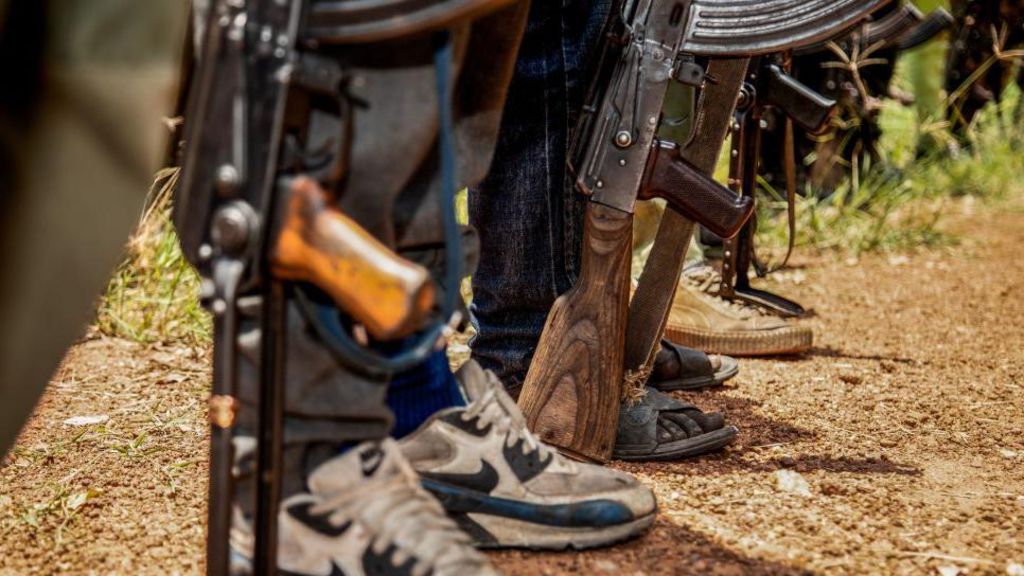
    A devastating attack on mine workers in South Sudan has resulted in at least 74 fatalities, with government and opposition forces exchanging blame for the weekend violence in the mineral-rich Jebel Iraq region southwest of Juba.

    The incident has triggered a wave of condemnation and mutual accusations between rival factions in the conflict-ridden nation. The Sudan People’s Liberation Movement in Opposition (SPLM-IO), representing suspended First-Vice President Riek Machar, issued a strong condemnation of what they described as ‘regrettable, barbaric and unacceptable’ killings, directly accusing government forces of responsibility.

    In response, Central Equatoria state acting governor Paulino Lukudu Obede expressed being ‘shocked and outraged’ by what he termed the ‘brutal and barbaric killing of innocent civilians by rebel forces,’ though he did not specify which rebel group he held responsible.

    The exchange of accusations intensified as Deputy Information Minister David Yau Yau, speaking on national broadcaster, counter-alleged that SPLM-IO fighters were behind the massacre. This created a complex web of claims and counter-claims without clear attribution of responsibility.

    Puok Both Baluang, spokesperson for Machar, challenged the government’s narrative by emphasizing that Jebel Iraq remains under exclusive control of national army forces, thereby implicating them in the killings. The national army has yet to respond to these specific allegations.

    The political context adds layers of complexity to the tragedy. Machar, the opposition leader, has been under house arrest in Juba since March last year and faces serious charges including murder, treason and crimes against humanity, all of which he denies.

    Vice-President James Wani Igga joined in condemning the attack, characterizing it as a ‘heinous massacre’ and highlighting the economic significance of the victims, whom he described as the ‘backbone of our local economy.’ He pledged government action to prevent further violence against civilians and called for a formal inquiry to determine the ‘identity and motives’ of the perpetrators.

    The massacre occurs against the backdrop of South Sudan’s lucrative mineral wealth, particularly gold deposits, which have attracted both legitimate mining operations and widespread illegal mining activities, especially in the Equatoria region where artisanal miners often operate without government approval.

    Baluang’s call for UN bodies to investigate the ‘Jebel Iraq massacre’ and ‘other war crimes’ throughout the country underscores the international dimension of the conflict and the ongoing humanitarian concerns in the world’s youngest nation, which continues to struggle with instability since gaining independence in 2011.

  • Kissing a woman’s hand can be sexual assault, Spanish court finds

    Kissing a woman’s hand can be sexual assault, Spanish court finds

    Spain’s Supreme Court has delivered a landmark ruling establishing that non-consensual hand kissing can qualify as sexual assault, marking a significant interpretation of the country’s consent laws. The decision stems from a 2023 incident where a man approached a woman at a Madrid bus stop, kissed her hand without permission, and made suggestive gestures indicating she should follow him for payment.

    The court rejected the defendant’s argument that his actions merely constituted sexual harassment rather than assault, emphasizing the clear sexual component of the encounter. In its ruling, the court stated that ‘a woman cannot tolerate being subjected to a man taking her hand and kissing her without consent in acts that have a clear and obvious sexual connotation.’

    The convicted individual had appealed his initial guilty verdict and €1,620 fine, arguing that the incident involved neither violence nor intimidation and occurred in a public space near a police station during daylight hours. He maintained that the victim might have felt bothered or offended but never faced genuine risk to her sexual integrity.

    Two magistrates filed dissenting opinions, characterizing hand kissing as an obsolete cultural greeting rather than a sexual act. They argued that such gestures, along with cheek kissing or handshakes, lack inherent sexual nature.

    This ruling reflects Spain’s ongoing transformation regarding sexual consent standards, particularly following the 2022 ‘Only Yes Means Yes’ legislation that eliminated requirements to prove violence or intimidation in sexual assault cases. The law gained prominence during the high-profile case involving former football federation president Luis Rubiales, who was convicted of sexual assault for non-consensually kissing player Jenni Hermoso during World Cup celebrations.

  • Xiong’an opens new cultural and sports center

    Xiong’an opens new cultural and sports center

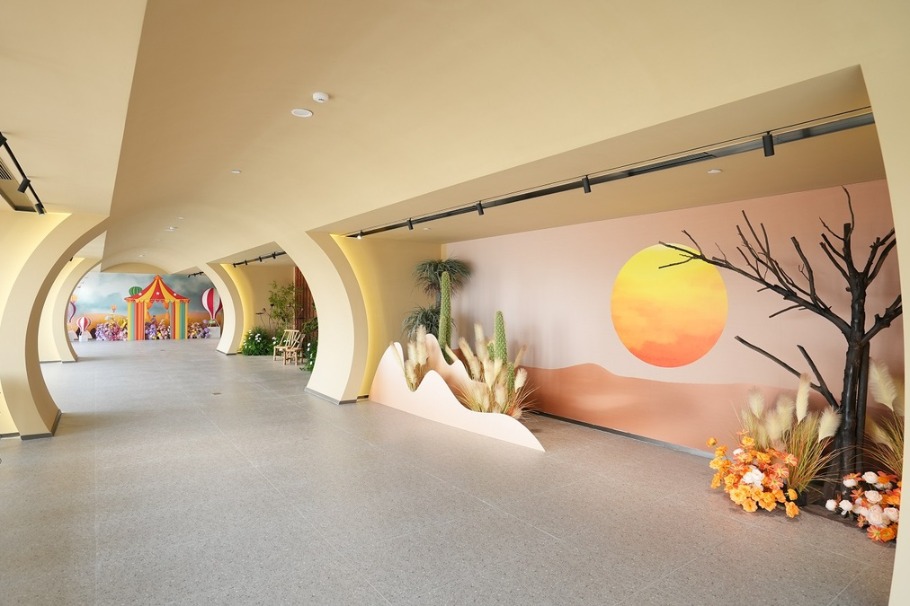
    Xiong’an New Area marked a significant milestone in its urban development with the inauguration of the Xiongdong Integrated Cultural and Sports Center on Saturday. The state-of-the-art facility represents a substantial advancement in public service infrastructure for the rapidly developing region in Hebei province.

    Designed as a comprehensive public participation hub, the center embodies Xiong’an’s strategic approach to urban planning that harmonizes public welfare initiatives with consumption-driven economic development. Local authorities emphasized that this project demonstrates their commitment to investing in both physical infrastructure and resident wellbeing simultaneously.

    The multifunctional complex features extensive cultural amenities and sports facilities all integrated within a single accessible location. This consolidation of services provides residents with unprecedented access to recreational, cultural, and athletic programming in one centralized venue.

    Urban development experts note that the timing of this opening aligns with Xiong’an’s accelerated growth phase, serving as both a practical facility for current residents and an attractive feature for future population growth. The center’s design incorporates sustainable elements and modern architectural principles consistent with Xiong’an’s vision as a model city of the future.

    This infrastructure project forms part of the broader development strategy for Xiong’an New Area, which has been designated a national priority for its potential to relieve pressure from Beijing while demonstrating innovative urban planning concepts. The cultural and sports center specifically addresses the need for quality-of-life improvements as the area continues to develop its residential capacity and economic foundations.

  • China bans storing cremated remains in empty ‘bone ash apartments’

    China bans storing cremated remains in empty ‘bone ash apartments’

    Chinese authorities have enacted legislation prohibiting the unconventional practice of storing cremated remains in residential apartments, a phenomenon known as ‘bone ash apartments.’ This trend emerged as a creative response to exorbitant cemetery costs and scarce burial space. The new law explicitly bans using residential properties ‘specifically for the placement of ashes’ and prohibits burials outside designated cemeteries or legally approved ecological burial zones.

    These unique memorial spaces typically involve converting empty apartments into ritual halls where urns are displayed and ancestral shrines are established. Reports from Chinese media indicate these properties are often identifiable by perpetually closed curtains or sealed windows.

    The practice gained traction due to China’s significant property market decline, with prices falling approximately 40% between 2021 and 2025, making apartment memorials more financially accessible than traditional burials. By contrast, cemetery plots in Beijing’s Changping Tianshou Cemetery range from 10,000 yuan (£1,095) for eco-friendly options to 300,000 yuan (£32,841) for standard tombstone plots, with leases requiring renewal every two decades.

    The regulatory change comes just before the Qingming Festival (Tomb Sweeping Day), when families traditionally honor ancestors. Simultaneously, the State Administration for Market Regulation and Ministry of Civil Affairs announced new requirements for the funeral industry, addressing transparency issues and fraudulent practices to alleviate the financial burden on citizens. A 2020 survey by British insurance firm SunLife revealed funeral costs approaching half of China’s average annual salary, highlighting the economic pressure driving unconventional practices.

    Social media reactions reflect public concern, with Weibo users questioning enforcement mechanisms and noting that affordable alternatives would naturally discourage apartment memorials. One commentator asked: ‘How will authorities distinguish between regular residences and those storing ashes?’ demonstrating implementation challenges facing the new prohibition.

  • Inside a San Francisco shop keeping the fortune cookie alive

    Inside a San Francisco shop keeping the fortune cookie alive

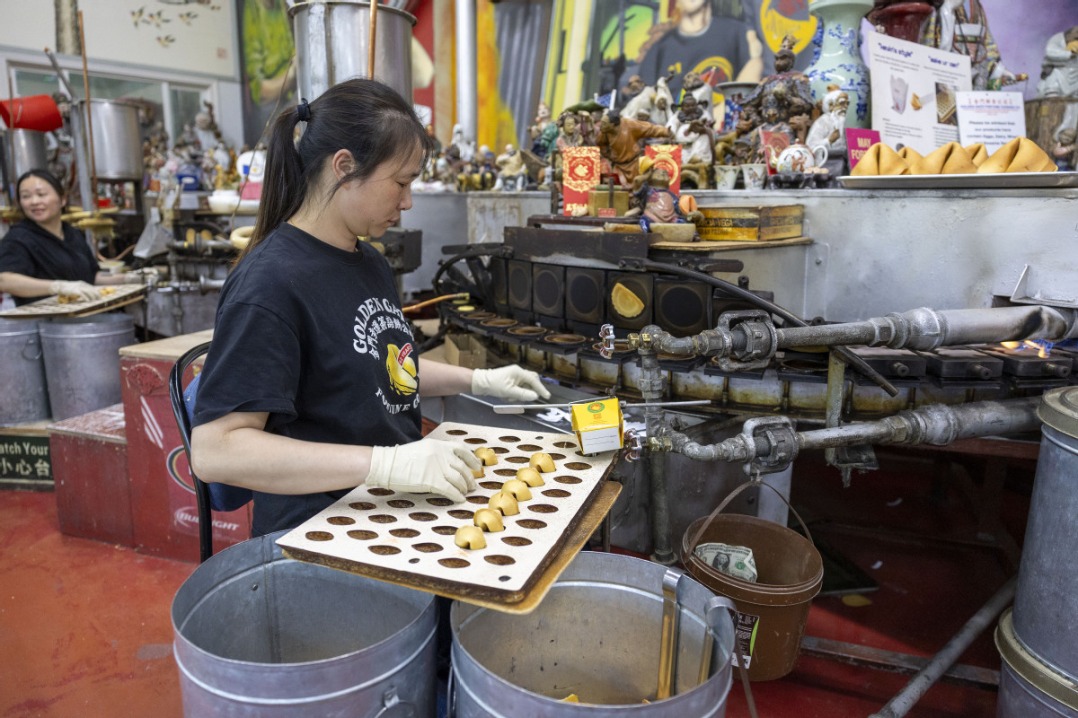
    In a narrow San Francisco alleyway, the Golden Gate Fortune Cookie Factory stands as a living monument to an American culinary tradition with unexpected origins. While synonymous with Chinese cuisine in the United States, fortune cookies actually trace their lineage to Japanese-style crackers brought by immigrants in the late 19th and early 20th centuries, according to historical records. Following World War II, Chinese American entrepreneurs adopted and popularized them nationwide, transforming the treats into cultural icons.

    Kevin Chan, the factory’s owner, presides over an operation that produces up to 10,000 cookies daily while maintaining traditional handcrafting methods largely abandoned by mass producers. Workers skillfully fold warm wafers fresh from vintage machines, inserting personalized messages before shaping them into their distinctive crescent form. The shop offers various flavors and decorated varieties, but its true value lies in its preservation of artisanal techniques.

    Beyond production, the factory serves as an informal cultural museum. Ceramic deities, laughing Buddhas, and weathered figurines share space with historical photographs, awards, and mementos collected over six decades of operation. The establishment’s weathered gold sign and traditional Chinese architectural elements create a portal to another time in a neighborhood transformed by modernization.

    Chan views his work as both cultural stewardship and personal meditation. ‘Fortune cookies are not just cookies,’ he reflects. ‘They represent Chinese-American ingenuity and perseverance.’ His pride stems from perfecting and globalizing what began as an American invention, creating something that now universally symbolizes Chinese dining culture.

    The factory’s significance extends beyond preservation. Customers worldwide visit for custom cookies containing personal messages or even engagement rings, creating romantic moments and family traditions. For many Americans like Stephanie Froebel from Buffalo, the ritual of sharing fortunes represents childhood memories and family bonding. International visitors from Brazil to Cuba recognize the cookies as both Chinese cultural symbols and global phenomena.

    Chan hopes to pass his legacy to future generations, ensuring that handcrafted fortune cookies remain accessible in an automated world. His small shop continues to draw diverse crowds, serving as both production facility and cultural crossroads where strangers become friends through shared appreciation for this quirky yet enduring American tradition.

  • Senior political advisor highlights role of proposals in advancing China’s modernization

    Senior political advisor highlights role of proposals in advancing China’s modernization

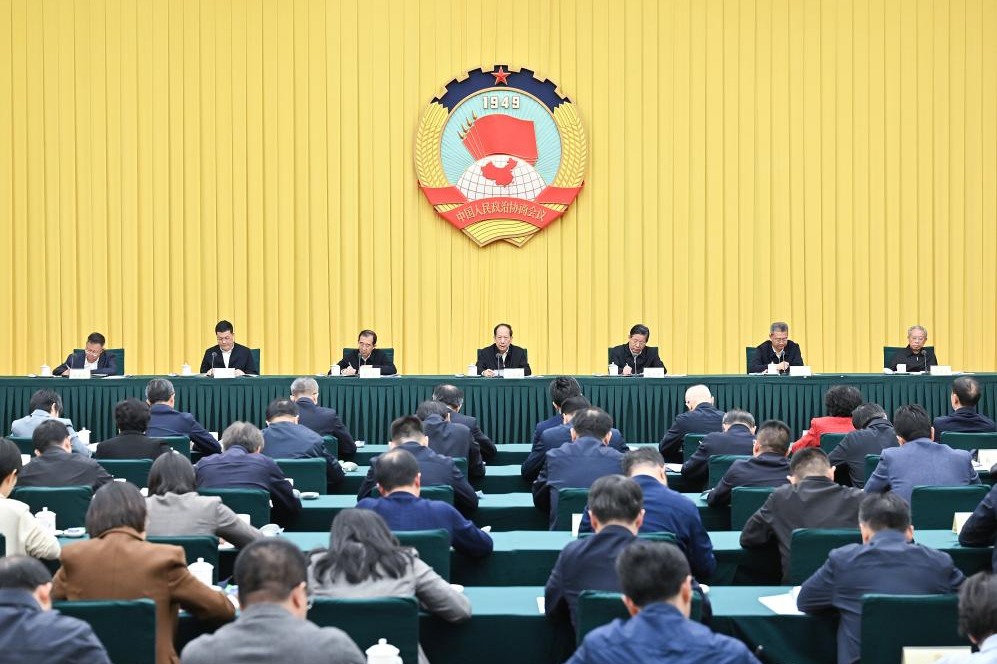
    In a significant address regarding China’s governance mechanisms, senior political leader Shi Taifeng has emphasized the critical role of policy proposals in advancing the nation’s modernization agenda. The high-ranking official, who serves as Vice-Chairperson of the Chinese People’s Political Consultative Conference (CPPCC) National Committee and member of the Political Bureau of the Communist Party of China Central Committee, delivered these remarks while presiding over a key meeting on March 30, 2026.

    The gathering focused on processing policy recommendations submitted during the fourth session of the 14th National Committee of the CPPCC, China’s prominent political advisory body. Shi characterized these proposals as instrumental in achieving substantial progress toward building a comprehensively modern socialist country, particularly as China prepares to implement its 15th Five-Year Plan (2026-2030).

    Shi articulated that the effective handling of these policy suggestions would demonstrate the distinctive advantages of China’s socialist consultative democracy while reflecting commitment to proper governance performance metrics. He outlined specific methodological approaches for processing the proposals, emphasizing categorical coordination, maintained consultation throughout implementation phases, and the delivery of targeted, standardized responses to ensure practical outcomes.

    The address positioned policy proposal mechanisms as fundamental to China’s governance model, particularly during this crucial transitional period between national development plans. Shi’s comments underscore the continuing evolution of China’s political advisory system and its integrated role in national policy formulation and execution.

  • Canberra to host Australia v Ireland pre-World Cup

    Canberra to host Australia v Ireland pre-World Cup

    In a landmark announcement for international rugby union, Ireland will lock horns with Australia in a historic first-ever Test match on Canberra’s home soil at GIO Stadium on September 18, 2027, serving as a critical warm-up fixture ahead of the men’s Rugby World Cup hosted on Australian shores.

    The clash will come just under two weeks before the tournament gets underway for the host nation. Australia, nicknamed the Wallabies, will open their 2027 World Cup campaign against Hong Kong China in Perth on October 1, while Ireland – currently ranked among the top rugby nations globally – will kick off their tournament three days later against Portugal in Sydney.

    GIO Stadium holds an unblemished winning record for the Wallabies in Test matches: the Australian side has claimed victory in all five Tests they have played at the venue to date, with their most recent outing at the ground a 45-20 win over Argentina back in 2017. The venue also welcomed a major rugby event just last year, when the British & Irish Lions faced off against the ACT Brumbies during their Australian tour. That 2025 clash, which ended in a 36-24 victory for the Lions, saw three current Irish internationals – James Lowe, Garry Ringrose and Josh van der Flier – all cross the try line, giving the Irish squad valuable prior experience of the ground’s playing surface.

    The most recent meeting between the two rugby powerhouses ended in a dominant Irish win, with Andy Farrell’s side running out 46-19 victors during the November 2026 Test window in Dublin. That result has added an extra layer of anticipation for the 2027 rematch in Canberra, as Australia looks to reverse their recent losing streak against the top-ranked Irish side.

    Speaking on the announcement, Rugby Australia Chief Executive Phil Waugh highlighted the deep passion for rugby that permeates the Canberra community, pointing to the unprecedented turnout for last year’s Lions-Brumbies fixture as evidence. “The rugby community in Canberra is deeply passionate and holds a great appreciation for international touring teams, as we witnessed last year when the biggest GIO Stadium Canberra rugby crowd in 20 years packed the venue for the Brumbies’ thrilling match against the British & Irish Lions,” Waugh said.

    “This will be the Wallabies’ first Test match at GIO Stadium Canberra in a decade, and their first ever encounter against Ireland in the city, coming as both teams put the final touches on their preparations for the eagerly-anticipated home Rugby World Cup,” he added. Waugh also extended official thanks to Australian Capital Territory Chief Minister Andrew Barr and Deputy Chief Minister Yvette Berry for their ongoing support of elite Test rugby in the region, at a pivotal moment of growth for the sport across Australia.

    Before the 2027 World Cup warm-up, the two nations will not have to wait long to meet again: Ireland is scheduled to face Australia as part of the inaugural Nations Championship summer tour, kicking off in Sydney on July 4 this year. Ireland’s 2026 summer tour will then see the side face Japan one week after the Australia clash, before wrapping up the tour with a Test against New Zealand in Auckland on July 18.

  • Searching for dignified model of ‘being there’

    Searching for dignified model of ‘being there’

    The global rise of Alzheimer’s disease presents profound challenges for aging populations, with the United States and China developing fundamentally different care paradigms rooted in their distinct healthcare infrastructures and cultural values. This divergence reflects deeper societal beliefs about responsibility, dignity, and the very nature of caregiving.

    American dementia care operates primarily through institutional frameworks where professional caregivers, specialized memory-care facilities, insurance systems, and legal protocols structure patient support. This model distributes responsibility through formal arrangements, enabling family members to maintain decision-making roles while reducing their direct hands-on care burden. The system prioritizes safety, efficiency, and liability management within regulated environments.

    Conversely, China’s approach remains predominantly family-centered, with adult children or elderly spouses providing most daily care within home settings. This tradition stems from deeply embedded cultural expectations rather than mere resource limitations. Medical sociologist Jing Jun of Tsinghua University notes this represents contrasting moral assumptions about where caregiving responsibility rightfully belongs.

    The American framework conceptualizes care as a professional service delivered by trained specialists, where families typically experience minimal social condemnation for utilizing institutional support. Chinese society, however, views care as an inherent kinship obligation, where nursing home placement often carries moral stigma associated with abandonment or unfilial conduct.

    Professor Jing observes that traditional filial piety concepts now face intense pressure from demographic shifts and medicalization trends. As medical technologies advance, families increasingly face difficult decisions about invasive interventions, where treatment refusal becomes emotionally synonymous with care abandonment.

    Dignity perceptions further differentiate these models. American care emphasizes autonomy and risk avoidance, sometimes at the expense of spontaneity and familiarity. Chinese care prioritizes relational presence and continuous familial engagement.

    Gerontology scholar Yin Shushan from Peking University identifies hidden costs in both systems: “The US approach reduces family burden but may distance care from daily life, while Chinese families preserve intimacy often at the expense of caregivers’ wellbeing.”

    Experts caution against wholesale adoption of Western institutional models in China’s rapid aging context, noting that large-scale facilities might erode relational care foundations while romanticizing family sacrifice ignores practical limitations like smaller households and geographic mobility.

    The future of Chinese dementia care, researchers suggest, depends on developing supportive institutions that complement rather than replace families—through caregiver training, community services, and cultural reframing that recognizes comfort-focused care as equally ethical as medical intervention.