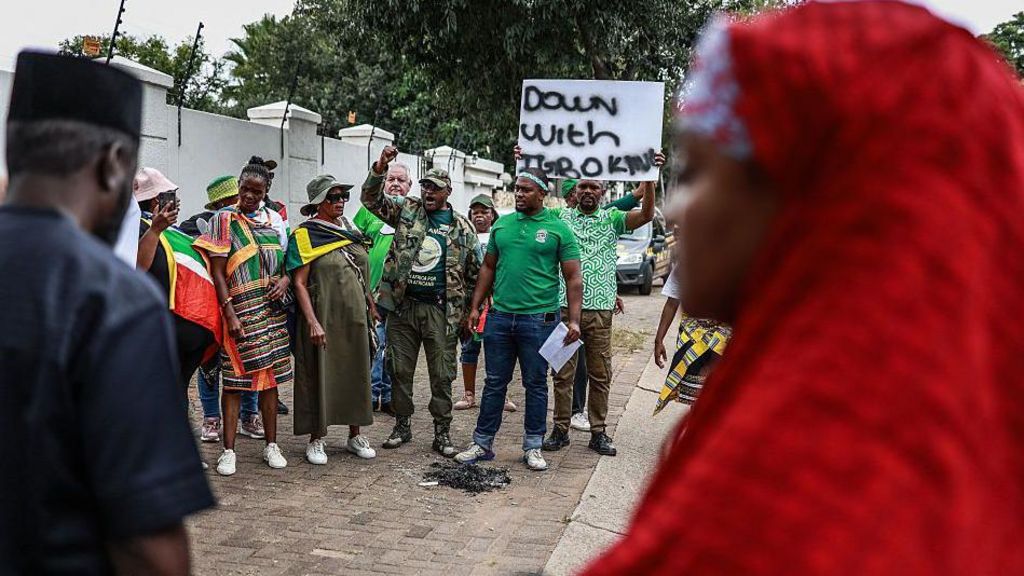
The port city of KuGompo (formerly East London) in South Africa’s Eastern Cape province became the epicenter of violent unrest this week, triggered by tensions surrounding the ceremonial installation of a Nigerian community leader. What began as a peaceful anti-illegal immigration protest organized by civil society groups escalated dramatically when a demonstrator claimed to be assaulted by a foreign national. The incident ignited widespread disorder, resulting in ten vehicles set ablaze and numerous shops—both foreign and locally owned—being looted.
The underlying tension stems from the recent recognition of Solomon Ogbonna Eziko as ‘Eze Ndi Igbo East London’ by the local Igbo diaspora community. This traditional title, translating to ‘king of the Igbo people in East London,’ is a common cultural practice among Igbos living outside their Nigerian homeland. However, some South African residents misinterpreted this ceremonial designation as an attempt to establish parallel political authority, despite having no legal standing beyond cultural recognition.
South African authorities, including KuGompo Mayor Princess Faku of the African National Congress, condemned the violence while acknowledging the right to peaceful protest. ‘We supported the march as part of defending our sovereignty but cannot condone violence,’ stated Faku. ‘It’s profoundly disappointing that such significant civic engagement devolved into chaos.’
The Nigerian High Commission promptly issued safety advisories, urging its citizens to restrict movement and avoid public gatherings amid heightened tensions. Meanwhile, Igbo community representatives emphasized the purely ceremonial nature of the title. Dr. ABC Okokoh, a leader within South Africa’s Igbo community, clarified to SABC that the installation was a ‘private event’ with no intention of establishing sovereignty, adding an apology for ‘the consequences that played out.’
Cultural experts and provincial authorities have denounced the installation as potentially violating customary protocols and South African laws. The Eastern Cape’s cooperative governance department explicitly distanced itself from the event while calling for respect of national legislation. Diplomatic apologies were subsequently extended during a picket at Nigeria’s high commission in Pretoria, underscoring the incident’s transnational implications.