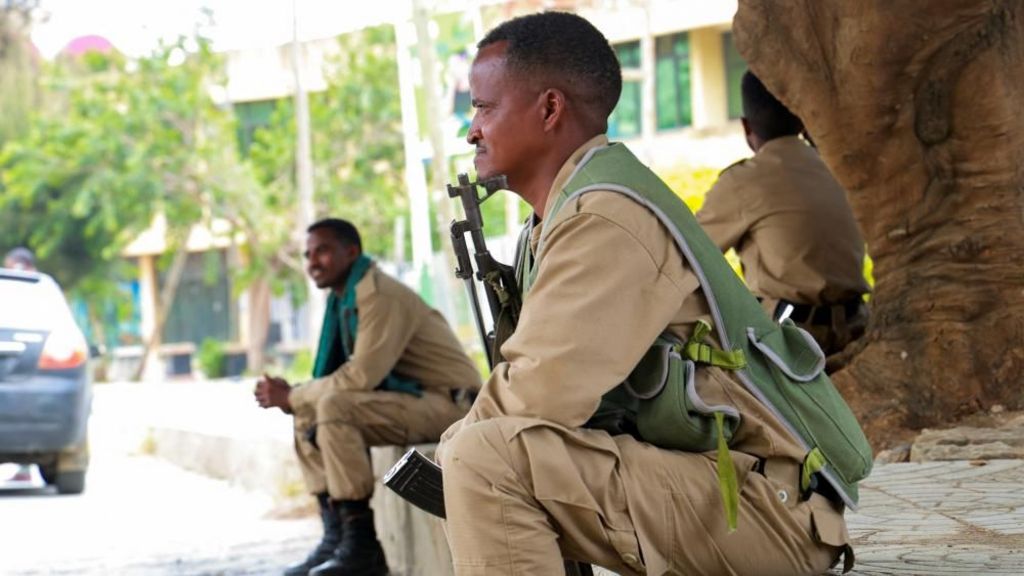
After two years of a fragile, AU-brokered ceasefire, deadly hostilities have erupted once again across northern Ethiopia, bringing the country to the brink of a resumption of its devastating 2020–2022 civil war. Spiking tensions between Prime Minister Abiy Ahmed’s federal government and the Tigray People’s Liberation Front (TPLF), the ruling party in Ethiopia’s Tigray region, boiled over into open combat on Wednesday, with both sides moving quickly to secure strategic territory.
In its first official public statement since fighting began, the Ethiopian National Army announced that it had successfully fended off coordinated assaults from TPLF fighters and their recently formed armed coalition in multiple northern border zones. According to the military’s account, the initial outbreak of hostilities occurred in the Amhara region, along its shared border with Tigray. The military claimed its forces inflicted heavy losses on TPLF combatants and seized a large stockpile of weapons from the attacking group.
Independent verification of the army’s claims remains impossible, as international media including the BBC are barred from entering Tigray and surrounding conflict zones, and the TPLF has not issued any formal response to the military’s statement. Unconfirmed reports from local and humanitarian sources, however, indicate TPLF forces have launched simultaneous offensives into both the neighboring Afar and Amhara regions.
A senior humanitarian source based in Afar told Agence France-Presse Thursday that TPLF fighters have launched intensive artillery barrages targeting the border town of Yallo, as they push to seize full control of the settlement. Speaking to AFP, TPLF vice-president Amanuel Assefa confirmed the collapse of the 2022 peace agreement, stating bluntly: “We are in the situation of full-blown war now.”
The latest escalation caps months of gradual deterioration in relations between the two sides, with both the federal government and Tigrayan authorities repeatedly accusing one another of violating the terms of the African Union-negotiated truce that ended the original 2020–2022 conflict. That war was one of the deadliest of the 21st century: the AU’s lead mediator estimated that roughly 600,000 people died from violence, famine, and lack of access to medical care, as the conflict pushed Tigray to the edge of a catastrophic humanitarian collapse. Just days before the current outbreak of fighting, the TPLF announced a new military alliance with six other armed opposition groups, with the explicit goal of ousting Abiy Ahmed’s federal government.
Since Wednesday, TPLF forces have seized control of three regional airports from federal police forces, including the main airport serving Mekelle, Tigray’s largest capital city. Following the seizure of aviation infrastructure, Ethiopian Airlines has suspended all commercial flights to the region. Multiple residents of Mekelle confirmed to the BBC that TPLF fighters are now visibly deployed across the city’s streets, though direct armed clashes have not yet broken out in the urban center.
Unlike the 2020–2022 war, which saw intense house-to-house fighting in Mekelle, all active combat is currently concentrated in outlying border areas. A Mekelle resident, who asked to be identified only as Fitsum to protect his safety, told the BBC’s *Newsday* program Thursday that the city remains outwardly calm, despite widespread fear among the population. “Mekelle is calm, except the stress from the people,” Fitsum said. He added that the city’s most pressing crisis is already economic, rooted in months of federal budget cuts that have left public sector workers unpaid and drained physical cash from local financial institutions.
“People are in a mood where they are distressed because it’s been so difficult, so tough. The last seven or eight months the government has been denying budgets to the civil servants and all the banks were running out of cash,” Fitsum explained. While residents have relied on mobile banking to access funds in recent months, widespread fears that communications infrastructure will be cut off amid the new fighting have left the population extremely vulnerable. “People are going to be in grave danger because there is almost no cash,” he added. Since fighting broke out, residents have largely stayed indoors and limited non-essential travel, leaving the city unusually quiet. “It’s like a curfew has been placed,” Fitsum said.
Recent drone strikes targeting locations inside Tigray in the days preceding the TPLF’s offensive have further stoked panic across the region, leaving global observers scrambling to de-escalate tensions before the conflict expands across the Horn of Africa.