博客

  • Chinese foreign minister calls for US and China to ‘overcome obstacles’ ahead of presidential summit

    Chinese foreign minister calls for US and China to ‘overcome obstacles’ ahead of presidential summit

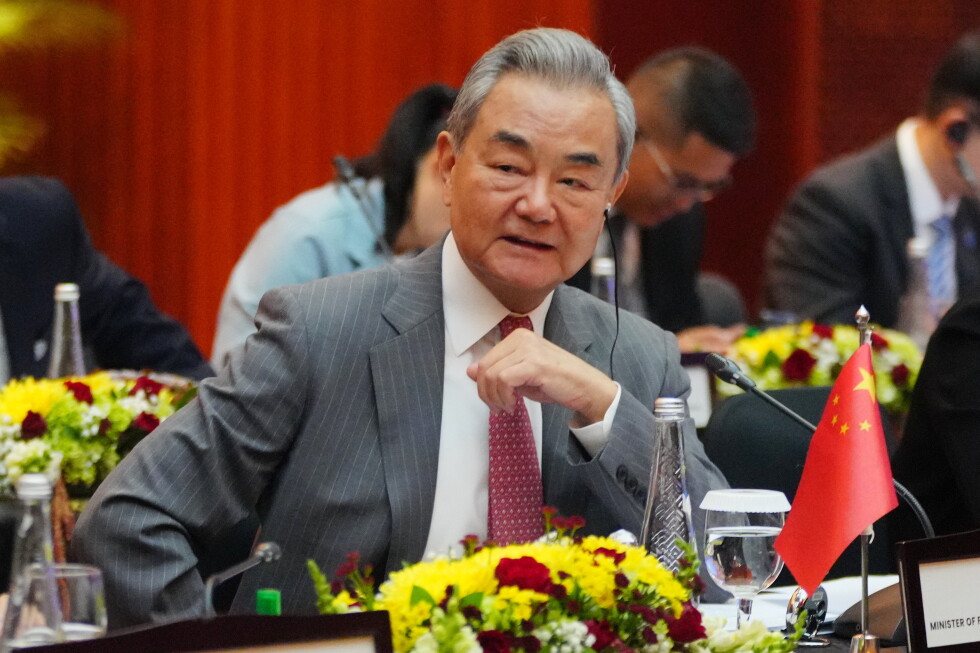
    BANGKOK – As anticipation builds for a highly anticipated high-level summit between Chinese President Xi Jinping and U.S. President Donald Trump slated for next month, Chinese Foreign Minister Wang Yi has emphasized that the two global powers must work proactively to dismantle long-standing barriers standing in the way of productive dialogue.

    China’s state-owned national broadcaster CCTV released details of Wang’s closed-door meeting with David Perdue, the U.S. Ambassador to China, which took place on Wednesday, with public comments shared Thursday. During the discussions, Wang called for both Beijing and Washington to reframe their engagement around shared priorities, steer through existing disagreements with careful diplomacy, push back against outside interference, and clear away barriers that threaten to undermine upcoming high-level exchanges between the two governments.

    In his official remarks carried by CCTV, Wang openly acknowledged that bilateral relations between China and the United States continue to confront a wide range of significant risks and unresolved challenges that could derail progress ahead of the summit.

    The two heads of state first met earlier this year in May in Beijing, where both leaders issued public pledges to maintain stability in bilateral ties and uphold a fragile, hard-won trade truce that had been negotiated to ease escalating economic tensions. Following that meeting, President Trump extended a formal invitation to President Xi to hold a second round of talks in the United States, originally penciled in for September 24. To date, however, Chinese officials have not formally confirmed the exact date of President Xi’s visit to the U.S.

    In the weeks following the Beijing meeting, the diplomatic thaw failed to hold, as both sides continued to roll out targeted economic measures against one another. These reciprocal actions include a U.S. ban on imports of Chinese-made robotics technology, as well as retaliatory restrictions implemented by Beijing that bar certain American entities from conducting trade and other commercial activities within Chinese borders.

  • People pulled from mud in Nepal after deadly flash floods

    People pulled from mud in Nepal after deadly flash floods

    Catastrophic flash floods have swept through regions along the Nepal-Tibet border, leaving a grim trail of destruction that has claimed the lives of at least 160 people. As emergency response teams race against time to reach trapped survivors stuck in thick mud and debris, significant logistical hurdles are slowing rescue operations. Many remote communities in the disaster-hit zone remain cut off from aid, damaged infrastructure and washed-out access routes have complicated efforts to deploy personnel and equipment to the hardest-hit areas. Local disaster management authorities have reported that dozens of people remain unaccounted for, buried under mudslides triggered by the sudden flash flooding. Emergency responders are working to clear blocked pathways and locate those still trapped, with international disaster response organizations monitoring the situation closely for potential deployment of additional support. The flooding, which struck suddenly, caught many local residents off guard, turning everyday communities into disaster zones overnight. Rescuers have managed to pull dozens of survivors out of deep mud, but the scale of the disaster continues to outpace the current response capacity in the remote border region.

  • Pakistani investigators visiting hospital nursery where fire killed 14 newborns

    Pakistani investigators visiting hospital nursery where fire killed 14 newborns

    A devastating fast-spreading fire that claimed the lives of 14 newborns in a government hospital nursery in Pakistan’s capital Islamabad has triggered public outrage, official probes and sweeping calls for safety overhauls across the country’s health facilities. As grieving families demand accountability for the tragedy, an investigative committee appointed by Prime Minister Shehbaz Sharif launched on-site inquiries Thursday at the Pakistan Institute of Medical Sciences (PIMS), the major public medical facility where the blaze broke out early Wednesday.

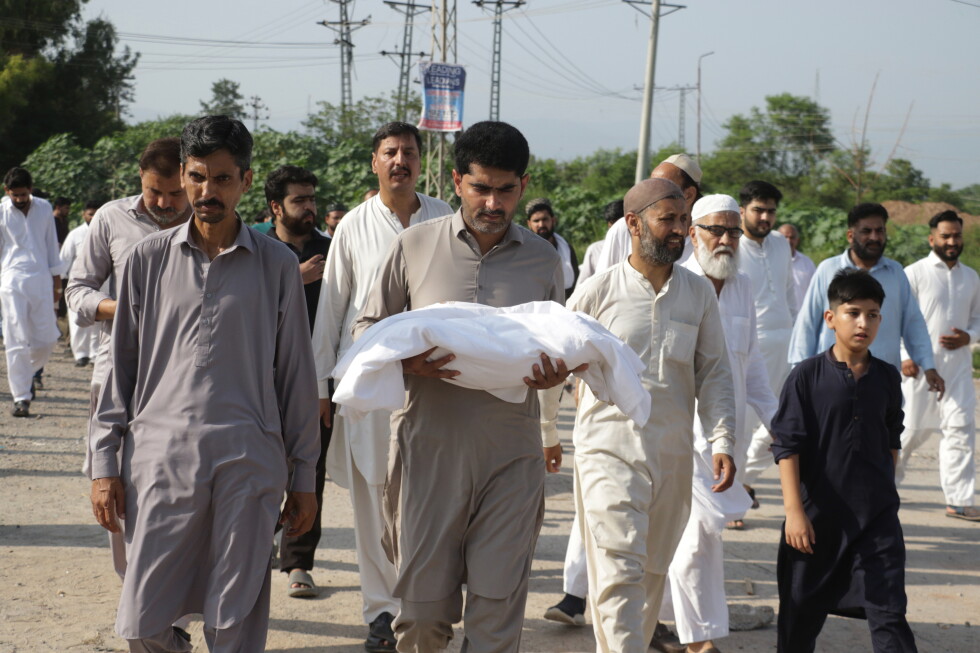
    The fire was limited exclusively to the third-floor neonatal nursery, leaving the rest of the hospital undamaged. But the blaze spread with alarming speed that left frontline staff unable to save most infants: only one of the 15 babies being cared for in the unit at the time was rescued by two attending doctors, two nurses and other on-duty personnel, hospital authorities confirmed.

    By Thursday, the atmosphere across PIMS was heavy with grief, as medical staff, patients and family members mourned the lost newborns. Access to the fire-ravaged third-floor nursery area was tightly restricted to preserve the scene for investigators. The five-member investigative panel, headed by retired federal secretary Shahid Khan, is tasked with collecting statements from hospital staff, eyewitnesses and bereaved families, with a tight deadline to deliver urgent policy recommendations to Sharif within 48 hours, followed by a full detailed investigative report within five working days.

    Conflicting preliminary accounts of the fire’s origin have deepened calls for an independent inquiry. Initially, hospital and district officials claimed an exploding air conditioning unit triggered the blaze. But a revised preliminary statement from the hospital later revised the cause to an explosion involving a medical nebulizer, noting that high oxygen concentrations in the neonatal unit allowed the fire to spread across the space in just minutes. The city administration emphasized that the appointed committee will carry out an independent assessment to determine the definitive cause, with no conclusions yet reached.

    Overnight following the tragedy, authorities released all 14 victims’ bodies to their families for burial. In the wake of the deaths, top officials have ordered wide-ranging audits of fire safety protocols and firefighting infrastructure at all healthcare facilities across Pakistan. In Punjab, the country’s most populous province, a government official statement confirmed that local authorities have directed the provincial Health Department to complete immediate reviews of fire safety systems and emergency response capabilities at all hospitals under its jurisdiction.

    Prime Minister Sharif has already taken disciplinary action following the tragedy, removing Aslam Ghauri from his post as Health Secretary, the top civil servant leading the country’s Health Ministry. Grieving parents have publicly pressed for full transparency, demanding clear answers about both the origin of the fire and whether the nursery had sufficient functioning firefighting equipment to prevent the mass casualties.

    The United Nations children’s agency UNICEF released a statement expressing profound sorrow over the deaths, adding its voice to calls for an urgent review and immediate strengthening of fire prevention and safety standards at all health facilities across Pakistan.

    The nursery fire is the latest in a string of deadly tragedies involving children in Pakistan this year. Just two months prior, in June, 14 schoolchildren lost their lives when the roof of an under-construction private tutoring center collapsed in the eastern city of Lahore, highlighting systemic gaps in public safety regulation across multiple sectors.

  • The missing in Nepal-Tibet flash floods

    The missing in Nepal-Tibet flash floods

    One of the world’s most sought-after destinations for adventurous hikers and mountaineers has been hit by a devastating natural disaster, after sudden flash floods and cascading landslides along the Nepal-Tibet border left at least 165 people confirmed dead and more than 1,300 others unaccounted for as of Thursday.

    Nepal’s national disaster management agency updated official figures Thursday, reporting 823 people still missing within Nepali territory. That total includes roughly 579 people who are either Nepali or international tourists visiting the region, though no breakdown of foreign nationalities has been released in the official count. Across the shared border, Chinese authorities confirmed 558 people remain missing on their side, nearly half of whom are foreign nationals.

    Nepal draws hundreds of thousands of adventure travelers every year, who flock to the Himalayan nation to tackle iconic high-altitude routes including Mount Everest, the world’s tallest peak. Disaster response officials have warned that official casualty and missing person counts are likely to shift in the coming days, a common pattern in the aftermath of large-scale catastrophes. Fluctuations can stem from overlapping counts of dual citizens, ongoing efforts to match recovered remains to missing person reports, and the widespread chaos that disrupts information-gathering immediately after a disaster.

    Authorities and governments around the world have been working around the clock to confirm the status of their citizens caught in the disaster. On China’s side of the border, 298 Chinese nationals are currently listed as missing.

    As of the last updated Nepali Tourism Board data from Wednesday, 142 Indian nationals are unaccounted for, all of whom were traveling with three local tour operators: Samrat Tours & Travels, Leaf Holiday, and Himalayan Glacier.

    Ukraine’s foreign ministry announced Thursday that Nepali tourist police had confirmed 53 Ukrainian citizens are missing, including a large group of 46 travelers that authorities lost contact with after the floods struck. Australian Prime Minister Anthony Albanese confirmed 34 Australians are missing, with 15 of those part of a pilgrimage group that includes two teenagers, a representative from the group’s tour operator confirmed to AFP.

    Malaysian Prime Minister Anwar Ibrahim reported Thursday that more than 50 Malaysian citizens in Nepal have not been reached since the disaster. Twelve UK citizens traveling with Alpine Eco Trek are unaccounted for per Wednesday’s tourism board data, with two additional Britons confirmed missing in the Rasuwagadhi region by Himalayan Glacier.

    Nine South Korean hydropower workers have been out of contact in Nepal’s Rasuwa district since the floods hit, South Korea’s foreign ministry confirmed Wednesday. Japanese acting Prime Minister Sanae Takaichi said she was deeply concerned by reports that five Japanese nationals are missing, posting to social media platform X that she “fervently prays that each and every irreplaceable life will be protected.”

    Four South African travelers, also with the Alpine Eco Trek agency, are missing per Wednesday’s official list. Three U.S. citizens traveling with Fishtail Tours & Travels are unaccounted for, and Himalayan Glacier managing director Sanket Pandey confirmed an additional eight American travelers are in the missing group. Two Portuguese nationals, one woman and one man, are missing, with the country’s foreign ministry telling AFP it continues “to monitor the situation minute by minute.”

    One Dutch citizen traveling with the same tour operator as the missing Australian group is also unaccounted for. In Italy, the foreign ministry confirmed two Italian nationals and their local guide were stranded upstream of a major landslide, though they are already receiving emergency assistance. Italian officials have accounted for 90 Italian citizens currently in the Nepal-Tibet border region, but have not yet confirmed if any others are affected. New Zealand’s foreign ministry reported five New Zealanders are unaccounted for, and Pandef confirmed 10 Canadian and two Singaporean citizens are also among the missing.

    China’s official missing count of 558 includes 260 foreign nationals, but no nationality breakdown has been released for that group. Multiple Nepali tour operators have also reported unaccounted-for foreign travelers whose nationalities have not yet been confirmed: 77 with Trekkers Society, 26 with Kailash Journey, and eight with Richa Tours & Travels.

  • Liverpool telco worker, 30, charged with selling customer details to criminal gangs

    Liverpool telco worker, 30, charged with selling customer details to criminal gangs

    A 30-year-old telecommunications employee from Liverpool in southwest Sydney is set to appear in court this week, facing serious criminal charges for allegedly leaking sensitive customer personal information to organised criminal gangs that used the data to carry out fraud against innocent members of the public. The arrest on Thursday capped off a four-week investigation led by New South Wales Police’s Financial Crimes Squad, which was launched after Queensland law enforcement referred the case to their NSW colleagues.

    According to allegations from NSW Police, the suspect, who holds a position at a major Australian telecommunications provider, abused his work access to illegally pull confidential customer records, which he then sold on to external criminal actors. Law enforcement officials confirmed that the stolen data was subsequently weaponised by the criminal groups to commit multiple fraud offences against unknowing victims.

    The defendant has been slapped with a total of 34 criminal charges. These include 12 counts of handling identity information for the purpose of committing an indictable offence, 12 counts of carrying out unauthorised system access with the intent to commit a serious offence, and 10 counts of a public servant or agent corruptly accepting financial benefits for improper conduct. Following his arrest, the man was denied bail and is scheduled to make his first court appearance at Liverpool Local Court this Thursday.

  • Tolu Koula expected to be fit for the World Cup as Manly fights for a miracle finals berth

    Tolu Koula expected to be fit for the World Cup as Manly fights for a miracle finals berth

    Tonga’s preparations for the upcoming 2026 Rugby League World Cup have been handed a major encouraging update, with star speed and center Tolu Koula on track to be fully fit for the nation’s opening tournament match, according to his Manly Sea Eagles club coach Kieran Foran.

    Koula suffered a high-grade two syndesmosis ankle injury during last week’s victory over the Newcastle Knights, when he was taken out of the game by a high-impact hip-drop tackle from Knights winger Dom Young. The injury has ruled the 8-cap Tongan international out for the remainder of the 2026 National Rugby League (NRL) regular season, even in the extremely unlikely scenario that Manly claw their way into the finals and advance all the way to the grand decider. NRL physiotherapy experts have noted that the mechanism of the tackle — where the tackler’s full weight lands on the outside of a trapped lower leg, forcing the ankle outward and knee inward — creates elevated risk for both syndesmosis and medial collateral ligament (MCL) injuries.

    In a positive twist for both Koula and Tonga’s World Cup campaign, Foran confirmed that the injury will not require surgical intervention. The young back is expected to complete a four-week rehabilitation program to restore full strength and flexibility to his injured ankle, putting him on track to be match-ready for Tonga’s first World Cup fixture against England on October 17.

    “It’s looking like he’ll be out for a month. It’s disappointing, but there’s not much you can do about it,” Foran told reporters. “He’s a really positive young guy. He’s naturally disappointed that the injury has happened, but he’s got to get on with his rehab and get his ankle back to full strength and full flexibility. They (the medical team) are pretty comfortable and confident that they’ll be able to rehab it without surgery, so that’s a bonus for him. He’s looking to get himself right for that campaign.”

    Foran also touched on his club’s current position in the NRL ladder, with Manly holding an extremely slim chance of qualifying for the finals after snapping a six-game losing streak with the win over Newcastle. After opening the season with three consecutive losses that led to the early departure of former head coach Anthony Seibold, Foran said the club has focused on incremental growth and sticking to its process to close out the season.

    Realistically, Manly needs to win its remaining two matches against the Dragons and Warriors, and rely on upset losses from three of the top-eight contenders South Sydney Rabbitohs, North Queensland Cowboys and Canterbury Bulldogs to secure a finals spot. Foran said the squad is keeping its focus on its own performance rather than speculating on external results.

    “We’re trying not to put our focus on external results,” he said. “We’ve got to focus on what we need to get right against the Dragons on Friday evening. If we get that part right then we’ve done our role there. Then it’s about hoping that results fall our way. We don’t want to put our energy into that because then we’ll miss the mark on what we need to do in our backyard. We’re really proud of the growth in the footy that we’ve played. We found ourselves in a really challenging patch for a bit that we would have loved to have been able to come away with a few more wins and put ourselves right up there. I think we’ve done the best job possible, and that’s all you can do.”

  • Memory wars: Election clash over Germany’s Nazi past as AfD eyes power in east

    Memory wars: Election clash over Germany’s Nazi past as AfD eyes power in east

    As eastern Germany’s Saxony-Anhalt region prepares for state elections on September 6, the far-right Alternative for Germany (AfD) holds a substantial lead in polling, putting it on the cusp of becoming the first post-war far-right party to control a German state government. Its campaign, centered on a sweeping “patriotism” agenda that seeks to downplay Germany’s Nazi past and reshape national memory, has ignited fierce national debate over the country’s long-standing moral commitment to confronting its 20th-century atrocities.

    At the core of the AfD’s platform is a rejection of Germany’s established culture of remembrance, Erinnerungskultur, which the party dismisses in its official manifesto as a harmful “guilt complex.” If it wins a parliamentary majority, the party has pledged to overhaul state school history curricula, shifting focus away from the crimes of the Nazi regime to highlight centuries of pre-World War II German history, framed as a legacy of “poets and thinkers.” While AfD leaders insist education on National Socialism will remain part of the curriculum, the party’s blueprint sums up its approach as “More Bismarck, less Hitler” – a reference to 19th-century German unifier Otto von Bismarck. Additional policy pledges include daily flying of the German flag at public schools, expanded preservation of German war memorials, and cuts to public funding for art the party labels “anti-German.”

    On the campaign trail in the small town of Querfurt, long-time AfD supporter Gerd, 70, summed up the view held by many of the party’s backers. Attached to the handlebars of his mobility scooter is a frayed German flag, a deliberate display of national pride that Gerd says modern Germany has suppressed for too long. “You can’t wipe away history, but the Second World War has nothing to do with us any more,” he told reporters, arguing that younger and even post-war generations should not carry perpetual collective responsibility for Nazi crimes, and that the nation should embrace its full historical legacy with pride.

    Ulrich Siegmund, the 35-year-old AfD candidate who would become Saxony-Anhalt’s state premier if the party wins a majority, defended the agenda in an interview with the BBC. A former air freshener salesman who has risen to become one of the party’s most popular figures thanks to his energetic campaigning and savvy social media strategy, Siegmund framed the push for renewed national pride as an entirely ordinary, unremarkable goal. “We want to get that back,” he said. “We have a diverse history, stretching back many hundreds of years, and we want to teach that history in its entirety, with all its highs and lows but with pride and a positive outlook.” Siegmund dismissed widespread allegations of extremism against the party, and denied ongoing connections to Austrian far-right activist Martin Sellner, who has a documented neo-Nazi past. Siegmund said he only met Sellner once at a 2023 gathering outside Berlin, and has had no contact since.

    Critics, however, warn that the AfD’s agenda amounts to dangerous historical revisionism that echoes the cultural control tactics of the Nazi regime itself. For Frank Martin Widmaier, director of a state-funded regional theatre in Eisleben, the party’s pledge to cut funding for “anti-German” art echoes the 1937 Nazi “Degenerate Art Exhibition,” where the regime labeled and banned works it deemed ideologically unacceptable. “How can somebody say it’s not German enough, and what does it mean?” Widmaier asked, noting that most German cultural institutions rely heavily on state funding. “This is playing with Nazi propaganda. To threaten people, to threaten the institutions.” Widmaier rejected the AfD’s core claim that Germany’s culture of remembrance has created a national guilt complex, arguing that confronting the Nazi past is a core part of modern German national identity, not a source of shame for generations born after the war. “You don’t have to feel guilty,” he said. “But you have to deal with all of that to make it never happen again. That’s part of our DNA in Germany.”

    The AfD has long faced official scrutiny: German domestic intelligence has classified the Saxony-Anhalt AfD branch as a right-wing extremist anti-democratic movement permeated by racist ideology, a designation the party dismisses as a politically motivated smear. All major established German parties have ruled out entering any coalition government with the AfD, meaning the party’s only path to power is winning an outright majority in the state parliament – a historic outcome that polls indicate is possible, though not guaranteed. If successful, the victory would give the AfD control over core state portfolios including education, policing, and cultural policy, allowing it to implement its full agenda for the first time.

    The growing popularity of the AfD’s nationalist agenda is not limited to Saxony-Anhalt: the party currently leads national polling as well, though its advantage at the federal level is less dramatic. The September 6 election is widely viewed as a watershed moment for post-war German politics, marking the first real test of whether a far-right party committed to rewriting Germany’s founding post-war moral consensus can seize state power.

  • Asian stocks are mixed after Wall Street losses following economic updates

    Asian stocks are mixed after Wall Street losses following economic updates

    Global financial markets delivered a mixed performance on Thursday, with Asian equities splitting gains and losses following marginal downward movement on Wall Street a day earlier, as a blockbuster earnings report from chip giant Nvidia lifted U.S. futures and oil prices retreated. The session unfolded against a backdrop of shifting macroeconomic data and ongoing investor anxiety around the sustainability of the global artificial intelligence investment boom.

    After U.S. markets closed Wednesday, Nvidia — one of the world’s most valuable public companies and a key barometer for the global AI industry — released quarterly results that far outstripped Wall Street analysts’ projections. The firm reported revenue for the May-to-July quarter more than doubled from the same period a year earlier, fueled by explosive, unrelenting demand for its high-end AI chips that power everything from large language models to generative AI tools for major tech corporations. Following the better-than-expected report, U.S. futures traded into positive territory early Thursday.

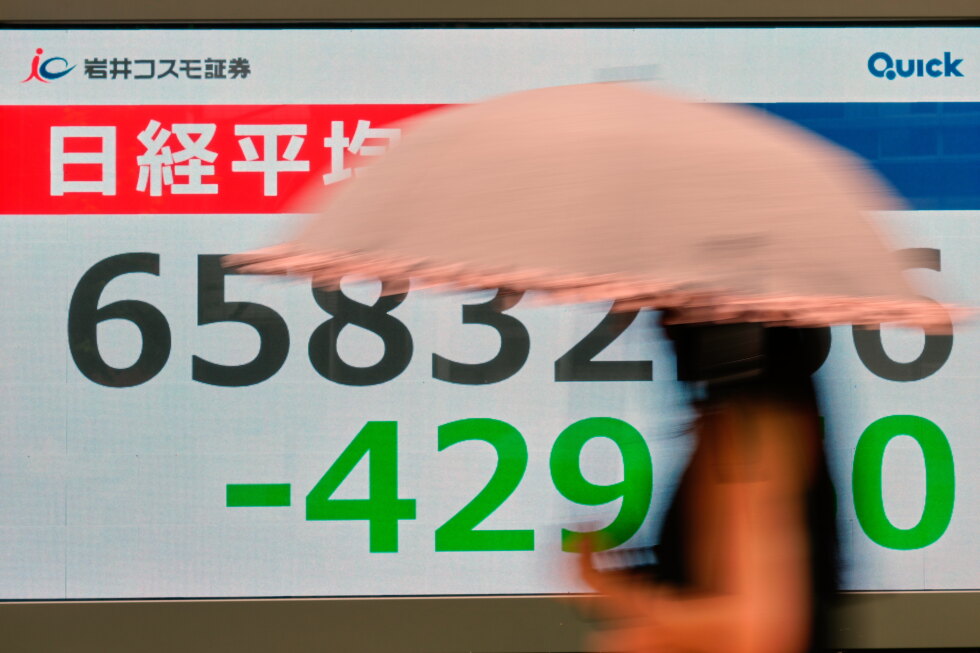
    Across major Asian benchmarks, performance was fragmented. Japan’s Nikkei 225 edged down 0.2% to close at 66,162.72, though SoftBank Group, the multinational investment holding that holds a stake in AI leader OpenAI, notched a 0.1% gain. South Korea’s Kospi outperformed most regional indexes, climbing 1.5% to 6,909.81, with market heavyweight Samsung Electronics rising 2% as investors bet on ongoing AI chip demand. Japan, South Korea and Taiwan have emerged as the biggest regional winners from the global AI investment frenzy, and Taiwan’s benchmark Taiex index added 0.5% on Thursday.

    In Greater China markets, Hong Kong’s Hang Seng Index slid 0.4% to 25,548.83, while the Shanghai Composite Index gained 0.6% to 3,935.99. New economic data released by China showed growth in industrial profits slowed to 11.2% in July, down from 15.1% in June, signaling ongoing softness in the country’s industrial recovery. Further afield, Australia’s S&P/ASX 200 dropped 0.9% to 9,041.70, and India’s Sensex posted a marginal 0.1% decline.

    On Wednesday, U.S. markets closed with modest losses, with the benchmark S&P 500 falling less than 0.1% to remain just below its recent record high levels. The Dow Jones Industrial Average lost 0.2%, while the tech-heavy Nasdaq Composite dipped 0.1%. Beyond Nvidia’s results, the session brought other notable market-moving developments: Meta Platforms added 1.1% after reaching an $18 billion settlement with U.S. states over claims that its platforms Facebook and Instagram fueled teen social media addiction. The deal also requires Meta to implement new child-safety measures, ending a landmark national trial against the company.

    New macroeconomic data released Wednesday also gave investors new insight into U.S. economic momentum and inflation pressures. The revised estimate for U.S. gross domestic product growth in the April-June quarter came in at 1.5%, matching earlier projections. The personal consumption expenditures price index — the inflation metric the Federal Reserve has long prioritized for policy decisions — held steady at 3.7% in July, unchanged from June. That reading was slightly higher than the 3.6% consensus forecast from economists surveyed by FactSet, and remains far above the Fed’s longstanding 2% annual inflation target.

    Nvidia’s strong results have come at a time of widespread debate among investors over the future of the AI boom. While chip and AI-related stocks have rallied for more than two years, many market participants warn that massive current investments in AI infrastructure could lead to an asset bubble, as companies may fail to generate enough near- and medium-term profits to justify the sky-high valuations and rising capital outlays.

    In energy markets, oil prices edged lower early Thursday. Brent crude, the global benchmark for oil pricing, fell 0.5% to $86.49 per barrel. For context, the commodity traded around $72 per barrel in late February, before the outbreak of open conflict in Iran pushed energy prices higher. U.S. benchmark West Texas Intermediate crude also dropped 0.5% to $81.84 per barrel. In currency markets, the U.S. dollar appreciated slightly against the Japanese yen, rising to 159.38 yen from 159.31 yen, while the euro edged up to $1.1655 from $1.1651.

  • Zelenskyy’s direct plea helped unlock Russia sanctions in the Senate. What’s next is uncertain

    Zelenskyy’s direct plea helped unlock Russia sanctions in the Senate. What’s next is uncertain

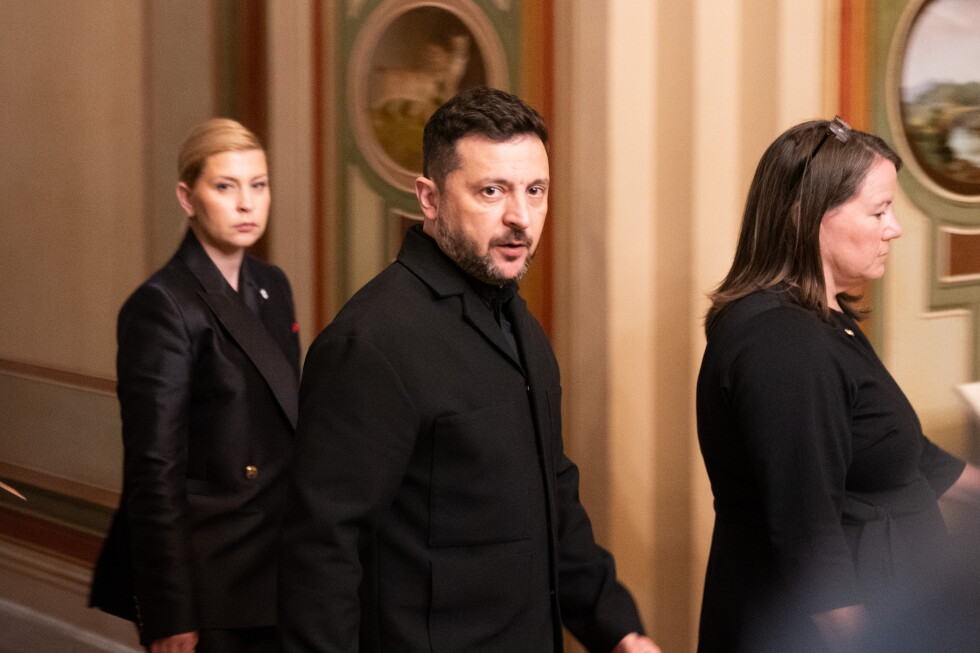
    On a singular day in Washington that blended mourning and urgent diplomacy, Ukrainian President Volodymyr Zelenskyy arrived at the U.S. Capitol just hours after the funeral of the late Republican Sen. Lindsey Graham to make a direct, personal appeal for sweeping new sanctions against Russia — a last legislative effort spearheaded by Graham to cut off Moscow’s war-fighting revenue.

    A rare show of bipartisan attention greeted the Ukrainian leader: half of all U.S. senators packed into a closed-door meeting, setting aside their usual mobile phone distractions to focus on Zelenskyy’s briefing. Joined by House members, attendees heard Zelenskyy lay out Ukraine’s ongoing strategy in its years-long defensive war against Russia’s full-scale invasion, detailing how Kyiv’s forces have held back Russian advances and even taken offensive action while outlining urgent unmet needs. Those needs include additional Patriot interceptor missiles, expanded access to Elon Musk’s Starlink satellite internet, updated defense licensing agreements, and, most pressingly, immediate passage of the sanctions package Graham spent a full year negotiating to advance.

    Zelenskyy made the stakes clear to lawmakers, according to Sen. Jeanne Shaheen, the top Democratic member of the Senate Foreign Relations Committee. “He said, ‘We need this legislation,’” Shaheen recalled in an interview, adding that the bill’s passage is critical to the morale of both Ukraine’s frontline troops and its civilian population.

    Multiple lawmakers in attendance described a palpable shift in the room, buoyed by Zelenskyy’s quiet confidence in Ukraine’s ability to persevere. “You could feel palpably in the room a sense that — Zelenskyy’s confidence of their ability to hold and to persevere,” said Rep. Steny Hoyer, Maryland’s veteran Democratic congressman and former House Democratic leader. “There was a sense in the room that, look, we can be successful.”

    The legislation, later named the Lindsey O. Graham Sanctioning Russia Act, marks the most ambitious pro-Ukraine policy initiative from Congress since Donald Trump reclaimed the White House in 2025. After two years of gridlock on Ukraine policy — the last major congressional action was 2024’s supplemental aid package — the bill advanced out of the Senate the very night of Zelenskyy’s visit, with the Ukrainian leader taking an unprecedented seat in the Senate chamber to observe the vote. Lawmakers smiled, waved, and gave encouraging gestures as they cast their ballots, and the bill ultimately passed days later by a lopsided 86-11 margin, sending it to the House of Representatives for consideration.

    Despite that strong Senate showing, the bill’s future remains deeply uncertain. House Speaker Mike Johnson leads a narrow Republican majority overwhelmingly reluctant to commit to new overseas initiatives aligned with U.S. foreign policy goals. Even among many Democratic lawmakers who have long supported Ukraine, concerns have emerged about the bill’s structure: it grants Trump sweeping authority to impose tariffs of up to 100 percent on any country that continues to import Russian energy, with no explicit congressional checks on how that power is used.

    At its core, the legislation is designed to cut off the Kremlin’s primary source of funding for its war machine by pressuring major Russian energy customers including China and India to halt purchases of Moscow’s oil and gas. But critics across the Democratic caucus warn the open-ended tariff authority gives the Trump administration too much unregulated power, which could be used against U.S. allies and ultimately raise costs for American consumers.

    “It’s important not to underestimate symbolically what this would mean,” said Daniel Balson, a policy advocate with Razom for Ukraine, a pro-Ukraine pro-democracy organization. Balson urged Congress to maintain momentum on the bill, arguing that passage would send a critical message to Kyiv that “hiccups and all, there is still an international alliance that stands behind Ukraine’s fight.”

    Zelenskyy’s 2025 Capitol Hill visit marks the latest chapter in a years-long diplomatic outreach to U.S. lawmakers that has seen dramatic high points and deep periods of uncertainty. In March 2022, just days after Russia launched its full-scale invasion, Zelenskyy addressed Congress via a dramatic private video call, pleading for warplanes to defend Ukraine’s skies. That December, he traveled to Washington for a historic Christmas address to Congress, drawing comparisons to Winston Churchill’s World War II visits to Washington to rally allied support.

    But by 2023, as then-Republican front-runner Trump aligned with critics of continued aid, congressional Republicans abandoned plans for a new round of Ukraine funding. After Trump won the 2024 election and returned to the Oval Office in 2025, all progress on new Ukraine aid ground to a halt. A high-profile Oval Office meeting saw Trump publicly berate Zelenskyy, blaming the Ukrainian leader’s opposition to Putin for blocking a negotiated peace. As Republican Rep. Don Bacon of Nebraska, a former Air Force brigadier general, put it: Republican support for the bill is largely held back by Trump’s stance. “This has largely hinged on President Trump,” Bacon said, noting that more Republicans would back Ukraine publicly if Trump signaled his approval.

    Graham, who spent a full year negotiating with the White House to win Trump’s backing for the sanctions package, shared the news of his breakthrough with colleagues at the NATO summit in Turkey last month, before traveling on to Kyiv for a final visit to Ukraine. He died just days after returning to Washington, from an apparent torn aorta. His Democratic partner on the bill, Sen. Richard Blumenthal of Connecticut, recalled that Graham called winning Trump’s approval a “BFD” — a nod to how critical the breakthrough was for the legislation.

    Top House Democrats have already raised formal objections to the bill’s open-ended tariff provisions. House Foreign Affairs Committee top Democrat Gregory Meeks of New York and Ways and Means Committee top Democrat Richard Neal of Massachusetts have both publicly pushed back on the language. More than 30 Senate Democrats supported a failed amendment to rein in the president’s tariff authority before the bill’s passage.

    “This is not so much a sanctions bill as it is a massive backdoor authority for President Trump to impose more tariffs, including on our European allies, that hurt American families,” Meeks said in a statement. Even so, Hoyer, who worked with Meeks on a separate pro-Ukraine security bill that passed the House earlier this year over Johnson’s objections, is urging lawmakers not to let the opportunity slip. He argued that existing congressional and judicial checks are sufficient to limit any potential abuse of the tariff authority, and that passing the bill is critical to sending a message of support to Ukraine.

    “You know there was so much negative vibes that we were sending,” Hoyer said. “We’ve got to send a letter to these courageous Ukrainians that we’re with them.”

  • ‘Come on’: Pauline Hanson, Nationals leader Matt Canavan clash over Barnaby Joyce

    ‘Come on’: Pauline Hanson, Nationals leader Matt Canavan clash over Barnaby Joyce

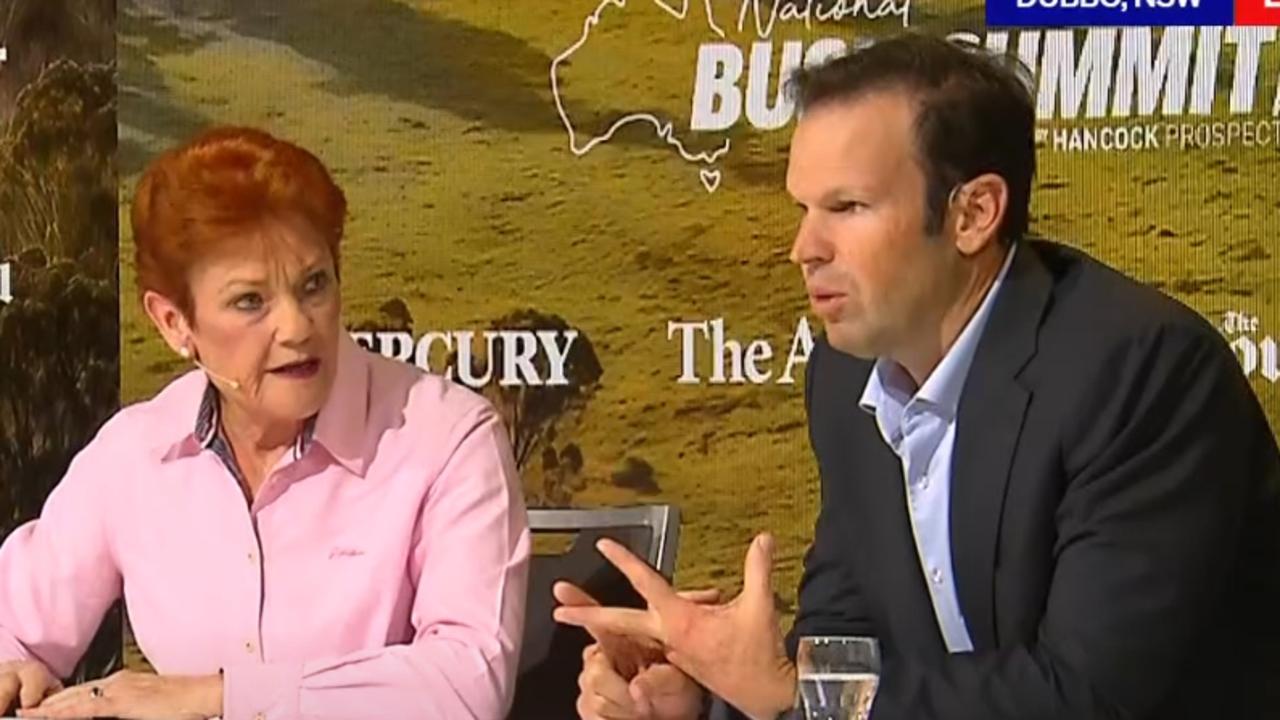
    A high-stakes public confrontation between One Nation founder Pauline Hanson and new Nationals leader Matt Canavan unfolded this Thursday at the annual Bush Summit in Dubbo, located in New South Wales’ Central West. The two senior conservative politicians went head-to-head on two divisive issues: former Nationals deputy prime minister Barnaby Joyce’s late 2023 defection to One Nation, and Australia’s long-running net-zero emissions policy debate.

    Canavan, who took over the Nationals leadership earlier this year from David Littleproud, opened discussion on Joyce’s party exit, acknowledging that he still considers the long-serving New England MP a personal friend. “He openly said he left because he didn’t like David Littleproud,” Canavan told the panel audience. While Canavan expressed personal disappointment in Joyce’s choice, he emphasized that his political work prioritizes policy impact over personal relationships, noting he spends long stretches away from his wife and five children to advance his policy goals. “I don’t think that’s a reasonable basis to leave a political party who put you there … the hundreds of thousands of volunteers that stayed out in the winds, out in the cold to get you elected,” he added.

    Hanson immediately interjected to defend Joyce, her party’s newest lower house member, pushing back on Canavan’s framing of the defection. “Come on, Matt. He didn’t leave The Nationals party just because of David Littleproud,” she said. Canavan ultimately conceded a second core motivation, acknowledging Joyce also cited the Nationals’ adoption of a net-zero emissions target as a driving factor — though he noted the party had already scrapped that policy before Joyce left.

    The confrontation quickly shifted to the broader net-zero debate, where Hanson pushed back hard against what she framed as suggestions she and One Nation are irrelevant to Australian climate politics. “It just annoys me, you know, to make me as if I’m irrelevant in this, as if I’ve got nothing to offer politics,” she said. Hanson also pushed back on the narrative that net-zero is a policy pushed by progressive parties, pointing out that ambitious renewable energy targets were first introduced under Liberal former prime minister John Howard, and the formal net-zero commitment was made under Liberal prime minister Scott Morrison — a point Canavan interrupted to clarify did not include the Paris Climate Agreement, which Hanson has long opposed. Hanson reaffirmed she has opposed Australia’s net-zero target from its inception, noting the Labor government has only continued the existing framework laid out by the previous Liberal government.

    Beyond climate policy, Hanson also addressed ongoing confusion over One Nation’s controversial migration policy, which calls for cutting net overseas migration to a cap of 130,000. She clarified that One Nation’s recent lower house MP David Farley misspoke when he claimed the party’s total migration numbers would not differ greatly from the current Labor government’s targets. Hanson explained that the 130,000 cap does not include seasonal farm workers brought into Australia under the Pacific Australia Labour Mobility (PALM) scheme, arguing these workers fill critical labor gaps that keep regional Australian agricultural and abattoir sectors operational. Unlike permanent migrants and student visa holders, PALM workers are provided accommodation directly by their employing farms and businesses, Hanson said, so they do not add pressure to Australia’s strained national housing market. When pressed, she confirmed that total annual migration, including PALM scheme workers, would exceed the 130,000 net cap, framing the separate scheme as a necessary exception for rural Australia.

    The public clash highlights growing tension between the Nationals and One Nation, as the smaller right-wing party targets regional-held Nationals seats ahead of Australia’s next federal election, leveraging voter discontent over climate policy and migration to win over regional electorates.