博客

  • Murayama Statement honored

    Murayama Statement honored

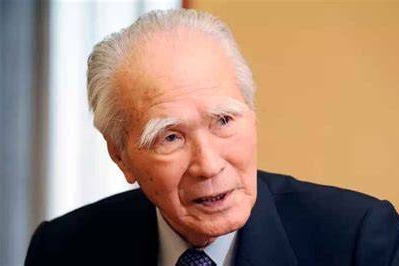
    A memorial service for former Japanese Prime Minister Tomiichi Murayama, who passed away last October at the age of 101, brought together more than 400 political figures and peace advocates in Tokyo on Monday. The gathering centered on a shared call to honor Murayama’s landmark 1995 apology for Japan’s wartime aggression and push back against growing efforts to roll back the nation’s post-WWII pacifist constitutional framework, amid surging nationalist and militaristic rhetoric across the country.

    Attendees included sitting Prime Minister Sanae Takaichi, former prime ministers Taro Aso and Yukio Hatoyama, and representatives from across Japan’s ruling and opposition political blocs, totaling around 450 guests. Murayama, Japan’s 81st prime minister and the first leader drawn from the Japan Socialist Party, died at his home in Oita Prefecture on October 17, 2025.

    Murayama’s most enduring legacy remains the historic cabinet-endorsed statement he released on August 15, 1995, the 50th anniversary of Japan’s surrender in World War II. In the document, widely known as the Murayama Statement, the government formally acknowledged that Japan had pursued a mistaken national policy that led it into war, triggering a catastrophic crisis for the Japanese people. It also admitted that Japan’s colonial rule and military aggression inflicted massive harm and suffering on populations across Asia and the world, offering official “deep remorse and heartfelt apology” for these wartime atrocities.

    Speaking at Monday’s memorial, Social Democratic Party leader Mizuho Fukushima emphasized the unshakable historical importance of the 1995 statement, recalling that Murayama repeatedly warned the Japanese public that the nation must “never again wage war.” Fukushima, who joined Murayama on a past visit to China, noted that in today’s fractious global climate, marked by intensifying domestic debates over constitutional revisions and security policy shifts, upholding and expanding the spirit of the Murayama Statement remains critical to keeping Japan out of conflict and preserving regional peace.

    Takakage Fujita, secretary-general of the Association for Inheriting and Propagating the Murayama Statement, told China Daily that the statement, paired with Japan’s post-war pacifist constitution, represents one of Japan’s most valuable political assets. This commitment to confronting historical wrongdoing has allowed Japan to rebuild trust with neighboring Asian nations and laid the groundwork for decades of constructive Japan-China friendship, he said, adding that its significance will resonate for generations to come.

    Fujita stressed that the statement is rooted in sincere, far-reaching reflection on the immense suffering Japan’s wartime aggression imposed on China and other Asian countries, serving as both a solemn pledge to never again initiate war and a formal declaration of peace for the entire Asia-Pacific region. “I will continue to uphold the spirit of the Murayama Statement and work tirelessly to promote Japan-China friendship,” Fujita added.

    Throughout his decades in public life, Murayama was a consistent, prominent voice pushing Japan to confront its wartime history honestly and build constructive, people-centered ties with China. Even shortly before his death, he sent a message to an international symposium marking the 80th anniversary of victory in the Chinese People’s War of Resistance Against Japanese Aggression and the World Anti-Fascist War. In that message, he argued that Japan can only truly restore its national standing “through humble reflection on Japan’s past.”

    On the topic of bilateral relations, Murayama wrote that a peaceful, friendly Japan-China relationship forms the foundational bedrock of overall stability across Asia. He reaffirmed his long-held belief that building enduring friendship between the two nations and strengthening this core pillar of regional peace is the only correct path to protecting and advancing Japan’s own national interests.
  • Hong Kong’s Wang Fuk Court residents return to fire-ravaged units in batches for belongings

    Hong Kong’s Wang Fuk Court residents return to fire-ravaged units in batches for belongings

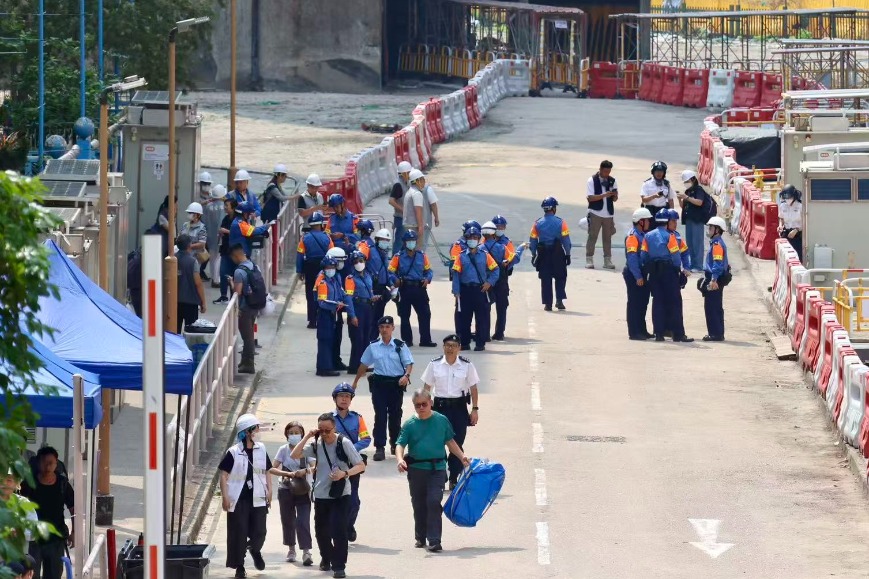
    HONG KONG — Nearly a year after a devastating large-scale blaze tore through Wang Fuk Court in Hong Kong’s Tai Po district, affected residents have begun the long process of returning to their fire-ravaged homes in organized, staggered groups to collect remaining personal belongings, with the first phase of the operation launching on Monday, April 20, 2026.

    To guarantee the safety of every resident entering the damaged building and coordinate the smooth execution of the retrieval operation, the Hong Kong Special Administrative Region (HKSAR) government has mobilized a force of more than 1,000 personnel from multiple government departments and public service agencies. The carefully planned operation is scheduled to run through May 4, giving registered residents adequate time to collect items they left behind after the 2025 fire forced an emergency evacuation of the residential block.

    According to Cheuk Wing-hing, Deputy Chief Secretary for Administration of the HKSAR government, all residents participating in the retrieval process will receive full personal protective gear before entering the site, including safety helmets, disposable face masks, heavy-duty work gloves and other necessary equipment to guard against structural hazards and residual toxic smoke or debris. Every resident is escorted round-trip to their unit by trained personnel, either serving police officers or volunteers from the Civil Aid Service.

    Chris Tang Ping-keung, HKSAR Secretary for Security, further outlined the multi-layered safety arrangements put in place for the operation. To respond to any unexpected situation that may arise during the retrieval, dedicated police and Civil Aid Service personnel will be stationed on every floor of the residential block to provide on-demand, immediate assistance. Additionally, fully qualified medical teams and emergency response staff will remain on standby at the site throughout the operation, with multiple ambulances parked nearby to handle any medical emergencies quickly.

  • Australian organ donor remembered

    Australian organ donor remembered

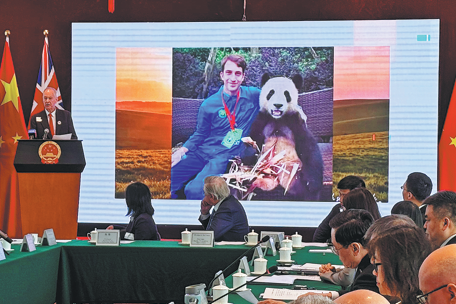
    Eight years after their son Philip Hancock passed away in southwest China, his Australian family gathered in Sydney for a memorial symposium to celebrate the young man’s extraordinary act of humanitarian kindness that continues to connect communities across two nations.

    In May 2018, 27-year-old Hancock, an English teacher at Chongqing’s Southwest University who had built deep personal ties with China, died after failed medical intervention. In line with explicit wishes he had shared with his family years earlier, his parents made the decision to donate his liver, two kidneys, and pair of corneas. The selfless choice granted five Chinese recipients a second chance at life — restoring sight to two and saving the lives of three others. This act made Hancock the first Australian and seventh foreign national to complete an organ donation in China.

    Addressing attendees at the Sydney memorial, Peter Hancock, Philip’s father, reflected on the gravity of the choice his family made. “This was a very difficult decision for our family to make,” he said, noting that Philip’s clear long-stated intent softened the pain of their loss. “He said he would like his organs to be donated so that other people could benefit from them. He believed that this was a humanitarian thing to do and that everyone should have the same attitude toward organ donations.”

    Co-hosted by the Red Cross Society of China and the Chinese Consulate-General in Sydney, the symposium brought together diplomatic and community leaders from both China and Australia to honor Hancock’s legacy. Chinese Consul General in Sydney Wang Yu highlighted the profound meaning of the young teacher’s choice, noting that his story vividly embodies boundless humanitarian love, strengthens the deep-rooted friendship between the Chinese and Australian peoples, and illustrates the core value of a shared human future.

    He Wei, president of the Red Cross Society of China, emphasized that Hancock’s act of generosity transcends borders, race, and ideological difference, forging a living bridge of connection and friendship between the two nations. “The Australian’s name, his kindness and his invaluable spirit will always remain in the hearts of the Chinese people, standing as a most touching, precious and heartfelt testament to China-Australia friendship,” He said.

    Gary Cowan, CEO of the National Foundation for Australia-China Relations, echoed that sentiment, pointing to the dual impact of Hancock’s legacy. “It really reminds us of the very profound lifesaving ripple effect that organ donation has. And it also reminds us in a very tangible way of the very real value of people-to-people relationships between Australia and China and the long-term positive impact,” Cowan explained.

    For the five recipients who owe their renewed health and sight to Hancock, his legacy has become a deeply personal mission to carry forward his passion and kindness. After learning the young Australian was an avid music lover, the group came together to form “One-Man’s Band,” a musical ensemble named in his honor. The group performs at public events to raise awareness of organ donation, and donates 100% of proceeds from commercial shows to the Chongqing Red Cross Society to support public education campaigns.

    Over the eight years since Philip’s passing, the Red Cross Society of China has maintained consistent contact with the Hancock family in Australia, providing regular updates on the maintenance of Philip’s memorial site and the ongoing health of the five recipients. This steady connection has brought significant comfort to the grieving family, turning an act of tragic loss into a lasting bond between two nations.

  • South Africa’s police boss charged in connection with controversial health contract

    South Africa’s police boss charged in connection with controversial health contract

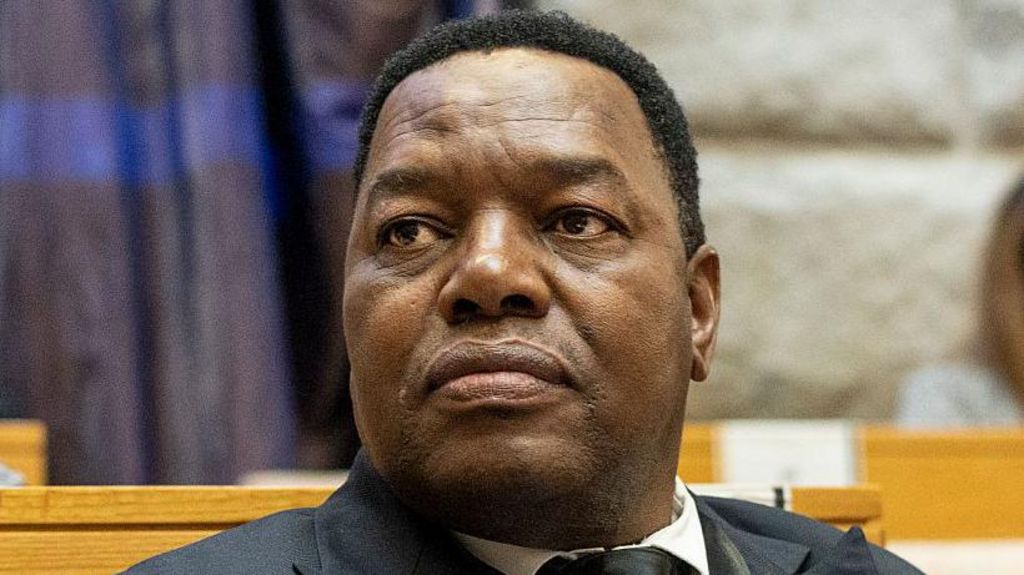
    South Africa’s top law enforcement leader is facing formal legal action over allegations of dereliction of duty connected to a tainted public health contract at the center of a sweeping national corruption probe. General Fannie Masemola, 62, the nation’s acting national police commissioner, appeared before Pretoria Magistrate’s Court this week to answer to four counts of violating South Africa’s Public Finance Management Act, regulations that set clear accountability standards for officials managing state funds.

    The charges stem from a controversial 21-million-U.S.-dollar tender awarded in 2024 to Medicare24 Tshwane District, a company owned by high-profile businessman Vusimuzi “Cat” Matlala. The contract was intended to deliver critical health services to South Africa’s police force, but it was scrapped just 12 months later in May 2025 after red flags emerged over improper awarding practices. To date, 16 other individuals, including multiple senior police officials and Matlala himself, have been linked to the scheme. All of the co-accused face corruption charges, with prosecutors alleging they colluded with Matlala to manipulate the tender process. Unlike his co-defendants, Masemola has not been charged with corruption – only with failing to fulfill his statutory duties as the police service’s designated accounting officer under Section 38 of the Public Finance Management Act.

    Following his brief preliminary court appearance, Masemola spoke publicly to reporters to reject all allegations against him. “I know that I’m not guilty, I’m not wrong, but the [law] must take its course,” he stated. None of the accused, including Masemola, have been required to enter formal pleas at this stage of the proceedings. The case has been adjourned until 13 May, when all 17 defendants will appear together in court to move the process forward.

    The scandal unfolded after evidence of bid rigging and improper influence was presented to the Madlanga Commission, a national public inquiry launched by President Cyril Ramaphosa in September 2024 specifically to investigate widespread allegations of systemic corruption within South Africa’s police service. Masemola’s inclusion in the criminal case marks a historic milestone: he is the third sitting national police chief to face a criminal investigation in South Africa since 2010.

    The first, Jackie Selebi, the country’s longest-serving police chief, was convicted in 2010 of accepting bribes from Italian drug trafficker Glen Agliotti in exchange for ignoring Agliotti’s illegal operations. Selebi was sentenced to 15 years in prison for his crimes. A second former chief, Khomotso Phahlane, was first charged with corruption in 2017. While those initial charges were dropped the following year, Phahlane was re-arrested on identical corruption charges in 2019, which he continues to deny. His case remains active in the court system.

    The charges against Masemola come as the Ramaphosa administration faces growing public pressure to root out systemic corruption across all levels of government, a persistent challenge that has eroded public trust in state institutions for decades. This latest development in the police corruption inquiry signals that the national push for accountability is extending to the very top of the country’s law enforcement hierarchy.

  • China’s top legislature schedules standing committee session for late April

    China’s top legislature schedules standing committee session for late April

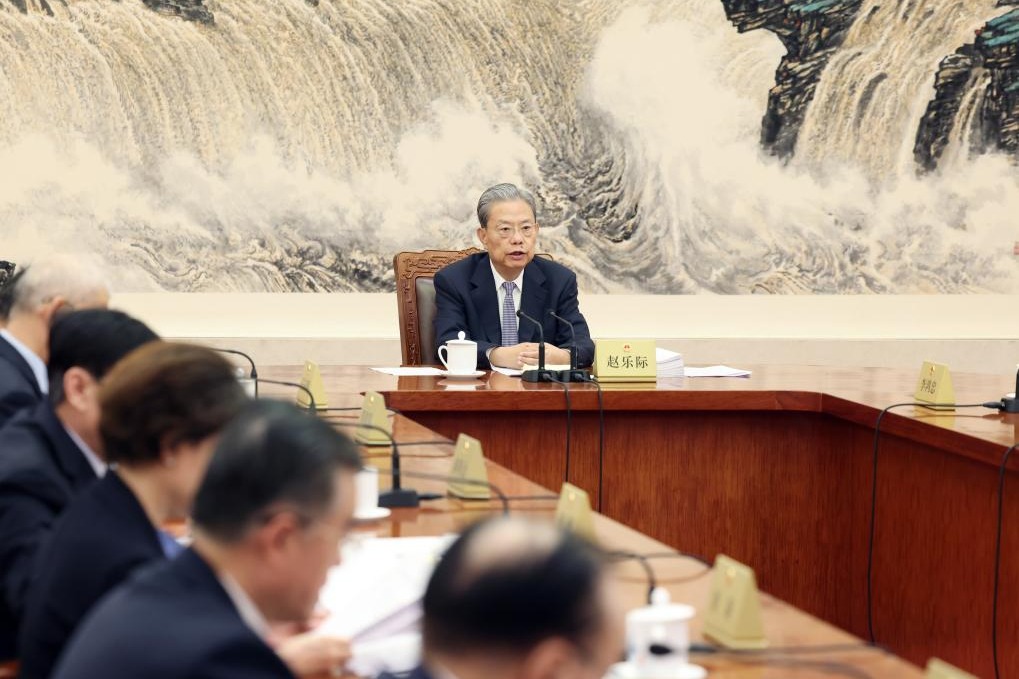
    BEIJING – China’s top national legislative body has slated a four-day standing committee session for late April, with a packed agenda that includes advancing long-gestating legislative drafts and launching first reviews of multiple proposed law revisions, according to official announcements. The upcoming session, set to run April 27 to 30 in Beijing, was formally scheduled during the 65th meeting of the Council of Chairpersons of the 14th National People’s Congress (NPC) Standing Committee, held April 20 at Beijing’s Great Hall of the People. The gathering was chaired by Zhao Leji, Chairman of the NPC Standing Committee.

    Per the finalized draft agenda approved at Monday’s chairpersons’ council meeting, the upcoming session will mark the first legislative review of revised drafts for four major laws: the Law on State-Owned Assets of Enterprises, the Agriculture Law, the National Defense Mobilization Law, and the Water Law. This round of initial deliberation opens the door for public feedback and further refinement before the drafts move to subsequent voting stages.

    In addition to the new reviews, sitting committee members will continue the deliberation process for three other high-priority draft pieces of legislation: a new law on social assistance, a foundational law on national healthcare security, and a targeted law on farmland protection and quality improvement. All three drafts have already gone through an initial round of review and have been amended based on earlier feedback from lawmakers and stakeholder groups.

    Beyond legislative work, the session will also include a series of oversight and procedural business items. Lawmakers will review official reports covering three core areas: national environmental protection efforts, the management of state-owned assets, and the verification of new and outgoing lawmakers’ qualifications. The body will also consider formal proposals for personnel appointments and removals within relevant state institutions.

    Monday’s organizational meeting also approved the NPC Standing Committee’s core work priorities for 2026, laying out clear guiding plans for the body’s upcoming legislative drafting, statutory oversight, and engagement with NPC deputies across the country. The framework sets the tone for the legislative body’s work through the rest of the year, aligning its agenda with national development priorities and public policy needs.

  • Japan’s new warship deal raises concern

    Japan’s new warship deal raises concern

    In a landmark move marking Japan’s largest post-WWII military export deal, Australia and Japan formalized a $7 billion warship procurement agreement on April 18, 2026, deepening bilateral defense ties and triggering widespread expert warnings over rising risks of bloc division in the Asia-Pacific. The deal, first awarded to Japan over Germany’s competing bid in August 2025, comes 12 years after Japan lifted its post-WWII ban on military exports, and represents a major milestone for Tokyo’s expanding global defense industry presence.

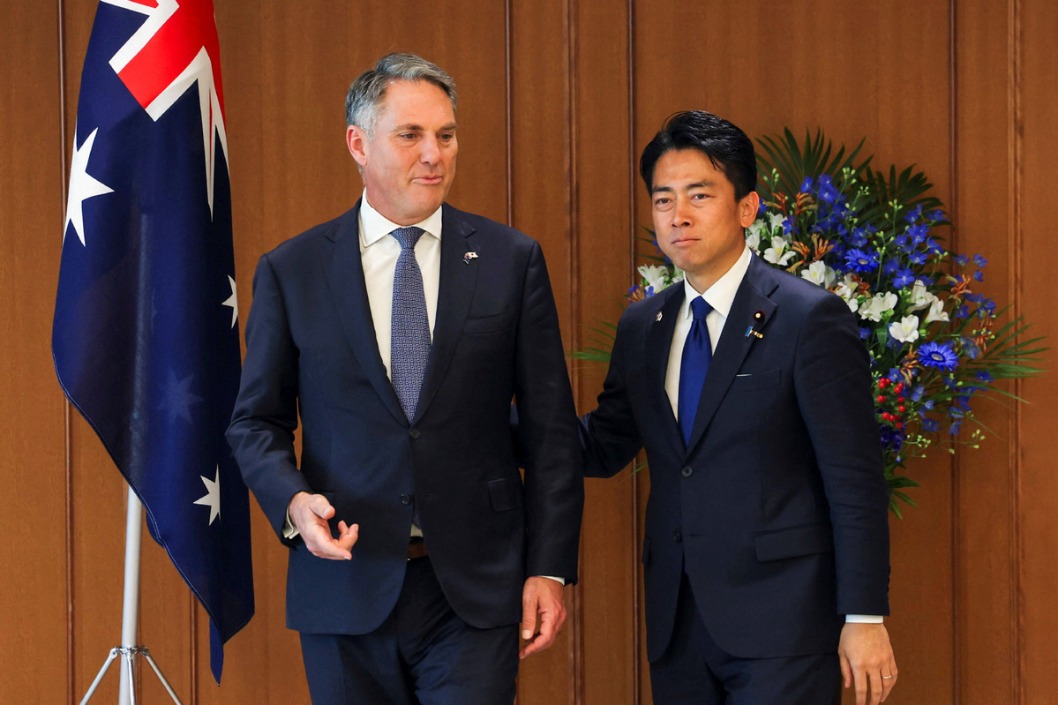
    Under the terms of the memorandum signed by Australian Defense Minister Richard Marles and Japanese Defense Minister Shinjiro Koizumi during talks in Tokyo, Japan’s Mitsubishi Heavy Industries will construct the first three of the 11 planned Mogami-class frigates domestically, with the remaining eight vessels to be built at a new shipyard in Western Australia. The first completed frigate is scheduled to be delivered to the Royal Australian Navy in 2029, a development Marles frames as a core component of Australia’s ambitious plan to build a larger, more technologically advanced and lethal surface fleet.

    The deal marks a significant comeback for Japan’s defense industry, which lost a high-profile 2016 Australian submarine contract to French defense contractors. For Tokyo, it also represents another step in its accelerating military buildup and expanding defense partnership network beyond its long-standing formal treaty alliance with the United States. Japan now officially labels Australia a “semi-ally”, and Koizumi described the procurement deal as a transformative step that elevates bilateral defense cooperation to an unprecedented new level, noting Japan remains an indispensable partner for Australia under Canberra’s newly updated national defense strategy.

    Just days after the deal was signed, Australia unveiled its 2026 National Defense Strategy, which earmarks an extra $38.1 billion in military spending over the next decade. The plan targets lifting Australia’s total defense budget to 3% of GDP by 2033 when calculated using NATO’s inclusive methodology that accounts for military pensions and related defense-associated expenditures. Marles told the National Press Club in Canberra that the strategy includes the most sweeping modernization of Australia’s maritime military capabilities since the end of World War II.

    However, the deepening defense alignment between Tokyo and Canberra has drawn sharp concern from both Chinese officials and regional security experts. In an official statement following the deal signing, Chinese Foreign Ministry spokesperson Guo Jiakun urged Japan to draw clear lessons from its wartime history, honor its international obligations, and remain committed to the path of peaceful development. His comments came amid large-scale public protests in Tokyo against the Japanese government’s ongoing push to revise the country’s pacifist post-WWII constitution. Guo stressed that preventing the resurgence of Japanese militarism is not only a core obligation for Tokyo, but also a shared firm demand of the international community, including China.

    Regional security analysts warn that the growing military cooperation between the two nations is far more than a routine arms transaction. Chen Hong, director of the Australian Studies Centre at East China Normal University, explained that the bilateral security relationship has evolved steadily from early dialogues and the Reciprocal Access Agreement to regular joint military exercises, integrated intelligence sharing, and now full defense industrial cooperation. This progression, Chen noted, is building a rapidly institutionalized regional security network, and the warship deal marks a critical turning point toward full integration of the two countries’ military systems. In effect, Chen argues, the partnership has evolved into a de facto “quasi-alliance”: an unofficial but fully functional security arrangement that allows both countries to avoid the political and financial costs of a formal alliance while advancing shared security goals.

    Chen added that while deeper ties with Japan give Australia a new regional military foothold and supports its existing policy narratives around supply chain and energy security, this comes at the cost of gradual erosion of Canberra’s long-standing strategic autonomy.

    Liu Shuliang, an associate researcher at the Tianjin Academy of Social Sciences, noted that Japan’s closer military ties with Australia are clearly aligned with Washington’s broader Indo-Pacific strategy, and fit into existing US-led security frameworks including the trilateral AUKUS partnership between Australia, the United Kingdom and the United States. Both Japan and Australia, as key US allies, have increasingly leveraged exclusive “small bloc” arrangements to deepen military cooperation aligned with US strategic priorities, Liu explained.

    This trend, experts warn, carries severe risks for the broader Asia-Pacific security architecture. Rooted in an outdated Cold War zero-sum mentality, Liu argued, this exclusive security framework weakens the central role of inclusive multilateralism in maintaining regional peace, limits space for broad multilateral cooperation, and erodes the effectiveness of existing collective security mechanisms. Beyond that, the alignment risks escalating tensions around existing regional flashpoints, accelerating destabilizing shifts in the regional military balance, fueling a new regional arms race, and deepening the widespread regional security dilemma. Chen Hong added that the development of this exclusive quasi-alliance framework will ultimately intensify regional tensions and deepen the security challenges that both Japan and Australia themselves face.

  • The Onion launches new effort to turn Infowars into parody website

    The Onion launches new effort to turn Infowars into parody website

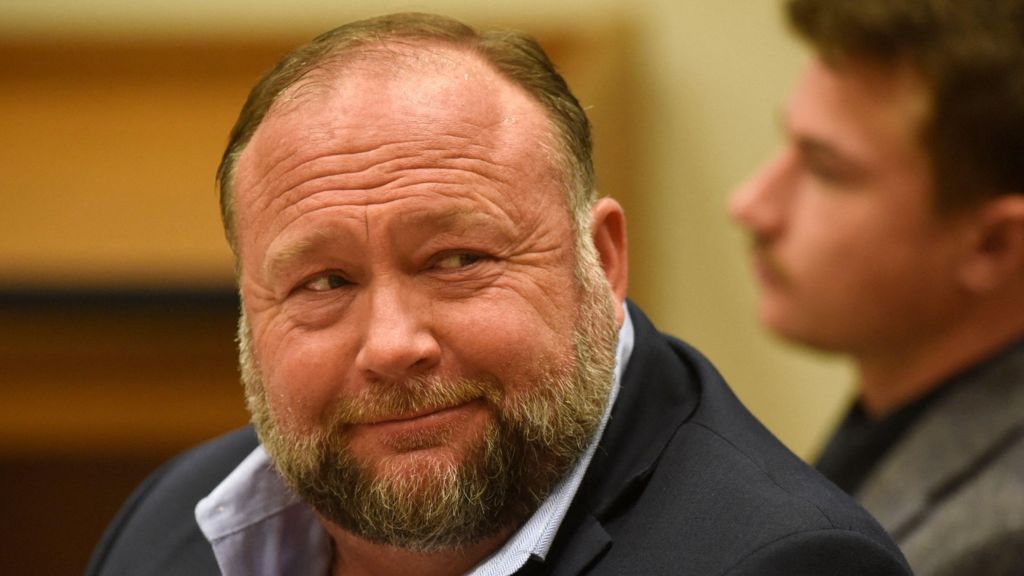
    A years-long legal battle over dangerous disinformation about one of the deadliest school shootings in U.S. history has brought far-right conspiracy theorist Alex Jones’ Infowars media platform to the brink of complete liquidation, with a surprise new bid from satirical news outlet The Onion introducing another twist in the high-profile saga.

    The conflict traces back to the 2012 Sandy Hook Elementary School shooting, which left 26 people — 20 of them young children — dead in Newtown, Connecticut. For years after the tragedy, Alex Jones used his Infowars platform to spread virally harmful falsehoods, repeatedly labeling the mass shooting a staged “giant hoax” manufactured with crisis actors. In a 2015 on-air statement, Jones doubled down on these lies, claiming “Sandy Hook is a synthetic, completely fake with actors, in my view, manufactured.”

    These baseless claims subjected grieving families to years of harassment, threats, and ongoing emotional trauma, prompting the relatives to file defamation lawsuits against Jones and his media company. Although Jones later reversed his position and acknowledged the shooting was real, arguing his original comments were protected under U.S. free speech law, courts sided firmly with the victims’ families, issuing hundreds of millions of dollars in defamation judgments against Jones and Infowars.

    Facing overwhelming legal penalties, Jones filed for personal bankruptcy in 2022, as the case moved through the court system. By June 2024, a judge had already ordered the liquidation of Jones’ personal assets to satisfy the unpaid damages. Later that same year, The Onion made its first attempt to acquire Infowars outright, winning an auction bid for the platform. However, that sale was ultimately thrown out by a judge, who ruled the auction process had failed to generate maximum-value bids for the estate and raised procedural concerns about the transaction.

    Now, with Infowars still set for full corporate liquidation under court order, The Onion has returned with an alternative, restructured proposal. Instead of an outright purchase, the satirical outlet is seeking a six-month initial licensing arrangement, with an option to extend the deal for an additional six months. Under the plan, The Onion would repurpose Infowars’ existing platforms to publish original parody content mocking the kind of conspiratorial far-right content Jones originally built the platform around.

    In comments shared with the Associated Press, The Onion CEO Ben Collins outlined the outlet’s vision for the platform: the project would create satirical characters and narratives to parody online influencers who spread harmful conspiracy theories and dangerous unregulated health advice that can cause serious harm to audiences. Collins also confirmed that if the court approves the deal, all profits generated by the new venture would go directly to the Sandy Hook victim families, fulfilling the outstanding defamation judgements.

    Jones, who has already appealed the court order mandating Infowars’ liquidation, has made clear he will oppose The Onion’s new proposal. A spokesperson for Jones told the AP he intends to continue broadcasting his original programming unchanged, and will fight to retain control of the platform he founded.

    The proposal now awaits judicial approval, marking the latest chapter in a years-long legal fight that has become a high-profile test of accountability for harmful disinformation spread by digital media personalities.

  • Hong Kong government seeks to seize millions from jailed activist Jimmy Lai

    Hong Kong government seeks to seize millions from jailed activist Jimmy Lai

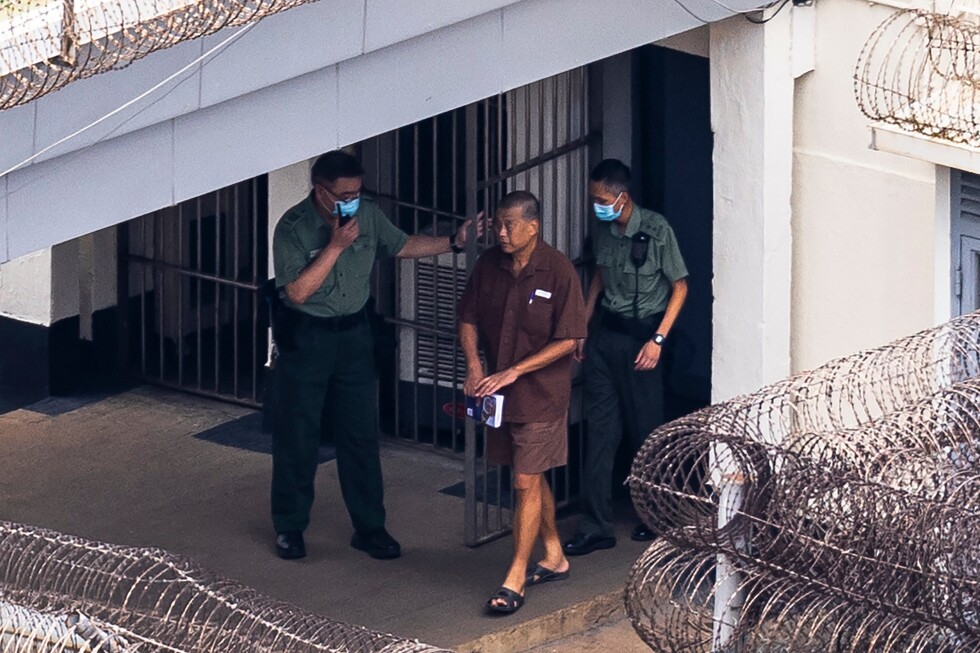
    Court documents obtained by the Associated Press on Tuesday have revealed new details of a major asset forfeiture action launched by the Hong Kong Special Administrative Region government against jailed former media entrepreneur Jimmy Lai. Authorities are moving to seize more than 127 million Hong Kong dollars, equal to roughly 16 million U.S. dollars, in cash held in personal and corporate bank accounts, corporate shares, and other funds linked to what officials describe as national security crimes tied to Lai. While the government first announced its plan to pursue asset forfeiture in early April, it had not publicly disclosed the full value of the assets in question until the release of the court filing, which also does not detail the specific connection between the targeted properties and Lai’s convicted offenses.

    Jimmy Lai, founder of the now-shuttered pro-democracy newspaper Apple Daily and a long-standing vocal critic of China’s ruling Communist Party, was found guilty in December last year on two counts under the Beijing-imposed Hong Kong National Security Law: conspiracy to collude with foreign forces and conspiracy to publish seditious content. In February, he was handed a 20-year prison sentence, the harshest penalty issued to date under the 2020 national security legislation.

    The court filing outlines the full scope of assets Hong Kong’s Department of Justice is seeking to have forfeited to the government. The list includes 15 personal bank accounts held under Lai’s name, funds held in accounts tied to multiple companies he is associated with, and corporate shares controlled by Lai and other connected parties. Among the targeted shares are Lai’s stake in Next Digital, the parent holding company of Apple Daily, and holdings in Dico Consultants, a firm tied to an earlier fraud conviction against Lai that was ultimately quashed by the courts. The requested seizure also includes 2 million Hong Kong dollar (US$255,440) fine from Lai’s 2022 fraud conviction, which was set to be refunded to him after that conviction was overturned in February, as well as bail funds deposited with the Hong Kong judiciary.

    In its April 2 statement announcing the forfeiture application, the Hong Kong government cited provisions of the national security law, which allow for the confiscation of any assets used, or intended for use, in committing a national security offense, as well as any proceeds generated through those offenses. Officials argue that the forfeiture order is a necessary step to protect national security, preventing Lai, his allies, and his representatives from using crime-connected assets to carry out further activities that threaten the stability and security of Hong Kong and China. A court hearing on the government’s application is scheduled to be held in July.

    The case has sparked ongoing international and domestic debate over the scope of the national security law and its impact on civil liberties in Hong Kong, which returned to Chinese rule in 1997 after more than 150 years of British colonial administration. Critics of Lai’s conviction argue that it represents a dramatic erosion of press freedom and other core civil liberties that were guaranteed to Hong Kong under the 1997 handover framework. Conversely, the Hong Kong government has repeatedly emphasized that the prosecution is not an attack on free press, maintaining that Lai and other co-defendants used journalistic activity as a cover to carry out acts that undermined national security over a period of years.

  • Japan eases arms export rules

    Japan eases arms export rules

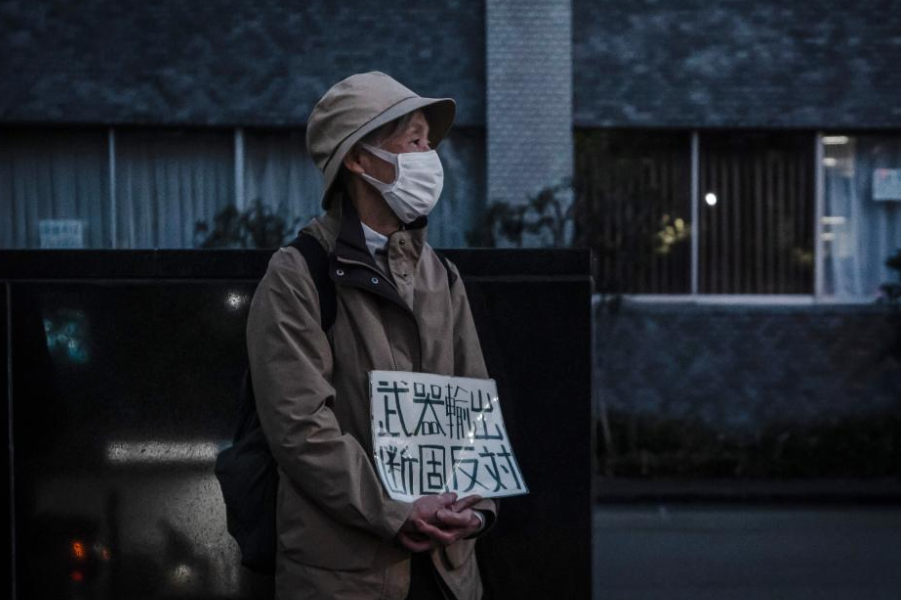
    In a move that has drawn both domestic pushback and international scrutiny, the Japanese government moved forward with a controversial revision of its defense equipment export regulations on Tuesday, April 21, 2026, removing long-standing restrictions that barred most shipments of lethal weapons to overseas buyers, according to a Kyodo News report. Just four days before the government formalized the policy change, hundreds of Japanese citizens gathered outside the prime minister’s official residence in central Tokyo on the evening of April 16 to stage a public protest. Holding placards and voicing clear opposition, demonstrators condemned the administration’s decision to scrap the decades-old arms export constraints, warning that the policy shift risks dragging Japan into greater global military entanglement and fueling regional arms proliferation. This revision marks a major break from Japan’s post-World War II pacifist stance, which for generations has imposed strict limits on the development and international trade of offensive military capabilities. Beyond domestic backlash, the policy change has already drawn attention from neighboring countries that have previously called on Japan to uphold historical reflection and guard against the resurgence of Japanese militarism. In prior statements, Chinese officials have emphasized that Japan bears a fundamental obligation to prevent the reemergence of aggressive militarism in the region, a point that has taken on new urgency following the arms rule revision.

  • Visit highlights Sino-Vietnamese ties

    Visit highlights Sino-Vietnamese ties

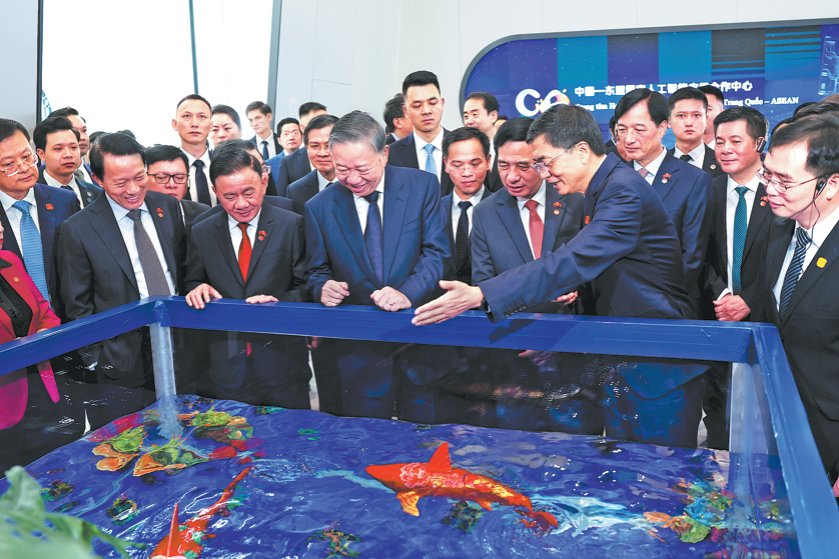
    Against a backdrop of shifting global geopolitics and regional development ambitions, the recent official visit of Vietnam’s highest leader To Lam to China has cemented the longstanding centrality of China-Vietnam relations in Hanoi’s foreign policy agenda, regional analysts agree. To Lam, who serves concurrently as General Secretary of the Communist Party of Vietnam Central Committee and President of Vietnam, carried out his four-day state visit to China from April 14 to 17, 2026. This trip marks his first official overseas visit since his recent election as Vietnamese president, and comes exactly one year after Chinese President Xi Jinping’s 2025 state visit to Vietnam, creating a critical rhythm of high-level diplomatic exchange between the two neighboring nations.

    Regional policy experts note that the itinerary of the visit carries far more than symbolic weight. After meetings in Beijing, To Lam traveled via high-speed rail for roughly 10 hours to Nanning, the capital of China’s Guangxi Zhuang Autonomous Region, which shares a long land border with Vietnam. During the stop in Nanning, the Vietnamese leader visited the China-ASEAN Countries Artificial Intelligence Application Cooperation Center, a tangible marker of expanding technological collaboration between the two sides.

    Le Hong Hiep, senior fellow and Vietnam Studies Programme coordinator at Singapore’s ISEAS-Yusof Ishak Institute, explained that the visit underscores the consistent priority Hanoi has long placed on its bilateral ties with Beijing. “This visit confirms that China remains a cornerstone of Vietnam’s foreign policy,” Hiep told China Daily. He added that the trip also reflects To Lam’s interest in adapting successful elements of China’s governance and development models to support Vietnam’s own domestic goals: the Southeast Asian nation has set a target to reach high-income economy status by 2045, with a focus on replicating China’s progress in infrastructure development and technological innovation.

    The visit aligns with key domestic milestones for both countries: it comes as Vietnam enters a new development cycle following its 14th National Party Congress, while China has just kicked off implementation of its 15th Five-Year Plan spanning 2026 to 2030.

    Ian Seow Cheng Wei, senior analyst at the S. Rajaratnam School of International Studies at Nanyang Technological University in Singapore, emphasized that the Guangxi leg of the journey stands out as a particularly meaningful highlight. Beyond highlighting the shared revolutionary roots between the Communist Party of China and the Communist Party of Vietnam, the stop draws attention to Guangxi’s outsize role in bilateral economic exchange: the autonomous region ranks among China’s largest provincial-level trading partners with Vietnam.

    This economic and strategic importance is reflected in the new cooperation agreements signed during the visit, which cover growing collaboration in artificial intelligence, semiconductor development, and cross-border transport connectivity. In a joint statement released during the visit, the two sides committed to accelerating cross-border infrastructure integration. They praised the early completion of the feasibility study for the Lao Cai-Hanoi-Haiphong railway, whose first phase of construction launched in December 2025 to connect Vietnam to China’s Yunnan Province. The two sides also welcomed the signing of implementation agreements for two additional standard-gauge railway projects linking Guangxi to northern Vietnam: the Dong Dang-Hanoi line and the Mong Cai-Ha Long-Haiphong line.

    Khang Vu, a visiting scholar in the Political Science Department at Boston College in the United States, noted that while Vietnam maintains multiple comprehensive strategic partnerships globally, the timing and framing of To Lam’s visit makes clear that China holds a unique “first among equals” status in Hanoi’s foreign relations. Khang added that expanded railway infrastructure cooperation delivers mutual benefits to both nations: it strengthens China’s connectivity with Vietnam and the broader Southeast Asian region, while also cutting transport costs for Vietnamese exports bound for European markets via transcontinental rail links.

    Against the backdrop of recent global energy market volatility sparked by the Iran war, which has exposed risks tied to Vietnam’s current energy import dependency, Khang pointed out that Hanoi can also draw lessons from China’s decades of experience in expanding electric vehicle production and scaling clean energy infrastructure. Moving forward, he noted, infrastructure connectivity and clean energy development are set to become the core pillars of deepening bilateral cooperation.

    Amid widespread global geopolitical turbulence, Hiep noted that both China and Vietnam used the visit to reaffirm their shared commitment to stabilizing bilateral relations and advancing the vision of a China-Vietnam community with a shared future. This approach aligns directly with Vietnam’s core goal of maintaining a peaceful, stable external environment to support its long-term domestic development ambitions. “The visit further underscores China’s indispensable role as a neighbor and a development partner of Vietnam,” Hiep said.