博客

  • Rise in pet ownership creates economic opportunities

    Rise in pet ownership creates economic opportunities

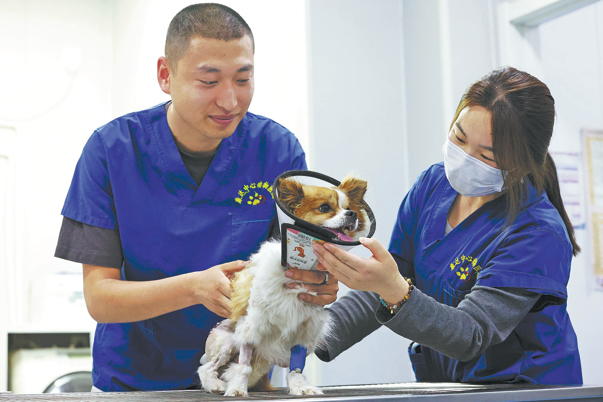
    Driven by shifting generational attitudes that position pets as beloved family members rather than simple companions, China’s pet sector is undergoing rapid expansion, with cities in northern Shanxi province emerging as a key example of the industry’s evolution beyond basic retail into a diversified, professionalized ecosystem.

    Across Taiyuan, the provincial capital of Shanxi, this growing demand for high-quality pet care has spawned a wave of new specialized services, ranging from standardized in-home pet sitting and high-speed rail pet transport to advanced veterinary care for aging animals. One of the professionals at the heart of this booming market is Chen Hong, a 40-year-old full-time in-home pet sitter who turned her years of personal pet ownership experience into a full-time career last winter.

    During a recent service call, Chen followed strict industry hygiene protocols: putting on disposable shoe covers and gloves, and spraying disinfectant throughout the entryway before entering the client’s home, where two friendly cats immediately greeted her with affectionate attention. As she played gently with the animals, Chen explained the core driver of rising demand for her work. “More and more people consider their pets as family members and emotional anchors, ” she said. “As a result, pet owners are increasingly demanding higher quality services that put their pets’ comfort first.”

    Chen’s work focuses on supporting pet owners who travel for work or leisure, providing in-home services that include feeding, litter box cleaning, and dedicated playtime. On an average day, she travels between Taiyuan’s residential communities to complete five to six appointments, with peak demand during national holiday seasons pushing her daily schedule to more than a dozen bookings.

    Chen’s career transition mirrors a much larger national trend, as skyrocketing pet ownership across China creates thousands of new professional roles and opens up major new economic opportunities. Data from the 2026 China Pet Industry White Paper underscores the scale of this growth: urban China is now home to nearly 126 million pet dogs and cats, pushing the national pet industry market size to 312.6 billion yuan, equivalent to roughly $45.5 billion. Industry forecasts project that total consumer spending on pet-related products and services will climb to 405 billion yuan by 2028.

    Unlike traditional pet boarding facilities that require owners to leave their animals at an off-site location, in-home pet sitting aligns far better with pets’ natural routines and reduces the stress animals often experience when separated from their owners in unfamiliar environments. That benefit has made the service increasingly popular among younger pet owners like Zhang Zining, a 28-year-old Taiyuan resident who owns an Abyssinian cat. Zhang says she always books in-home sitting services whenever she plans to travel for more than two days, citing the peace of mind it gives her knowing her pet is comfortable in its own home.

    Local authorities in Shanxi have also moved to standardize this fast-growing sector, introducing formal guidelines to ensure service quality and consumer protection, laying the groundwork for the pet economy’s sustained long-term growth across the region.


  • Cuba confirms recent meeting with US delegation

    Cuba confirms recent meeting with US delegation

    HAVANA — Cuban officials have formally confirmed that a high-level diplomatic meeting between Cuban and U.S. government delegations was recently held in the Cuban capital, according to a statement reported by the country’s leading state-run newspaper.

    Alejandro Garcia del Toro, deputy director general for U.S. affairs at Cuba’s Ministry of Foreign Affairs, shared details of the closed-door talks with Granma, the official daily of the Cuban Communist Party, on Monday. He confirmed that both sides dispatched senior officials to lead their respective delegations: the U.S. side was led by State Department assistant secretaries, while Cuba’s delegation was headed by a deputy foreign minister.

    Garcia explained that the discussions were conducted with deliberate discretion, a choice rooted in the Cuban government’s classification of the bilateral negotiations as a sensitive topic. He emphasized that the exchange unfolded in a constructive, respectful framework: neither side imposed arbitrary deadlines for progress nor placed coercive demands on the other, with all interactions carried out in a professional manner.

    For the Cuban negotiating team, Garcia noted, the number one priority for discussion was the full removal of the U.S. energy blockade imposed on the island nation. The measure in question refers to U.S. sanctions that target third-party countries that engage in fuel exports to Cuba.

    Garcia reaffirmed Cuba’s longstanding stance that this U.S. policy of economic coercion represents an unjustified collective punishment that harms the entirety of the Cuban civilian population. Beyond its impact on Cuba, he added, the sanctions framework also functions as a form of global blackmail against sovereign nations, which hold clear legal right to sell fuel to Cuba under established international free trade rules.

  • Toymaker empowers plush puppy with AI

    Toymaker empowers plush puppy with AI

    In the heart of Xiong’an New Area, Hebei Province, a fluffy plush puppy named Xiaowen does far more than sit on a child’s shelf waiting for a hug. This isn’t an ordinary stuffed animal: when called, it responds with a playful, sarcastic quip that turns everyday interaction into a spontaneous moment of fun. “Yeah? What’s up? I’m so tired of endless work. Do you even have a job?” it teases, and after a gentle pat on its soft body, it quickly shifts to a apologetic tone: “I promise it won’t happen again. Please forgive me!” This viral fan favorite is the AI Apology Dog, the brainchild of 62-year-old industry veteran Zhang Qingli, whose decades-long career in manufacturing has taken him from clothing to contract toy production, and now to pioneering AI-integrated plush companions.

    Zhang’s journey into smart toy development didn’t happen overnight. Starting out in clothing manufacturing back in the 1990s, he pivoted to the plush toy industry in 2011, setting up his production base in Rongcheng County, a region long recognized as one of China’s leading plush toy manufacturing hubs. Like most local factories at the time, Hebei Hai Fa Toy Co operated primarily as an original equipment manufacturer (OEM), producing goods for external brands. This model brought with it slim profit margins and almost no control over product design or pricing, leaving Zhang searching for a path to long-term growth.

    The 2017 establishment of Xiong’an New Area, China’s high-tech, smart development demonstration zone, became the turning point Zhang needed. “We couldn’t just keep making ordinary toys,” he explained. “Xiong’an is about high-end and smart development.” The specific inspiration for his AI pivot came in 2022, when a friend asked Zhang to help locate an exact replica of his daughter’s well-worn, decade-old childhood bunny toy. After a months-long search across the country, Zhang finally tracked down a matching replacement in Guangdong Province. That experience drove home a powerful truth: plush toys are far more than fabric and stuffing — they carry deep emotional attachment for their owners. That realization sparked his idea to give traditional plush toys a digital “brain.”

    By 2023, Zhang had assembled a dedicated in-house artificial intelligence R&D team, combining cross-functional software and hardware expertise to develop the company’s first line of fully independent smart toys. The AI Kids series launched in 2024, boasting more than 60 functions spanning early childhood education, interactive entertainment, and long-distance companionship.

    Gao Mengyang, head of the company’s R&D division, explained the core design: “We combine AI technology with plush toys, putting a self-developed core inside to make them smart. With one-press chat, children can talk remotely with their parents anytime.” The product also includes a patented near field communication (NFC) system that lets children trigger customized learning content simply by holding a themed card near the toy, solving the common problem of inaccurate voice recognition for young children with underdeveloped speech.

    The road to success wasn’t smooth. The first month of sales for the new AI line only moved a few thousand units — less than one-tenth of the factory’s daily sales volume for traditional plush toys. Early design choices, including the removal of a manual switch to create a seamless interaction experience, led to user complaints about frequent false triggers, and the team quickly recognized the domestic AI toy market was still in its early stages of growth.

    Instead of abandoning the project, Zhang and his team doubled down on iterative upgrades. Version 2.0 introduced multi-touch responsive interaction, adding nuanced emotional engagement: when the toy is lifted high off the ground, it will squeak “Too high, I’m scared!” in a soft, playful voice. A major breakthrough came in early 2025, when similar AI plush toys gained massive viral popularity overseas, sparking a surge in consumer interest for domestic smart toy products. Sales of Hebei Hai Fa’s AI Kids line began climbing steadily, and the product line quickly earned widespread consumer recognition.

    Today, the AI Apology Dog stands as the company’s breakout hit. Soft, huggable, and integrated with a large language AI model, it can chat with users, tell jokes, deliver early childhood education, detect user emotions, and respond physically to touch. “It helps users release stress,” Zhang said. “Children see it as a friend and teacher, while parents use it as a companion and assistant.” The most popular functions across the full AI Kids line include voice conversation, NFC card learning, remote parent-child messaging, music and storytelling, emotional support, and daily habit reminders.

    The company has already expanded its global footprint, exporting products to 30+ markets across Europe, Japan, South Korea, Southeast Asia, the Middle East and North America. International versions of the AI toys support more than 100 languages and meet all regional product safety and technology standards. In 2025, the company sold millions of traditional plush toys alongside more than 100,000 AI-powered models, with one-third of all AI units shipped to overseas buyers.

    Now partnering with leading AI and chip specialists who have relocated to Xiong’an New Area to take advantage of the zone’s high-tech policy support, Zhang is already planning his next line of innovative smart products. Upcoming projects include a smart memory pillow that can store and play a loved one’s voice, and AI-enabled companion pets tailored for elderly care that can monitor basic health metrics, provide daily companionship, and connect seniors with their far-flung family members.

    For Zhang, the evolution of the toy industry marks a fundamental shift in what these products mean to consumers: “Toys are no longer just toys. They are companionship, education, stress relief and warmth. Our goal is to build Xiong’an smart plush toys into a recognized global brand.”

  • Stable grain output, lower soybean imports forecast for nation in 2026

    Stable grain output, lower soybean imports forecast for nation in 2026

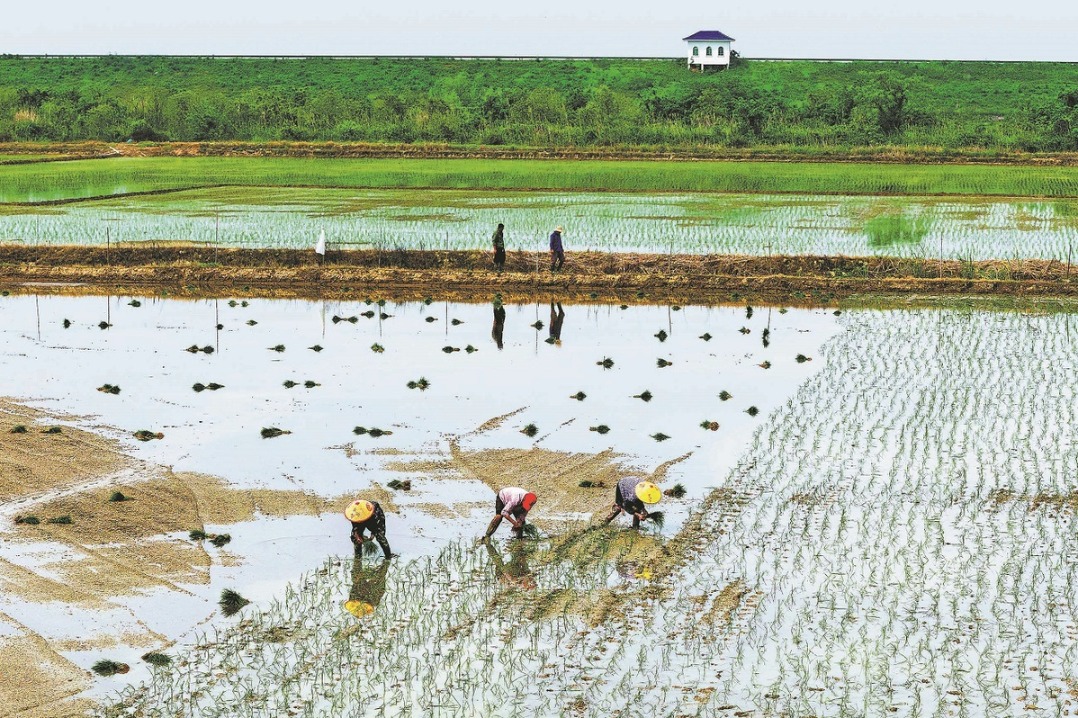
    Against a backdrop of rising global food security uncertainties fueled by geopolitical turbulence, a landmark long-term agricultural outlook report released Monday projects that China will record a modest but steady uptick in domestic grain output in 2026, while seeing the first decline in imports of major agricultural commodities – most notably soybeans – in recent years.

    The *China Agricultural Outlook (2026-2035)*, compiled by the agricultural market analysis and early-warning team under China’s Ministry of Agriculture and Rural Affairs, forecasts total national grain production will hit 716 million metric tons this year, a 0.2% year-on-year increase. Oilseed output is also set for stronger growth, projected to rise 2.6% to 42.04 million tons. The expansion is driven by consistent improvements in crop productivity, with average national grain yields expected to cross the 6,000 kilograms per hectare threshold in 2026.

    “Large-scale improvements in crop productivity will continue to support a stable grain supply,” noted Xu Shiwei, head of the Ministry of Agriculture and Rural Affairs’ key laboratory of agricultural monitoring and early warning technology. Alongside rising domestic output, the report forecasts a pullback in imports of several major agricultural goods, paired with ongoing growth in exports of China’s competitive agricultural products. Xu confirmed that soybean imports will fall 6.1% year-on-year in 2026, marking the first drop for that metric in recent years. Pork imports are projected to decline 8.2%, while dairy imports will see a 4.1% decrease, per the report.

    At the same time, exports of high-demand Chinese agricultural products are on track to expand: vegetable exports are forecast to grow 6.4% in 2026, and fruit exports are set to rise 5%. Even with the projected decline in some import volumes, the report stresses that global agricultural markets will remain a critical supplement to China’s domestic supply, noting that imports of goods including poultry are still expected to increase this year.

    The report comes as global agricultural markets face mounting headwinds from global geopolitical instability. Li Ganqiong, head of the agricultural monitoring and early-warning research center at the Chinese Academy of Agricultural Sciences, pointed out that rising geopolitical risks – including ongoing conflict in the Middle East – have driven up global oil prices, fertilizer costs and shipping expenses, creating greater uncertainty for global agricultural production and trade. “These factors could heighten risks to global food security,” Li said, adding that shoring up domestic agricultural production remains the most critical strategy for buffering against external volatility.

    Beyond 2026, the report outlines a decades-long trajectory of steady growth for China’s agricultural sector. Total national grain output is projected to climb gradually to 733 million tons by 2030 and 753 million tons by 2035, with average grain yields per hectare expected to rise 6.3% over the next 10 years. On the demand side, national grain consumption is forecast to grow slowly before peaking at 842 million tons around 2032, after which it will stabilize and enter a gradual decline.

    As domestic productivity improves and China’s agricultural goods gain stronger global competitiveness, the country’s reliance on imports for major agricultural commodities will continue to decrease over the long term, Xu explained. By 2035, total grain imports are projected to drop to 115 million tons, a 25.5% reduction from the 2023-2025 average. Soybean imports are set to fall to 82.55 million tons by 2035, a 21.5% drop from current average levels.

    Other agricultural sectors are also set for structural adjustment and steady growth. The Chinese dairy industry will continue expanding, with domestic milk production projected to reach 45.07 million tons by 2030 and 51.17 million tons by 2035, for an average annual growth rate of 2%. This growth aligns with shifting domestic consumer demand: the report notes rising demand for fresh milk, alongside growing use of cheese and butter in beverages and baked goods across China.

    For the pork sector, the report forecasts a gradual output decline over the next decade, as the industry transitions from a period of rapid expansion to a focus on higher-quality, more efficient production. By 2035, pork output is projected to reach 55.11 million tons, with an average annual decline of roughly 0.5%.

    First launched in 2014, the annual China Agricultural Outlook report has become a core authoritative platform for evaluating China’s agricultural trends, supporting more accurate market forecasting and guiding evidence-based policy planning, the Ministry of Agriculture and Rural Affairs said.

  • New batch of Chinese martyrs’ remains from Korean War to be returned Wednesday

    New batch of Chinese martyrs’ remains from Korean War to be returned Wednesday

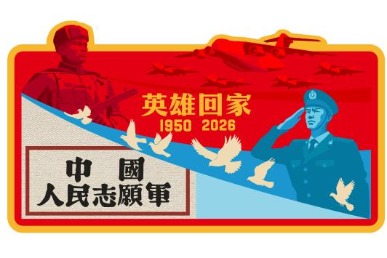
    BEIJING – After more than seven decades resting far from their homeland, 12 Chinese People’s Volunteers (CPV) martyrs who fell during the 1950–1953 War to Resist US Aggression and Aid Korea will finally be brought back to Chinese soil this Wednesday, China’s Ministry of Veterans Affairs has announced. This scheduled handover marks the 13th repatriation conducted under a bilateral agreement between China and the Republic of Korea (ROK) that has allowed fallen heroes to return home for burial. Since the first repatriation operation launched in 2014, a total of 1,011 CPV remains have been transferred from the ROK to China, each recovery a quiet act of respect for the sacrifice these service members made more than 70 years ago. The long-running repatriation program reflects the shared commitment of both sides to honoring the war dead and upholding historical memory, giving fallen soldiers the homecoming they deserve decades after the end of the conflict.

  • War in the Middle East: latest developments

    War in the Middle East: latest developments

    The ongoing conflict in the Middle East continues to unfold with a cascade of new developments across diplomatic, military, economic, and political fronts this week, reshaping regional dynamics and global market sentiment.

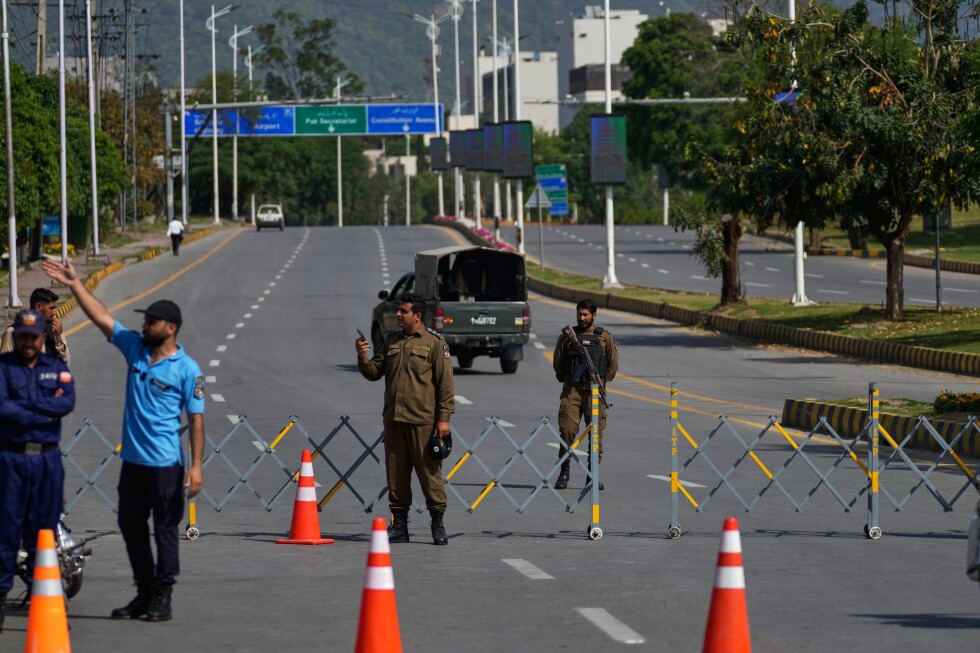
    On the diplomatic track, conflicting updates have emerged regarding planned indirect talks between Iran and the United States set to take place in Islamabad, Pakistan. Iran’s state-run television has firmly denied earlier reports that any Iranian negotiating delegation has already departed for the bilateral discussions, stating explicitly that no official group — whether core or ancillary — has left the country for the talks. A separate anonymous source familiar with U.S. planning confirmed to Agence France-Presse that an American delegation is still scheduled to travel to Pakistan “soon” for the new round of negotiations focused on de-escalation.

    Separately, the United States is moving forward with its diplomatic efforts to resolve tensions along the Israeli-Lebanese border. A senior U.S. State Department official, speaking on condition of anonymity, confirmed that Washington will host a new round of direct talks between Israeli and Lebanese delegations on Thursday. This meeting follows an earlier negotiation session that paved the way for a fragile, currently holding ceasefire between Israeli forces and the Iran-aligned militant group Hezbollah. “We will continue to facilitate direct, good-faith discussions between the two governments,” the official noted.

    In northern Israel, Israeli Defense Minister Israel Katz outlined the dual strategy driving his country’s ongoing military campaign in southern Lebanon. Katz emphasized that Israel’s overarching objective is the full disarmament of Hezbollah, a step the country says is necessary to eliminate persistent security threats to Israeli communities located along the northern border. According to Katz, this goal will be pursued through a coordinated combination of targeted military pressure and parallel diplomatic action.

    Inside Iran, the national judiciary confirmed the execution of Amir Ali Mirjafari, a man convicted of multiple charges including collaboration with Israeli intelligence agency Mossad and the United States, involvement in arson at the prominent Gholhak Grand Mosque in Tehran, and leading anti-government security activities during pre-war protest waves. The execution was carried out by hanging on Wednesday morning, according to a statement published on Iran’s official judiciary Mizan Online website.

    On the maritime front, shipping industry intelligence outlet Lloyd’s List has documented that more than 20 Iranian-registered “shadow vessels” — unmarked or obscurely flagged vessels often used to evade trade restrictions — have successfully bypassed the U.S.-led naval blockade on Iranian ports. In normal peacetime conditions, the strategic Strait of Hormuz, a critical chokepoint for global oil supplies, sees an average of 120 commercial vessel transits on a daily basis, the outlet noted.

    In comments on U.S. policy toward Iran, former U.S. President Donald Trump, who oversaw last year’s Operation Midnight Hammer strikes on Iranian nuclear infrastructure, offered updated remarks on the state of Iran’s uranium program. Writing on his Truth Social platform, Trump reiterated that the U.S. strikes achieved the complete destruction of Iran’s nuclear sites, adding that any future effort by the U.S. to recover enriched uranium from the targeted facilities would be an extended and logistically challenging process. Trump also reaffirmed his support for the ongoing U.S. blockade of Iranian ports, stating that the trade restriction will remain in place until Iran signs a comprehensive peace agreement to end the current regional conflict. He noted that Iran loses an estimated $500 million daily under the blockade, a financial hit he described as unsustainable even over short timeframes.

    Global commodity and equity markets reacted to shifting optimism around a potential de-escalation deal that would end the conflict and reopen full transit through the Strait of Hormuz. As of 07:15 GMT, global benchmark Brent Crude fell 0.7% to trade at $94.78 per barrel, while U.S. West Texas Intermediate crude dropped 1.4% to $88.35 per barrel. In contrast, global equity markets posted gains as investors grew more hopeful that a breakthrough deal could ease upward pressure on energy prices.

  • Fired former UK official says he felt political pressure to approve Mandelson as US ambassador

    Fired former UK official says he felt political pressure to approve Mandelson as US ambassador

    The escalating political scandal over former UK prime minister Keir Starmer’s appointment of Peter Mandelson as ambassador to the United States has entered a new phase, with the top former civil servant who oversaw the approval process telling lawmakers that his team was pushed to rush the selection despite formal security red flags.

    In testimony delivered Tuesday to the House of Commons Foreign Affairs Committee, Olly Robbins, the former head of the UK Foreign Office who was fired by Starmer last week over the affair, clarified critical details: the initial security concerns that triggered vetting warnings were not connected to Mandelson’s long-documented friendship with convicted sex offender Jeffrey Epstein, who died in prison in 2019. When pressed by parliamentarians, Robbins declined to specify what issue led the government’s official vetting body to flag Mandelson as a risk.

    Robbins told the committee that the UK’s vetting agency had classified Mandelson as a “borderline case” that leaned toward a recommendation against granting him high-level security clearance. Despite this formal assessment, the Foreign Office ultimately approved the clearance, a decision that has now cost Robbins his position.

    Widening his account of the internal pressure that preceded the approval, Robbins said an “atmosphere of pressure” originated directly from Starmer’s Downing Street office, with a “very, very strong expectation” that Mandelson needed to be installed in the Washington post as quickly as possible. He added that there was a “generally dismissive attitude” toward the security vetting process among political officials back in January 2025, just before Mandelson traveled to the U.S. to take up the role.

    Starmer has already publicly acknowledged he made a misjudgment in appointing Mandelson, but has pushed back against growing opposition calls to step down from the premiership. He claims that he was never informed by Foreign Office officials of the failed security vetting assessment, saying he only learned of the red flags last week. He has called the failure to disclose this information “frankly staggering”, placing full blame for the affair on career civil servants rather than his own political leadership.

    Mandelson’s appointment was terminated by Starmer back in September 2025, nine months after he took up the ambassador post, when new details about his long-running ties to Epstein came to light. In response to the unfolding crisis, Starmer has ordered an official review to assess what security risks may have emerged from Mandelson’s nine months of access to top-secret UK government information while serving in Washington.

    Critics argue the entire affair is just the latest example of poor decision-making from Starmer, who led the centre-left Labour Party to a landslide general election victory in July 2024, but has been plagued by repeated missteps in office. Records show Starmer went ahead with the appointment even after his own internal staff warned him that Mandelson’s friendship with Epstein created major “reputational risk” for the government. Additional concerns were also raised about Mandelson’s past business ties to both Russia and China, but political leaders ultimately pushed forward with the selection, citing his experience as a former European Union trade chief and his deep network of connections among global political and business elites as valuable assets for working with U.S. President Donald Trump’s administration.

    The scandal has deepened unease within the parliamentary Labour Party, where lawmakers already faced anxiety over the party’s poor standing in national opinion polls. Starmer previously defused one wave of internal pressure back in February 2025, when multiple backbench Labour MPs called on him to resign over the unfolding controversy.

    Separately, Mandelson is currently the subject of an active criminal investigation by UK police over suspected misconduct in public office. The probe was launched after the U.S. Department of Justice released a large trove of Epstein-related documents in January 2025, which included emails suggesting Mandelson passed sensitive, market-moving UK government information to Epstein back in 2009 in the wake of the global financial crisis. British law enforcement arrested Mandelson in February 2025 as part of the inquiry; he has repeatedly denied any wrongdoing, has not been formally charged with any criminal offense, and faces no allegations of sexual misconduct connected to the Epstein case.

  • No delegation from Iran visits Islamabad, state television says, as talks speculation grows

    No delegation from Iran visits Islamabad, state television says, as talks speculation grows

    DUBAI, United Arab Emirates – As swirling rumors of potential negotiations between Iran and the United States gained traction in regional and international policy circles, Iran’s state-owned television released an official on-screen statement Tuesday clarifying that no Iranian diplomatic delegation has traveled to Islamabad for discussions as of yet. This public correction comes amid a backdrop of rising internal tension within Iran’s theocratic leadership, which is grappling with how to respond to a recent high-seizure of an Iranian container vessel by the U.S. Navy over the weekend. For decades, Iran’s state television has remained under the direct control of hardline factions within the country’s ruling establishment, making its public messaging a key window into internal ideological divides. To date, no senior Iranian official has confirmed plans to dispatch a negotiating team to the Pakistani capital, where Pakistani officials have reportedly maintained preparedness for days in anticipation of the potential talks. U.S. officials have confirmed that Vice President JD Vance is tapped to lead the American delegation if talks move forward, while Iran has yet to announce any representative to head its side. The last time direct talks between the two nations occurred, Iranian Parliament Speaker Mohammad Bagher Qalibaf led Tehran’s delegation. Public discourse around resuming diplomatic talks with the U.S. remains entirely absent from official Iranian media and public government channels, with extreme hardline factions voicing strong public pushback against any renewed negotiations in recent days. This opposition has only hardened following the U.S. seizure of the Iranian container ship, a move that has escalated already heightened tensions between the two nations. Online, a growing campaign has called for Supreme Leader Ayatollah Mojtaba Khamenei to issue an official public statement clarifying his stance on whether the Islamic Republic should move forward with new talks. However, the newly installed supreme leader has not released any public comment, and no verified images of him have been published since the start of the ongoing conflict between Iran, Israel, and the United States. U.S. and Israeli intelligence officials have claimed Khamenei was wounded in an attack carried out earlier in the conflict. The absence of the supreme leader from public view has shifted governing power firmly toward Iran’s paramilitary Revolutionary Guard, the institution that has led much of Iran’s military operations throughout the ongoing conflict. Guard commanders have largely operated with limited oversight from central Tehran authorities when selecting targets and coordinating military actions, a dynamic that has only become more pronounced amid the current leadership vacuum. Iran’s civilian political leadership has remained largely silent on the issue of potential talks, a silence made more notable by a recent public misstatement from Foreign Minister Abbas Araghchi. Over the weekend, Araghchi posted online that the Strait of Hormuz, the critical global oil chokepoint connecting the Persian Gulf to international open waters, had been reopened to full traffic – a claim that was immediately retracted and denied by other senior officials in Tehran. Since the U.S. and Israel launched coordinated military strikes against Iran on Feb. 28 that ignited the current open conflict, Tehran has restricted commercial vessel traffic through the strait, a move that has rippled through global energy markets. In response to Iran’s actions and ongoing pressure from hardline domestic factions, the U.S. has implemented a full naval blockade of major Iranian ports, further isolating the country’s economy and escalating the ongoing military standoff.

  • Wembanyama wins NBA award with 100% of vote

    Wembanyama wins NBA award with 100% of vote

    The NBA has crowned a new trailblazer in defensive dominance, as 22-year-old San Antonio Spurs center Victor Wembanyama etched his name into league history by taking home the 2025-26 Defensive Player of the Year award. The 7-foot-4 French star achieved a milestone no other player has managed in the award’s 43-year existence: he claimed every single one of the 100 available first-place votes, making him the first unanimous winner in the honor’s history. Beyond the unanimous selection, Wembanyama also breaks another record as the youngest player ever to win the award, and only the second player to claim the honor within his first three seasons in the league. That rare distinction was previously only held by Spurs legend David Robinson, who took home the award back in the 1991-92 campaign.

    Selected first overall in the 2023 NBA Draft, Wembanyama has built a reputation as an unrivaled rim protector early in his career, and this season was no exception. He led the entire league in blocks per game for the third consecutive season, averaging 3.1 rejections per contest. His 2025-26 season also saw career-best offensive production: the two-time All-Star put up 25 points per game, pulled down 11.5 rebounds per game, and added one steal per game to round out his well-rounded stat line.

    In comments to NBC after the award announcement, Wembanyama expressed his excitement over the historic achievement, saying, “I’m super, super happy to win this award and actually super proud to be the first ever unanimous [winner].” Behind Wembanyama in the voting, Chet Holmgren of the Oklahoma City Thunder finished second overall with 239 total points, including 76 second-place votes, while Ausar Thompson of the Detroit Pistons took third place with 60 points and nine second-place votes.

    Already a contender for this season’s MVP award, Wembanyama has been the driving force behind the Spurs’ dominant regular season. San Antonio posted the league’s second-best record at 62 wins and 20 losses, with the team’s overall defensive rating ranking third across the NBA. German NBA legend Dirk Nowitzki praised Wembanyama’s one-of-a-kind impact in comments to Agence France-Presse, noting, “I’ve never seen anything like it. His defence is so good that he changes the game just by being on the court and taking away some of the lay-ups and twos that other teams would usually take.”

    The historic award came just days after Wembanyama turned in a sensational performance in his first ever NBA playoff appearance. On Sunday, the young star dropped a game-high 35 points to lead the Spurs to a win over the Portland Trail Blazers in his postseason debut. The first round of the 2026 NBA playoffs continued on Monday, with several more teams taking the court to extend or level their series.

    The Cleveland Cavaliers moved to a 2-0 series lead over the Toronto Raptors after a 115-105 home win, behind 30 points from Donovan Mitchell and 28 points from James Harden. Cavaliers big man Evan Mobley praised the dynamic offensive duo after the game, saying, “They’re one of the greatest (back-courts). It’s hard to stop them because of their offensive prowess. They can make any shot.” Toronto guard RJ Barrett acknowledged the challenge his team faces, telling reporters, “They’re a problem and we’ve got to figure out how to fix that.”

    In Denver, the Minnesota Timberwolves pulled off a dramatic comeback win after falling behind by 19 points against the defending champion Denver Nuggets. Anthony Edwards led the way with 30 points and 10 rebounds, helping Minnesota secure a 119-114 road win to even their series at one game apiece. The Atlanta Hawks also notched a road comeback victory, holding off the New York Knicks 107-106 to level their first-round series at 1-1. CJ McCollum led all scorers in that matchup with 32 points.

  • PLA warns Japan after Strait transit

    PLA warns Japan after Strait transit

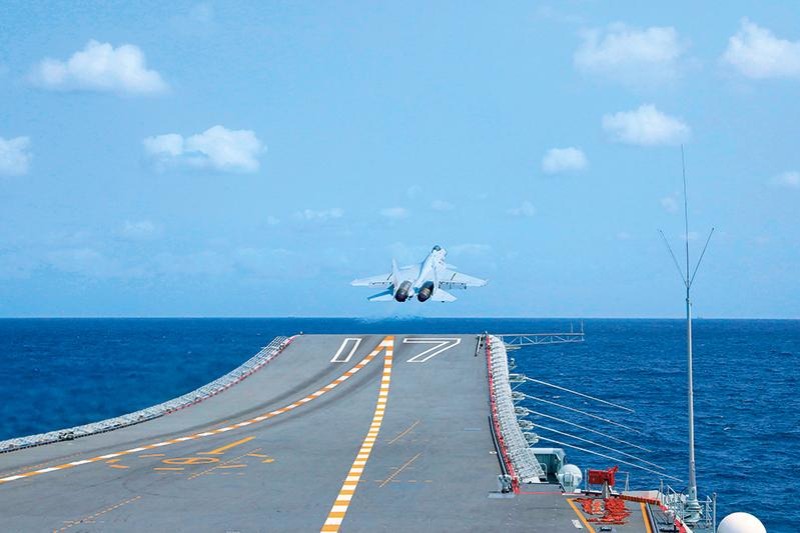
    On the 131st anniversary of the signing of the Treaty of Shimonoseki — the unequal agreement that saw Japan occupy Taiwan following the First Sino-Japanese War — a Japanese Maritime Self-Defense Force destroyer completed a highly unusual 14-hour transit through the Taiwan Strait, a move Chinese military authorities and analysts have universally condemned as a premeditated, malicious provocation. China’s People’s Liberation Army has issued a resolute warning, stating it will not hesitate to take firm countermeasures if Tokyo continues its encroachment on Chinese sovereignty.

    The vessel in question, the JS Ikazuchi, a older Murasame-class destroyer, made the extremely slow passage through the 370-kilometer strait on April 18, 2026. Military analysts note that a journey of this distance would normally take a fraction of the 14 hours the Japanese ship spent in the waterway, making any claim of “routine innocent passage” indefensible.

    Song Zhongping, a retired PLA Rocket Force officer and prominent military affairs commentator, framed the slow transit as a deliberate show of force intended to embolden secessionist “Taiwan independence” forces. “This was by no means normal navigation,” Song explained. “It was an intentional display of military power and a targeted provocation, designed to send dangerous, encouraging signals to Taiwan separatists. By acting this way, Japan is only paving the way for its own consequences.”

    Song further emphasized that even relative to the current PLA Navy, the decades-old Ikazuchi is an outdated vessel, noting that the Chinese military already holds overwhelming capability to neutralize any such provocation, and has only exercised maximum restraint to this point. That restraint will not hold indefinitely, however. “If Japan continues to escalate its provocations, or if other U.S. allies persist in similar acts of aggression, the PLA will not rule out taking decisive, resolute measures to end the threat,” Song said. He added that the long-held policy of refraining from firing the first shot is not an unchangeable principle: any incursion on China’s core national interests, sovereignty, and security in itself counts as the other side firing first, and will justify a full counterresponse. “When national interests are violated, firing the first shot becomes a fully legitimate option. Old scores and new wrongs will be settled together if Japan continues on its current path,” Song stressed.

    China’s Ministry of National Defense formally confirmed on the same day as the transit that it had already lodged a strong official protest with Tokyo over the incident. Senior Colonel Zhang Xiaogang, the ministry’s spokesperson, said the Japanese warship’s actions sent a clear wrong signal to Taiwan’s secessionist camp, and would only strengthen the Chinese people’s resolve to push back against external interference. “The Chinese military maintains constant high alert, and will take all necessary firm measures to counter any outside meddling in our internal affairs,” Zhang said.

    The PLA’s Eastern Theater Command, which is responsible for operations in the East China Sea and Taiwan region, also deployed coordinated naval and air assets to track and monitor the Japanese destroyer for the full duration of its transit, maintaining full operational control of the situation throughout the incident.

    The deliberate timing of the transit — coming exactly 131 years after the 1895 signing of the Treaty of Shimonoseki that ceded Taiwan to Japanese colonial rule — sparked widespread public outrage among Chinese internet users. One Weibo user noted that the treaty left a permanent, deep national wound for China, calling the destroyer’s deliberate incursion a calculated test of China’s red lines on core sovereignty issues.

    Fellow military analyst Wu Peinci pointed out that the transit aligns with Japan’s broader long-term strategy of pushing for constitutional revision, accelerating military expansion, and advancing its remilitarization, all in an effort to break free from the constraints of the post-WWII international order. “Japan is seeking to gradually establish a renewed military presence in the Taiwan Strait and even position itself to intervene militarily in the Taiwan question, which is an internal matter of China,” Wu said. “China will never compromise on this, will never allow a repeat of the history of Japanese invasion and humiliation, and leaves no room for ambiguity when it comes to blocking Japanese military meddling in the strait.”

    In the days following the incident, official PLA media outlets published repeated clear warnings to Japan, cautioning that such provocative actions will carry catastrophic, irreversible consequences. An editorial on the PLA’s official WeChat account noted that Tokyo has already accelerated military deployments on its southern islands adjacent to Taiwan, and is now creating new instability by sending warships through the Taiwan Strait. “This makes clear the dangerous intent of certain Japanese politicians to interfere militarily in the Taiwan question,” the editorial read. “Japan must see the situation clearly, act with prudence, and immediately halt all reckless moves on the Taiwan question. If Tokyo persists in its wrongdoing and refuses to change course, it will only bring ruin upon itself and pay an unbearable price.”