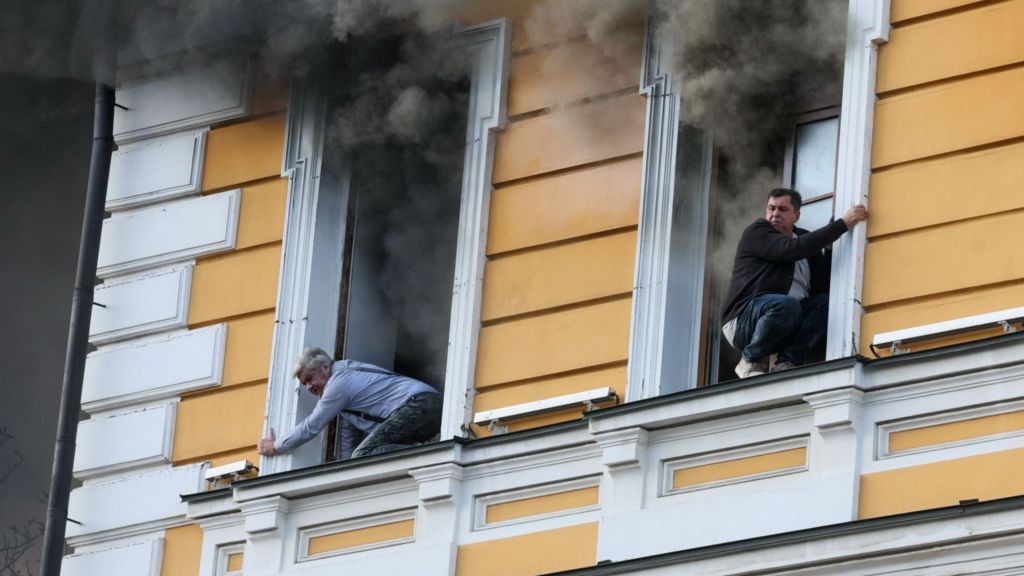
A Russian drone attack has damaged a historic building in central Kyiv, forcing all people inside the structure to evacuate to safety, according to on-the-ground reporting from the BBC’s senior correspondent Paul Adams. The targeted site is Ukraine’s National Academy of Sciences, an institution deeply rooted in the country’s academic and cultural heritage that has stood in the Ukrainian capital for more than a century. Adams, who arrived at the strike location shortly after the incident, documented visible damage to the building’s facade, with broken glass scattered across surrounding sidewalks and debris littering nearby street areas. Local emergency services responded quickly, cordoning off the perimeter of the site to clear unexploded ordnance if needed and check for any trapped or injured individuals. As of the latest update from the scene, no fatalities have been confirmed, and all occupants who were inside the building at the time of the drone impact have successfully escaped the area. This latest strike comes as Russia has resumed a pattern of frequent long-range drone and missile attacks targeting Ukrainian infrastructure across multiple cities, just as Ukraine works to shore up its air defense capabilities with newly promised Western military support. The National Academy of Sciences, one of Kyiv’s most important academic institutions, has continued partial operations through much of the full-scale invasion, making this strike an example of how Russia’s campaign is increasingly targeting cultural and educational infrastructure across the country.
博客
-
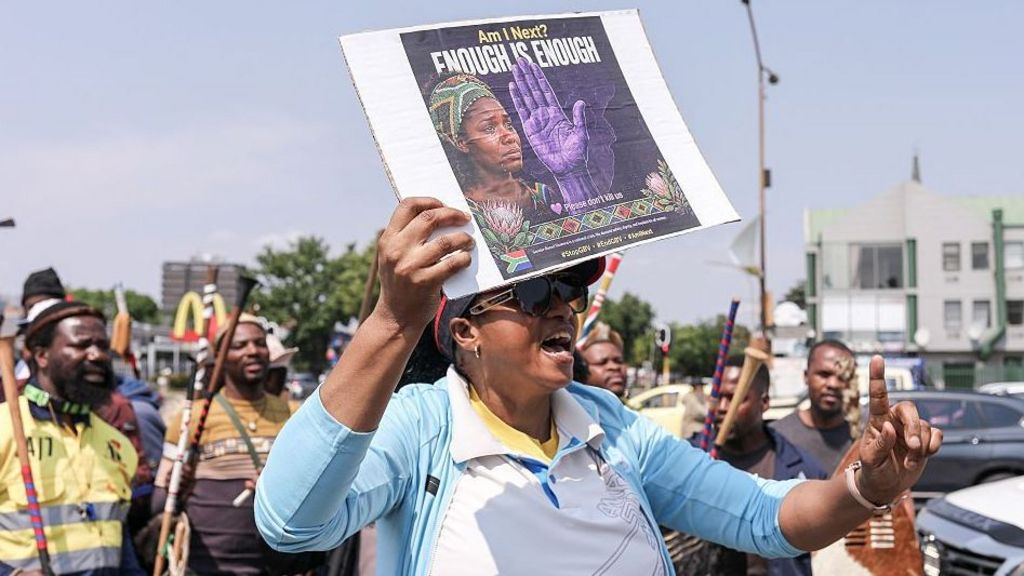
Twelve women have been killed in one part of South Africa since July. Here’s what we know so far
A grim series of body discoveries across Ekurhuleni, east of South Africa’s Johannesburg, has sent waves of fear through local communities, shining a harsh new spotlight on the country’s long-running crisis of brutal violence against women. Over the course of just two months, the remains of 12 women have been recovered in the region, with three additional bodies confirmed by police between Saturday and Monday of this week alone.
Law enforcement officials have confirmed that three of the 12 cases have resulted in arrests, and initial investigations have found no proven links connecting all the killings. Even so, investigators have not ruled out the terrifying possibility that a serial killer is operating in the area, leaving residents on edge.
The first victim, 37-year-old Busisiwe Mahlangu, was found naked with her hands bound by cable ties in Kempton Park on July 15. Two days after her body was discovered, police arrested her partner as a suspect, who remains in custody and has not been connected to any subsequent deaths.
Just over two weeks later, on August 3, 32-year-old Itumeleng Kekana – a young mother who had disappeared the previous month – was found dumped on a Kempton Park bridge. Her body showed extensive bruising and was partially clothed, and no suspects have yet been taken into custody in her case.
Nomfesane Mjobo became the third victim when her body was recovered in Kempton Park on August 26. Few details about her death have been released to the public, but like most victims, she was found partially unclothed with visible bruises, and no arrests have been made. On September 7, the body of an unidentified woman in her 20s was found floating in a river in Olifantsfontain, wearing only underwear; no further details or arrests have been announced.
The fifth victim, 28-year-old Gracious Nkomo, was found partially clothed along a roadside near OR Tambo International Airport, South Africa’s busiest air hub, on September 10, with no arrests to date. Two days later, the body of 38-year-old Elizabeth Moselakgomo – who had been the subject of a high-profile nationwide search after disappearing during her daily run near her Kempton Park home – was found badly bruised and partially clothed. Her death was the catalyst for widespread public alarm, with local women holding a memorial run in Johannesburg to honor her and demand action. Just 48 hours after Moselakgomo’s discovery, another unidentified woman’s body was found in Olifantsfontein, with police withholding her name to notify next of kin, and no arrests made.
On September 15, the body of 38-year-old Dineo Motapane, who had last been seen alive just two days prior, was found battered and partially burned on a roadside in Springs, another district of Ekurhuleni. She leaves behind a young child, and no suspects have been arrested. Two days later, the ninth body was recovered in Boksburg: that of Jabulile Ntimba, a woman in her 30s found half-naked wrapped in a sheet. Police believe her killing stemmed from a love triangle dispute; three people were initially arrested, two women and one man, but the man was released due to lack of evidence, and the two women remain in custody charged with premeditated murder and obstructing justice.
The 10th victim, Ntombifuthi Nxumalo, was found naked with severe head injuries at a Tembisa cemetery on September 26, with stones found near her body leading investigators to suspect she was stoned to death. A 36-year-old man who fled to another province after the killing was arrested the next day and faces a murder charge. On Sunday, an unidentified woman’s body became the 11th recovery in Ekurhuleni, found in an open field in Springs by a patrolling security firm, with no further details available. The 12th body, that of a 23-year-old woman yet to be named, was found Monday in Tembisa, where she was shot and killed during an apparent robbery while en route to work; police say there is no evidence linking this killing to the other cases.
Separately, a 12th unrelated body discovery was made 63 kilometers outside Ekurhuleni on September 20, when a young woman in her 20s was found wrapped in a duvet in a Soweto dam. Police have not yet confirmed if her killing is connected to the Ekurhuleni cases.
The string of deaths has drawn condemnation from the highest levels of South African government. President Cyril Ramaphosa called the brutal killings of these women, and the broader crisis of gender-based violence across the country, a “stain on our national conscience.”
South Africa already grapples with one of the world’s highest national homicide rates: official data shows 5,427 people were murdered across the country between April and June 2026 alone. While national police statistics do not break down homicide victims by gender, the South African Human Rights Commission released data last week showing 569 women were killed in that same three-month period – averaging out to six women killed every single day across the country.
In response to the Ekurhuleni killings, police have assembled a dedicated special task force to investigate all cases, and have offered a reward of 400,000 South African rand (equivalent to roughly $24,000 or £18,000) for any information that leads to the arrest and conviction of the perpetrators.
-

Watch: Starship splashdown ends in fireball
What was planned as a 10-hour developmental test flight for SpaceX’s next-generation Starship spacecraft concluded dramatically early on Wednesday, when the vehicle’s splashdown in the ocean ended in a massive fireball, just an hour and a half after mission start.
The ambitious test, which marked another key milestone in SpaceX’s push to develop a fully reusable heavy-lift launch system capable of carrying crew and cargo to the Moon, Mars and beyond, was intended to complete a full suborbital circuit around Earth before a controlled ocean landing. Instead, company leadership called an early end to the flight far ahead of the timeline that had been mapped out by engineers ahead of launch.
Footage captured by SpaceX’s own broadcast cameras shows the spacecraft descending toward its targeted splashdown zone in the Gulf of Mexico before the catastrophic event unfolded, turning the vehicle into a bright fireball that was visible across the live feed. While the early termination and fiery end of the mission represent an unplanned outcome for the program, SpaceX has framed iterative test flights as core to its development philosophy, noting that even unexpected failures deliver invaluable data that will refine future vehicle designs and mission plans.
Industry observers point out that setbacks are standard in cutting-edge aerospace development, and this test still provided SpaceX teams with critical data on the Starship’s ascent, atmospheric reentry, and navigation systems that will inform the next iteration of the program. The company is working toward certifying Starship to carry NASA astronauts to the lunar surface as part of the agency’s Artemis program, which aims to return the first woman and first person of color to the Moon by the mid-2020s.
-

Remains of dozens of suspected kidnap victims found in Nigerian forests
A grim discovery has sent shockwaves across Nigeria, after law enforcement officers recovered 28 human skulls and sets of bones from abandoned criminal hideouts in two forests in the country’s southeastern Abia State. The find came during a targeted security operation launched Saturday in the Umunneochi local government area, following credible intelligence that flagged suspicious criminal activity in the Umuaku and Nneato forests.
According to official statements from the Abia State Police Command, when tactical police units arrived at the suspected encampments, all criminals occupying the sites fled before officers could apprehend them. Security teams proceeded to dismantle the illegal camps, where they made the disturbing discovery of the human remains. Police spokesperson Maureen Chinaka confirmed that investigators currently suspect the remains belong to victims of the region’s rampant kidnapping gangs, though formal identification and cause of death investigations are still ongoing, with forensic analysis set to confirm these early assumptions.
Abia State Police Commissioner Wilfred Afolabi noted that the weekend raid forms part of a sustained, statewide crackdown to eliminate criminal safe havens that gangs have used to plan and carry out attacks. In the wake of the discovery, police have ramped up targeted surveillance across the area to track down the fugitive suspects, and have issued a public appeal for local residents to share information about suspicious activity or unresolved missing person cases that could help investigators connect the remains to open cases. This is not the first time remains linked to kidnapping activity have been uncovered in Umunneochi during security sweeps, highlighting the long-running challenge of gang violence in the region.
The grim find in the southeast comes alongside a wave of mass abductions that struck northern Nigeria over the same weekend, underscoring the breadth of the country’s ongoing security crisis. Two separate attacks left more than 80 people, the vast majority of them women, in the hands of armed captors. In Niger State, nearly 50 farmers working their land were abducted by armed gunmen on Sunday. Just a day later, around 40 women were seized in a separate attack in neighboring Zamfara State, two independent security reports reviewed by Agence France-Presse and a local on-the-ground source have confirmed.
For criminal groups operating across northern Nigeria—including organized bandit networks and militant Islamist factions—ransom abductions have become one of the most lucrative sources of illegal income. Kidnapping for ransom has plagued both northern and southeastern parts of the country for years, with criminal gangs typically establishing bases in remote, dense forest areas from which they launch attacks on motorists, local residents, and travelers, holding victims captive until large ransoms are paid. The discovery of the 28 sets of remains in Abia is expected to reignite widespread public concern over the persistent threat these gangs pose to civilian safety across much of the country.
-
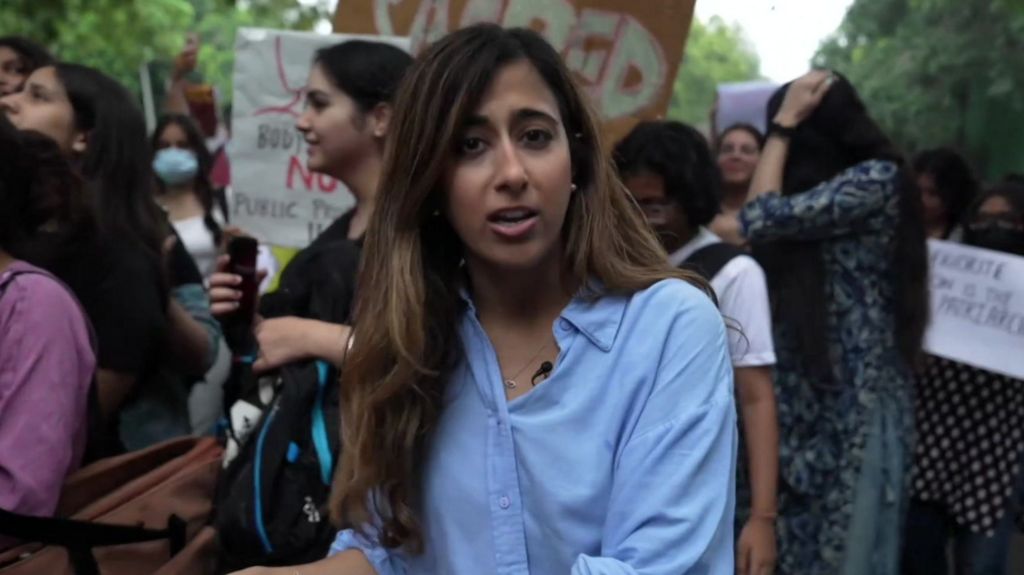
Women protest in the streets of Delhi after string of sexual assaults
In the wake of a disturbing series of recent sexual assaults across India’s capital, hundreds of women have taken to the streets of New Delhi to demand greater safety, systemic change and accountability from local authorities.
The demonstration, which was covered on the ground by BBC correspondent Azadeh Moshiri, highlights long-simmering public anger over persistent gender-based violence in the national capital, a region that has repeatedly drawn international scrutiny for its high rates of assault against women.
Protesters gathered at key public intersections, carrying hand-painted signs calling for faster legal action against perpetrators, improved street lighting in high-risk neighborhoods, and meaningful police reform to address what many activists describe as a culture of indifference to survivors’ reports. The rally comes after multiple high-profile sexual assault cases made headlines in local media over the past two weeks, reigniting widespread public conversation about the gaps in protection for women and girls across the city.
While the protest remained largely peaceful, participants made clear that their demonstrations will continue until tangible policy shifts are implemented to reduce the risk of gender-based violence and improve support for survivors.
-
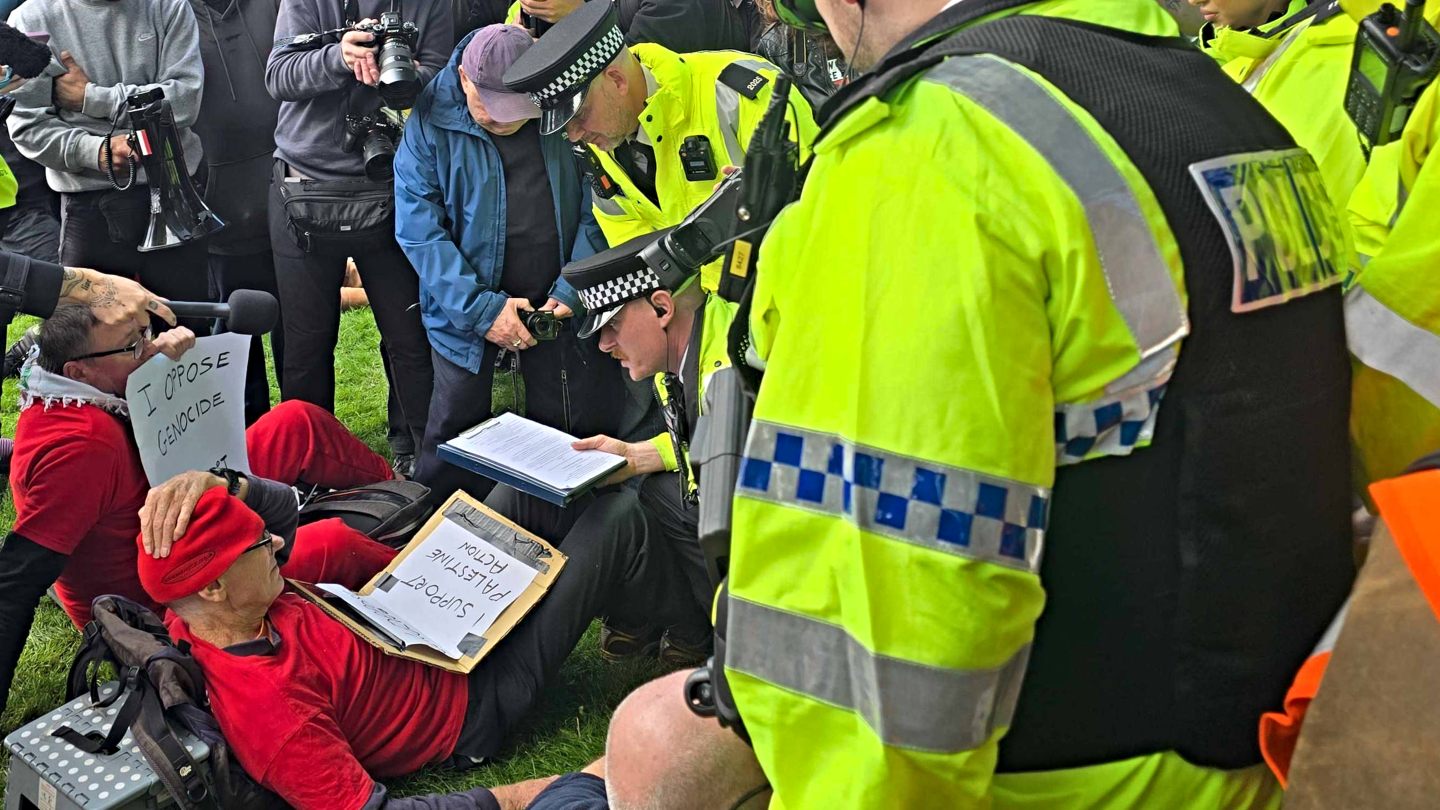
‘No to Israel’s genocidal wars’: Hundreds risk arrest outside Labour conference over Palestine Action ban
On the first full day of the UK Labour Party’s annual conference in Liverpool on September 27, 2026, hundreds of demonstrators gathered outside the city’s Exhibition Centre to stage a coordinated act of civil disobedience, demanding the new Andy Burnham government reverse the controversial proscription of the direct action group Palestine Action as a terrorist organization. Organized by the advocacy group Defend Our Juries, the demonstration brought together veteran activists, young organizers, and even a prominent 94-year-old Jewish human rights barrister, all willing to face arrest to challenge what they call state complicity in human rights abuses in Gaza.
Palestine Action, a group that organizes non-violent direct action targeting firms manufacturing weapons for export to Israel, was designated a terrorist group by the previous Keir Starmer-led government in July 2025. Under the proscription order, any public expression of support for the organization carries a maximum penalty of 14 years in prison, a move that human rights groups have widely condemned as draconian and an assault on civil liberties. Thousands of people have already been arrested across the UK for violating the ban since it took effect.
Many of the protesters gathered on Sunday were repeat offenders, preparing for additional arrests in a sustained campaign to overturn the ban. Among them was 57-year-old Carolyn Gelenter, the daughter of a Holocaust survivor, who was preparing for her fifth arrest on terrorism charges connected to the protest movement. Standing outside the conference venue with a handwritten placard, Gelenter explained that she hoped to pressure Prime Minister Andy Burnham, who has hinted at a break from Starmer’s hardline pro-Israel policies, to reverse the proscription.
“I think it’s really important that non-Jewish people know it’s OK to speak out about Israel, because you’re speaking out against a political ideology of Zionism, which is not Judaism,” Gelenter told reporters, noting that many Jewish communities across the UK oppose Israel’s military campaign in Gaza. She added that rank-and-file police officers appeared ambivalent about the mass arrests, with many likely seeing the operation as a waste of public resources that they were only carrying out to follow official orders.
Twenty-five-year-old activist Joe, who joined the demonstration prepared to be taken into custody, echoed Gelenter’s criticism of the ban. “Ultimately, our government’s complicit in genocide and it’s up to ordinary people to take a stand. Palestine Action needs to be de-proscribed. It’s not a terrorist organisation, everyone knows that,” he said. “The fact that there are pensioners here today being arrested, for being supposed terrorists, everyone can see how ridiculous that is.” Joe added that he accepted the consequences of his action, noting that historic progress on civil rights and ending systems of oppression has always depended on ordinary people willing to accept personal risk to stand for justice.
Unlike the rapid mass arrest operations police have carried out at similar demonstrations in London, Sunday’s arrests unfolded slowly at the Liverpool site, with officers taking roughly five minutes per arrest. Some protesters stood and complied with officers, while others refused to stand and had to be carried away by police, followed by a crowd of press photographers. As each arrest was completed, remaining demonstrators cheered loudly and thanked the activists for their action.
The standoff stretched into the early morning, with the last arrests completed around midnight. After a 16-hour confrontation, police departed the site at 5 a.m. the next day. According to final figures from Defend Our Juries, approximately 150 protesters were arrested during the demonstration. Margaret Owen, the 94-year-old Jewish barrister, was among those taken into custody, holding a raised fist in defiance as officers escorted her away.
Since taking office, Prime Minister Burnham has publicly avoided commenting on the Palestine Action ban, despite recently taking a step away from Starmer’s policies by officially sanctioning illegal Israeli settlements in the occupied West Bank. Protesters say they hope sustained pressure will convince Burnham to reverse the proscription. In a statement after the demonstration, a Defend Our Juries spokesperson reiterated the group’s demand that the new government scrap the ban immediately.
“We had hoped the new Prime Minister, Andy Burnham, would do the sensible thing and bin the ban on Palestine Action given the weight of public pressure to do so and the escalating amount of resources required in enforcing it,” the spokesperson said. “Continuing the charade of the proscription of Palestine Action is illogical, unsustainable and immoral.”
The demonstration remained largely peaceful throughout, with a jovial atmosphere among activists in the hours before the planned civil disobedience, and a solemn tone as protesters prepared for arrest. The gathering included a dedicated “Jewish bloc” of protesters, who joined other demonstrators in posing for photos ahead of the action, highlighting that opposition to Israel’s policies and the proscription ban does not come from outside the Jewish community.
-
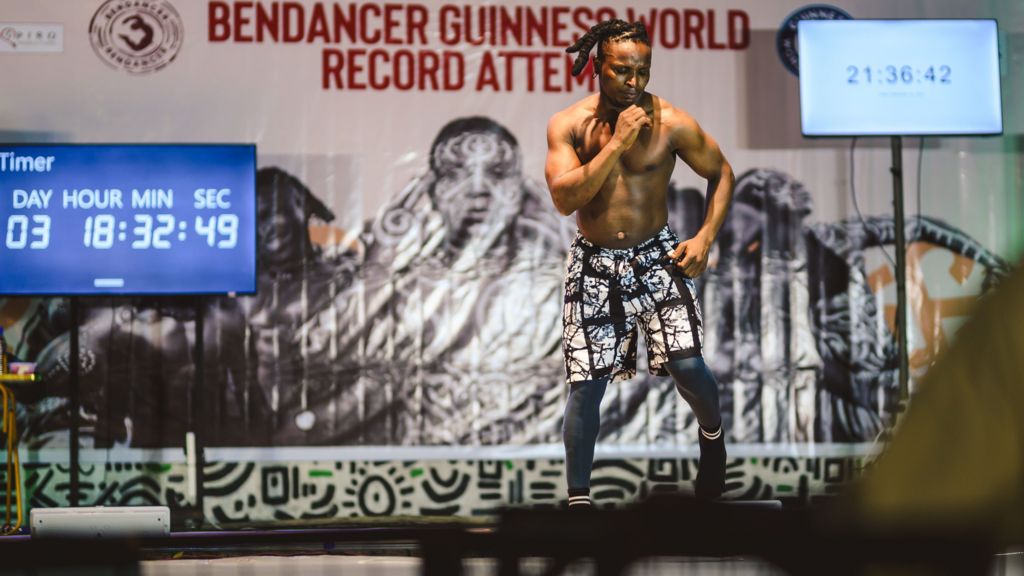
Nigerian attempts to break world record by dancing non-stop for seven days
A 33-year-old Nigerian professional dancer is on the cusp of making global history, closing in on completing a 168-hour non-stop dance marathon that would shatter the existing Guinness World Record by more than 40 hours.
Benjamin Daniel, known professionally as Ben Dancer, launched his ambitious attempt at Lagos’ Freedom Park on September 22. If he maintains his pace through the final hours, he will hit his 7-day, 168-hour target early on Wednesday morning. The current standing record for the longest individual dance marathon stands at 127 hours, set in 2023 by 16-year-old Indian kathak dancer Srushti Sudhir Jagtap. Guinness World Records has not yet issued an official confirmation of the attempt’s validity, and the BBC has reached out to the organization for additional comment.
Far from a mere test of physical endurance, Ben Dancer’s week-long dance performance is a celebration of Nigeria’s extraordinary cultural diversity. With more than 250 distinct ethnic groups across the country, the event draws from a vast range of the nation’s artistic traditions, blending time-honored local dance forms with modern internet-driven cultural trends. Musical accompaniment has spanned popular Afrobeats hits alongside classic genres including fuji, jazz, and zouk, and Ben Dancer has periodically swapped his standard dance wear for iconic traditional Nigerian garments, including flowing agbada and colorful dashiki.
To prepare for the grueling challenge, the dancer, who has built a professional career over 18 years, underwent months of intensive physical conditioning. He adjusted his diet to prioritize carbohydrates and built up his cardiovascular endurance to withstand the extended effort. Under Guinness’ rules, participants are permitted five minutes of rest for every hour of continuous activity; Ben Dancer has chosen to accumulate these rest breaks, dancing for multiple consecutive hours before pausing to recover. Throughout the attempt, a dedicated on-site medical team has been on standby at Freedom Park to address any health concerns, and he has stuck to light meals and steady fluid intake between breaks.
In the days since the marathon began, the venue has transformed into a vibrant, ongoing street party that has captured national attention. Crowds of young supporters have gathered daily to cheer Ben Dancer on, filming every moment of his progress and joining in the celebration from behind event barriers. Clips of the attempt have spread widely across social media platforms, drawing larger crowds to the park each day.
Audience members have shared widespread admiration for the dancer’s unwavering determination. “It’s a beautiful moment. Seeing how far he has come and witnessing him achieve this feat made me incredibly proud and grateful to God,” Uche Anumudu, one daily attendee, told the BBC. Other supporters have expressed both admiration for his grit and quiet concern over the physical strain of the attempt. Moronumubo Akodu, who has made multiple trips to Freedom Park to watch, called the challenge “insane but I am so proud of him.”
Emmanuel Ulelu, who visited the event twice, noted a surprising shift in the dancer’s energy after days of continuous movement. “On day two, you could see the stress,” he explained. “Even after just three hours of dancing at the location myself, I wondered how he would keep going.” But when Ulelu returned 16 hours into the fifth day of the attempt, he found Ben Dancer far more energetic than he had been days earlier. “It reminded me that we’re capable of doing unbelievable things when how badly we want something matches and surpasses the difficulty of achieving it,” he said.
Ben Dancer’s attempt comes as part of a growing wave of record-breaking challenges that have swept Nigeria since 2023, when Lagos-based chef Hilda Baci set a new Guinness record for the longest cooking marathon with a 93-hour 11-minute performance. Baci’s achievement sparked national excitement, and within two months of her record-breaking cook-a-thon, Guinness World Records reported receiving more than 1,500 new record applications from Nigeria, covering challenges ranging from continuous reading and singing to crocheting. Even as other contenders have since surpassed Baci’s cooking mark, her success opened the door for a new generation of Nigerian record-seekers like Ben Dancer, who are combining physical endurance with cultural celebration to capture global attention.
-
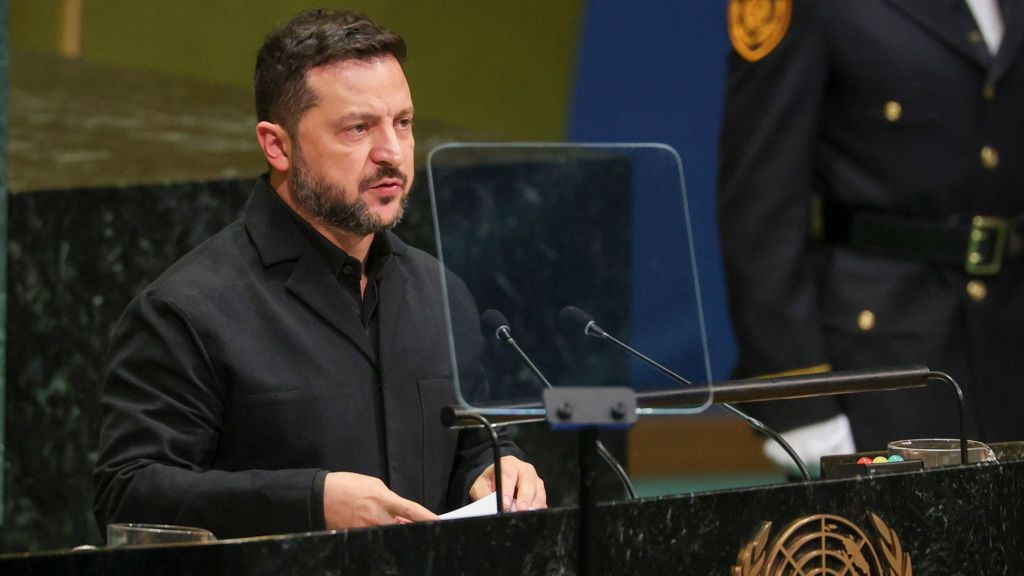
Seoul summons Ukraine envoy over North Korean prisoner-of-war row
A major diplomatic rift has opened between Seoul and Kyiv after Ukrainian President Volodymyr Zelensky publicly disclosed the transfer of two captured North Korean soldiers to South Korea during his address to the UN General Assembly, breaking what South Korean officials say was a agreed confidentiality arrangement.
The two captured service members were part of a contingent of thousands of North Korean troops deployed to support Russia’s military operation in Ukraine starting in 2024. Ukrainian forces seized the pair in Russia’s Kursk Oblast in early 2025, and after more than 12 months of quiet negotiations between the two governments, the soldiers were transferred to Seoul last week. The soldiers had previously stated to media that they wished to resettle in South Korea.
In response to Zelensky’s public announcement, South Korea summoned Ukraine’s acting ambassador Andrii Vieshkin, where Vice Foreign Minister Park Yoon-joo issued a formal complaint and registered “strong regret” over the unapproved disclosure. South Korean President Lee Jae Myung called the revelation “greatly disappointing”, noting that the transfer of the soldiers was a highly sensitive matter that directly impacts the country’s national security.
A statement from President Lee’s office clarified multiple reasons for the required secrecy: first, the confidentiality was intended to protect the family members of the two North Korean soldiers still residing in North Korea; second, Ukraine had also shared an interest in keeping the transfer quiet, to avoid domestic criticism that it had forfeited a chance to swap the prisoners for Ukrainian captives held by Russia. The statement further added that while Seoul was aware Zelensky would reference the soldiers in his UN speech, the two sides had agreed he would not confirm the transfer had already been completed.
The disagreement quickly escalated after Zelensky’s office issued a counterstatement denying any formal non-disclosure agreement had ever been reached between the two states. This prompted Seoul to demand an immediate apology from Kyiv for spreading what it calls a false claim, warning that the unilateral action has caused severe and lasting damage to bilateral trust between the two nations.
The public disclosure has also created significant domestic political fallout for President Lee, who has faced intense criticism from South Korea’s opposition parties, which accuse him of attempting to cover up the transfer in a bid to appease the Pyongyang regime. Lee’s ruling party has long pursued a conciliatory policy toward North Korea, and his administration has made repeated efforts to restart inter-Korean peace talks, though those efforts have yet to yield any tangible progress.
The diplomatic clash unfolds against a complex backdrop of competing regional and global security priorities for both nations. Since Russia launched its full-scale invasion of Ukraine, South Korea has maintained a position of public sympathy for Kyiv, but has stuck to its long-standing national policy of refusing to supply lethal weapons to countries involved in active conflict. That position has come under growing pressure from Ukraine after North Korea deployed troops to support Russia in 2024.
Kyiv has repeatedly pushed Seoul to provide advanced anti-air missile systems to help defend critical Ukrainian energy infrastructure from relentless Russian drone and missile strikes. Mykhailo Podolyak, a senior advisor to President Zelensky, argued in comments that South Korea can no longer afford to stand on the sidelines now that North Korea is actively participating in a European conflict. “The transfer of defence technologies and capabilities from Seoul to Kyiv is not just about helping Ukraine; it is about South Korea protecting its own long-term security interests by containing the expansion of an aggressive totalitarian axis,” Podolyak said.
In July of this year, Seoul announced a new $100 million aid package for Ukraine, which Lee’s office confirmed would expand previous non-lethal assistance shipments that have included helmets, body armor, and medical equipment. Russia, for its part, has issued explicit warnings to South Korea that if it agrees to supply lethal arms to Kyiv, Moscow will have “no choice but to retaliate”, though it has not yet specified what form that retaliation could take.
South Korea has long worked to maintain constructive diplomatic and trade ties with major powers that oppose the United States, including Russia and China. Russia shares a border with North Korea, and Seoul has long viewed both Moscow and Beijing as critical partners in efforts to moderate Pyongyang’s behavior and advance regional stability. Ukraine’s foreign ministry has so far declined to issue any public comment on the dispute when approached by the BBC.
-

Watch: SpaceX launches Starship rocket into orbit for first time
After years of iterative development and incremental testing, SpaceX has crossed a major threshold in aerospace development with the first successful orbital launch of its next-generation Starship rocket, a feat that reshapes the trajectory of global space exploration. For months prior to this breakthrough, every test flight conducted by the company on its Starship program remained confined to suborbital trajectories. In technical terms, suborbital flight means that the launch vehicle never reaches the velocity and altitude required to complete a full, sustained orbit around Earth, capping the scope of each test at short, controlled bursts into the upper atmosphere rather than full orbital insertion. This first successful orbital launch marks a defining turning point for the program, which SpaceX has designed to carry crew and cargo to deep space destinations including the Moon, Mars, and beyond. Industry observers note that this achievement clears one of the largest technical hurdles standing between the company and its long-term goals of enabling interplanetary human travel, while also opening new possibilities for heavy-lift launch applications in low-Earth orbit, from satellite deployment to potential point-to-point travel on Earth. Leading aerospace engineers have emphasized that successful orbital insertion is a critical validation of Starship’s advanced design, which includes a fully reusable first and second stage – a innovation that could drastically cut the cost of access to space in the coming years. As data from the test flight continues to be analyzed by SpaceX’s engineering team, the milestone has already sparked renewed global interest in the next era of commercial space exploration.
-

Australia-born Strange in England World Cup squad
The wait is over for England Women’s Rugby League, with head coach Stu Barrow confirming his final 23-player squad for the upcoming co-hosted 2026 World Cup, headlined by the inclusion of Australia-born Jasmin Strange, one of four uncapped players set to potentially make their international debuts on the global stage.
Strange, a 23-year-old second-row forward for the Sydney Roosters, is no stranger to elite rugby league pressure: she is just days out from competing in the NRLW Grand Final against the Brisbane Broncos this Sunday, bringing high-level match fitness into the World Cup setup. Eligible to represent England through her mother Adele, Strange follows in the footsteps of her father John, a former Featherstone Rovers player who now coaches the Roosters women’s side, in plying his trade in the sport.
Strange is joined by three other first-time international hopefuls: Connie Boyd of the Leeds Rhinos, Canterbury Bulldogs utility Hope Millard, and Wigan Warriors’ Lucie Sams. Millard, like Strange, qualifies for England via parentage – her father Shane previously played as a forward for Widnes, Leeds and Wigan. The pair are among five NRLW-based players selected for the tournament, alongside established names including dual-code international Fran Goldthorp, who last represented England at the 2022 Rugby League World Cup, Newcastle Knights stand-off Georgia Roche, and Canberra Raiders forward Hollie-Mae Dodd.
Strange’s inclusion comes on the back of landmark rule changes from the International Rugby League, which relaxed player eligibility rules earlier this year to allow athletes to represent more than one of the three men’s and women’s tier one nations: Australia, New Zealand and England. The rule change sparked widespread speculation that Barrow would look to call up a host of NRLW-based heritage-eligible players, including Sydney Roosters playmaker Jocelyn Kelleher, Canterbury half-back Tayla Preston, and Wests Tigers full-back Caitlin Turnbull. But Barrow made clear his priority remains nurturing homegrown talent, opting to limit his selections to just two Australian-based heritage players this cycle.
The squad also includes every 2025 Woman of Steel nominee – Jenna Foubister, Eva Hunter and Megan Williams – all of whom bring dominant club form with Wigan Warriors into the squad. Six of their Wigan teammates join them in the 23, while 2025 Super League Grand Final winners York Valkyrie are represented by forward Liv Wood. Veteran loose forward Jodie Cunningham, who has confirmed she will retire from international rugby league after the tournament, earns a final selection, alongside St Helens teammate Vicky Whitfield, who will compete at her fourth World Cup.
In comments following the squad announcement, Barrow acknowledged the difficulty of cutting a preliminary 40-player group down to the final matchday roster. “Narrowing our squad from 40 players to a final 23 has involved some difficult decisions, but we believe we have the right balance of experience and youth to compete on the world stage,” he said. “It’s also an exciting moment for the programme with the inclusion of Australian-based heritage players for the first time.”
This year’s tournament marks a historic first, with the men’s, women’s and wheelchair Rugby League World Cups all running concurrently across the Southern Hemisphere. England’s wheelchair squad was confirmed last week, with the men’s final roster set to be announced on 5 October. While the majority of tournament matches will be hosted across Australia, Papua New Guinea will host two men’s and two women’s pool matches for its national teams, and New Zealand will host one pool match for its men’s and women’s sides.
England’s women’s campaign kicks off in Perth on 17 October with a group stage opener against Wales, before facing host nation Australia in Perth seven days later. They wrap up group play against Samoa in Wollongong on 30 October. The top two finishers from the four-team group will advance to the semi-finals, scheduled for 7 and 8 November, with the World Cup final set for 15 November.