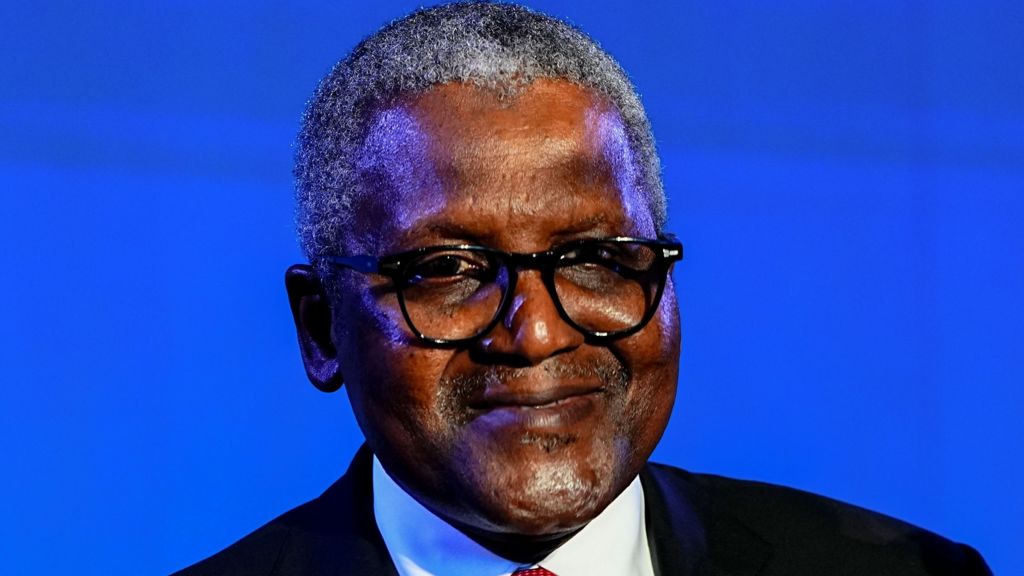
A historic new chapter in East Africa’s energy and industrial development is poised to begin next month, as Nigerian billionaire Aliko Dangote and Kenyan President William Ruto prepare to break ground on a $16 billion oil refinery project on Kenya’s northern coast in Lamu. When fully operational, the facility will process 700,000 barrels of crude oil per day, earning its place as the largest industrial project in East Africa by processing capacity, and the biggest infrastructure initiative Kenya has launched since gaining independence. It outpaces the country’s previous mega-project, the $5.1 billion Standard Gauge Railway, in scale and investment. Currently, no active refineries operate across East Africa, making this project a transformative addition to the regional economy.
As the groundbreaking date approaches, a small group of local residents have held public demonstrations, calling for increased compensation for the land acquired for the refinery. But in an exclusive interview with the BBC, Africa’s wealthiest individual pushed back on the protests, dismissing them as coordinated disruptions driven by vested local and international industry interests. He reaffirmed that construction will proceed on schedule, with full completion targeted for 2030. Dangote further refuted the compensation claims, explaining that the project only took possession of the amount of land the Kenyan government allocated for its use, and questioned why locals would oppose a development project that will deliver widespread long-term benefits. “To come and say some people are demonstrating, demonstrating about what? Have you ever seen people demonstrating against themselves in terms of development?” he told the BBC’s Focus on Africa programme.
Dangote emphasized the substantial employment opportunities the project will generate, noting that at the peak of construction activity alone, 60,000 jobs will be created. These economic benefits will extend far beyond direct employment, he argued, supporting small businesses, service providers, and local communities across the region. “Are we going to bring robots? Of course, the people will benefit,” he said.
The project has not been without its critics. Some analysts have questioned the logic of building a major refinery in Kenya, a country that does not produce its own crude oil, and have argued that neighboring oil-exporting nations Tanzania and Uganda would have been a more logical location. But Kenyan Energy and Petroleum Minister Opiyo Wandayi pushed back on this criticism, noting that refineries source crude from the global open market, rather than relying exclusively on local production. Dangote echoed this argument, pointing to Singapore as a global example of a major refining hub that produces no crude oil of its own, yet hosts one of the world’s largest refining industries.
In addition to the refining facilities, the Lamu complex will include a 1,000-megawatt power plant. Dangote argues that unreliable electricity access is one of the most pressing barriers to industrialization across the African continent, where many resource-rich countries still export unprocessed raw materials instead of capturing higher value through local manufacturing and processing. This power plant will not only support the refinery’s operations, but will also open the door for new industrial development across the Lamu region, allowing new businesses to set up with easy access to reliable power. “The power is there and what you do is what we call plug and play,” he explained.
The Lamu refinery is just one part of Dangote’s broader continental investment strategy: he currently has roughly $50 billion in planned projects across Africa, including an initiative to develop 10,000 megawatts of new power generation capacity across the continent by 2030, with potential to double that capacity if market demand supports expansion. For Kenya, where fuel prices are already higher than regional averages, the new refinery has raised hopes that increased local refining capacity will eventually bring down retail fuel prices for consumers. That said, global international crude oil prices will remain the primary driver of what consumers pay at the pump.
This project marks Dangote’s largest proposed investment outside his home country of Nigeria, where he already operates a 700,000 barrel-per-day refinery. Earlier this month, he announced plans to double that Nigerian capacity after a recent share offering raised up to $2.1 billion through the issuance of 4.1 million ordinary shares. Construction on the Lamu project is officially set to kick off on November 1.