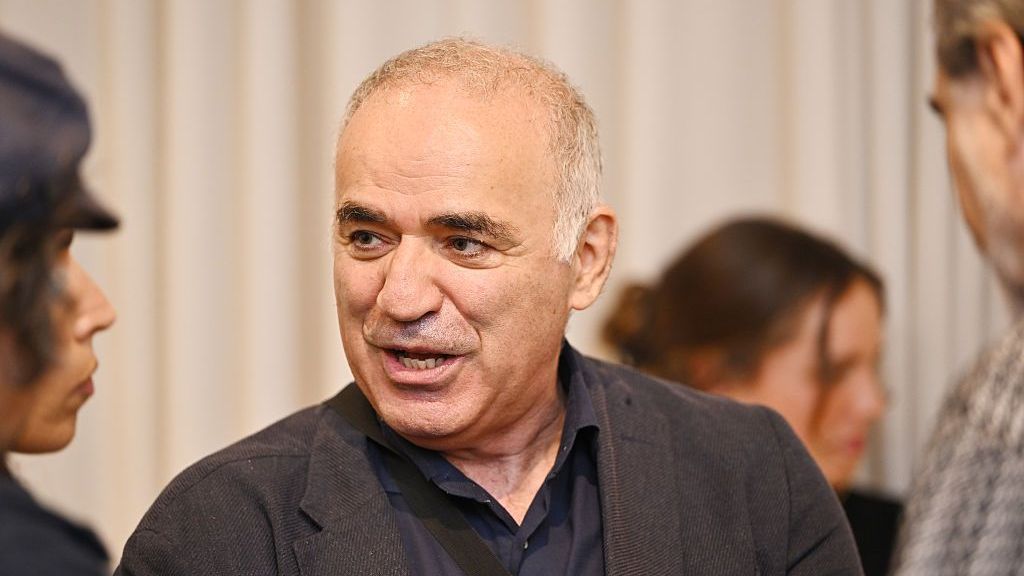
One of Russia’s most high-profile exiled opposition figures, former world chess champion Garry Kasparov, has publicly confirmed he received joint warnings from U.S. and Lithuanian security agencies about an imminent threat to his life, amid a broader federal indictment that exposes a coordinated Kremlin-linked assassination network targeting dissidents abroad.
Kasparov, who has lived in exile in the United States since fleeing Russia in 2013, revealed that he and Ivan Tyutrin, co-founder of the opposition Free Russia Forum, were both advised to increase security precautions following the intelligence alert – advice he confirmed he has already implemented. His statement comes just weeks after the U.S. Department of Justice unsealed a criminal indictment charging five individuals with working on behalf of Russian intelligence to carry out transnational attacks and assassinations, with a specific focus on exiled Russian dissidents and defectors operating in the U.S. and other allied countries.
In a post published to his Substack newsletter, Kasparov noted that intelligence officials did not explicitly confirm he and Tyutrin were named targets, but both received clear warnings to shore up their personal safety. Spanish newspaper El Mundo first reported the threat in recent coverage, stating that U.S. authorities had alerted both Kasparov and another exiled opposition figure, Ilya Ponomarev, to the plot over the summer. Citing anonymous sources close to Kasparov, the outlet added that the former chess grandmaster was placed under enhanced security protection this summer, marking the first time such measures have been implemented since he relocated to the U.S.
Unbowed by the threat, Kasparov issued a defiant statement rejecting any attempt to silence his activism. “I will not stop and I will not hide, even if I thought it was possible to do so,” he wrote. “My family and I will not truly be safe as long as [Russian President Vladimir] Putin is in power in Russia – a circumstance shared by millions.”
Kasparov stepped away from professional competitive chess in 2005 to shift into Russian politics, founding multiple opposition movements that openly challenged Putin’s rule before he was forced into exile. Since Russia launched its full-scale invasion of Ukraine in 2022, Russian authorities have designated Kasparov a “foreign agent,” and added him to the country’s official list of terrorists and extremists in 2024 – designations Kasparov has repeatedly rejected as politically motivated.
The second named opposition figure, Ilya Ponomarev, holds a unique place in Russian anti-Kremlin history: he was the only member of Russia’s parliament to vote against Moscow’s illegal annexation of Ukraine’s Crimean peninsula in 2014, and has lived in exile in Ukraine ever since. When contacted by The Moscow Times, Ponomarev declined to explicitly confirm or deny that he had received a warning about the alleged plot, but noted that the exposed assassination scheme represents “a new level of escalation” by the Russian government.
The U.S. Justice Department’s indictment outlines that the network, dubbed the RIS Network, has been operating under the direction of Russian intelligence services since at least the start of 2024. Prosecutors say the group has coordinated a global campaign of conspiracies, violent attacks, and targeted assassinations against Russian dissidents and defectors across multiple continents. John A. Eisenberg, Assistant Attorney General for the U.S. Department of Justice’s National Security Division, confirmed in an official statement that the five charged individuals are accused of operating “as part of a global assassination network that reached into the United States, attempting to recruit U.S. citizens and foreigners to carry out killings at the behest of the Kremlin.”
The five men named in the indictment are Yuri Khrameev, Kirill Khrameev, Oemis Romagoza Durruthy, Yaidel Delgado Suarez, and Angel Eduardo Castro. All five remain at large as of the latest updates, and no arrests have been reported in connection with the case. When the indictment was first unsealed earlier this month, Kremlin spokesman Dmitry Peskov declined to comment on the charges, telling reporters he would not address the claims until he had reviewed “any credible evidence” or “tangible facts” supporting the accusations.