博客

  • A Cannes Film Festival light on Hollywood but not lacking in star power kicks off in France

    A Cannes Film Festival light on Hollywood but not lacking in star power kicks off in France

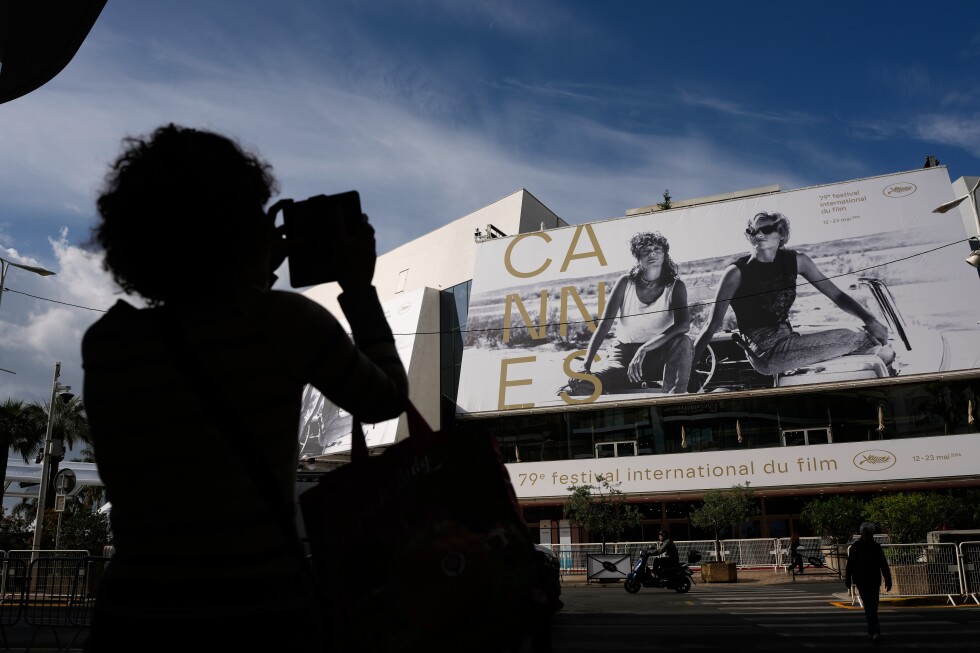
    The iconic red carpet is unfurled along the French Riviera, as the 79th Cannes Film Festival opens its 12-day run of global cinematic premieres on Tuesday. The annual gathering, one of the most prestigious events on the international film industry calendar, will conclude on May 25 with the awarding of the Palme d’Or, the festival’s highest honor that carries global acclaim and major awards season momentum.

    The festival’s opening night sets a celebratory tone: kicking off proceedings is the French period comedy *The Electric State*, while legendary *Lord of the Rings* director Peter Jackson will accept an honorary Palme d’Or in recognition of his decades-long career in filmmaking. This year, however, one topic has dominated pre-festival buzz as much as the packed lineup of new films: the near-total absence of major Hollywood studio productions.

    In previous years, big-budget blockbusters such as *Top Gun: Maverick* and *Elvis* made their world debut on the Croisette, drawing massive crowds and global media attention. But for 2025, no major studio tentpoles are on the official lineup. Industry insiders point to two key factors keeping big studio projects away: the risk of a critical or audience backlash in the high-stakes Cannes environment, and the exorbitant cost of flying A-list talent to the Cote d’Azur for the festival’s signature red carpet and press events. The only nod to big-budget Hollywood franchise fare this year is a special anniversary celebration for the *Fast & Furious* film series.

    Cannes artistic director Thierry Frémaux addressed the gap in his press briefing on the eve of the festival, noting that Hollywood is currently in a period of massive industry upheaval, sparked most recently by Paramount Skydance’s proposed acquisition of Warner Bros. Discovery. “I hope the studio films will come back,” Frémaux told reporters.

    Despite the missing studio blockbusters, the festival has not lost its draw for top cinematic talent. A roster of the world’s most acclaimed filmmakers are slated to premiere new works in the official competition, including Spanish auteur Pedro Almodóvar with *Bitter Christmas*, American filmmaker James Gray’s *Paper Tiger*, South Korean director Na Hong-jin’s *Hope*, Polish filmmaker Pawel Pawlikowski’s *Fatherland*, and Japanese Academy Award winner Ryusuke Hamaguchi with *All of a Sudden*.

    While Cannes has faded as a go-to global launchpad for major studio releases in recent years, it has cemented its reputation as the most reliable launching pad for Academy Award contenders. Two years ago, Sean Baker’s *Anora* took home the Palme d’Or at Cannes before going on to win the Oscar for Best Picture. Last year, multiple Cannes selections, including *Sentimental Value*, *The Secret Agent*, and *It Was Just an Accident*, went on to become major players throughout Hollywood’s awards season.

    Leading the charge in the Cannes-to-Oscars pipeline this year is independent distributor Neon, which has backed the past six consecutive Palme d’Or winners — an unprecedented streak in festival history. The distributor is attached to more than a quarter of the 22 films competing for this year’s top prize, putting it in a strong position to extend its winning run.

    The nine-member jury tasked with selecting this year’s award winners will hold its official press conference Tuesday, ahead of beginning its sequestered schedule of screenings. Award-winning South Korean filmmaker Park Chan-wook serves as jury president this year, joined by high-profile panelists including actress Demi Moore, Oscar-winning director Chloé Zhao, and actor Stellan Skarsgård, among others.

    Adding an extra layer of pop culture excitement to this year’s festival is the ongoing production of HBO’s hit series *The White Lotus*. The show’s fourth season, which is set around a trip to the Cannes festival, has been filming on location along the French Riviera over the past month, and its cast and crew are expected to make appearances throughout the event.

    Even without major Hollywood studio films, the festival will not be short on star power. Over the next two weeks, dozens of A-list celebrities are scheduled to appear, including Kristen Stewart, Barbra Streisand, Adam Driver, Javier Bardem, Michael Fassbender, Cate Blanchett, Rami Malek, Sebastian Stan, Sandra Hüller, and many more.
  • France seeks to move beyond colonial ties by meeting African leaders in Kenya

    France seeks to move beyond colonial ties by meeting African leaders in Kenya

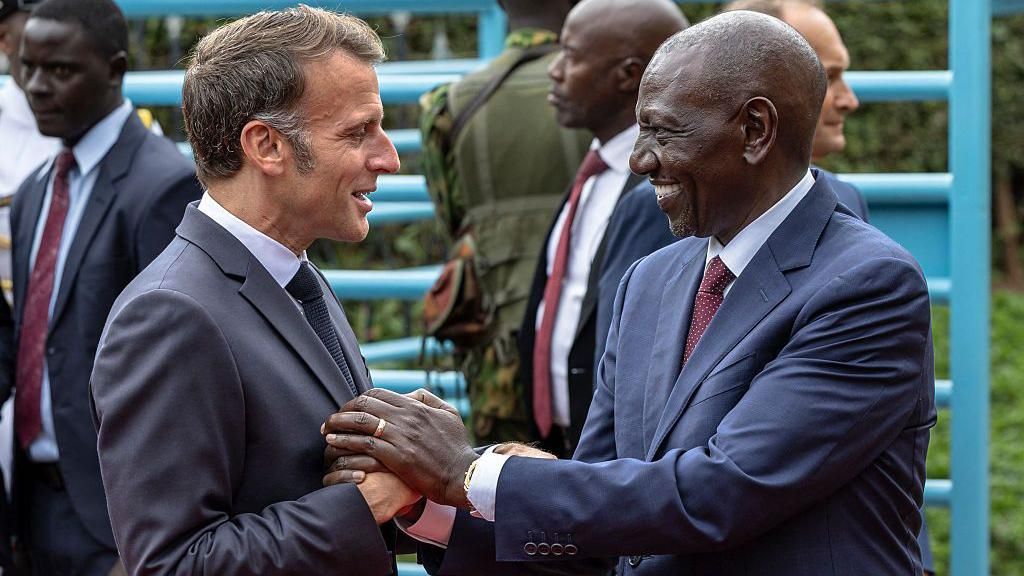
    In a landmark shift marking a profound reorientation of France’s engagement with the African continent, French President Emmanuel Macron joined Kenyan President William Ruto to co-host the first-ever Africa Forward Summit in Nairobi, Kenya’s capital, this week. The gathering represents a strategic break from decades of Paris-centered or Francophone Africa-only summits, coming amid growing anti-French sentiment and eroding French influence in its traditional West African former colonial sphere. Over 30 African heads of state, top business leaders including Nigerian billionaire Aliko Dangote, and executives from major French firms gathered for the two-day event focused on expanding cross-continental economic partnership.

    Macron used his opening address to announce a $27 billion package of new French investments across priority African sectors, ranging from energy transition, digital innovation and artificial intelligence, to the blue maritime economy and sustainable agriculture. The French president emphasized that the investment initiative is projected to generate an estimated 250,000 new jobs on both the African continent and in France, framing the partnership as a two-way street rather than a one-sided donor relationship. “Africa is succeeding. It’s the youngest continent in the world… and needs investment to become more self-reliant,” Macron told attendees at the Nairobi Convention Centre. He added that France is not only seeking to invest in African markets, but is actively encouraging leading African business leaders to expand their investments into the European country.

    The summit comes against a decades-long backdrop of criticism that France has maintained neocolonial-style political, economic and military control over its former African colonies decades after they gained independence in the 1960s. Tensions have boiled over in recent years in West Africa, where military juntas that seized power in Burkina Faso, Mali and Niger all expelled French counter-insurgency troops and pivoted to closer security ties with Russia; none of the three nations’ leaders are in attendance at the Nairobi summit. France now only maintains one operational military base on the continent, based in Djibouti at the entrance to the Red Sea. Ahead of the summit, Macron defended the drawdown of French military presence, framing the withdrawal from unwelcome stations as a deliberate step respecting African sovereignty, not a defeat. “When our presence was no longer wanted after the coups, we left. I’m convinced that we must let these states and their leaders, even putschists, chart their own course,” he said.

    By choosing to co-host the summit in English-speaking Kenya rather than a traditional Francophone African nation, French officials are sending a clear signal that Paris is expanding its African partnerships beyond its old colonial sphere. Kenyan Foreign Minister Musalia Mudavadi framed the location as a deliberate rejection of the colonial-era divisions that split African nations into Anglophone, Francophone and Lusophone blocs, which he argued have long hindered cross-continental integration. “Having this summit being held in a non-French-speaking African country on the continent, to me, is a very, very big message that we should not be looking at engagements on the basis of the official languages that are spoken in those countries,” Mudavadi told the BBC. He added that the summit, which covers both peace and security and broad economic cooperation, is a deliberate move to “start speaking as one” and focus on the future rather than rehashing colonial history. Kenyan officials note that as a former British colony, Kenya shares no direct colonial history with France, making it an ideal neutral diplomatic bridge for the event, a point echoed by Foreign Affairs Principal Secretary Korir Sing’oei, who described Kenya as a natural “bridge-builder” for pan-African engagement.

    Analysts broadly frame the summit as a deliberate strategic repositioning for France, which is competing with growing influence from other global powers including China, Russia and Turkey across the African continent. Gilles Yabi, a Senegal-based independent political analyst specializing in Franco-African relations, told the BBC that the shift reflects not just a reaction to deteriorating ties in West Africa, but a long-running recognition that France needs to pursue new, dynamic markets beyond its traditional sphere of influence. “It’s not only a reaction of France to the deteriorating relationship with some countries in West Africa. It’s also a trend that has been there for some time because France realises that it has to look for new markets, dynamic markets and looking beyond traditional former colonies of West and Central Africa,” Yabi explained.
    Beverly Ochieng, a senior analyst at global risk advisory firm Control Risks, argues that France is moving away from reliance on military influence toward a soft-power and economic engagement strategy. “France is repositioning and softening its presence and reputation. Rather than relying mainly on military influence, she believes that France is increasingly using business, investment and soft power to maintain its relevance on the continent. France is looking to leverage already recognisable commercial brands, cultural presence and its weight in the European Union to mobilise economic initiatives,” Ochieng explained.

    For Kenya, the summit offers significant potential economic and diplomatic gains: France is already Kenya’s fourth-largest source of foreign direct investment, with French brands including retail giant Carrefour already well-established across Nairobi’s more affluent neighborhoods, and French firms active in Kenyan transport, energy and retail infrastructure. Kenyan officials are actively seeking new foreign investment in infrastructure, renewable energy and digital technology, and have already held early exploratory talks with French counterparts about potential future cooperation on nuclear energy to diversify Kenya’s long-term energy mix. Last month, Nairobi also approved a new five-year renewable defense cooperation agreement with France, covering intelligence sharing, Indian Ocean maritime security and joint disaster response operations.

    The summit was not without controversy: during a public event, Macron drew criticism on social media after he interrupted a speaker to chide audience members for holding side conversations, saying “There is a total lack of respect” and urging disruptive attendees to move their discussions to private meeting rooms. Some social media users slammed the outburst as evidence that France has not abandoned its old colonial habit of lecturing African partners, while others argued the French president was well within his rights to call for order during formal proceedings.

    Macron struck a clear new tone for Franco-African relations in an address at the University of Nairobi ahead of the summit’s official opening, stressing that Paris now recognizes Africa’s demand for full sovereignty and no longer seeks to dictate policy to African nations. “Africa needs investment to become more sovereign. This is a continent that I no longer want France to view as a private preserve, where business leaders supposedly have all the rights or guaranteed contracts simply because it’s Francophone Africa,” Macron said. “The continent no longer… needs or wants to hear European leaders telling them what their countries need.” French Ambassador to Kenya Arnaud Suquet noted that France has long-standing ties with the East African nation, saying “it is not as if France has just discovered Kenya yesterday” ahead of the high-profile gathering, framing the summit as a deepening of already robust bilateral relations.

  • Banks and technology stocks drag ASX 200 down on Tuesday

    Banks and technology stocks drag ASX 200 down on Tuesday

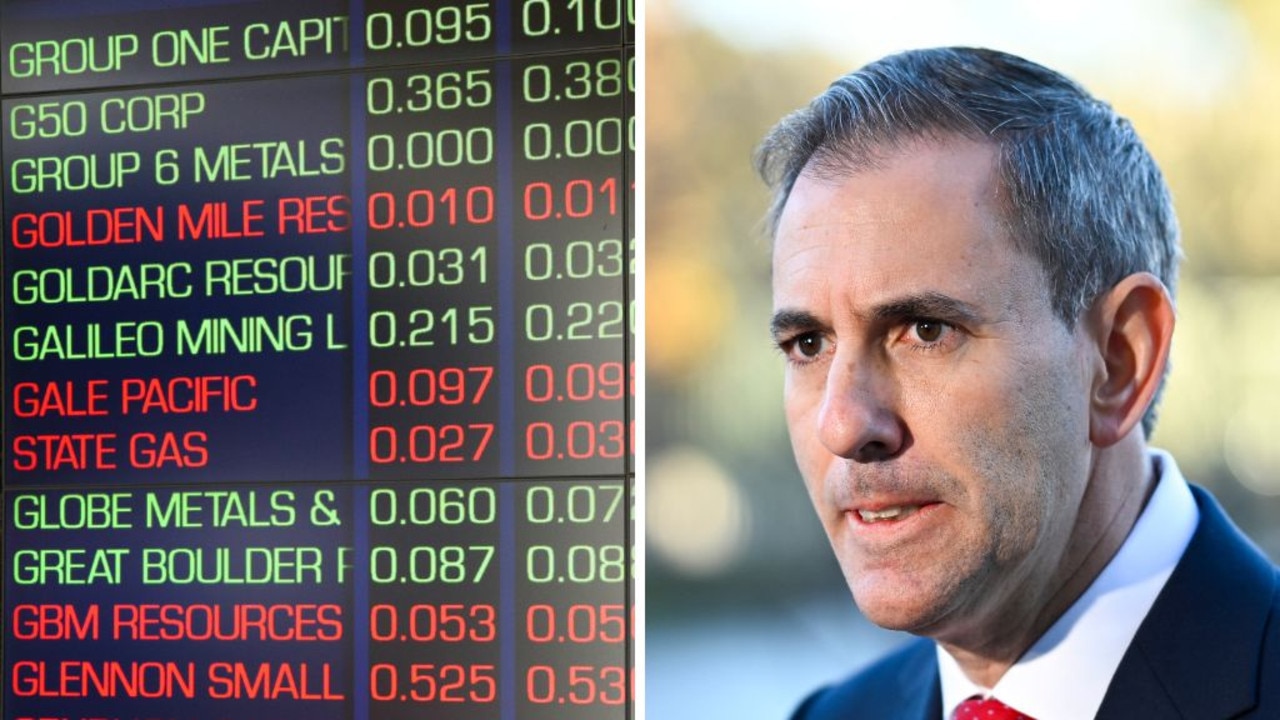
    Australia’s benchmark stock index, the ASX 200, has extended its recent downward trend, closing lower on Tuesday to mark its 15th decline in 19 trading sessions. The slump was fueled by two key pressures: investor jitters ahead of a highly anticipated federal budget packed with potentially transformative tax and housing policy changes, and fresh geopolitical volatility stemming from shifting U.S. rhetoric on a Iran ceasefire. By the closing bell, the ASX 200 shed 26.6 points, or 0.3%, to settle at 8675.2, hitting a five-week low in the session. The broader All Ordinaries index followed suit, dropping an identical 0.3% to close at 8912.9, with 7 of the 11 tracked market sectors ending the day in negative territory.

    In a detailed market analysis published Tuesday afternoon, IG market analyst Tony Sycamore outlined the dual drivers of the market’s cautious sentiment. Ahead of Tuesday night’s federal budget, policymakers are widely expected to introduce major adjustments to Australia’s negative gearing rules and capital gains tax regime — changes that market participants have already begun pricing in amid fears of unforeseen ripple effects across the property and financial sectors. Sycamore emphasized that this budget stands out as the most impactful in recent memory, with structural policy shifts already roiling investor confidence. Compounding these domestic jitters, comments from former U.S. President Donald Trump labeling the U.S.-Iran ceasefire as “on life support” reignited geopolitical risk, stoking anxieties around global fuel security and energy supply chains.

    The banking sector led the market downturn, as investors assessed the potential impact of housing-linked policy changes on the country’s largest lenders. All four major Australian banks closed in negative territory: ANZ fell 2.12%, National Australia Bank dropped 2.09%, Commonwealth Bank eased 1.4%, and Westpac slipped 1.37%. Sycamore warned that banks’ heavy exposure to residential housing lending means any disruption to property markets would directly flow through to the broader financial system, a particularly worrying outcome against Australia’s already muted economic outlook. “You don’t really want to weaken your banking system given the outlook here in Australia isn’t particularly flush,” he noted.

    The technology sector, which has struggled through a weak start to the year, continued its downward trajectory on Tuesday. Supply chain software firm WiseTech Global plunged 5.39%, cloud accounting platform Xero dropped 3.85%, and connected safety firm Life360 tumbled 10.89% after the company downgraded its user growth guidance due to an unanticipated technical issue. DroneShield, a defense technology firm, dropped 9.92% after Australia’s corporate watchdog announced it had launched an investigation into corporate disclosures and trading activity surrounding a period of heavy insider selling at the company. The healthcare sector also posted broad losses, with biotech giant CSL falling 2.18% and medical device maker ResMed dropping 3.35%.

    Against the broad market downturn, the materials and mining sectors emerged as a rare bright spot, boosted by strong commodity fundamentals and a capital rotation out of the underperforming financial sector. Mining giant BHP climbed 2.49% to overtake Commonwealth Bank as the largest company on the ASX by market capitalization, a milestone that underscores the sector’s recent strength. Rival miners Rio Tinto gained 3.13% and South32 added 3.57% for the session. Sycamore explained that capital leaving the banking sector has increasingly flowed into resources, with rising copper and iron ore prices providing a strong tailwind for mining stocks. “It’s got to go somewhere,” he said of the capital shifting out of financials.

    The energy sector also posted modest gains, lifted by edging higher crude oil prices that responded to new geopolitical uncertainty around the Middle East. Brent crude rose 0.9% to settle at $US105.15 a barrel following Trump’s comments casting doubt on the Iran ceasefire. Australian energy producers Woodside Energy added 0.75% and Santos gained 0.53% in line with the crude price increase. Sycamore noted that the oil market is currently defined by conflicting pressures: geopolitical uncertainty is adding volatility to crude pricing, but tight supply dynamics have acted as a check on extreme price spikes, leaving what he called “an uneasy calm” over the market.

    Looking ahead, all market focus remains fixed on the incoming federal budget, with Sycamore warning that the major policy changes to be unveiled could have long-lasting ramifications for both Australian markets and the broader domestic economy. He added that the full impact of structural policy shifts can take months or even quarters to fully filter through the financial system, meaning market volatility tied to the budget could persist long after the announcement is made.

  • James unsure over future after Lakers eliminated

    James unsure over future after Lakers eliminated

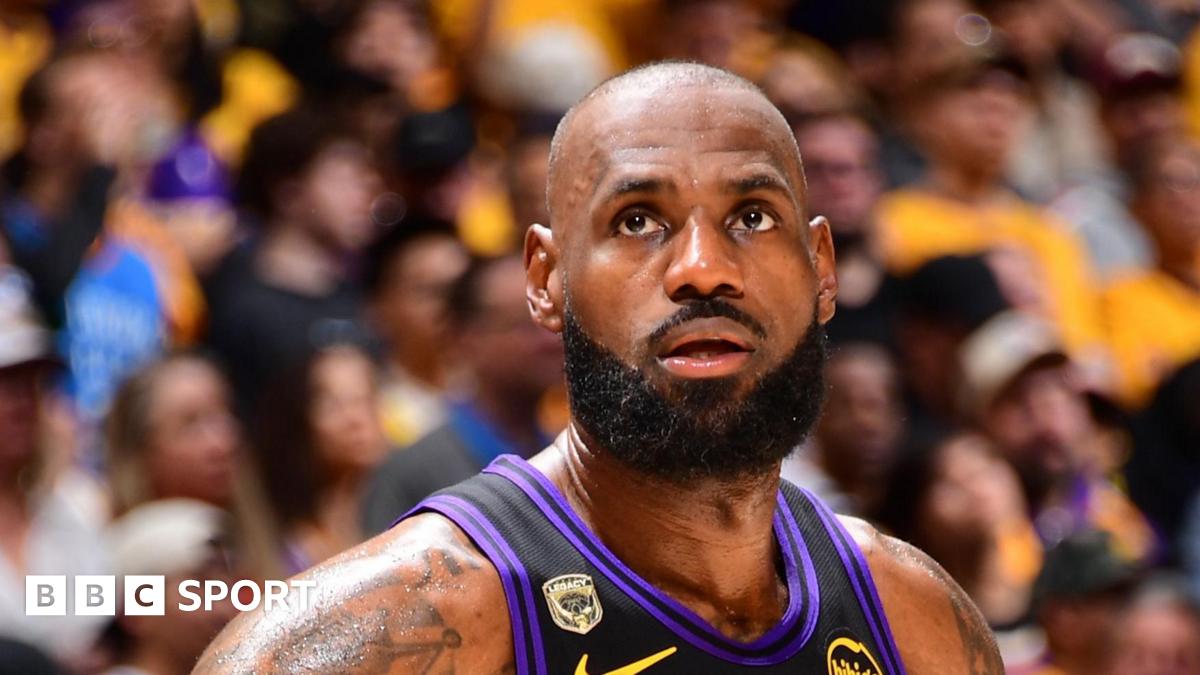
    The 2026 NBA postseason has delivered one of its most storied subplots, as 41-year-old Los Angeles Lakers superstar LeBron James — widely hailed as the greatest basketball player of all time — enters an offseason shrouded in uncertainty over his professional future. The Lakers’ 110-115 Game 4 loss to the defending champion Oklahoma City Thunder eliminated the franchise from the Western Conference semi-finals with a 4-0 series sweep, leaving James’ next step up in the air after his contract expires this coming summer.

    Following the final buzzer at Crypto.com Arena, the league’s all-time leading scorer acknowledged he has not yet made a call on whether he will return for his 24th NBA season, a decision that will come after months of reflection with his inner circle.

    “I’ve got a lot of time. I’ll go back and recalibrate with my family and talk with them,” James told reporters. “When the time comes, you guys will know what I decide to do. It’s about the process — if I can commit to still being in love with the process of showing up to the arena five and a half hours before a game to start preparing.”

    James, who is the only player in league history to compete across 23 consecutive NBA seasons, retires any remaining arguments about his career legacy. Holding four NBA championship rings, four regular-season MVP awards, and the all-time record for most career points, James says he has nothing left to prove to basketball audiences.

    “There’s nothing I need to show in this league,” he added. “I’ve done it all; I’ve seen it all. Just trying to compete and trying to win championships — that’s a motivating factor.”

    In the decisive Game 4, James put up 24 points for the Lakers, but the Thunder were led by an elite performance from 2026 MVP Shai Gilgeous-Alexander, who notched 35 points and eight assists to lock in the sweep. Oklahoma City previously advanced past the first round with an equal 4-0 sweep of the Phoenix Suns, and will next compete in the Western Conference Finals against the winner of the ongoing semi-final series between the Minnesota Timberwolves and San Antonio Spurs, which is currently tied 2-2.

    Elsewhere in the league’s post-season matchups, the Eastern Conference semi-final between the Cleveland Cavaliers and Detroit Pistons is now tied at 2-2 after the Cavaliers earned a 112-103 home victory at Rocket Mortgage FieldHouse. Cavaliers guard Donovan Mitchell delivered a historic offensive performance, scoring a career-high 43 total points, 39 of which came in the second half. The output ties the 36-year-old NBA post-season record for most points in a single playoff half, set by Golden State Warriors guard Eric Floyd back in 1987. The Cavaliers, who dropped the first two games of the series against the Pistons, evened the series with the come-from-behind win. The winner of this semi-final series will advance to face the New York Knicks in the Eastern Conference Finals.

  • Japan baseball to punish dangerous swings after umpire hit

    Japan baseball to punish dangerous swings after umpire hit

    Nearly one month after a catastrophic on-field incident left a top Japanese baseball umpire fighting for recovery, Nippon Professional Baseball (NPB) has implemented sweeping new safety rules aimed at preventing similar tragedies, instituting formal punishments for dangerous bat swings that put players, officials and spectators at risk.

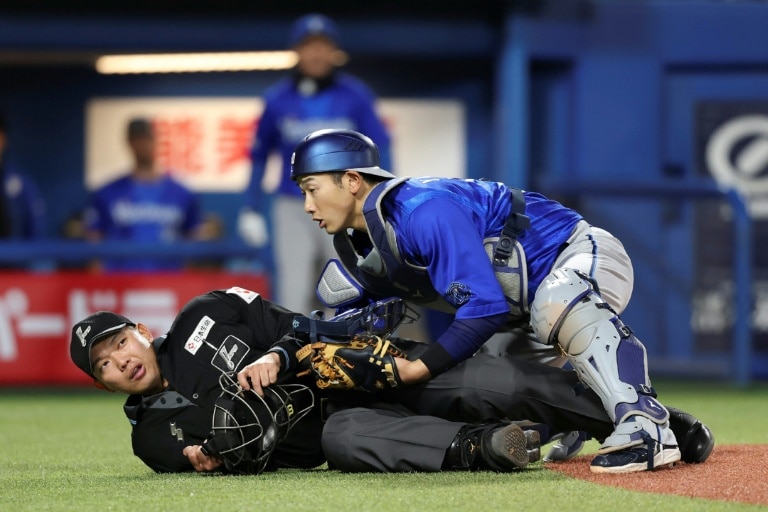
    The incident that sparked the rule change unfolded on April 16 during a Tokyo-based league game. While working behind home plate, 30-year-old umpire Takuto Kawakami was struck in the left side of the head by a loose bat that slipped out of the hands of Tokyo Yakult Swallows slugger Jose Osuna, a Venezuelan-born player. Kawakami collapsed immediately on the diamond and was airlifted to a nearby hospital for emergency neurosurgery, after which he was placed in intensive care. As of the latest official updates, Kawakami remains unresponsive and continues to receive ongoing medical treatment.

    In the immediate aftermath of the accident, NPB rolled out an interim safety mandate requiring all on-field umpires to wear protective helmets during games. Kawakami had only been wearing a standard face mask and baseball cap at the time of the impact, leaving his head critically unprotected. Last week, the Japanese baseball community showed public solidarity with the injured umpire, with all umpires across the country displaying Kawakami’s jersey number 29 on their new protective helmets.

    On Monday, NPB’s governing body formally approved a permanent rule change to codify penalties for dangerous swinging behavior, which will go into effect starting Tuesday. The new framework defines a dangerous swing as any instance where a batter loses control of their bat and releases it mid-swing, whether the slip is accidental or not.

    Under the new regulation, players who execute a dangerous swing that does not make contact with any person will receive an official formal warning. A second offense during the same game will result in immediate ejection from the match. Any dangerous swing that results in a person being struck by the loose bat will also lead to instant ejection, regardless of whether it is the player’s first offense.

    Following the April incident, Osuna issued a public apology for the accident, expressing his concern for Kawakami’s condition. “I’m very sorry about what happened today when my bat hit the main umpire. I hope he’s well, I’m really sorry,” he wrote in a public post on social media platform X shortly after the game concluded.

    The rule change marks one of the most significant updates to NPB’s on-field safety protocols in recent years, drawing widespread attention to the risks that loose bats pose to officials in professional baseball, a hazard that has long been underregulated in many global baseball leagues.

  • Israel takes the stage in semis of boycotted Eurovision

    Israel takes the stage in semis of boycotted Eurovision

    As the curtain prepares to rise on the first semi-final of the 70th Eurovision Song Contest in Vienna on Tuesday, all eyes are not just on the musical performances but on the unprecedented political crisis that has engulfed the world’s largest live televised music event. Israel’s participation this year has triggered the biggest boycott in the contest’s 70-year history, a controversy rooted in the ongoing Israeli military campaign in the Gaza Strip.

    Five countries have already pulled out of the annual glitzy extravaganza: Spain, Ireland, Slovenia, the Netherlands and Iceland, with Spain, Ireland and Slovenia going a step further by refusing to broadcast any portion of this week’s competition. The withdrawals have shrunk the total number of participating nations to 37, the smallest field since the contest expanded its entry pool in 2004. The lineup would have been even smaller if Bulgaria, Romania and Moldova had not reversed their initial plans to sit out the event, rejoining the competition at the eleventh hour.

    Martin Green, the director general of Eurovision, issued a statement on Monday reaffirming the event’s commitment to reconciliation, saying the organization would do “anything in our power to find a pathway back” for the withdrawing nations.

    The controversy extends far beyond non-participation. Pro-Palestinian activist groups have organized mass demonstrations set to coincide with Tuesday’s semi-final, with plans to place symbolic coffins in central Vienna to honor civilian casualties in Gaza. In a public statement, the activists criticized contest organizers, arguing that “despite its crimes, Israel has the opportunity to be celebrated this week in Vienna as a democratic and peaceful rainbow nation.”

    Beyond outrage over the Gaza war, withdrawing national broadcasters have raised two additional key concerns: first, widespread suspicion that the public televoting system was manipulated to artificially boost Israel’s standing at the 2025 Eurovision held in Basel, Switzerland, and second, violations of media freedom after Israel blocked international journalists from accessing the Gaza Strip.

    Israeli officials have pushed back hard against the boycott, framing the backlash as an expression of bigotry. Amichai Chikli, Israel’s Minister of Diaspora Affairs, condemned what he called a “sharp and coordinated surge in antisemitic and anti-Israel discourse surrounding Eurovision 2026.” He added that the current unrest is a direct consequence of “the conduct of European governments and public bodies, which choose, in a hypocritical and weak manner, to boycott the competition.”

    This year’s contest is hosted by Austria, which earned hosting rights after Finnish operatic artist JJ took home the top prize at 2025’s Basel contest with his hit “Wasted Love”. This marks the third time Austria has hosted the event, following stagings in 1967 and 2015.

    Fifteen acts will take the stage at Vienna’s iconic Wiener Stadthalle for Tuesday’s first semi-final, with only 10 spots up for grabs in Saturday’s 25-act grand final. Early bookmaker odds mark Finland, Greece, Israel, Sweden and Croatia as the clear front-runners to qualify. Finland’s entry, performed by violinist Linda Lampenius and singer Pete Parkkonen, is the overall fan favorite this year with their high-energy track “Liekinheitin” (translated as “Flamethrower”).

    Lampenius told Agence France-Presse that the pair has stayed focused on their craft despite the surrounding political chaos. “We are so much into the music and what we are doing in the numbers, so that’s what we are actually always going for: the feeling. It has to come from here: from the heart,” she said.

    Israel’s representative, Noam Bettan, will take the stage with his multilingual entry “Michelle”, which blends lyrics in Hebrew, French and English. Bookmakers predict the toughest fights for qualification will come from San Marino, Georgia and Belgium. Belgian entrant Essyla said he has tried to tune out the outside noise and pressure, telling AFP: “The only stress I put on myself is to want to do things well.”

    The first semi-final will kick off at 19:00 GMT, with Moldova earning the honor of opening the show as it returns to the contest after sitting out the 2025 event. A second semi-final featuring another 15 acts will be held on Thursday, with another 10 acts advancing to the grand final.

    In a change designed to address long-simmering concerns about televote manipulation, this year’s semi-finals and final will combine public voting with scores from professional juries, marking the first time the combined system has been used since the 2022 contest in Turin. The so-called “Big Five” major financial backers of the contest — Britain, France, Germany and Italy — along with host nation Austria, have all received automatic spots in Saturday’s grand final regardless of semi-final performance.

    Organizers have drawn inspiration for this year’s production from one of Vienna’s most iconic cultural institutions: the classic Viennese coffee house. Michael Kroen, the executive producer of Eurovision 2026, explained the creative choice to reporters on Monday, noting that coffee houses have long served as hubs for creativity and intellectual exchange in the city. “The creativity and the intellectuality was based in the coffee houses, and very great people lived in Vienna at the same time and created a lot of good stuff for the world,” Kroen said. “This was our inspiration and we’re trying to uphold this story… and present you modern Vienna.” To bring the theme to life, each competing nation has been given its own dedicated coffee house space in the city where fans can gather to watch screenings and connect ahead of performances.

  • Albanese government to spend $600m on multi-year Bondi response

    Albanese government to spend $600m on multi-year Bondi response

    Nearly six months after the deadly December 14 terror attack at Bondi Beach that claimed 15 lives, most of them Jewish, the Albanese government has formally detailed a $604.2 million multi-year funding package in its 2026-27 federal budget, released on Tuesday, to boost Jewish community security, expand national counter-terrorism capacity, and combat rising anti-Semitism across Australia. The five-year allocation, which includes $8.1 million in permanent annual funding after the initial period, will be distributed across dozens of key stakeholders, from peak Jewish representative bodies and educational institutions to counter-terrorism police units and regulatory agencies. More than $120 million of the total package will be allocated over four years to the Executive Council of Australian Jewry to upgrade community-wide security infrastructure, with $22 million of that sum drawn from the Confiscated Assets Account established under the Proceeds of Crime Act over three years. An additional $46.7 million over the same four-year period will go toward upgrades for major Jewish communal and cultural sites, including the Hakoah Club and the National Jewish Memorial Centre, as well as a targeted non-competitive grant program for local projects led by Chabad of Bondi. Roughly $5 million in targeted support is earmarked for affected stakeholders including Lewis’ Continental Kitchen, a Jewish business that was firebombed in a separate earlier attack, Jewish youth camps across the state of Victoria, and directly impacted survivors and families of victims of the Bondi Beach attack. A further $42.9 million allocated over two years will fund immediate and accessible mental health support services for community members affected by the attack and rising hate violence. Ahead of the federal budget announcement, the government already revealed an $80 million two-year investment to establish a new national counter-terrorism center dedicated to addressing the growing crisis of online radicalization among young Australians. When combined with new allocations in the 2026-27 budget, total spending targeting anti-Semitism and violent extremism in this fiscal cycle tops $207 million. This allocation includes almost $70 million for the Australian Federal Police’s National Security Investigations teams, as well as sustained funding for cross-agency initiatives: a teacher resource hub managed by the Department of Education, and a hate group monitoring framework developed by the Department of Home Affairs. Another $32.6 million in 2026-27 will fund national public awareness campaigns designed to strengthen national security and reinforce social cohesion across diverse Australian communities. The long-running Together for Humanity interfaith education program will also receive a $20 million four-year investment to extend and expand its reach, while public broadcaster SBS will get $3 million over three years to continue its *SBS Examines* podcast series focused on hate and extremism. The newly launched Royal Commission on Anti-Semitism and Social Cohesion, which held its first public hearings last week, will also receive sustained resourcing, with more than $131 million allocated to the Attorney-General’s Department from the 2025-26 fiscal cycle to support the commission’s work. The budget also confirms continued funding for national firearms licensing reforms, though the government has declined to disclose the specific total amount, stating that public release would prejudice ongoing negotiations with state and territory jurisdictions over funding levels. In addition, the budget sets aside a contingency reserve for the stalled National Gun Buyback Scheme, which has faced significant delays and pushback from multiple state and territory governments since it was proposed. The scheme has already received partial funding, and the new contingency allocation aims to support its implementation moving forward.

  • New Zealand moves to halt lawsuits over climate damage

    New Zealand moves to halt lawsuits over climate damage

    In a controversial policy shift that has drawn sharp criticism from climate campaigners, New Zealand’s center-right government confirmed plans Tuesday to amend national legislation to block courts from holding private companies legally liable for climate change damage connected to their greenhouse gas emissions.

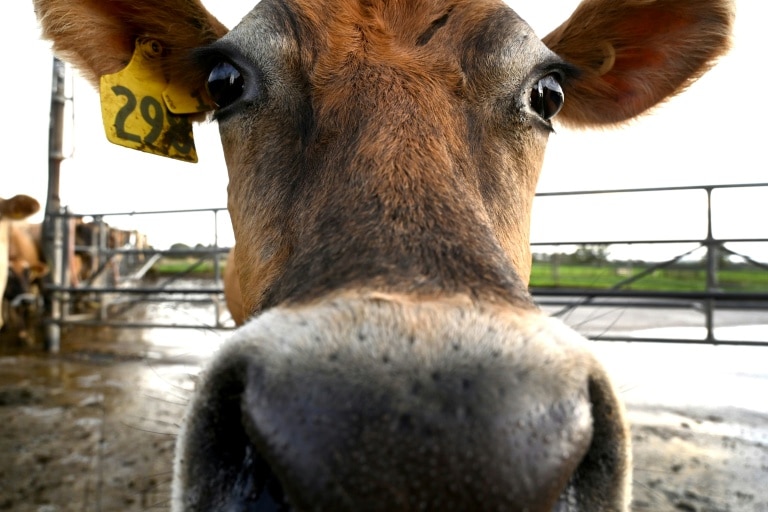
    Justice Minister Paul Goldsmith announced the change, pointing specifically to an ongoing high-profile lawsuit filed by Indigenous Māori climate activist Michael Smith, which targets six major New Zealand firms, including dairy industry giant Fonterra, over their contribution to climate-related environmental harm. Goldsmith argued that civil tort law—the legal framework under which such compensation claims are filed—is ill-equipped to address a systemic issue like climate change, which intersects with complex environmental, economic, and social priorities. He added that allowing such lawsuits to proceed would create crippling uncertainty that undermines business confidence across the country.

    “The courts are not the right venue to resolve claims of climate harm,” Goldsmith said, confirming the amendment will explicitly bar courts from issuing findings of liability for climate damage tied to greenhouse gas emissions.

    Smith, the activist leading the pending case, condemned the government’s move as a direct attack on democratic principles. Speaking to Radio New Zealand, he warned that if parliament can intervene to cancel an active court case simply because it has become politically inconvenient, no individual’s legal claims can ever be considered secure. The proposed law change is widely expected to pass parliament, as the ruling national coalition holds a clear majority of legislative seats.

    The announcement is the latest in a series of rollbacks of climate-friendly policies by the current administration, which took office in 2023. Since assuming power, the government has scrapped a popular clean car discount designed to boost electric vehicle adoption, reversed a nationwide ban on new offshore oil and gas exploration, and implemented a streamlined fast-track approval process for new mining permits.

    The government’s 2025 emissions target has also faced separate legal pushback. In January, officials announced a goal to cut carbon emissions 51% below 2005 levels by 2035—an almost negligible adjustment from the previous administration’s target of a 50% cut by 2030. In March, two major environmental legal groups, Lawyers for Climate Action and the Environmental Law Initiative, sued Climate Change Minister Simon Watts, arguing the weak, delayed target fails to meet the government’s legal obligations to cut emissions. New Zealand’s long-term legally binding target remains net-zero greenhouse gas emissions by 2050, excluding agricultural and waste methane.

    Globally, climate litigation has emerged as a key tactic for activists and affected communities to push for greater accountability from major emitters and governments. From South Korea to Germany, courts around the world have increasingly accepted climate liability cases, pushing both public and private actors to strengthen their climate action. New Zealand’s proposed law change marks one of the most explicit efforts by a national government to block this growing trend of climate accountability.

  • Canberra teen allegedly motivated by ‘nationalist, racist extremism’ hit with additional charges over alleged plan to commit terror attack

    Canberra teen allegedly motivated by ‘nationalist, racist extremism’ hit with additional charges over alleged plan to commit terror attack

    A 17-year-old Canberra resident, already in custody on earlier firearm and terrorism-related charges, has been hit with two new, historic charges in the Australian Capital Territory (ACT) in connection to an alleged far-right extremist plot to carry out a deadly terror attack against random civilians. This development marks the first time any individual has been charged with terrorist act planning in the ACT’s history.

    The teenager was first taken into custody by law enforcement in November 2023, when authorities executed a search warrant at his residential property. During that operation, investigators seized a cache of prohibited items: explosive precursor chemicals, gas masks, military-style tactical clothing, a replica imitation firearm, printed extremist ideological material, and the teen’s personal mobile phone. He has remained in detention ever since his initial arrest.

    On Tuesday, the teen made a brief first appearance at the ACT Children’s Court to face the newly filed charges: one count of preparation and planning for a terrorist act, and a second count of transmitting violent extremist material. In a joint official statement, the Australian Federal Police (AFP), ACT Policing, and Australia’s national security agency ASIO confirmed that additional evidence uncovered during the ongoing investigation justified the expanded charges.

    Authorities allege the planned attack was targeted at people unknown to the teenager, and was driven by ideological views aligned with violent nationalist and racist extremism. AFP Assistant Commissioner Peter Crozier, who leads the force’s counter-terrorism division, described the radicalization of young Australians by online extremist propaganda as a deeply alarming trend for the country.

    “Violent extremist material is circulated deliberately by terrorist networks to sow violence, hate, and deep division within Australian society,” Crozier explained in his statement. He emphasized that the AFP and its national security and law enforcement partner agencies remain unwavering in their work to protect Australian communities. “It is our core mandate to defend and protect the Australian public, and we will relentlessly pursue any actor that seeks to undermine our democracy or fracture our social cohesion,” he added.

    Crozier also highlighted the shared responsibility of non-law enforcement stakeholders in countering youth radicalization, saying: “We strongly emphasise the important role that parents, schools, social services and technology companies have in preventing access to violent extremist material by our youth.”

    ACT Policing Deputy Chief Police Officer Richard Chin echoed this focus on prevention and early intervention, noting that community safety remains the top priority for the local Joint Counter Terrorism Team (JCTT). “We are focused on limiting the accessibility of violent extremist material and promoting education and awareness for those in frontline protective roles, including parents, educators and health care providers in the ACT, to maximise prevention and early intervention options,” Chin said.

    Chin pointed out that parents and teachers are often the first adults to notice warning signs of radicalization in young people. Strengthening awareness and building confidence within trusted, supportive community networks, he explained, is a core strategy to stop young people from being exposed to harmful extremist influences and stop radicalization before it leads to violence.

  • UAE secretly joined Israeli-US strikes on Iran: Report

    UAE secretly joined Israeli-US strikes on Iran: Report

    In a stunning revelation published by The Wall Street Journal, the United Arab Emirates has secretly carried out offensive military strikes against Iran, pulling the Gulf monarchy directly into the expanding Israeli-U.S. conflict that has already destabilized the broader Middle East region.

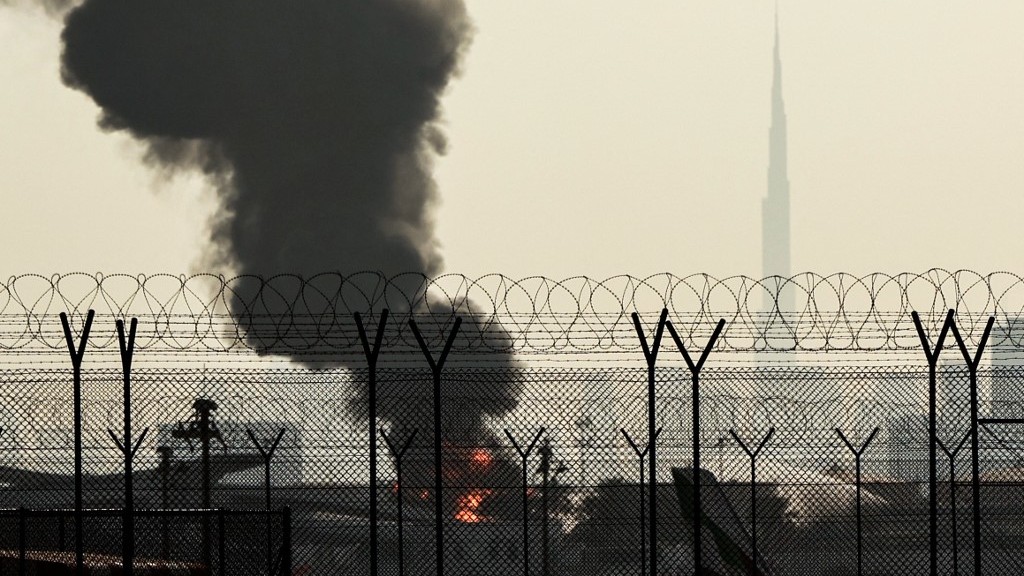
    According to anonymous sources familiar with the operation, Emirati military units targeted a key oil refinery located on Iran’s Lavan Island in the Persian Gulf during the first week of April. The UAE has not issued any public statement confirming or acknowledging its role in the attack. The strike, the Journal reports, ignited a massive blaze at the facility that knocked most of the refinery’s production capacity offline for months.

    The attack comes at a particularly sensitive juncture: just as former U.S. President Donald Trump was pushing for a ceasefire to end a five-week sustained air campaign against Iran, making the covert strike a major escalation of already soaring tensions. Tehran quickly labeled the incident an “enemy attack” and launched an immediate counteroffensive, firing a large volley of ballistic missiles and attack drones at both the UAE and neighboring Kuwait.

    In the weeks since the strike, Iran has concentrated the vast majority of its retaliatory firepower on the Emirates, launching more than 2,800 projectiles – a total that far outpaces the volume of attacks against any other adversary involved in the conflict, including Israel and the United States. This large-scale retaliation has sent shockwaves through the UAE’s economy, disrupting commercial air travel across the country, cutting deep into vital tourism revenue, and triggering widespread instability in the country’s once-booming property market. As the economic fallout spreads across key sectors, dozens of domestic and international companies have implemented mandatory furloughs and begun cutting staff to offset losses.

    By the end of April, data shows more than $120 billion had been erased from the total market capitalization of the Dubai and Abu Dhabi stock exchanges, while more than 18,400 commercial flights to and from the UAE have been canceled amid persistent security risks.

    The Wall Street Journal’s report also confirms that Washington has privately given its approval to the UAE’s decision to join offensive operations, reinforcing widespread analysis that Abu Dhabi is now operating in full coordination with U.S. and Israeli military goals in the region. This deepening alignment, critics argue, has formed a new confrontational axis that has prolonged and intensified the regional conflict, rather than working to de-escalate or contain it.

    In recent years, the UAE has emerged as one of the most hawkish Gulf states, maintaining continuous close military coordination with both the U.S. and Israel throughout the ongoing conflict. This openly confrontational posture has pulled Abu Dhabi directly into the line of Iranian retaliation, despite decades of careful diplomatic balancing by Gulf monarchies seeking to avoid open conflict with Tehran.

    Speculation about direct Emirati involvement in offensive operations against Iran first began circulating in mid-March, after publicly shared footage captured an unidentified fighter jet operating inside Iranian airspace that did not match the markings or design of any known U.S. or Israeli aircraft. Around the same time, independent outlet Middle East Eye reported that Iranian air defenses had shot down a Chinese-made Wing Loong II reconnaissance and attack drone near the city of Shiraz, leading independent analysts to question whether other Gulf states, including Saudi Arabia or the UAE, had joined active offensive operations against Iran.

    Beyond the military escalation, Tehran has moved to exploit existing tensions among Gulf Cooperation Council members to isolate Abu Dhabi. Per The Wall Street Journal, Iran issued explicit warnings to Saudi Arabia and Oman that it would “heavily target” the UAE in response to its participation in the Israeli-U.S. campaign, a move widely interpreted as an attempt to split the Gulf bloc.

    Existing rifts among Gulf powers are already becoming more visible. Long-simmering tensions between the UAE and Saudi Arabia have grown increasingly tense in recent years, and the fallout from the Iran strike has only worsened frictions. The UAE’s recent decision to withdraw from OPEC further strained diplomatic and economic ties with Riyadh, indicating that the ongoing conflict with Iran is deepening historical rivalries rather than uniting Gulf powers against a common perceived threat.