博客

  • Elon Musk said control of OpenAI should go to his children, Sam Altman tells jury

    Elon Musk said control of OpenAI should go to his children, Sam Altman tells jury

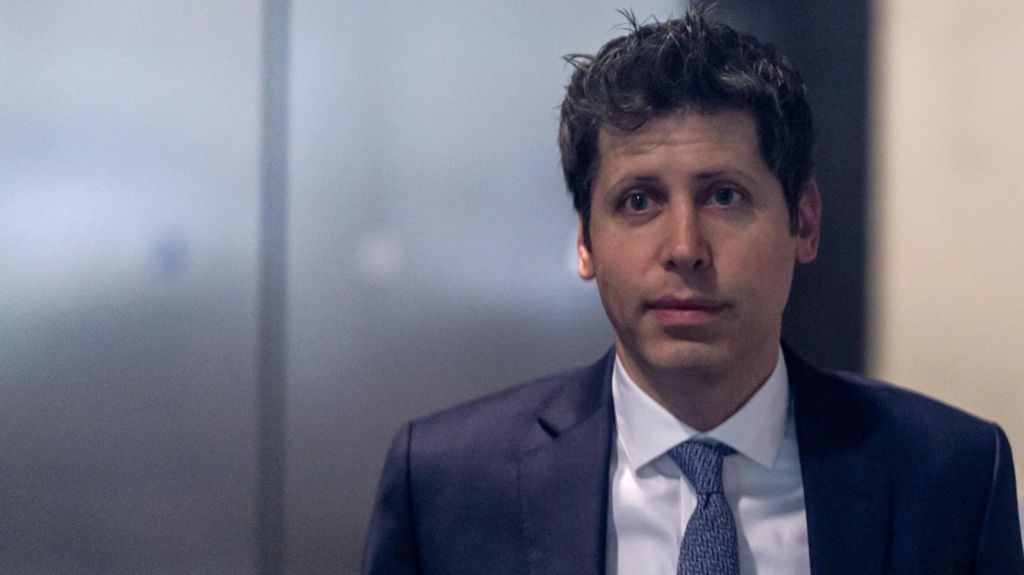
    In explosive testimony delivered Tuesday to a federal jury in Oakland, California, OpenAI chief executive Sam Altman laid out new details of a years-long power struggle with Tesla and X owner Elon Musk, revealing the billionaire’s far-reaching bid to seize total control of the ChatGPT-developing AI firm shortly after its founding — including a plan to pass that control to his children upon his death.

    The courtroom appearance comes as part of an ongoing lawsuit filed by Musk against Altman and OpenAI, in which the billionaire accuses Altman of abandoning the organization’s original non-profit charter to “loot” the non-profit entity for personal gain. But Altman’s testimony flipped the narrative, arguing that Musk himself was the driving force behind restructuring OpenAI into a for-profit enterprise, all while pushing aggressively to claim full control of the company.

    Recalling tense early discussions among OpenAI’s founding team, Altman described a striking exchange that he called “hair-raising.” When his co-founders asked Musk what would happen to control of the company if Musk passed away, Altman said Musk responded that leadership should transfer to his children.

    According to Altman, Musk floated multiple concrete proposals to accumulate more power at OpenAI in the years after its 2015 founding. Beyond seeking additional board seats and the top executive role as CEO, Musk even proposed folding OpenAI into Tesla as a wholly owned subsidiary. The core motivation behind this push for a structural overhaul, Altman told the jury, was to access larger amounts of capital at a faster pace than the non-profit structure allowed.

    Altman recalled Musk arguing that his high-profile status as a tech billionaire made him the only suitable leader for the organization. Musk allegedly claimed that a single public tweet from him would instantly generate massive value for OpenAI and attract the substantial financial backing the company needed to advance its research.

    But Altman and his fellow co-founders Greg Brockman and Ilya Sutskever rejected Musk’s overtures, saying that concentrating full control of OpenAI in a single individual ran directly counter to the organization’s core mission. OpenAI was founded with the explicit goal of developing artificial general intelligence (AGI) — a broadly defined AI system that can outperform humans on nearly all economically valuable tasks — safely and for the public good, Altman noted, and the founding team never believed one person should hold unilateral power over AGI development.

    “I was extremely uncomfortable with it,” Altman told the jury. “One of the reasons we started OpenAI was because we didn’t think any one person should be in control of AGI.”

    The standoff ultimately led Musk to sever ties with OpenAI in early 2018. He resigned from the company’s board and halted his regular $5 million quarterly donations to the research effort. Altman told the court a blunt email from Musk announcing his exit remains “burned into my memory”: Musk insisted OpenAI had “a zero percent chance, not a one percent chance, of success” without his leadership.

    Years later, when OpenAI established its for-profit subsidiary in 2019, Altman extended an offer for Musk to take an ownership stake in the new entity. Altman said Musk declined the offer outright, explaining that he would never invest in a startup that he did not control full stop. The ongoing legal battle between the two high-profile tech leaders centers on the future of one of the world’s most valuable AI companies, and the question of whether OpenAI violated its founding non-profit commitments in its push to commercialize generative AI technology.

  • NBA player Clarke dies aged 29

    NBA player Clarke dies aged 29

    The global basketball community is in mourning after the Memphis Grizzlies confirmed the death of 29-year-old forward Brandon Clarke, a standout Canadian talent who earned league-wide acclaim early in his NBA career.

    Selected as the 21st overall pick in the 2019 NBA Draft by the Oklahoma City Thunder, Clarke was traded to the Grizzlies just moments after his name was called, kicking off a seven-season tenure with the franchise that saw him leave a lasting mark both on and off the court. After a breakout rookie season that saw him average 12.1 points per game, Clarke was named to the 2020 NBA All-Rookie First Team, cementing his status as one of the league’s most promising young frontcourt players.

    Across his 309 total regular-season appearances with the Grizzlies, which included 50 starts, Clarke posted a career average of 10.2 points per game, known for his energetic style of play and high-energy contributions off the bench. Plagued by persistent injury issues in his final season, Clarke only appeared in two games, both coming in December 2025, though he still traveled with the team to London this past January for the Grizzlies’ NBA Global Game against the Orlando Magic, where he participated in team-hosted community outreach events for local basketball fans.

    News of Clarke’s passing was met with immediate sorrow across the NBA ecosystem. In an official statement announcing the news, the Memphis Grizzlies organization shared they are “heartbroken” by the loss, noting “Brandon was an outstanding team-mate and an even better person whose impact on the organisation and the greater Memphis community will not be forgotten.”

    As of press time, no official cause of death has been publicly released. The news comes just one month after Clarke was arrested in Arkansas on multiple charges including speeding and possession of a controlled substance, a case that was still pending at the time of his death.

    Clarke’s representation at Priority Sports also released a tribute honoring the player’s warm character. “He was so loved by all of us here and everyone whose life he touched. He was the gentlest soul who was the first to be there for all of his friends and family,” the statement read.

    NBA Commissioner Adam Silver added his own remembrance, saying “As one of the longest-tenured members of the Grizzlies, Brandon was a beloved team-mate and leader who played the game with enormous passion and grit.” Tributes from fellow players, coaches, and fans across the league continued to pour out across social media Saturday, remembering Clarke’s contributions to the sport and his kindness off the court.

  • Trump’s Lincoln Memorial Reflecting Pool makeover faces a lawsuit and a $13m price tag

    Trump’s Lincoln Memorial Reflecting Pool makeover faces a lawsuit and a $13m price tag

    What was supposed to be a low-cost quick-fix renovation of the iconic Lincoln Memorial Reflecting Pool has turned into a controversial, seven-times-over-budget project that raises questions about procurement rules, historic preservation, and executive decision-making just ahead of the United States’ 250th anniversary celebrations this summer.

    Federal government records now show the final projected cost for the repair and repainting project has jumped from the $1.8 million that former President Donald Trump publicly claimed it would cost to $13.1 million, more than doubling the original no-bid contract award of $6.9 million. The massive cost overrun comes amid ongoing legal pushback from a historic preservation nonprofit that has asked courts to halt work, arguing the project violates federal laws meant to protect culturally significant landmarks.

    Stretching 2,030 feet between the Lincoln Memorial and the Washington Monument, the 104-year-old reflecting pool has suffered from longstanding infrastructure problems for decades: persistent leaks, crumbling structural foundations, corroded pipes, excessive algae growth, and accumulated bird waste. For years, large-scale renovations were projected to cost up to $300 million and take more than three years to complete. Trump positioned his accelerated, low-cost overhaul as a smarter alternative, promising the project would deliver a fully functional, beautifully restored pool in time for the country’s 250th birthday celebrations, with a total price tag between $1.5 million and $2 million.

    In a break from standard federal procurement rules that require open competitive bidding for public works projects, the Trump administration awarded the contract to Atlantic Industrial Coatings, a Virginia-based firm that had previously completed pool repair work at one of Trump’s private golf clubs. Administration officials justified the no-bid award using an emergency exemption meant for urgent, unplanned repairs. The contract mandates all work be finished by May 22, a far faster timeline than the multi-year overhaul originally proposed, to meet the anniversary deadline.

    Work on the drained pool kicked off over the weekend, and Trump personally inspected the site last week, traveling across the empty pool bed in his motorcade to view progress. During the inspection, he told reporters the renovated pool would be superior to its original condition, saying, “It’s much more beautiful than it was new because it never had the colour people wanted, but now it’s going to have the great colour. So it’s going to be good.” The project is part of a broader slate of capital beautification and construction initiatives Trump has prioritized since returning to office, including a proposal to build a 250-foot national victory arch, the demolition of the White House East Wing to construct a new presidential ballroom, and the rebranding of multiple federal and cultural institutions to add his name.

    The administration’s procurement process and the changes to the historic landmark have already drawn legal challenge. The Cultural Landscape Foundation, a nonprofit focused on responsible stewardship of historic public landscapes, filed a lawsuit seeking an immediate halt to construction. The suit argues that the ongoing resurfacing and repainting work is permanently eroding the unique historic character of the reflecting pool, and that Trump’s administration violated federal laws that regulate alterations to protected national landmarks.

    Even as costs have ballooned far beyond the president’s original promise, it remains uncertain whether the accelerated, low-impact renovation will actually resolve the pool’s longstanding underlying structural problems. Critics continue to question both the legality of the no-bid contract award and the wisdom of altering a century-old national landmark to meet a political deadline.

  • Marty Makary out as head of US Food and Drug Administration

    Marty Makary out as head of US Food and Drug Administration

    In a surprise announcement from the White House on Tuesday, former President Donald Trump confirmed that U.S. Food and Drug Administration (FDA) Commissioner Marty Makary is departing his role, less than 15 months after he took office. The exit comes as Makary faced mounting pushback from both within the administration and outside groups over a series of high-profile policy disagreements.

    Trump told reporters ahead of his departure for a state visit to China that Makary had been encountering professional difficulties, noting that a deputy commissioner would serve as acting head of the agency while the administration searches for a permanent successor. The president stopped short of clarifying whether Makary was fired or chose to resign, offering only a brief, warm assessment of his tenure: “He’s a great doctor, he’s a friend, and he’s going to go on and do well.”

    A British-American surgeon who previously served on the faculty of Baltimore’s renowned Johns Hopkins University, Makary first rose to public attention as a leading voice for the Make America Healthy Again movement. Nominated by Trump to lead the FDA shortly after Trump won the 2024 presidential election, Makary was confirmed by the Senate in March 2025. At the time of his appointment, Trump framed the pick as part of a broader push alongside Health and Human Services (HHS) Secretary Robert F. Kennedy Jr. to crack down on harmful chemicals in food and pharmaceutical overuse among American youth, with the goal of addressing rising childhood chronic disease rates.

    But Makary quickly found himself at odds with the administration on multiple key policy files. Most notably, he resisted a White House push to greenlight broad approval of flavored e-cigarette products, a category long linked to youth vaping outbreaks by public health advocates. The Wall Street Journal reported last month that Makary overruled internal agency scientists to block approval of fruit-flavored vapes from a major U.S. manufacturer, directly contradicting Trump’s repeated public pledges to move forward with approvals. In early May, the FDA ultimately authorized the first set of fruit-flavored e-cigarettes, including mango and blueberry varieties, made by Los Angeles-based manufacturer Glas.

    Makary also drew fierce criticism from anti-abortion groups after the FDA approved a generic version of the abortion medication mifepristone, a decision that expanded access to the drug by lowering costs. Leading anti-abortion nonprofit Susan B. Anthony Pro-Life America publicly called for Makary’s ouster over the approval. Beyond these flashpoints, he also earned the ire of the pharmaceutical industry over a higher-than-expected rate of new drug approval denials, particularly for rare disease treatments and cancer therapies.

    Makary’s departure marks the latest high-level exit from HHS under Kennedy’s leadership. Earlier in 2026, HHS Deputy Secretary Jim O’Neill stepped down from his role, and Centers for Disease Control and Prevention Director Susan Monarez left the agency in 2025. His exit also joins a string of recent senior personnel changes across the Trump administration, which have also seen the departure of Navy Secretary John Phelan, Attorney General Pam Bondi, and Department of Homeland Security Secretary Kristi Noem in recent months.

    Prior to his appointment to lead the FDA, Makary was a prominent critic of federal public health policies implemented during the COVID-19 pandemic, most notably expressing skepticism about mass vaccine mandates. Born in Liverpool, England, Makary moved to the U.S. as a child and was raised in Baltimore, Maryland, the same city that would become home to his long-time academic career at Johns Hopkins. The BBC has reached out to HHS to request additional comment on Makary’s departure, and no additional details on the timeline for naming a permanent replacement have been released as of Tuesday.

  • Nakba: The Palestinian catastrophe, explained

    Nakba: The Palestinian catastrophe, explained

    For Palestinians across the globe, May 15 is not an ordinary date on the calendar – it is a day etched in collective memory as a commemoration of loss, resilience, and a decades-long struggle for justice. Annually, millions gather to mark the Nakba, meaning “catastrophe” in Arabic, a defining turning point that refers to the 1948 displacement and ethnic cleansing of Palestinian people by Zionist militias to clear the way for the establishment of the State of Israel. To contextualize this event, the history of Palestine’s governance stretches back centuries under Ottoman rule, a period that ended when British forces seized control of the territory at the conclusion of World War I.

    Following the war, the League of Nations granted Britain a formal mandate to administer Palestine, a framework that explicitly excluded input from the territory’s native Palestinian majority. While the official stated goal of the mandate system was to guide local populations toward self-governance and eventual independence, Palestine’s mandate deviated sharply from this promise: it embedded the 1917 Balfour Declaration, a pledge to create a “national home for the Jewish people” in Palestine, at a time when Jewish residents made up less than 10 percent of the total population. Over the course of the mandate era, from 1923 to 1948, Britain facilitated large-scale Jewish immigration from Europe, growing the Jewish population tenfold from roughly 60,000 before the mandate to 700,000 by 1948. British authorities also provided military training, weapons, and autonomy to Zionist armed groups, while violently suppressing native Palestinian uprisings that demanded independence and opposed the unregulated immigration project.

    By 1947, growing unrest led Britain to announce it would abandon its mandate and cede authority over the Palestine question to the newly formed United Nations. In November of that year, the UN adopted a partition plan that would split historic Palestine into two entities: 55 percent of the territory would be allocated to a Jewish state, while 45 percent would go to an Arab Palestinian state, with Jerusalem designated as an internationally administered city. Like earlier arrangements, the plan was developed without any consultation with Palestinian leaders, and it never went into effect. Almost immediately after the plan was announced, Zionist armed groups launched a systematic campaign of expulsion, drawing on detailed military blueprints that had been drafted as early as 1945.

    This military strategy coalesced into Plan Dalet, the official operational framework for Zionist forces that explicitly called for the destruction of Palestinian villages through arson, demolition, and mining, and mandated that in cases of local resistance, armed groups would destroy resistance forces and expel the entire civilian population outside the borders of the proposed Jewish state. Over the course of the campaign, Zionist militias deployed a range of brutal tactics to force Palestinian flight, including large-scale bombing campaigns, targeted massacres of civilian communities, and psychological warfare designed to terrorize residents into leaving. Unarmed civilian men, women, and children were killed indiscriminately, with many buried in unmarked mass graves.

    Between December 1947 and May 14, 1948 – the day Zionist leaders unilaterally declared the establishment of the State of Israel, 24 hours before the British Mandate was set to officially expire – an estimated 175,000 Palestinians were expelled, and more than 200 Palestinian villages and urban neighborhoods were destroyed and seized. Following the declaration of statehood, neighboring Arab armies entered the territory to oppose Zionist expansion, leading to a full-scale war that concluded with armistice agreements between Israel and neighboring Arab states in July 1949. By the end of the conflict, the newly formed State of Israel controlled 78 percent of historic Palestine, with the remaining 22 percent held by Arab forces; that remaining territory, the West Bank and Gaza Strip, would fall under Israeli military occupation 19 years later in the 1967 Six-Day War, and remains under occupation to this day.

    Final casualty and displacement figures from the 1948 campaign are staggering: an estimated 13,000 Palestinians were killed, more than 530 Palestinian villages and towns were completely destroyed and depopulated, at least 30 documented massacres were carried out, and roughly 750,000 Palestinians were forcibly expelled from their homeland. Around 150,000 Palestinians remained within the borders of the new Israeli state, the vast majority of them internally displaced from their original homes. In the years after the war, the Israeli government passed a series of laws that seized all abandoned property and assets left by expelled Palestinians – including land, homes, cash, stocks, businesses, furniture, and other personal belongings. It also enacted the Law of Return, which grants immediate Israeli citizenship to any Jewish person from anywhere in the world who relocates to Israel, while permanently barring Palestinian refugees from returning to their ancestral homes.

    Today, the legacy of the 1948 Nakba endures for Palestinians across the globe. There are 5.8 million registered Palestinian refugees living in formal refugee camps across the occupied West Bank, Gaza Strip, Jordan, Syria, and Lebanon, with an additional 2 million internally displaced Palestinians holding Israeli citizenship within Israel’s 1948 borders. For Palestinians, the Nakba is not merely a historical event confined to 1948; it is an ongoing process of displacement, marked by decades of military occupation, blockade of Gaza, home demolitions, land confiscation, and systemic dispossession that continues to shape Palestinian life to this day. Every May 15, communities across the world gather to honor the lives lost, the homes destroyed, and the ongoing struggle for Palestinian self-determination, ensuring the memory of the Nakba remains central to the national Palestinian identity.

  • Iran says US must accept peace plan or face ‘failure’

    Iran says US must accept peace plan or face ‘failure’

    Tensions in the Middle East have reached a new boiling point this week, as Iran’s top negotiator issued a stark ultimatum to the United States: accept Tehran’s updated 14-point peace proposal, or prepare for continued failure to resolve the two-month-old conflict that has upended global energy markets and destabilized the entire region. The warning comes just days after former U.S. President Donald Trump declared the existing month-long ceasefire on the brink of total collapse, calling Iran’s counterproposal to an earlier U.S. framework “totally unacceptable.”

    The conflict, which erupted in early March when joint U.S.-Israeli strikes targeted Iranian positions, has expanded across multiple fronts in the region despite the ceasefire that took effect mid-April. Millions of people across the Middle East and hundreds of millions globally have felt its ripple effects, from spiking energy prices to widespread economic disruption. While both Washington and Tehran have dug in their heels and refused to make key concessions, neither side has moved to resume full-scale all-out war – a tense stalemate that has left communities on edge and global markets jittery.

    “There is no alternative but to accept the rights of the Iranian people as laid out in the 14-point proposal. Any other approach will be completely inconclusive; nothing but one failure after another,” Mohammad Bagher Ghalibaf, Iran’s chief negotiator, wrote in a public post on X Tuesday. He added that prolonged delays in reaching a deal would only add to the financial burden borne by American taxpayers, a claim that is backed by new Pentagon data showing the cumulative cost of the conflict for the U.S. has now climbed to nearly $29 billion – a $4 billion increase from just two weeks prior.

    Iran’s latest proposal was delivered in response to a draft framework shared by U.S. negotiators earlier, details of which remain largely under wraps. Media reports indicate the U.S. plan centered on a one-page memorandum of understanding that would end active fighting and set up a long-term negotiation framework for addressing concerns over Iran’s nuclear program. In its counteroffer, Iran has laid out its own non-negotiable demands: an end to hostilities across all fronts, including Lebanon; a lifting of the ongoing U.S. naval blockade on Iranian ports; and the release of billions of dollars in Iranian assets that have been frozen abroad under decades of U.S. sanctions.

    Trump has already rejected Tehran’s counteroffer out of hand, claiming the U.S. is positioned to secure “complete victory” over Iran and warning the ceasefire – which has held for more than a month – is in its final days. In a show of military defiance, Iran’s Revolutionary Guards conducted new combat readiness drills in Tehran Tuesday, state media reported, with exercises framed as enhancing the country’s ability to confront “any movement of the American-Zionist enemy.” Reza Talaei-Nik, spokesman for Iran’s Ministry of Defence, doubled down on the country’s stance Tuesday, saying if Washington refuses to meet Iran’s “rightful and definitive demands” through diplomacy, it should prepare to suffer repeated defeats on the battlefield just as it has in past conflicts.

    For ordinary Iranian citizens, the escalating war of words has only deepened the pervasive uncertainty that has shaped daily life since the conflict began. “We are just trying to dig our nails into anything that could help us survive. The future is so uncertain and we are just living day to day,” Maryam, a 43-year-old painter based in Tehran, told reporters from AFP Tuesday. “We are trying to find a way to continue. Keeping hope is very difficult right now.”

    Trump’s sharp rejection of Iran’s proposal triggered an immediate spike in global crude oil prices this week, dashing fragile hopes that a quick diplomatic deal could reopen the Strait of Hormuz to unimpeded commercial shipping. Iran has restricted maritime traffic through the strategic waterway – which normally carries roughly one-fifth of the world’s total oil and natural gas supplies – and has implemented a new toll system for transiting ships. The move has sparked what the CEO of Saudi oil giant Aramco has called the most severe energy supply shock “the world has ever experienced.” U.S. officials have repeatedly called Iran’s control over traffic through the strait unacceptable, and other regional leaders echoed that pushback Tuesday. “Iran should not use this strait as a weapon to pressure or to blackmail the Gulf countries,” Qatari Foreign Minister Sheikh Mohammed bin Abdulrahman Al Thani said.

    Sanam Vakil, director of the Middle East and North Africa Programme at London-based think tank Chatham House, says Iran’s leadership is betting it can outlast Trump in negotiations. “Tehran is committed to negotiations, but wanted to extract concessions because of their improved hand” on the battlefield, Vakil explained.

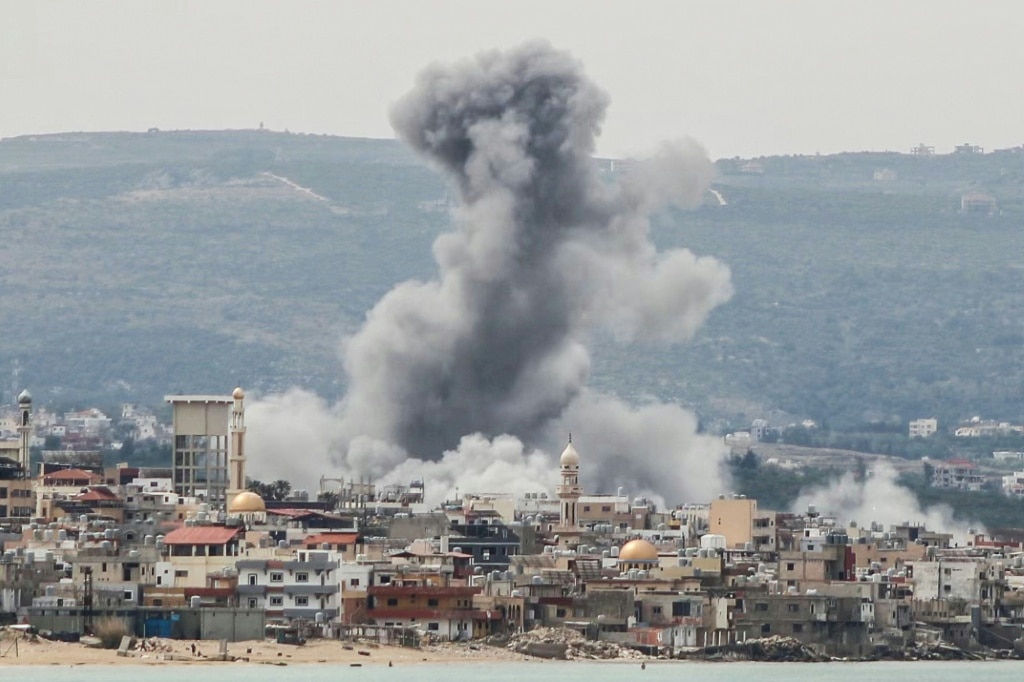
    The stalemate has also kept violence active on the Lebanese front of the conflict, where Israeli strikes continued to claim lives in southern Lebanon Tuesday even in spite of the ceasefire agreement. Israel has ramped up attacks against Iran-backed Hezbollah in southern Lebanon since the April 17 truce, with frequent exchanges of fire keeping the border region in chaos. Lebanon’s health ministry reports more than 2,880 people have been killed in the country since it was drawn into the wider conflict on March 2 – 380 of those deaths have occurred since the ceasefire took effect. Hezbollah chief Naim Qassem reaffirmed the group’s stance Tuesday, saying the group’s arsenal would not be on the negotiating table when Lebanese and Israeli representatives meet for a third round of talks this week. Vowing not to surrender regardless of the cost, Qassem said: “We will not abandon the battlefield and we will turn it into hell for Israel.”

  • Kevin Warsh returns to Federal Reserve with ‘regime change’ agenda

    Kevin Warsh returns to Federal Reserve with ‘regime change’ agenda

    The U.S. Senate has confirmed Kevin Warsh to a 14-year term on the Federal Reserve Board of Governors, with a final vote imminent to seat him as the next leader of the world’s most influential central bank. The 56-year-old New York native is set to return to the institution he left a decade ago, bringing with him an ambitious plan to reshape how the Fed operates – even as he navigates unprecedented political pressure from his nominating authority, former President Donald Trump.

    Warsh first joined the Fed’s Board of Governors in 2006, appointed by then-President George W. Bush after stints as a White House economic advisor and a mergers and acquisitions specialist at Morgan Stanley. He served through the 2008 global financial crisis, but stepped down prematurely in 2011, citing sharp disagreements over the central bank’s post-crisis policy direction. In the years since his departure, Warsh built a career on Wall Street, holding board positions at major corporations including shipping giant UPS, and cemented ties to political circles through his family connections: he is married to Jane Lauder, granddaughter of cosmetics icon Estee Lauder, whose father Ronald Lauder is a long-time close associate of Trump.

    Now, as he prepares to take the helm of the Fed, Warsh has laid out a sweeping “regime change” agenda for the central bank, which is mandated by Congress to maintain stable inflation and maximum employment. His proposed reforms include overhauling the data the Fed relies on for policy decisions, eliminating the “forward guidance” communication tool the bank has used for decades to signal future policy shifts to markets, fostering more open debate among policymakers at rate-setting meetings, and shrinking the Fed’s oversize balance sheet to refocus the central bank on interest rate adjustments as its primary policy tool.

    Warsh has repeatedly blamed the persistent post-Covid-19 inflation that has squeezed U.S. households on what he calls “policy errors” made by the Fed in 2021 and 2022, and has echoed longstanding claims from Trump that the central bank has overstepped its mandate and strayed into political territory. Notably, while Warsh was labeled an inflation hawk – a policymaker prioritizing aggressive rate hikes to cool price growth – during his first Fed tenure, he has recently aligned with Trump’s demands for lower interest rates despite still-elevated inflation.

    His appointment comes amid a broader effort by the Trump administration to exert greater control over the traditionally independent central bank. Trump repeatedly attacked Warsh’s predecessor Jerome Powell for refusing to cut rates quickly enough, ultimately opening a misguided criminal probe against the sitting Fed chair, and the administration is currently pushing to remove sitting Fed Governor Lisa Cook from her post. At his Senate confirmation hearing, Warsh sought to ease concerns about political influence, vowing he would not bow to White House pressure. “I am honored the president nominated me for the position and I’ll be an independent actor if confirmed as chairman of the Federal Reserve,” he said, adding he would “absolutely not” act as a puppet for the administration.

    Even so, policy experts warn Warsh will face steep challenges pushing his reform agenda through the Fed’s existing leadership structure. David Wessel, senior fellow at the Brookings Institution, noted that the new chair cannot unilaterally impose his will on the institution, and must build consensus among a board of fellow policymakers with their own policy views. “He is very smooth, and generally good with the people, and that will serve him well in this endeavor as long as he doesn’t move too fast or too radically,” Wessel told Agence France-Presse.

    Columbia University law professor Kathryn Judge added that existing ideological divisions within the Fed will create a “significant challenge” for Warsh. Unlike most incoming Fed chairs, who have sought to build on the policy framework established by their predecessors, Judge noted Warsh is entering the role with explicit plans to chart an entirely new policy course. “I think we really just have to wait and see,” Judge said.

  • Starmer faces endgame as Wes Streeting launches ‘coup’ to beat rivals to the top job

    Starmer faces endgame as Wes Streeting launches ‘coup’ to beat rivals to the top job

    British Prime Minister Keir Starmer is currently fighting to retain his hold on Downing Street, with political insiders widely predicting his premiership could end in a matter of days as rival factions within the Labour Party scramble to position his successor.

    During a Tuesday morning Cabinet meeting held at 10 Downing Street, the embattled prime minister pushed back against growing pressure to step down, telling his senior ministerial team that the Labour Party’s formal leadership challenge process had not yet been activated. “The country expects us to get on with governing. That is what I am doing and what we must do as a Cabinet,” Starmer told attendees, according to accounts of the closed-door meeting.

    But few senior officials in London’s Whitehall government district believe Starmer can cling to power for much longer. His bloc of loyal allies has shrunk rapidly in recent days, and more than 80 Labour MPs spanning every ideological faction of the party have publicly and privately called on him to acknowledge his leadership is finished. The unrest spilled into open revolt on Monday night, when five junior ministerial aides resigned from their government posts in protest of Starmer’s continued tenure.

    With Starmer’s position hanging by a thread, a bitter power struggle has erupted between the centre-right and soft-left wings of the Labour Party over who will take the top job, multiple party sources confirmed to Middle East Eye.

    Health Secretary Wes Streeting, a figure aligned with the party’s centre-right, is moving quickly to force Starmer out before soft-left opponents can organize a coordinated campaign, Labour insiders say. Streeting’s push has already drawn accusations of an undemocratic power grab from left-wing party figures.

    One of the most high-profile potential challengers from the soft left is Greater Manchester Mayor Andy Burnham, who has spent weeks quietly building support for a leadership bid among sitting Labour MPs. Burnham’s path to the premiership faces major structural barriers, however: he currently does not hold a seat in the House of Commons, a requirement for the office of prime minister in the UK.

    To resolve this obstacle, an unnamed Labour MP is reportedly preparing to resign their parliamentary seat to clear a path for Burnham. If the MP steps down, Burnham would need to win a subsequent by-election to enter the Commons before he could launch a formal leadership challenge. A further complication comes from the Green Party, which has indicated it will mount a aggressive left-wing campaign to defeat Burnham in any by-election he contests.

    Another leading soft-left contender is Angela Rayner, Starmer’s former deputy leader, who has positioned herself as a unifying candidate for the party’s progressive wing. Rayner stepped down from the Cabinet last September after revelations she underpaid stamp duty on her £800,000 coastal vacation property. One senior soft-left Labour insider warned Middle East Eye that opposition researchers have compiled damaging information on Rayner that would be released if she takes power, saying “there is a truck load of dirt on Rayner waiting to be unloaded if she becomes PM.” The insider compared Rayner’s potential short-lived premiership to that of Conservative former Prime Minister Liz Truss, who resigned after just 49 days in office.

    Energy Secretary Ed Miliband, another veteran soft-left politician, has been urged by dozens of MPs to launch his own leadership bid, though he has so far declined to comment publicly on his plans. Some party figures have floated the idea of a joint Burnham-Miliband ticket to unify the soft left against Streeting’s faster-moving campaign. The soft left as a whole is working against the clock, as it needs time to organize its base while Streeting pushes for an immediate ousting of Starmer.

    John McDonnell, a veteran left-wing Labour MP and former Shadow Chancellor, publicly condemned Streeting’s maneuver on Tuesday morning via social media, writing that Streeting “has launched coup for fear of a democratic process & whilst candidates are blocked”. Labour Together, the influential centrist think tank that was instrumental in getting Starmer elected Labour leader, is widely understood to be backing Streeting to retain its hold on power after Starmer departs.

    Streeting faces his own major headwinds in a leadership contest, however. He is widely tied to former senior Labour minister Peter Mandelson, a once-powerful party figure who was disgraced earlier this year for his long-standing close personal ties to convicted sex offender and disgraced financier Jeffrey Epstein. Streeting, who has previously been described as a protégé of Mandelson, has struggled to distance himself from the scandal. Most critically, Streeting’s popularity among rank-and-file Labour Party members is far lower than his leading rivals: a recent survey conducted by the progressive think tank Compass found 42 percent of Labour members backed Burnham in a potential leadership race, compared to just 11 percent who supported Streeting.

    For Streeting, that means his only realistic path to power is to force a leadership vote before Burnham can resolve his by-election barrier and gain the ability to contest the leadership.

  • Putin hails Russia’s test launch of a new ballistic missile and calls it the world’s most powerful

    Putin hails Russia’s test launch of a new ballistic missile and calls it the world’s most powerful

    On a Tuesday in Moscow, Russian military officials carried out a successful test launch of the new Sarmat intercontinental ballistic missile (ICBM), a key milestone in the Kremlin’s years-long campaign to modernize its aging nuclear strategic forces. The announcement came just days after President Vladimir Putin claimed that the nearly three-year full-scale conflict in Ukraine was drawing to a close, delivering a high-profile display of Moscow’s nuclear military capabilities to the West.

    Speaking after the test, Putin confirmed that the nuclear-capable Sarmat missile – codenamed “Satan II” by Western defense analysts – will enter official combat service with Russia’s strategic nuclear forces by the end of 2025. The new system is engineered to replace the Soviet-designed Voyevoda ICBM, a decades-old platform that has formed the core of Russia’s land-based nuclear deterrent for generations.

    Putin emphasized the Sarmat’s unprecedented destructive power, describing it as “the most powerful missile in the world.” He noted that the combined explosive yield of the system’s multiple independently targetable reentry vehicles is more than four times greater than that of any comparable ICBM fielded by Western nuclear powers. The missile boasts a maximum range of more than 35,000 kilometers, or 21,700 miles, enabling it to strike targets anywhere on the globe via suborbital flight, and incorporates advanced design features that allow it to penetrate even the most sophisticated prospective Western missile defense networks. Compared to its Soviet-era predecessor, the Sarmat also delivers dramatically improved targeting accuracy, Putin added.

    This test marks the second publicly acknowledged successful test of the Sarmat, after development began back in 2011. Reports indicate the program suffered a major setback in 2024, when a test launch ended in a large accidental explosion at the test site. The Sarmat is one of several next-generation strategic nuclear systems Putin first unveiled in a 2018 address, when he claimed the new weapons would render any U.S.-built missile defense systems completely ineffective.

    The test launch fits into a broader pattern that has played out since Putin ordered the full-scale invasion of Ukraine in February 2022: the Russian leader has repeatedly emphasized his country’s nuclear capabilities to deter Western nations from expanding military and political support for Kyiv. Just three days before the test, Putin oversaw the annual Victory Day military parade on Moscow’s Red Square, marking the 1945 defeat of Nazi Germany in World War II. Notably, the 2025 parade broke with nearly 20 years of tradition by excluding all heavy weapons and armor, a shift widely interpreted as a security measure to reduce vulnerability to Ukrainian cross-border attacks.

    Since Putin first took office in 2000, upgrading Russia’s Soviet-era nuclear triad – the three-pronged force of land-based ICBMs, nuclear-armed submarine-launched missiles, and nuclear-capable strategic bombers – has been a core national security priority. To date, the Kremlin has overseen the deployment of hundreds of new land-based ICBMs, commissioned new nuclear-powered ballistic missile submarines, and completed modernization work on its fleet of strategic bombers. Beyond the Sarmat, multiple other next-generation nuclear systems have reached deployment or are in late-stage development:
    – The Avangard hypersonic glide vehicle, capable of reaching speeds up to 27 times the speed of sound, has already entered operational service.
    – The new Oreshnik intermediate-range ballistic missile, which can be fitted with either conventional or nuclear warheads, has already been used twice in conventional strikes against targets in Ukraine. With a maximum range of 5,000 kilometers (3,100 miles), the system can reach any target across the entire European continent.
    – Development of the Poseidon, a nuclear-powered underwater drone designed to carry a massive thermonuclear warhead, is in its final stages. The system is engineered to detonate offshore near enemy coastal cities, generating a catastrophic radioactive tsunami that would render large swathes of coastline uninhabitable for decades.
    – The Burevestnik nuclear-powered cruise missile, also in late-stage development, boasts effectively unlimited range thanks to its miniature atomic reactor propulsion system. The design allows the missile to loiter for days outside enemy air defenses, bypassing traditional defensive networks to strike targets from unexpected directions.

    Putin framed the development of these new systems as a forced response to U.S. policy dating back to 2001, when Washington withdrew from the Anti-Ballistic Missile Treaty, a Cold War-era agreement between the U.S. and Soviet Union that limited the deployment of national missile defense systems. Russian military strategists have long warned that a U.S. national missile shield could create an incentive for Washington to launch a pre-emptive nuclear strike against Russia, counting on the shield to intercept the small number of Russian warheads that would survive an initial first strike.

    “We were forced to consider ensuring our strategic security in the face of the new reality and the need to maintain a strategic balance of power and parity,” Putin stated Tuesday.

    Russia’s ongoing nuclear modernization push has already triggered reciprocal action from the United States, which has launched a costly multi-billion dollar upgrade of its own nuclear arsenal. The move comes at a time of historic erosion in bilateral nuclear arms control: the last remaining binding treaty limiting the size of the two countries’ nuclear arsenals, New START, expired in February 2025. For the first time in more than 50 years, there are no legal caps on the world’s two largest nuclear stockpiles, fueling widespread international concern that the world is now entering an unconstrained new nuclear arms race.

  • Ethiopian marathon runner Melese dies aged 36

    Ethiopian marathon runner Melese dies aged 36

    The Ethiopian Athletics Federation has confirmed the passing of decorated long-distance runner Yebrgual Melese, who died at 36 following a sudden medical emergency during a routine training session this Tuesday. The multiple international marathon champion was in active preparation for an upcoming race scheduled to take place in Ottawa on May 24 when the unexpected incident unfolded.

    Local media reports confirm that Melese suffered the acute health crisis while training in Addis Ababa, Ethiopia’s capital. Emergency personnel transported her quickly to a nearby medical facility, but clinical teams were unable to save her life despite all resuscitation and treatment efforts. No additional details surrounding the exact cause of her death have been released to the public as of this reporting.

    In an official statement released following the announcement of Melese’s passing, the Ethiopian Athletics Federation shared its profound grief over the loss of the celebrated athlete. “We express our deep sorrow over the sudden passing of this heroic athlete and offer our sincerest condolences to her family, friends and fans across the globe,” the statement read.

    Melese built a legendary competitive career spanning more than a decade, claiming prestigious marathon titles in major global cities including Houston, Prague, and Shanghai. Her 2018 victory at the Shanghai Marathon remains one of her most iconic career wins. She notched her strongest performance in the World Marathon Majors circuit in 2015 — the same year she secured wins in Houston and Prague — when she crossed the finish line in second place at the Chicago Marathon. Her most recent appearance in competitive racing came at a Beijing marathon in May 2023, where she was unable to complete the full distance.