博客

  • Thief jailed after stealing unreleased Beyoncé music from car

    Thief jailed after stealing unreleased Beyoncé music from car

    A 41-year-old Georgia man has been handed a two-year prison sentence for a random car break-in that resulted in the theft of hard drives holding unreleased Beyoncé music, just days before the global superstar launched a multi-night stop of her hit Cowboy Carter tour in Atlanta.

    Kelvin Evans pleaded guilty last year to charges of entering an automobile and criminal trespass, with a Fulton County judge adding three years of probation to his sentence on top of the prison term. As part of the court ruling, Evans is also barred from contacting the victims of the theft and is prohibited from entering the parking garage where the crime took place.

    The burglary unfolded on July 8, 2025, when Evans targeted a Jeep Wagoneer rented by two members of Beyoncé’s touring team: choreographer Christopher Grant and dancer Diandre Blue. When the pair returned to their vehicle after a pre-tour work stop, they found the rear window smashed and all their luggage stolen. Investigators have never recovered the hard drives or any of the other stolen property, which included two MacBook laptops, a pair of Apple headphones, high-end clothing and accessories, and devices that carried personal sensitive information belonging to Beyoncé herself.

    Court proceedings confirm Evans struck a plea deal with prosecutors on Tuesday, just ahead of his scheduled trial that was set to begin this week. Jury selection had already gotten underway on Monday, where prosecutors presented key surveillance evidence tying Evans to the crime. The footage first showed a red Hyundai, linked to Evans, pulling alongside the rental Jeep in a downtown Atlanta parking garage. A second surveillance clip captured the same vehicle arriving at a nearby apartment building, with Evans carrying the suitcases confirmed to belong to Grant and Blue.

    Prosecutors added that tracking technology built into the stolen MacBooks also led law enforcement directly to the apartment address captured in the second video, solidifying the case against Evans. Evans has been held in county jail since his arrest in August 2025, meaning that time served will be applied to his new sentence. His defense attorney told the court during sentencing that Evans is seeking to rebuild his life after his release, telling the judge his client “is hoping for a future where he can make money legitimately and be part of society like the rest of us.”

    The theft sent shockwaves through the Beyoncé fandom ahead of the singer’s four-night tour run at Atlanta’s Mercedes-Benz Stadium, with fans speculating for months about what unreleased content was lost in the burglary. To date, none of the stolen material has leaked online, and no public comment has been issued by Beyoncé’s team regarding the final sentencing.

  • Brazil says the EU has moved to block its animal product exports starting from September

    Brazil says the EU has moved to block its animal product exports starting from September

    Just days after the long-negotiated EU-Mercosur free trade agreement entered provisional force, a new trade dispute has emerged between Brazil and the European Union, after Brasilia confirmed Tuesday that Brussels will implement a full block on Brazilian animal product imports starting this September.

    The landmark transatlantic trade pact, which covers a combined $22 trillion market and includes Mercosur members Brazil, Argentina, Paraguay and Uruguay, was formally signed in January 2025 and entered provisional application on May 1. European Commission President Ursula von der Leyen pushed forward the provisional enactment, moving ahead of full ratification and sidestepping the European Parliament, where the agreement has faced fierce criticism from multiple blocs of lawmakers. The deal is currently being reviewed by the European Court of Justice, and will be scrapped entirely if the court rules against its legal standing.

    From its earliest stages of negotiation, the trade agreement has faced staunch pushback from European farmers and environmental advocacy groups. Opponents cite a range of concerns including unfair competitive pressure from lower-cost South American imports, risks to the livelihoods of EU agricultural producers, downward pressure on European food prices, and lower environmental and food safety standards among Mercosur exporting nations.

    Brazil’s Ministry of Agriculture said in an official statement Tuesday that the EU’s import ban came as a complete surprise to Brazilian authorities, and that the federal government will launch immediate diplomatic efforts to reverse the decision. Per Brazilian media reporting, the EU has justified the new restriction by stating it has not received sufficient documentation proving that Brazilian animal products are free of growth-promoting antimicrobial substances, a common livestock feed additive banned under EU food safety rules.

    In a next step to resolve the dispute, Brazil’s head of mission to the European Union will hold a formal meeting with EU agricultural regulators on Wednesday to demand clarity on the new restriction and push back on the ban, the agriculture ministry confirmed.

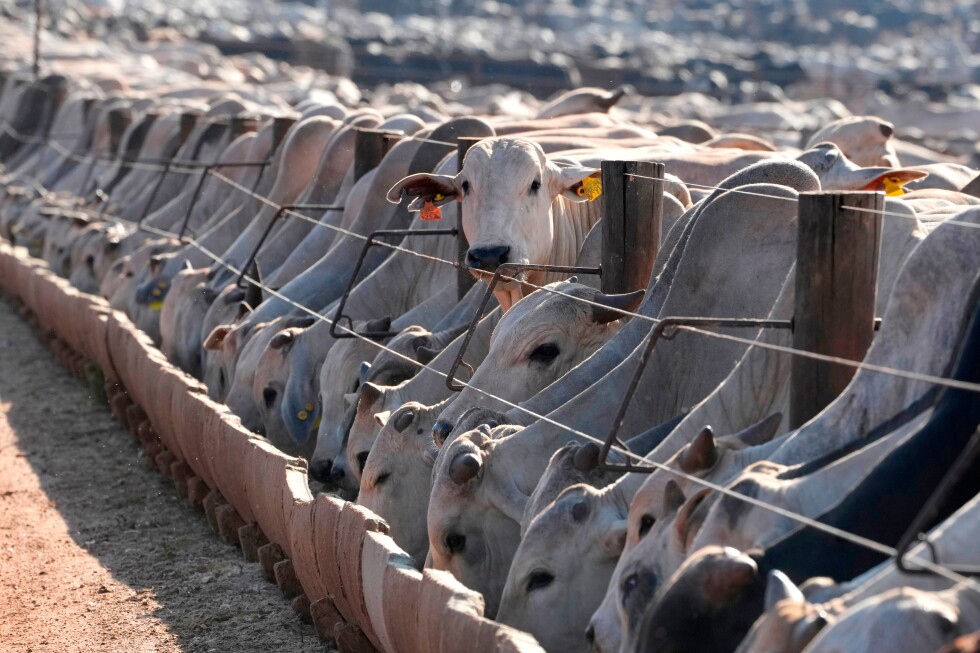
    Data from the Brazilian Animal Product Industry Association shows that EU member states ranked as the third-largest export market for Brazilian beef in 2025, trailing only the United States and China. The new import block is expected to deal a significant blow to Brazilian beef producers who had anticipated expanded market access under the new trade deal.

  • Australia has some of the world’s costliest homes. Will scrapping tax breaks help?

    Australia has some of the world’s costliest homes. Will scrapping tax breaks help?

    Thirteen-year-old Adelaide student Sebastian Muñoz-Najar has not yet reached his teens, cannot legally hold a full-time job, and is years away from learning to drive. But even this primary school graduate is already consumed by despair over one critical life question: will he ever be able to afford to own a home in his own country?

    Against a backdrop of non-stop headlines about Australia’s deepening national housing affordability crisis, Sebastian began running the numbers himself using little more than a Google search and a basic calculator. What he found alarmed him: if current trends of skyrocketing property prices and stagnant wage growth hold steady, the average Adelaide home will cost 17 times his projected annual income by the time he completes university.

    Australia’s housing affordability emergency is no longer a contested political issue – across the political spectrum, policymakers and the public agree the country is in crisis. What has divided the nation and gridlocked legislative action for more than a decade, however, is how to fix it. Now, the federal government is moving forward with a polarizing set of reforms: eliminating long-standing, lucrative tax breaks for property investors, a change it argues will begin to address the intergenerational inequality that has come to define Australia’s housing market.

    For younger Australians like Sebastian, the promise of the “Australian Dream” – the idea that hard work guarantees the reward of home ownership – has already been broken. They argue they have been locked out of the same opportunities their parents took for granted, and hope the reforms will rebalance a housing market tilted heavily in favor of wealthy investors. But critics warn the changes could choke off the very investment the country needs to build much-needed new housing, push rental prices even higher for already struggling tenants, and unfairly erode the life savings of ordinary Australians who built wealth through property investment.

    Australia is now home to some of the least affordable major cities on the planet. Today, the average Australian property costs nearly 10 times the median annual household income – a four-fold increase from where it stood 25 years ago. Over that same period, national average rental prices have doubled. The root of the crisis is a simple supply and demand imbalance: Australia does not have nearly enough housing to accommodate its fast-growing population. Decades of underinvestment in public social housing, chronically slow residential construction, and restrictive zoning laws that block new development in high-demand urban areas have all combined to create the current crunch.

    But many analysts argue that generous tax breaks for property investors have significantly exacerbated the problem. The two most high-profile policies at the center of the debate are negative gearing, which allows investment property owners to deduct any losses from their taxable income, and the 50% capital gains tax (CGT) discount, which halves the tax owed on profits from selling an investment property. Together, these policies have turned residential housing into an extremely attractive speculative asset, incentivizing mass buying and selling of properties for profit rather than for use as homes. Analysts note these policies were rolled out at the turn of the millennium, marking a clear turning point after which house prices began to outpace wage growth permanently.

    These tax arrangements remain fiercely defended by existing homeowners, who benefit from rising property values that grow their personal wealth, as well as investor groups and real estate industry bodies that argue changes will cut into profits and disrupt the market’s ability to deliver new supply. The group bearing the worst of the crisis is young people, who are caught in a vicious cycle: saving for ever-larger down payments while paying soaring rents, only to face decades of large mortgage repayments on smaller properties located far from city center job markets.

    Sebastian’s parents had long harbored quiet concerns about their children’s future housing prospects, but were shocked to learn the issue was already weighing on their 13-year-old son’s mind. “The first thought I had was you shouldn’t have to worry about this – you should be worrying about homework, friends, school,” Sebastian’s father Ed told the BBC. “The second was: you don’t have to just accept this.”

    Together, the pair turned their anxiety into action: they built a website publishing Sebastian’s calculations and launched a public petition calling for reform to the CGT discount and negative gearing, which has now collected thousands of signatures from supporters across the country. “We hope this would remove the incentive to use houses as investments and bring houses back to being places to live,” Sebastian says.

    This is not the first time Australian federal politicians have pushed for these changes. The center-left Labor Party, which now forms government, first proposed reforms to negative gearing and CGT in the 2016 and 2019 federal elections. It lost both campaigns, with many political analysts blaming the housing reform proposals for the defeat. But much has changed since 2019: the housing crisis has deepened dramatically, pushing its impact up into the middle class, while demographic shifts have put younger, disenfranchised millennial and Generation Z voters in a much larger share of the national electorate. Many older voters are also now seeing the crisis impact their own children and grandchildren, shifting their views on the need for change.

    “It’s like a slow-boiling frog – this has been building for more than 20 years, but it has now hit crisis point,” Danielle Wood, chair of the Productivity Commission, the Australian government’s independent economic advisory body, told the BBC. “And I think these tax changes have probably become a bit symbolic in thinking about what’s created this problem.”

    For older Australians who have already built property wealth, many see the proposed reforms as an unfair political attack. Retired Melbourne couple Christine and Cliff Hill, who own their own home plus three investment properties, reject the complaints from younger generations. Cliff, 64, says he and his wife were able to afford their first home by making sacrifices: moving to an outer suburb, cutting every unnecessary expense, and skipping luxury holidays. “You can’t go complaining that houses are $1m because they aren’t. They’re $500,000 or $600,000 but the young folks don’t want to live 35km from Melbourne,” he says. The couple profited heavily from the current tax system when they sold a fourth investment property last year, earning a $348,000 profit they would have paid half the tax on under existing rules. They argue the government’s reforms will lead to disaster: investors will either raise rents or sell off their properties, and even if there is a temporary bump in supply, long-term demand will still outstrip supply, leaving homes just as unaffordable for first-time buyers.

    “The government are going after the inter-generational gap that they keep talking about – and being a baby boomer, I’m really over that,” Christine says.

    But the current Labor government believes public opinion has shifted enough to make reform politically viable this time around. One early indicator of shifting public attitudes came in 2024, when Prime Minister Anthony Albanese faced widespread public backlash over his purchase of a multi-million-dollar clifftop holiday home amid the worsening affordability crisis. In its first budget following its landmark 2025 election win, passed as public anger over inaction on housing boosted support for minor progressive parties, the government outlined its planned changes: it will replace the fixed 50% CGT discount with an inflation-adjusted markdown, and restrict negative gearing tax benefits to newly constructed properties only.

    Crucially, the changes will be grandfathered, meaning they will only apply to investment properties purchased after the budget passes; existing investors will keep their current tax benefits permanently. Even supporters of the reforms, however, acknowledge the tax changes alone will not solve the crisis. Experts warn the reforms will do little to address the core issue: the national shortage of housing supply. The tax changes are projected to cause a small drop in property prices and free up more market space for first-time buyers by reducing investor competition, but they are not a silver bullet.

    “They’re not a panacea on house prices,” Wood says. Critics on the right have increasingly shifted blame for the crisis to Australia’s high migration intake, with the conservative Coalition opposition and right-wing populist party One Nation both calling for deep cuts to migration to reduce housing demand. While migration does contribute to population growth, experts say it is a minor factor in the supply shortage, and economists warn cutting migration would have severe negative knock-on effects for Australia’s labor force and overall economy.

    Wood says the real solution is far simpler: “We just need to make it easier and faster to build.” While construction regulation is necessary to protect public safety, the current system requires dozens of overlapping approvals and layers of bureaucracy that have slowed average build times by 40% over the past 15 years.

    For Sebastian, the tax reforms feel like a small step in the right direction, but he remains deeply skeptical that policymakers truly have the interests of young people at heart. Many sitting politicians own investment properties themselves, and he argues the grandfathering clause was explicitly designed to protect their own wealth. “Young people, they feel let down… disappointed in policymakers for allowing this to happen. And they also feel just sad that the ‘Australian Dream’ of owning a house is unattainable for them.”

  • UN expands Nairobi hub to boost Global South representation

    UN expands Nairobi hub to boost Global South representation

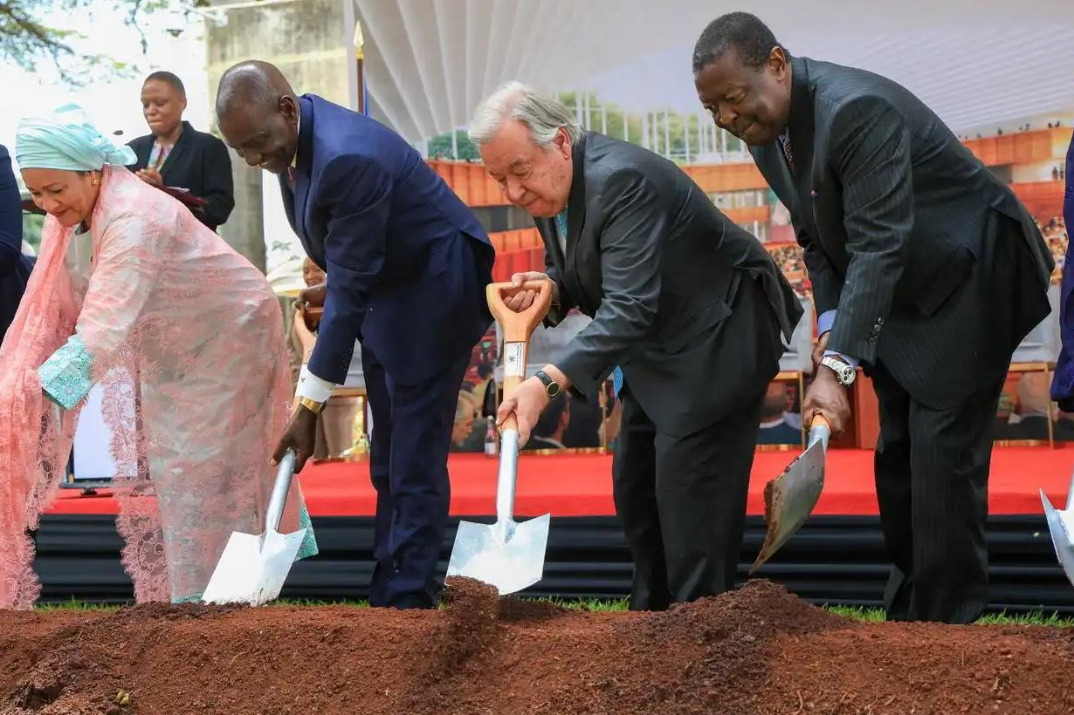
    On a symbolic Monday in Nairobi, Kenya, the United Nations launched construction of a cutting-edge new conference complex at its regional headquarters, marking a $340 million strategic investment that will reshape the body’s global footprint and amplify the voice of developing nations in global governance. Once completed, the redevelopment project — which includes a 1,600-seat assembly hall and climate-resilient office infrastructure — will catapult Nairobi into the ranks of the UN’s largest diplomatic hubs, bringing multilateral decision-making closer to the regions that are increasingly setting the global agenda on climate action, sustainable development, and peacebuilding.

    The ground-breaking ceremony was co-led by UN Secretary-General António Guterres and Kenyan President William Ruto, who highlighted the transformative scope of the expansion: the project will grow the hub’s total delegate capacity from 2,000 to 9,000, and increase the number of available meeting rooms from 14 to 30. When finished, Nairobi will become the UN’s third-largest duty station by conferencing scale, outranking Vienna and trailing only New York and Geneva.

    Guterres emphasized that the expansion is far more than an infrastructure upgrade — it is a tangible commitment to reforming global governance to better reflect shifting global realities. “Nairobi is neither a satellite nor an outpost. It is a pillar — the only United Nations headquarters in Africa and in the Global South,” Guterres told attendees. He added that the project embodies the UN’s recognition that Africa is not just a region facing challenges, but a core driver of innovative solutions and a critical moral voice in the global pursuit of peace, security, sustainable development, and universal human rights. The Secretary-General also noted that Nairobi’s strategic location and cost-effective operating environment make it an ideal site for broader UN reform, with additional organizational functions set to be relocated to the Kenyan capital in coming years to boost operational efficiency and cut overhead costs.

    Aligned with the UN’s global climate goals, the new complex is built around sustainability and universal accessibility. The completed office blocks already operate as the UN’s first net-zero carbon buildings, powered entirely by on-site solar installations, with the full campus targeted to achieve full energy neutrality by 2029. The investment also dovetails with Kenya’s long-running effort to position Nairobi as Africa’s preeminent hub for diplomacy, climate policy, and international development cooperation.

    President Ruto noted that the upgrade comes at a critical moment for multilateralism, which faces growing strains from deepening geopolitical divisions and widening global economic inequality. “As the only UN headquarters in the Global South, Nairobi stands as a powerful symbol that the United Nations truly belongs to all the peoples of the world,” Ruto said, committing the Kenyan government to continued investment in supporting infrastructure — from expanded road networks and water systems to enhanced security and environmental restoration across the capital — to accommodate the UN’s growing presence.

    Currently, the Nairobi UN campus hosts more than 70 UN agencies, funds, and programs, with over 4,000 personnel based on the compound and nearly 6,000 total UN staff working across Kenya. Diplomats from across the Global South welcomed the expansion as a long-overdue correction to historical underrepresentation. William McDonnell, Barbados’ permanent representative to the UN in Kenya, noted that smaller and developing nations have long been sidelined in major global negotiations held in Northern hemisphere hubs. The new complex will provide a modern, fully accessible venue on par with UN facilities in New York, Geneva and Vienna, creating a more inclusive platform for Global South nations to shape global outcomes. “With the development of this campus and conferencing facility, this trend should — and hopefully will — change,” McDonnell said.

    Kenya’s Prime Cabinet Secretary and Foreign Affairs Cabinet Secretary Musalia Mudavadi echoed that sentiment, noting the project reflects both Kenya’s enduring commitment to multilateral cooperation and Africa’s rising influence within the UN system. “Kenya remains committed to working closely with all member states and the leadership of the United Nations to ensure that the UN system becomes more efficient, effective, responsive, and impactful in improving the lives of all people, especially the most vulnerable populations,” Mudavadi said.

  • Trump Justice Department subpoenas news outlets over war coverage

    Trump Justice Department subpoenas news outlets over war coverage

    A sweeping escalation of tensions between the former president and the American press has emerged, with multiple leading U.S. news organizations confirming they have been subpoenaed by the Department of Justice at the explicit urging of former President Donald Trump, who has waged a relentless campaign against critical coverage of his Iran conflict.

    The Wall Street Journal, one of the nation’s most prominent business and general-interest news publications, broke the story Monday, confirming it received a grand jury subpoena dated March 4 seeking internal reporter records. The demand comes as Trump pressures Attorney General Todd Blanche—his former personal attorney, who now leads the DOJ—to launch investigations into leaks of sensitive information related to the ongoing Iran war.

    Citing an anonymous senior administration official, the Journal reported that Blanche personally pledged to secure subpoenas specifically targeting the work records of reporters who have reported on sensitive national security topics tied to the conflict. In one high-level meeting, the outlet added, Trump handed Blanche a thick stack of news articles that the president and other top officials claimed undermined U.S. national security. Scrawled on a sticky note attached to the stack was a single word: “treason.”

    Trump’s aggression toward press coverage of the Iran war is not a new development. The president and his top cabinet members, including Pentagon Secretary Pete Hegseth, have repeatedly publicly condemned media coverage of the conflict and threatened journalists who publish classified information—a routine practice for national security reporting that is protected under longstanding press freedom precedents.

    As early as March of this year, Trump raised the prospect of bringing treason charges against journalists he accused of spreading what he called “false information” about the Iran war. The following month, he doubled down, stating explicitly that he would push to imprison reporters who covered the downing of a U.S. fighter jet by Iranian forces and the subsequent rescue operation for the plane’s crew.

    The subpoena issued to the Wall Street Journal specifically ties back to a February 23 report that revealed Chairman of the Joint Chiefs of Staff General Dan Caine and other senior Pentagon leaders had privately warned Trump about the severe risks of a prolonged military campaign against Iran. Multiple other major outlets, including Axios and The Washington Post, published matching reports on the same day. Five days after that reporting, on February 28, Trump officially launched the full-scale military offensive against Iran.

    In an official statement Monday, Ashok Sinha, chief communications officer for Dow Jones, the Wall Street Journal’s parent company, denounced the action as a direct attack on constitutionally protected journalistic work. “The government’s subpoenas to The Wall Street Journal and our reporters represent an attack on constitutionally protected newsgathering,” Sinha said. “We will vigorously oppose this effort to stifle and intimidate essential reporting.”

    CNN corroborated the Journal’s reporting Monday, adding that multiple other news outlets beyond the Journal have also received similar subpoenas over the past several months. However, the network noted that many of these targeted organizations have opted not to comment publicly on the orders to date, a choice that has drawn sharp criticism from press freedom advocates and independent journalists.

    Scott Stedman, an investigative journalist with independent outlet The Newsground, slammed the leadership of silent targeted organizations for what he called cowardice in the face of an open assault on press liberty. “The president uses the DOJ to target your news organization with subpoenas because he wants to out your sources and you don’t even have the guts to say anything,” Stedman wrote.

  • Mossad chief opposes Netanyahu’s successor pick: Israeli press review

    Mossad chief opposes Netanyahu’s successor pick: Israeli press review

    A series of contentious developments emerged from Israel this week, spanning intelligence leadership, national aviation infrastructure, international cultural participation, and occupied territory policy, drawing sharp criticism and urgent warnings from across sectors.

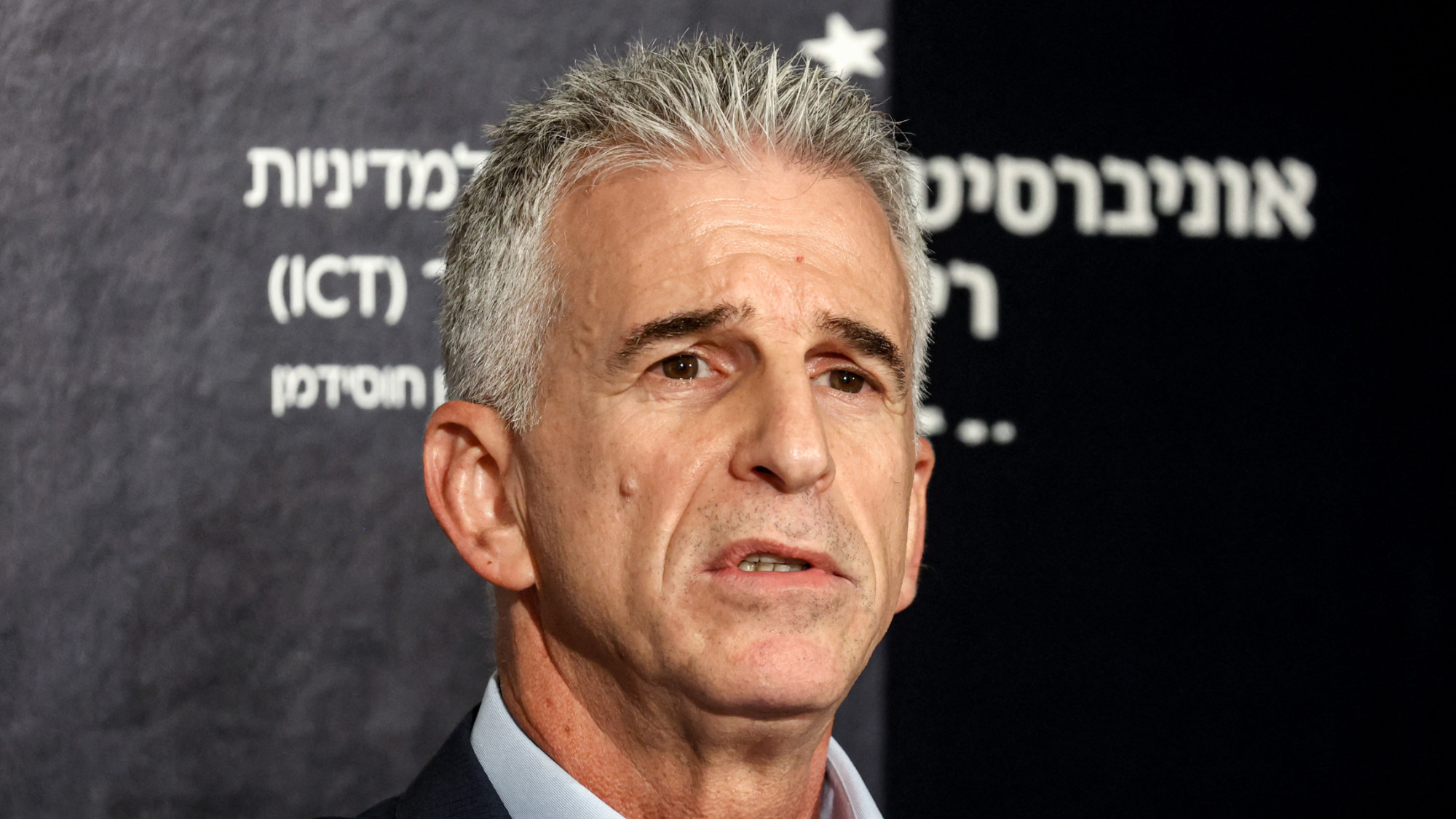
    First, outgoing Mossad Director David Barnea has delivered a formal rebuke of Prime Minister Benjamin Netanyahu’s pick to replace him, Roman Gofman, arguing the nominee is categorically unfit to lead the country’s premier intelligence agency. In a four-page legal brief submitted to Israel’s Supreme Court ahead of a Tuesday hearing on the legality of Gofman’s appointment, Barnea laid out damning claims about Gofman’s ethical conduct. The nomination, announced last month, immediately ignited public backlash, as Gofman – currently Netanyahu’s military secretary – stands accused of exploiting a 17-year-old Israeli citizen for an intelligence operation. After the teenager was arrested by hostile forces during the mission, Gofman allegedly abandoned and disowned the operative. Citing this incident, Barnea wrote that Gofman “does not meet the standards of integrity required for this role” and warned his leadership would put all Mossad personnel at grave risk. Barnea emphasized that the role of Mossad chief demands uncompromising personal ethics, and Gofman’s history of poor judgment reveals a persistent character flaw that could cause irreversible damage to the agency. “Within an organization that operates outside regular legal constraints and public oversight – a structure unique among Western intelligence services – such a flaw poses unacceptable risk,” Barnea added.

    Separately, a senior Israeli aviation official has issued a stark warning that the country’s primary international gateway, Ben Gurion Airport, has been effectively converted into an auxiliary American military base since the outbreak of the war with Iran, with severe consequences for civilian travel and the national economy. In a formal letter addressed to Transport Minister Miri Regev, Israel Civil Aviation Authority Director-General Shmuel Zakay warned that the facility now operates largely as a military airfield, with only minimal civilian air activity remaining. Zakay warned that unless the overcrowding from U.S. military deployments is addressed immediately, Israeli travelers will face sustained, sharp increases in flight costs. He added that Israel’s defense establishment has consistently failed to grasp the severity of the crisis, noting that “under the current circumstances, the State of Israel has no international airport capable of operating efficiently.” Business daily Calcalist, which first reported the letter, noted the problem is compounded by war-driven spikes in aviation fuel costs, and the fact that Israeli commercial carriers have been forced to park dozens of civilian aircraft at foreign airports to free up space for U.S. military jets, adding millions in extra operational costs. Last month, Calcalist reported that offsite aircraft parking alone has cost Israeli airlines more than 60 million shekels in recent months. Only after weeks of pressure from the Transport Ministry did U.S. and Israeli officials agree to reposition just 12 U.S. military aircraft out of Ben Gurion. Data from Israeli business publication TheMarker underscores the scale of the crisis: just 24 airlines currently operate regular service to Israel, with three domestic carriers accounting for 89% of all airport traffic in April 2024. Total passenger volume plummeted 74% compared to the same period last year.

    In a separate development related to international cultural participation, the European Broadcasting Union (EBU) has held internal discussions about reassigning Israel from the main Eurovision Song Contest to the newly launched Eurovision Asia competition, Israeli news outlet Ynet reported Monday. According to sources familiar with the talks, the EBU has already surveyed current and prospective participating countries in the upcoming Asian contest to gauge how they would react to Israel’s inclusion in the lineup. The proposal has already faced “partial opposition” from a number of Asian participating nations, including several Muslim-majority countries that are set to take part in the inaugural event. Eurovision Asia will hold its first edition in Bangkok this November, with 10 competing countries confirmed so far – including Malaysia and Bangladesh, both of which have no diplomatic relations with Israel. Ynet reports that Israeli officials have not yet been formally notified of the proposal, which would ultimately require Israel’s consent to move forward. A source close to the discussions told Ynet that “Israel is geographically located in Asia, which is why the issue was examined,” adding that “no final decisions have been made yet, but this option is actively on the table.” Israel’s participation in the 2024 main Eurovision contest has already sparked massive global controversy over Israel’s military campaign in Gaza, with five participating countries – the Netherlands, Spain, Slovenia, Ireland and Iceland – announcing full boycotts of this year’s event in protest.

    Finally, the Israeli parliament has advanced controversial legislation that would create a new state-run antiquities authority with full jurisdiction over all archaeological and heritage sites across the occupied West Bank. Israeli newspaper Haaretz reported Tuesday that the bill passed its preliminary parliamentary vote and will now move to the Knesset committee stage for further debate and amendments. If passed, the new body would take full control of all heritage, archaeology and antiquity matters from the Israeli army’s Civil Administration, which currently manages the sector in the occupied territory. The authority would gain powers to approve and conduct excavations, manage heritage sites, oversee all archaeological work, and enforce relevant laws across the entire West Bank – including Areas A and B, which are nominally under the administrative control of the Palestinian Authority. The legislation frames its purpose as streamlining management, reducing unregulated looting and damage to archaeological sites, and establishing direct state responsibility for heritage sites in what Israel refers to as Judea and Samaria. However, Emek Shaveh, an Israeli non-governmental organization that advocates for fair cultural heritage rights, has harshly condemned the bill, arguing it does nothing to protect antiquities and instead weaponizes cultural heritage as a tool of policy against the Palestinian population to advance Israel’s de facto annexation of the West Bank. In testimony to the Knesset earlier this year, the group warned the law puts Palestinian communities located near archaeological sites at direct risk of displacement and seizure, and that expanded state oversight of heritage sites “opens the door wide to the advancement of racist and destructive policies.” Emek Shaveh also emphasized that the legislation violates international law, existing diplomatic agreements Israel is a signatory to, and global professional ethical standards for archaeological management.

  • ‘Cultural genocide’: Palestinian musicians urge Eurovision boycott over Israel’s inclusion

    ‘Cultural genocide’: Palestinian musicians urge Eurovision boycott over Israel’s inclusion

    As the first semi-finals of the 2026 Eurovision Song Contest kicked off, Palestinian artists from the besieged Gaza Strip and the occupied West Bank launched a coordinated call for a widespread boycott of the global competition, condemning its decision to allow Israel’s participation amid ongoing military operations that have devastated Palestinian communities. Spearheaded under the campaign banner #VoteJustice4Palestine, the movement calls on boycotters to amplify *The Drone Song* online, a viral work recorded by Gaza-based musician Ahmed Abu Amsha that has become an unofficial anthem of Palestinian cultural resilience.

  • Lamine Yamal waves Palestine flag during Barcelona title celebrations

    Lamine Yamal waves Palestine flag during Barcelona title celebrations

    Barcelona’s 2024-2025 La Liga title celebrations took an unexpectedly political turn on Monday, when 18-year-old football phenom Lamine Yamal brought a large Palestinian flag onto the team’s open-top victory parade, drawing widespread acclaim across social media platforms for the high-profile act of solidarity. The moment came just 24 hours after Barcelona sealed their latest domestic championship with a decisive 2-0 win over bitter El Clasico rivals Real Madrid, drawing tens of thousands of jubilant fans into the streets of the Catalan capital to celebrate with the squad.

    Yamal, one of the sport’s most globally recognized young talents, is no stranger to using his massive public platform to speak out against injustice. Last month, he openly condemned anti-Muslim chanting from Spanish supporters during a national team friendly match against Egypt. In a candid public statement released after the match, Yamal, who is Muslim, said the chant “Whoever doesn’t jump is a Muslim” was unacceptable. “I know it was aimed at the opposing team and wasn’t something personal against me, but as a Muslim, this still counts as disrespectful and unacceptable behaviour,” he said at the time. “Football was created for enjoyment and cheering, not for insulting people because of who they are or what they believe in.”

    Yamal’s gesture also is not unique among Spanish footballers in recent weeks. Just seven days prior, former Barcelona winger Ilias Akhomach unfurled a Palestinian flag during title celebrations for his current club Rayo Vallecano, after the side secured a spot in the UEFA Conference League final with a semi-final win over France’s Strasbourg.

    Catalonia, and Barcelona in particular, has long been a hub for pro-Palestine activism in Spain. The city has served as the departure point for international aid flotillas organized to break the Israeli military blockade of the Gaza Strip, a role that has cemented the region’s reputation as a center of pro-Palestine organizing in Europe.

    The act of solidarity from Yamal also aligns with the Spanish federal government’s longstanding, high-profile stance on the Israeli-Palestinian conflict, which has put Madrid at odds with both Israel and the United States in recent months. Spain is one of the only European governments to have repeatedly and openly condemned Israel’s military campaign in Gaza, officially labeling the actions a genocide. In 2024, Madrid became one of the first Western governments to formally recognize Palestinian statehood, a decision that prompted Israel to immediately recall its ambassador from Madrid. By 2025, the government expanded its actions, banning all Israeli ships and aircraft carrying weapons bound for Israel from accessing Spanish ports and airspace, as part of a nine-part package of restrictive measures against Israel.

    Diplomatic relations between the two nations have been frozen since late 2024, when Spain recalled its ambassador to Israel for consultations amid the escalating row. Israel has not had an ambassador posted to Madrid since 2024, leaving bilateral ties at their lowest point in decades. More recently, tensions have flared again over the joint US-Israeli military campaign against Iran. Spanish Prime Minister Pedro Sanchez has publicly labeled the military strikes illegal under international law, and refused the United States’ request to access jointly operated Spanish military bases in southern Spain for operations linked to the Iran campaign.

    That decision triggered an angry public response from US President Donald Trump, who accused Spain of acting in an “unfriendly” manner and threatened to impose sweeping trade restrictions on the country in retaliation. Despite the pressure, Sanchez has stood firm on his position, maintaining Spain’s commitment to upholding international law across the Middle East.

  • Iranian press review: Unexploded US Tomahawks used to develop missile technology

    Iranian press review: Unexploded US Tomahawks used to develop missile technology

    In the aftermath of the 40-day US-Israeli war on Iran, four interconnected developments have emerged from inside the country, painting a complex picture of military adaptation, domestic unrest, political division, and regional strategic risk, according to an Iranian press review compiled by Middle East Eye. None of the reporting included in this digest has been independently verified by MEE.

    First, Iran’s military is working to reverse-engineer captured US-made Tomahawk missiles to replicate their advanced technology, Iran’s semi-official Mehr News Agency has claimed. The report states that multiple Tomahawk missiles fired during the war were either intercepted and downed by Iranian air defenses or failed to detonate on impact, leaving large portions of the weapons intact for analysis. Mehr added that some missiles failed to explode either due to faulty detonator systems or because Iranian electronic warfare units disrupted their guidance and detonation mechanisms. Iranian military engineers are now studying these intact components to develop the country’s own indigenous long-range missile systems. “In the 40-day war, Iran’s strategy switched to gaining knowledge from the battlefield. Every Tomahawk missile that landed and did not explode was an advanced textbook for Iranian engineers,” the agency reported. While Mehr’s claim has not been confirmed by independent third-party sources, Iranian officials have previously confirmed that they recovered and neutralized dozens of unused American and Israeli munitions in the weeks after a ceasefire took effect on April 7. On the final day of the conflict, Iran’s ILNA news agency released a public photograph of an unexploded missile that struck a section of Tehran’s iconic Grand Bazaar, identifying the weapon as a US-built Tomahawk. This approach to weapons development is not new for Iran: the country has been locked out of international arms markets under sweeping global sanctions since 1979, and for decades it has relied on reverse-engineering captured foreign weapons to build its domestic missile and drone programs.

    Second, conflicting official statements have left thousands of Iranians displaced by US-Israeli airstrikes on Tehran uncertain about their long-term temporary housing. When the war first began, Tehran’s municipal government announced that any resident whose home was destroyed or rendered uninhabitable in attacks would be offered free accommodation in city-owned hotels until they could rebuild or secure permanent new housing. But on Saturday, Iran’s reformist Etemad daily newspaper reported that dozens of displaced households currently staying in capital city hotels had already received eviction notices ordering them to leave by the end of the week. One displaced resident, whose apartment suffered catastrophic damage in an airstrike explosion, told the outlet that they had nowhere else to go. “The fire department and the Red Crescent say my house is uninhabitable. Even if it was not destroyed, there are no stairs left in the building for me to reach my apartment,” the resident said. A day after Etemad published its report, Tehran Municipality spokesperson Abdolmotahar Mohammadkhani released a corrective statement saying displaced residents should reach out directly to municipal authorities to have their individual cases resolved. Mohammadkhani confirmed that the city has already housed 6,677 displaced people across 45 hotels and municipal housing complexes, and stressed that “as long as their housing problems are not solved, the municipality will cover all accommodation costs.”

    Third, a prominent jailed Iranian reformist political philosopher has publicly called on Iran’s hardline government to pursue national reconciliation with the Iranian public and end open conflict with the United States and Israel. Mohammad Reza Tajik, a leading reformist figure who was detained during the 2009 Green Movement anti-government protests, published the commentary on Jamaran, a website aligned with the grandson of Ruhollah Khomeini, Iran’s first supreme leader. Tajik, a longstanding public critic of the government’s violent crackdown on political opposition, argued that ruling officials must address both widespread domestic public discontent and mounting international pressure to make adaptive policy choices in the post-war period. “It is only in the light of practical reason that one can discern what, in the present conditions, is to be done and what is to be left undone; and in this darkness of the world’s night, it becomes clear which is the path and which is the path astray,” he wrote. Tajik pointed to the deep public anger that followed the government’s bloody crackdown on nationwide anti-establishment protests in January, saying that ruling leaders must demonstrate a clear willingness to reform to restore public trust. “Through clear signs of a will to change, and a turning away from what has left so many citizens feeling dissatisfied, powerless, alienated, abandoned and without effect, these many [must] be given hope for the coming of that day of joy when they will be reconciled,” he added.

    Finally, two recent high-profile developments involving the United Arab Emirates – the public exposure of secret military cooperation with Israel and Abu Dhabi’s withdrawal from OPEC – have sparked widespread speculation across Iranian political circles about the Gulf state’s future role in regional tensions. Iranian political analysts have focused heavily on how these moves signal a shift in the UAE’s long-term regional strategic posture. Writing in the reformist daily Shargh, Iranian analyst Mehdi Bazargan pointed to recent statements by US officials that downplayed reported Iranian attacks on the UAE that took place on May 4 and 5, arguing that the comments signal Washington may be stepping back from its security commitments to Abu Dhabi. Bazargan argued that after observing the trajectory of the recent US-Israeli war and the level of consistent US military backing for Israel, the UAE may choose to deepen its military alignment with Tel Aviv. “Trump’s words show that Washington is not currently willing to go to war with Iran again at the expense of the security of the Emiratis,” Bazargan wrote. “Even if some actors like Israel can push him towards a new escalation of tension with Iran, the end result will be nothing but the formation of a ‘scorched earth’ in the UAE.” The analyst also criticized the 2020 Abraham Accords, which normalized diplomatic relations between the UAE and Israel, calling it a fundamental strategic mistake. The agreement, he argued, was built on the incorrect assumption that the US and Israel could guarantee the UAE’s security against Iranian military retaliation. “Normalising relations with Israel in practice exposed Abu Dhabi to a more complex game whose requirements exceed the country’s actual capacities,” he wrote. “The idea of enjoying security benefits without accepting the consequences on the ground is now at odds with the harsh regional realities.” Speculation about the UAE’s role in the recent conflict intensified after The Wall Street Journal published a report on Monday claiming that the UAE had launched quiet offensive military strikes against Iranian targets earlier this spring, confirming Abu Dhabi’s active participation in the US-Israeli war. Citing anonymous sources familiar with the operation, the outlet reported that Emirati forces targeted an oil refinery on Iran’s Lavan Island in the Persian Gulf in early April. The UAE government has not made any public statement acknowledging or confirming the strike.

  • Victoria has backed coach Chris Rogers with a contract extension

    Victoria has backed coach Chris Rogers with a contract extension

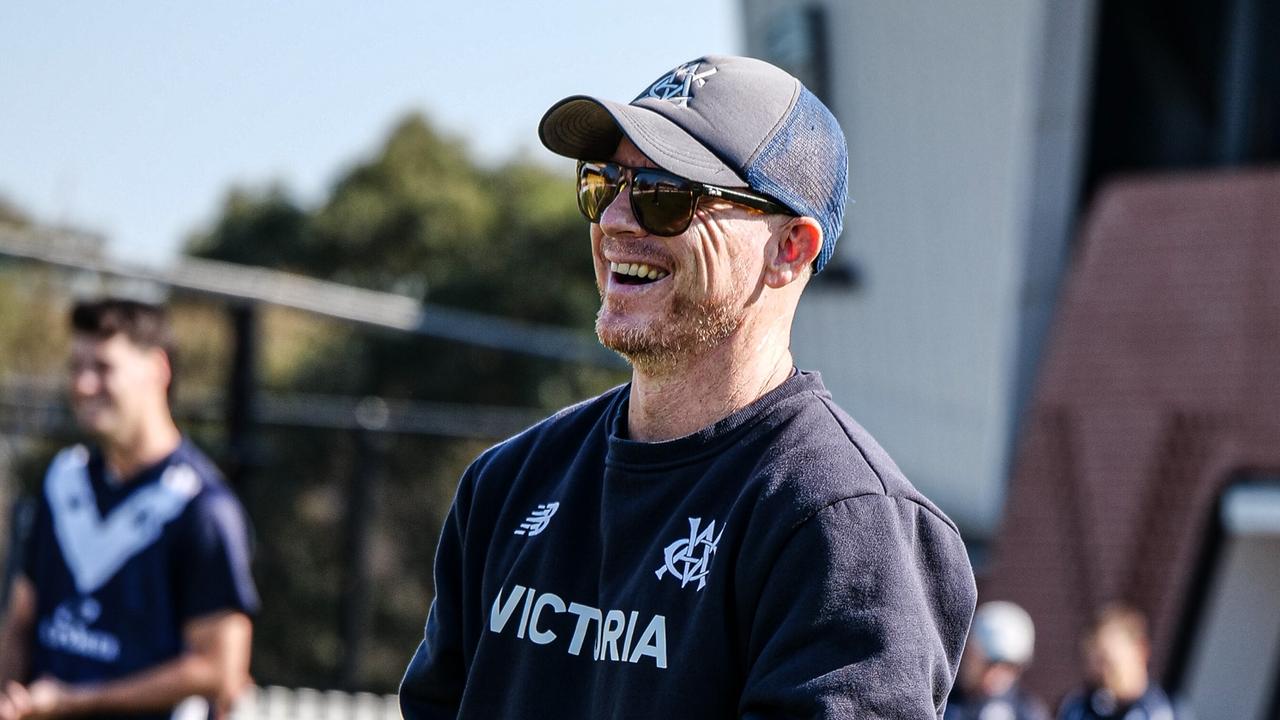
    One of Australia’s most dominant domestic cricket programs is set to continue its successful youth development strategy after announcing a contract extension for head coach Chris Rogers. The former Australian Test opening batsman, who first took the helm of Victoria’s men’s team in August 2020, will now remain in charge at Junction Oval through the conclusion of the 2027-28 domestic cricket season.

    Over his four-and-a-half year tenure to date, Rogers has built a program defined by a steadfast commitment to nurturing homegrown Victorian talent, a strategy that has already delivered consistent on-field success and produced new candidates for national team selection. Under his leadership, the Vics have advanced to four domestic cricket finals: three Sheffield Shield title deciders and one One Day Cup final, with the core of the squad made up of locally developed players.

    The most recent 2024-25 Sheffield Shield campaign encapsulated both Victoria’s dominant form throughout the season and the youth focus at the heart of Rogers’ blueprint. Despite finishing as the top-ranked team across the round-robin stage, Victoria fell short of claiming the title in a tight final against South Australia. Even in defeat, the match highlighted the program’s success: Victoria fielded three of the youngest players on the pitch, headlined by rising star Ollie Peake, who earned a call-up to Australia’s senior white-ball national squad earlier this year.

    Peake’s rapid progression from state development pathway to national selection is not an isolated case. Opening batsman Campbell Kellaway has also emerged as a promising young talent under Rogers’ tutelage, while consistent all-rounder Fergus O’Neill has put himself on the radar of national selectors after turning down multiple high-paying contract offers from other interstate states to remain in Victoria.

    Since the 2021-22 season, Victoria has signed just two contracted players from other parts of Australia: veteran fast bowler Peter Siddle, who returned to his home state after stints elsewhere, and destructive one-day batter Josh Brown. This track record underscores how rare interstate signings have become under Rogers’ leadership.

    David Hussey, Victorian Head of Men’s Cricket, noted that Rogers’ leadership and the supportive, development-focused environment he has built are major factors in convincing the state’s top young talent to reject overtures from rival programs. “It probably speaks of the environment Chris and his coaching staff have created,” Hussey explained in a recent interview. “They all want to improve, they all want to be part of the sustained success we’re trying to set the male program up for.”

    In a separate update, Victoria recently confirmed its contracted player list for the 2026-27 season, making targeted adjustments to the squad. Three players – Jai Lemire, Xavier Crone and Callum Stow – have departed the contract list, replaced by up-and-coming prospects Harry Hoekstra, Tom Paddington and Aryan Sharma, continuing the program’s focus on elevating new young talent through the development pathway.