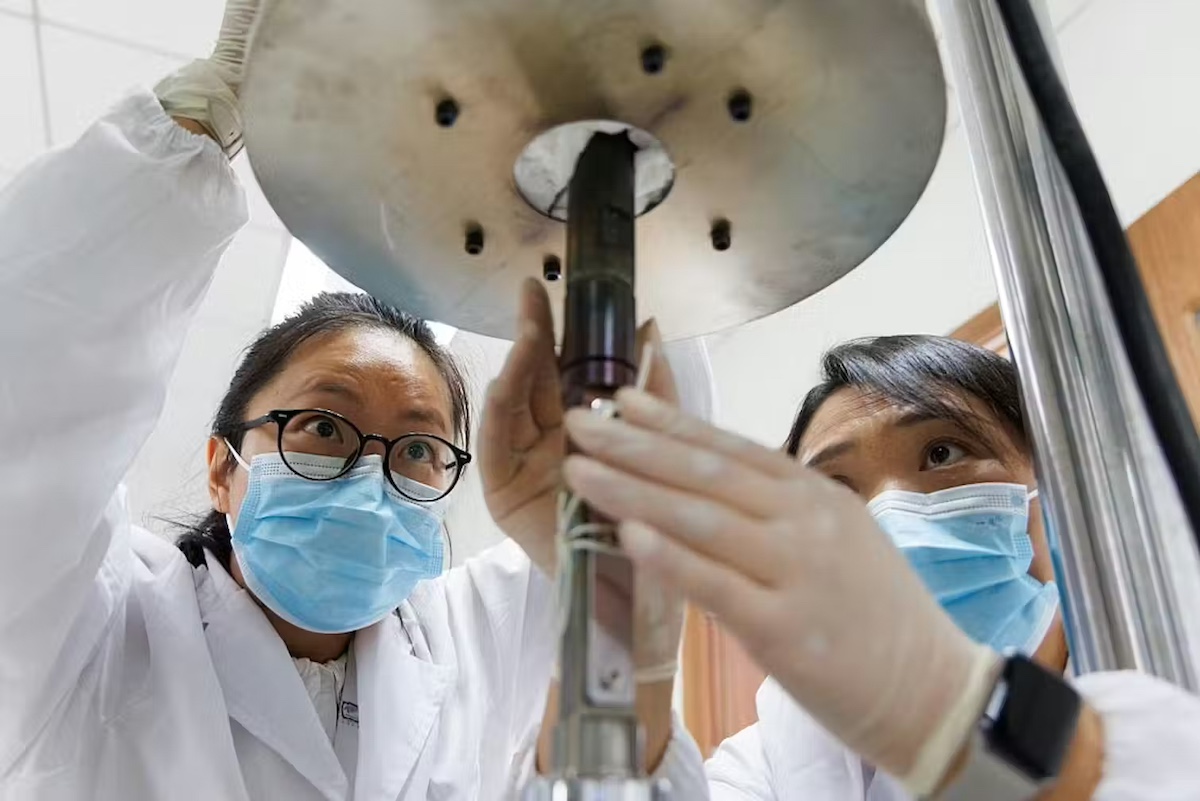
In a landmark announcement made on September 19, Dou Xiankang, president of the National Natural Science Foundation of China (NSFC), unveiled a groundbreaking research funding initiative that has drawn global attention for its unprecedented commitment to early-career scientists. The program, targeted exclusively at researchers under the age of 35, offers 15 years of continuous financial support, with funding increasing twofold after five years and doubling again a decade into the grant period. Unlike most traditional research awards that demand frequent short-term performance reviews, this scheme requires only one core commitment from recipients: consistent presence in their laboratories to advance their work. For its inaugural cohort, the program has selected 44 emerging researchers, 9 of whom currently hold positions outside of mainland China.
The 15-year timeline is no accident. Designed to explicitly tolerate failure and allow for iterative, long-term exploration, the program responds to a long-held observation about high-impact science: breakthrough discoveries often require multiple failed attempts before yielding transformative results. This focus on patient, long-term funding was recently reinforced by the July 2026 Fields Medals, the most prestigious honor in global mathematics, which highlighted the critical value of giving early-career researchers space to pursue high-risk, high-reward work. With this new initiative, China has translated that observation into policy, putting substantial resources behind the idea that time is the most valuable resource young scientists can receive.
This move frames a broader, underreported competition between the world’s two largest scientific powers: the competition for research time. While China is now intentionally allocating extended time to its rising research stars, the United States, which for decades offered open-ended time and stability as a core advantage for global talent, has increasingly begun to restrict that stability across both immigration and research funding systems.
On the U.S. side, growing policy shifts have eroded predictability for early-career and international researchers. In July 2026, the U.S. Department of Homeland Security formalized a new rule ending indefinite residency permits for international students, capping their allowed stay at four years for most degree programs. Department Secretary Markwayne Mullin framed the change as a measure to ensure students complete their studies and return to their home countries, but the policy has already had a measurable chilling effect: the number of F-1 student visas issued dropped by one-third in the past year alone.
Research funding instability has compounded this challenge. The U.S. National Institutes of Health (NIH) is set to terminate 2,291 active research grants in 2025, withdrawing a total of $2.45 billion in committed funding. A peer-reviewed study published in the *Proceedings of the National Academy of Sciences* (PNAS) found that early-career researchers and women scientists bear the brunt of these cuts, as they lack the institutional reputation and established networks to secure alternative funding quickly. Even preeminent, award-winning researchers are not immune: at the U.S. National Science Foundation, Terence Tao, a UCLA mathematician and Fields Medalist, had two of his active grants suspended last year, only restored after a federal court intervened to reverse the decision.
A striking irony underpins China’s new 15-year grant model: it is adapted from a long-standing American approach to research funding. The Howard Hughes Medical Institute (HHMI), a private U.S. research foundation, has for decades operated under the mantra of “funding people, not projects,” appointing investigators for seven-year terms and allowing them full flexibility to pivot their research direction as new insights emerge. When a team of economists led by Pierre Azoulay compared HHMI-funded investigators to equally accomplished researchers supported by shorter, more rigid NIH grants, they found the HHMI cohort produced nearly twice as many top-cited, high-impact research papers. The model also produced more failed projects, which the researchers noted is the explicit mark of a system that tolerates the risk-taking necessary for breakthrough innovation. China has now taken this proven lesson and scaled it into a national government program, while the United States has never expanded the model beyond its small niche in the American research ecosystem.
Extended stable funding is only half of the equation for nurturing top scientific talent, as this year’s Fields Medal cohort makes clear. Two of the four 2026 Fields Medal winners, Hong Wang and Yu Deng, both entered Peking University as undergraduate students in 2007 before moving abroad to build their research careers. Wang has publicly spoken about feeling discouraged in her early research years, until mentors in France and the United States created space for her to pursue her own ideas. At MIT, she recalled, her adviser took her arguments seriously even when she disagreed with established senior scholars. Her account resonated so strongly with early-career researchers in China that a related hashtag was later censored on the Chinese social platform Weibo.
No funding grant can buy that kind of open, inclusive research culture that elevates unproven young voices. China can now match Western institutions on researcher salaries and state-of-the-art laboratory infrastructure, but it has yet to cultivate a system where a 25-year-old early-career researcher can openly contradict a senior professor without professional consequences. The new 15-year grant program does not resolve this gap. Requiring only daily presence in the lab measures diligence, but it does nothing to foster the intellectual curiosity that drives breakthroughs. The program’s success will depend on unpublicized implementation details: how recipients are selected, whether they are allowed to pivot their research direction mid-grant, and whether they retain the freedom to leave the program or the country if they choose.
That final question is no longer hypothetical. New exit restrictions implemented on September 15 allow Chinese authorities to block any individual deemed a risk to national technological security from leaving the country, and media reports indicate that spouses and children of leading artificial intelligence researchers now require official government approval to travel abroad. A 15-year commitment to support looks very different when researchers need government permission to exit the country if their circumstances change.
The United States retains a substantial, though eroding, advantage in open research culture. In 2024, temporary visa holders earned 38% of all U.S. science and engineering doctorates, and 87% of Chinese nationals who earned these doctorates between 2006 and 2015 still resided in the U.S. by 2017. They stayed for the professional networks, the access to research capital, and the open intellectual culture that encourages debate. But that stability is fading: Yu Deng, now a faculty member at the University of Chicago, has noted that he would think far harder about moving to the U.S. to build his career if he were making that choice today.
A small but growing number of top global researchers are already shifting their affiliation in response to these shifting dynamics. Omar Yaghi, a 2025 Nobel laureate in chemistry, left his position at the University of California, Berkeley to join Tsinghua University in Beijing in July 2026.
The core takeaway from this shifting landscape is simple: the most effective talent strategy any government can offer is a reliable, consistent promise: uncut funding mid-project, and stable visa rules that do not change mid-degree. Right now, each competing power has strength where the other has weakness: China is building out long-term stable research capital, while the U.S. still retains the open intellectual culture that allows young researchers to challenge consensus openly. The global scientific lead will go to whichever country can successfully combine both strengths.
To date, neither side has achieved that combination, creating an opening for other Asia-Pacific economies to step in and attract top global research talent. Singapore has launched a new five-year research strategy allocating S$37 billion (US$28.6 billion) to new programs designed to draw early-career research talent, while the Australian Academy of Science is leading a national initiative to recruit scientists leaving the United States. None of these countries need to take sides in the U.S.-China rivalry, but success will require more than just large funding pools: they must combine long-term financial stability with open intellectual culture to win top talent. The first cohort of China’s 15-year grants will conclude around 2041, and by then the global research community will know whether time alone was enough to secure scientific leadership.
This analysis was written by Y. Tony Yang, an endowed professor at George Washington University in Washington, D.C.