博客

  • Iran ‘very confident’ about World Cup protocols: federation vice-president

    Iran ‘very confident’ about World Cup protocols: federation vice-president

    As the Iranian men’s national football team makes its final preparations for the 2026 FIFA World Cup co-hosted by the United States, a top Iranian football official has voiced strong confidence in the governance and security protocols laid out by global football’s governing body, even as lingering uncertainty over U.S. entry visas casts a faint shadow over the team’s preparations.

    The Iranian squad touched down in Turkey on Monday to wrap up their pre-tournament training camp, a multi-week stay that will serve as their final tune-up before traveling to North America for the world’s biggest sporting event. This World Cup carries unusual geopolitical weight for Iran: the United States, one of the three co-hosts of this year’s tournament, has been engaged in active military conflict against Iran alongside Israel since late February, a confrontation that has ignited widespread instability across the Middle East.

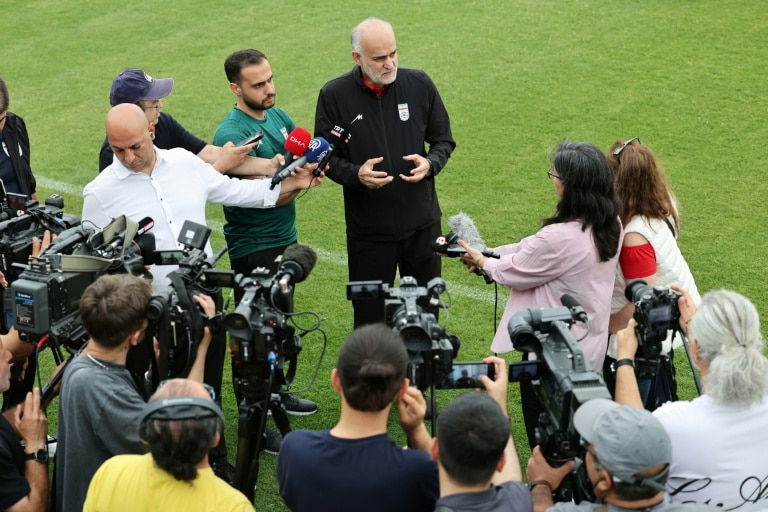
    Mehdi Mohammad Nabi, vice-president of the Iranian Football Federation and director of the national team program, shared his assessment with reporters on the sidelines of the team’s Turkish training session on Tuesday. Nabi insisted that all logistics for Iran’s participation would follow the formal rules and frameworks set by FIFA. “Everything will proceed properly according to the protocols and what FIFA has stipulated,” he said.

    Nabi noted that U.S. organizers have already established dedicated working groups to handle tournament logistics, including a specialized security committee that coordinates closely with FIFA to manage safety for all participating delegations. Drawing on Iran’s history of competing in multiple previous World Cup tournaments, Nabi said the federation has full familiarity with how these security and operational systems function at the global event. “In past years we’ve experienced all of this and we’re fully informed about how these security committees operate at every World Cup we’ve participated in. In this regard, we’re very confident and we have a clear plan,” he added.

    One key unresolved issue remains: entry visas for the Iranian squad and staff. Iranian officials confirmed earlier that none of the delegation have yet received their U.S. travel authorization, and the team is planning to submit visa applications through the Canadian embassy in Turkey, where they are currently based. Nabi acknowledged that there is no guarantee all members of the delegation will be granted entry.

    However, he pointed to binding FIFA rules that place responsibility on host nations to accommodate qualified teams. “One of the rules that applies to the host country is that they must provide guarantees, according to FIFA’s statutes and the regulations of the competition. One of their commitments is the visas: they have to grant the necessary visa facilities to all the teams that have qualified for the World Cup,” Nabi explained. He added that FIFA has already taken steps to ensure the United States fulfills its obligations to facilitate entry for Iranian team personnel.

    Iran has been drawn into Group G for the 2026 tournament, with a scheduled opening match against New Zealand on June 15 in Los Angeles. The team will face Belgium in the same city next, before wrapping up their group stage play against Egypt in Seattle. Throughout the tournament, the Iranian delegation will be based in Tucson, Arizona, for their training and accommodation.

  • Venezuela plans to free 300 people including some whose detentions are considered politically based

    Venezuela plans to free 300 people including some whose detentions are considered politically based

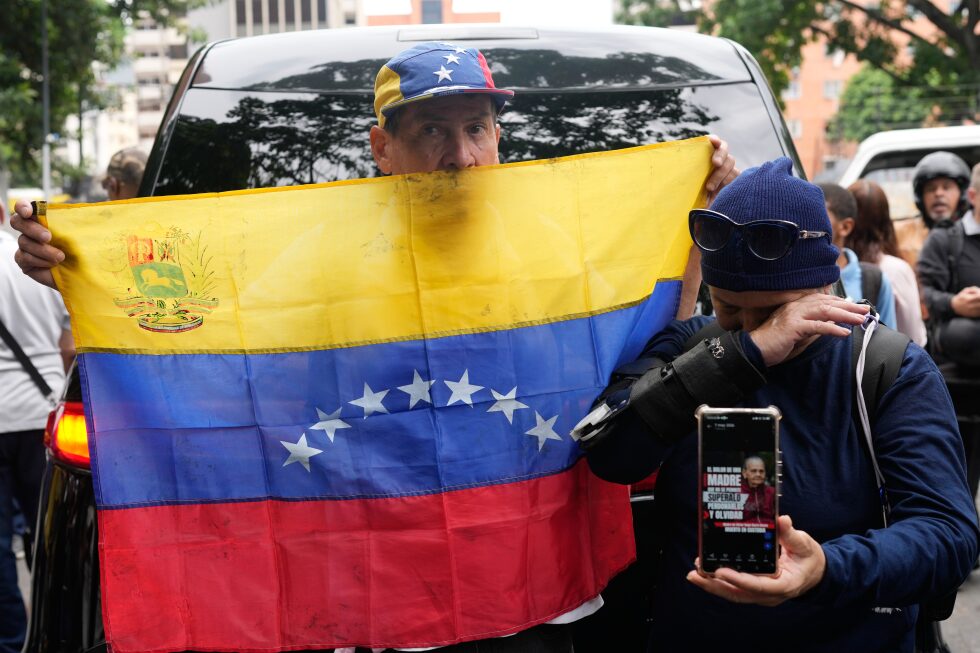
    CARACAS, VENEZUELA – In a move that comes amid mounting public and international pressure over arbitrary political detentions, Venezuela’s sitting government has unveiled plans to free 300 detainees this week, a cohort that includes dozens of individuals held for years on what rights advocates describe as politically motivated charges. National Assembly President Jorge Rodríguez made the announcement Tuesday during a plenary session at Caracas’ legislative palace, stopping short of explicitly labeling the upcoming releases a political prisoner amnesty. But leading human rights defenders have already confirmed that many of the people named in the government’s release list were arbitrarily detained for their opposition to the current administration.

  • From graduation boos to voter unease: AI anxiety grows in the US

    From graduation boos to voter unease: AI anxiety grows in the US

    Across the United States, a growing backlash against artificial intelligence is reshaping public discourse, political positions, and community attitudes, once-strong early enthusiasm for the transformative technology giving way to widespread unease. The shifting sentiment plays out in every corner of public life: pro-AI speakers are met with jeers at college graduation ceremonies, local political candidates supporting AI infrastructure are ousted at the polls, and even a traditionally AI-friendly White House has softened its unbridled support for unregulated development.

    This rising anxiety did not emerge out of nowhere. It stems from concrete economic pressures and unaddressed fears: persistent inflation has stretched household budgets, while a wave of AI-driven layoffs across the tech sector has reinforced fears of widespread job displacement. For young people, many of whom have taken on crippling student loan debt to earn college degrees, the worry that AI will render their hard-won qualifications obsolete has turned tentative concern into active hostility.

    That hostility played out publicly on two separate graduation stages in recent months. When former Google CEO Eric Schmidt took the stage at the University of Arizona to deliver the 2026 commencement address, he urged graduates to embrace AI, arguing the technology would reshape every corner of modern life from education to healthcare to professional work. Instead of the polite applause expected of such occasions, Schmidt was met with loud, sustained boos from the assembled graduates. Scott Borchetta, CEO of Big Machine Records, faced the same reaction when he told graduates at Middle Tennessee State University to adapt to AI as a useful tool. When he joked that graduates could “hear me now or pay me later,” the crowd responded with resounding boos.

    Public opinion polling bears out this widespread discontent. Cited by news outlet Semafor, recent polling shows 70 percent of Americans believe AI development is moving too quickly, more than half hold negative views of the technology, and just 18 percent of young people report feeling hopeful about AI’s future impact.

    The pushback is not limited to college quads. The rapid expansion of AI has spurred a nationwide buildout of energy-intensive data centers, and this infrastructure has become one of the most contentious flashpoints in local politics. Data centers draw massive amounts of electricity, drive up local utility rates, and put strain on regional water supplies, turning community opposition into a potent political force. In recent months, local officials who have backed AI data center projects have repeatedly lost elections at the hands of angry voters. The discontent has even spilled over into violence.

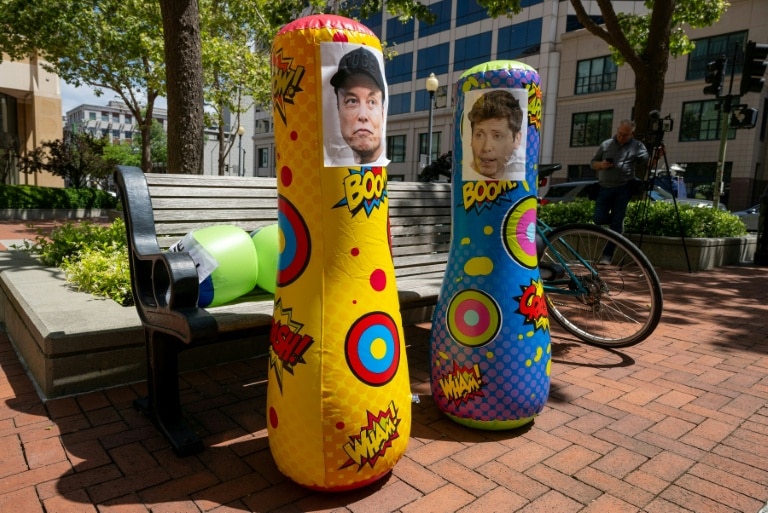
    In April 2026, as the high-profile civil trial between Elon Musk and Sam Altman opened in Oakland, California, protesters set up inflatable punching bags emblazoned with the images of the two AI industry leaders outside the federal courthouse. Last month, a young man threw a Molotov cocktail at Altman’s personal home in Northern California. Just days before that incident, an Indiana city council member who supported a local data center project found his front door struck by gunfire; a note left at the scene read simply “No Data Centers.”

    Christabel Randolph, acting executive director of the Washington D.C.-based Center for AI and Digital Policy, notes that opposition to local data centers now outpaces even opposition to nuclear power plants. A May 2026 Gallup poll found that 71 percent of Americans oppose hosting an AI data center in their community, compared to just 53 percent who oppose hosting a nuclear power plant. “Americans are really, really angry and upset about AI data centers because of the noise, the pollution, the impact on their electricity bills, on water supplies,” Randolph told Agence France-Presse. She added that AI anxiety is set to become a defining issue in the upcoming November midterm elections, and could even shape the 2028 presidential race. “That existential fear is a very animating anxiety,” she said. “People are thinking about what their future is going to look like.”

    Even the Trump White House, which initially positioned itself as a staunch backer of unregulated rapid AI development, has shifted its stance. After returning to office in 2025, President Donald Trump rolled back strict AI safety rules put in place during the Biden administration, arguing that overregulation would hurt U.S. competitiveness against China. But in recent months, the administration has reversed course: it now calls for pre-release safety vetting of advanced AI models, has urged Congress to pass nationwide AI regulations, and has held discussions with Chinese officials about establishing global AI guardrails. When asked about AI risks on Fox News’ *Mornings with Maria* last month, Trump acknowledged the mixed picture: “There are a lot of good things, but we have to be careful with it.”

  • Taiwan author wins International Booker for ‘slyly sophisticated’ novel

    Taiwan author wins International Booker for ‘slyly sophisticated’ novel

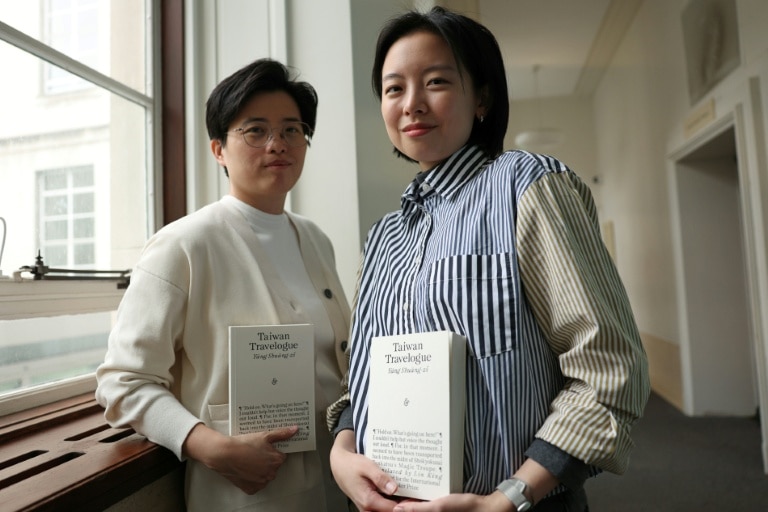
    In a landmark moment for global translated literature, Taiwanese author Yang Shuang-zi and translator Lin King have claimed the 2024 International Booker Prize at a ceremony held at London’s iconic Tate Modern gallery, bringing home the 10th anniversary of the award for their bold postcolonial novel *Taiwan Travelogue*. This win marks two firsts for the prize: it is the first work translated from Mandarin Chinese to take home the honor, and Yang, the 40-year-old multi-talented creator who also pens manga and video game scripts, becomes the first Taiwanese author ever to win the award. Set against the backdrop of 1930s Taiwan under Japanese colonial rule, the novel constructs a clever metafictional narrative: it is framed as a newly rediscovered Japanese travel memoir written by the fictional author Aoyama Chizuko, translated into English for contemporary readers. The plot follows Chizuko across the colonial territory, tracing her food-focused journeys through the island’s landscapes and the quiet, intimate romantic bond that grows between her and her Taiwanese interpreter, Chizuru. Speaking on the win, prize jury chair Natasha Brown praised the work for its deceptive depth and layered storytelling. “This is a book that surprises and isn’t perhaps what it seems like on the surface,” Brown noted, adding that the novel “pulls off an incredible double feat: it succeeds as both a tender romance and an incisive postcolonial novel. It’s a captivating, slyly sophisticated novel.” This year, *Taiwan Travelogue* beat out five other celebrated shortlisted works from around the globe to claim the prize. The shortlist included a story of a suburban witch from French novelist Marie NDiaye, a dystopian tale of a brutal prison colony from Brazilian author Ana Paula Maia, a quiet Tehran-set story from German writer Shida Bazyar, Bulgarian poet Rene Karabash’s *She Who Remains*, and *The Director* from German-Austrian author Daniel Kehlmann — the only male nominee on this year’s shortlist. Established to elevate fiction originally written in languages other than English and introduce new global voices to English-speaking audiences, the International Booker Prize has a proven track record of catapulting winning authors to international acclaim and driving major increases in their visibility and book sales. Several past International Booker winners, including Han Kang, Annie Ernaux, and Olga Tokarczuk, have gone on to win the Nobel Prize in Literature in the years following their Booker win. *Taiwan Travelogue* marks the first of Yang’s works to be translated into English, a project completed by Taiwanese-American translator Lin King. The pair will split the £50,000 (approximately $67,000) prize purse evenly between them. The novel was first published in Mandarin in 2020, and quickly earned recognition within Taiwan when it won the Golden Tripod Award, the island’s highest literary honor. In a lighthearted reflection on the novel’s core themes, Yang joked about the impact of writing the food- and travel-focused story: “The novel’s central themes of travel and food changed my life in two obvious ways: my savings went down; my weight went up.”

  • Acting US attorney general defends fund for prosecuted Trump allies

    Acting US attorney general defends fund for prosecuted Trump allies

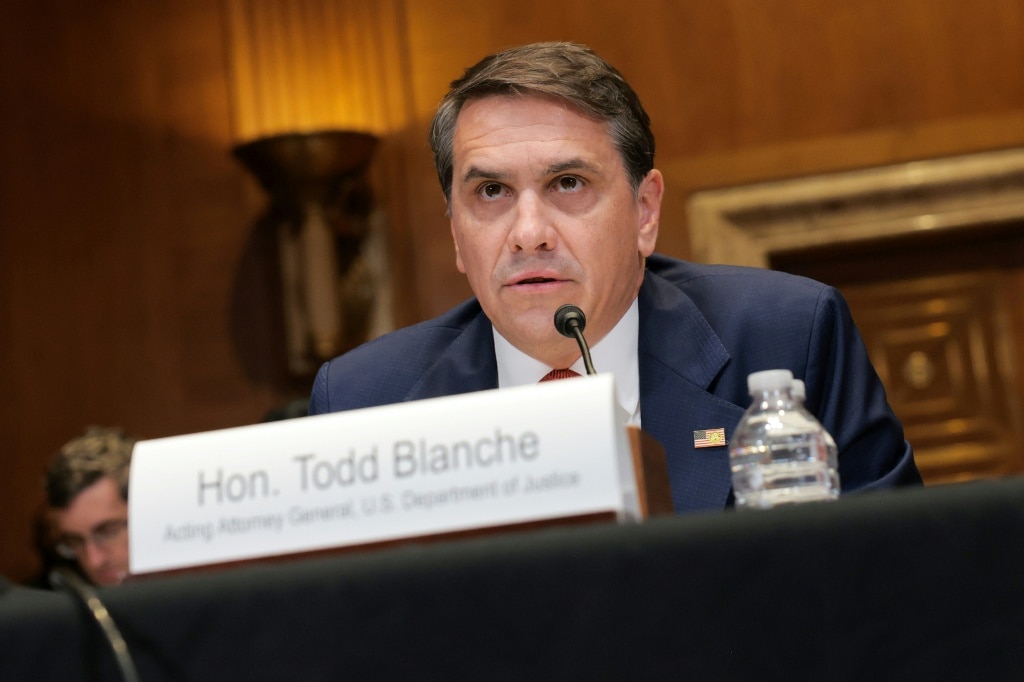
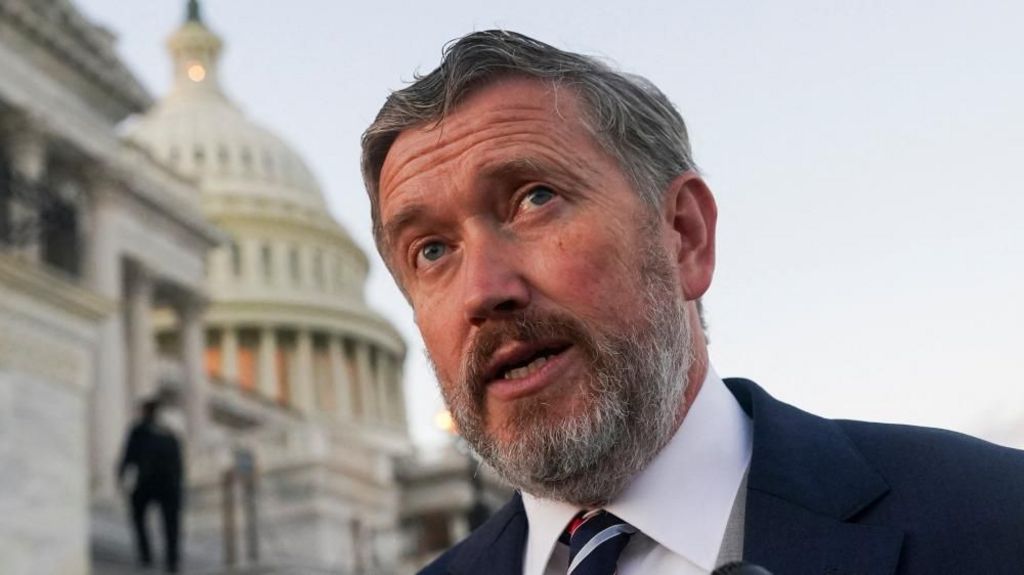
    A fierce partisan debate erupted on Capitol Hill this week as Acting U.S. Attorney General Todd Blanche defended the newly established $1.8 billion “Anti-Weaponization Fund”, a initiative designed to compensate individuals who claim they were wrongfully prosecuted during the Biden administration. The fund, created as part of a settlement ending former President Donald Trump’s lawsuit against the Internal Revenue Service over a 2023 tax return leak, has drawn sharp condemnation from congressional Democrats who frame it as an unprecedented misuse of taxpayer dollars to benefit the sitting president’s political allies.

    During hours of testimony before the Senate Appropriations Committee, Blanche, Trump’s former personal defense attorney who took over the top Justice Department role, faced repeated questioning from Democratic lawmakers over the fund’s structure and purpose. Washington Senator Patty Murray called the initiative outright corruption, arguing it amounted to the sitting president draining public treasury for personal political gain, labeling it a corrupt “slush fund” reserved for Trump’s loyalists.

    Blanche pushed back aggressively against these claims, stressing that Trump himself would be ineligible to receive compensation from the fund and rejecting assertions that only Republican allies of the president would qualify. He noted that even individuals like Hunter Biden, the former president’s son convicted of gun and tax crimes during his father’s tenure, would be eligible to apply for compensation if they believe they were targeted by politically motivated prosecutions. When pressed repeatedly about whether rioters convicted for their roles in the January 6, 2021, Capitol attack could receive payouts, Blanche refused to rule out eligibility, stating that any U.S. citizen who believes they were a victim of politically weaponized law enforcement would be allowed to apply.

    Blanche will personally appoint the five commissioners tasked with overseeing the fund, a detail that drew further criticism from lawmakers who highlighted his long-standing professional ties to Trump. Rhode Island Senator Jack Reed drew a comparison between Blanche and a mafia political adviser, calling him the “president’s consigliere,” while Maryland Senator Chris Van Hollen argued Blanche was continuing to act as Trump’s personal attorney rather than an independent government official. Blanche defended the fund’s necessity, framing it as a corrective measure for what he described as four years of abusive law enforcement practices under former Biden Attorney General Merrick Garland.

    The fund was established Monday as part of a legal settlement with Trump, who dropped his $10 billion damages lawsuit against the IRS over the leak of his tax returns. A former IRS contractor pleaded guilty in 2023 to leaking Trump’s returns and those of other wealthy individuals to media outlets, and was sentenced to five years in prison for the crime. As part of the new settlement addendum released by Blanche Tuesday, the IRS is formally barred from pursuing back tax claims against Trump, his immediate family members, or any of his corporate entities.

    This move aligns with a broader pattern of action Trump has taken since starting his second term in office: he has moved swiftly to punish perceived political opponents, purge disloyal government officials, issue mass pardons to political allies—including hundreds of January 6 defendants on his first day back in office—target law firms that worked on cases against him, and pull federal funding from universities he accuses of political bias. The two criminal cases against Trump handled by special counsel Jack Smith, one over efforts to overturn the 2020 presidential election and a second over improper handling of classified documents, were both dropped after Trump won the 2024 election, with Blanche having served as his lead defense attorney in both matters.

  • Shock and bafflement at San Diego mosque where three were killed

    Shock and bafflement at San Diego mosque where three were killed

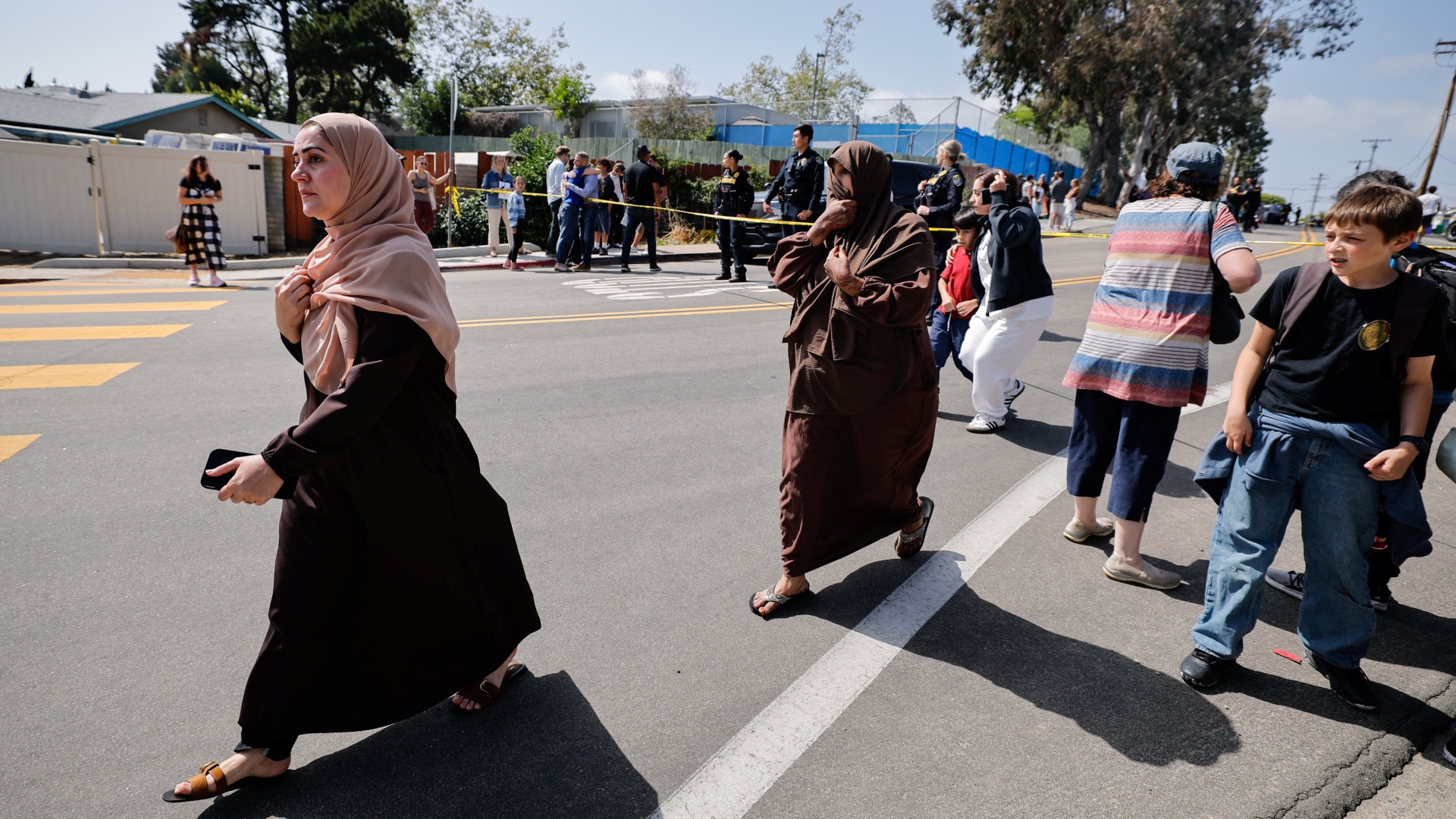
    The tight-knit Muslim community of San Diego is reeling from an unthinkable act of violence Monday, when two radicalized teenage gunmen stormed the Islamic Center of San Diego, killing three people before turning their weapons on themselves. The attack, which law enforcement has officially classified as an Islamophobic hate crime, has left neighbors and community members grappling with shock, grief, and a sudden loss of the sense of safety they long felt in their suburban neighborhood.

    Ramzy Awad, son of victim Nader Awad, sat blankly outside the mosque complex Tuesday, still unable to process the events that claimed his father’s life. “Everyone’s really shocked. It’s hard to believe this is real. We’re just all still figuring it out,” he told reporters from Agence France-Presse. Today, Awad and the two other slain men — security guard Amin Abdullah and community member Mansour Kaziha — are being widely celebrated as heroes whose quick, brave actions prevented a far deadlier massacre.

    San Diego Police Chief Scott Wahl explained at a Tuesday press briefing that the two attackers, identified as 17-year-old Cain Clark and 18-year-old Caleb Vazquez, arrived at the center heavily armed with the intent to kill as many people as possible. At the time of the breach, as many as 140 children were in classrooms just 15 feet from the entry point where the gunmen entered. Abdullah, the on-site security guard, immediately engaged the attackers, fired on them, and radioed for backup, delaying and disrupting their plan to push deeper into the building.

    After Abdullah initial confrontation, Awad and Kaziha drew the gunmen back out into the mosque’s parking lot, sacrificing their own lives to keep the attackers away from the crowded interior. All three men died at the scene. The teens’ bodies were later found in a vehicle a short distance from the mosque, and investigators have confirmed they died of self-inflicted gunshot wounds. Searches of the attackers’ homes turned up a cache of weapons, ammunition, tactical gear, and electronic devices, alongside extremist writings that laid out a radical worldview rooted in racial and religious hatred.

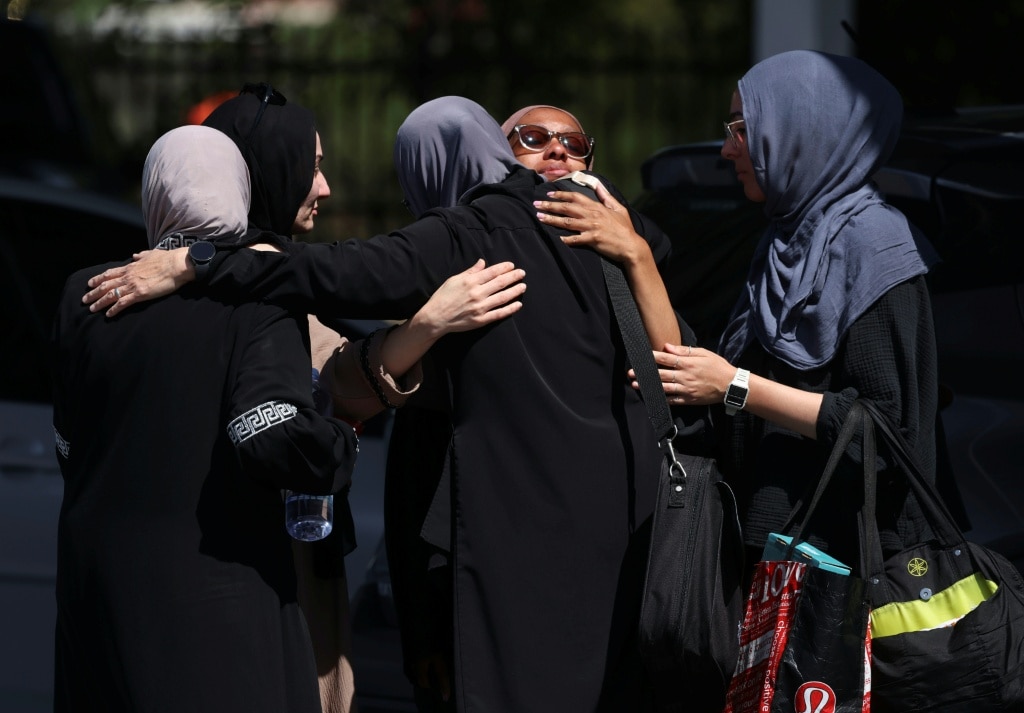
    On Tuesday, community members and mourners gathered outside the mosque to lay flowers, their faces marked by confusion and grief. Many could only manage a few words before breaking into tears or falling silent. The Islamic Center of San Diego, one of the largest Muslim worship sites in a city of 1.4 million, has long been a hub for a diverse community of worshippers hailing from the Middle East, Asia, Africa, and Europe. Its minaret rises above palm-lined streets dotted with quiet suburban homes, and the center has long functioned as a core part of the local multicultural fabric — it even serves as a polling station during elections, and its imam regularly holds interfaith prayer events alongside a nearby Protestant church’s leadership.

    Neighbors like Katelynn Fisk, who was out walking her dog near the center Tuesday, expressed their shock and support for the community. “This Muslim community, they’re really good people, you know. They never treat anybody like they’re different, even if they don’t follow their beliefs,” Fisk said. For decades, the center has felt like a refuge for local Muslims, but the attack has shattered that long-held sense of safety. “We used to feel safe here. I don’t understand why we were targeted,” said 31-year-old teaching assistant Imani Khatib, breaking down in tears outside the security booth where Abdullah gave his life.

    Mosque imam Taha Hassane confirmed that without the three men’s sacrifice, the attackers would have had unimpeded access to all of the center’s classrooms. “We’re so proud of him… I see messages about him, literally from all over the world, talking about his heroism,” Hassane said of Abdullah. The imam explained that like many Muslim places of worship across the United States, the center has faced sporadic incidents of Islamophobia for decades, with tensions spiking after the 9/11 attacks and rising again more recently amid ongoing conflicts in Gaza and Iran. “We received some mails and emails and phone messages, blaming us for everything going wrong in the world. But having shooters, I mean, it never came to our mind,” he said.

    Hassane attributed the deadly attack to a broader national rise in white supremacy, saying that rhetoric from elected officials and segments of the media has dehumanized Muslims, Black people, Latinos, and other marginalized groups, creating a culture that enables extremist violence. “When young people who are brainwashed, they hear this rhetoric from the media, from the elected officials. This gives them the excuse, the green light to go and commit a crime,” he added.

  • Muslim-American groups blame mainstreaming of hate speech for mosque shooting

    Muslim-American groups blame mainstreaming of hate speech for mosque shooting

    A fatal shooting outside the Islamic Center of San Diego, California, that left three people dead on Monday has sparked fierce condemnation and renewed scrutiny of rising anti-Muslim bigotry in American public life, with major Muslim-American advocacy groups tying the attack to the growing mainstream acceptance of anti-Muslim hate speech pushed by right-wing politicians and influential online figures.

    The Council on American-Islamic Relations (CAIR), one of the nation’s leading Muslim civil rights organizations, said in an official statement following the attack that while the violence left the group deeply disturbed, it was not an unexpected event. “Hate against American Muslims is completely out of control,” the organization emphasized, pointing to a year of increasingly extreme rhetoric from elected officials that has framed Muslim communities as an inherent threat to the United States.

    CAIR specifically called out congressional Republicans, noting that just one week before the shooting, the chamber held a formal hearing that intentionally amplified anti-Muslim animus targeting Muslim houses of worship and even Muslim schoolchildren. The hearing was tied to the GOP’s Sharia-Free Caucus, a congressional bloc that counts more than 60 sitting House lawmakers among its members. Florida Congressman Randy Fine has emerged as one of the most high-profile figures pushing aggressive anti-Muslim rhetoric in recent years, CAIR added. The organization framed Monday’s attack as “as predictable as it is unacceptable.”

    The Muslim Public Affairs Council echoed CAIR’s assessment, noting the shooting “did not occur in a vacuum.” The group’s internal tracking shows threats and violent attacks against Muslim-American communities have jumped 11-fold since January 2016. The organization also called out right-wing online influencers, including Laura Loomer and Amy Mek, as well as the advocacy group StopAntisemitism, for repeatedly spreading baseless conspiracy theories that paint Muslim Americans as a national security threat. In the wake of the San Diego attack, Loomer publicly called for the mass deportation of all Muslims living in the U.S., claiming the policy would keep Muslims “safe.” Last week, Mek testified before Congress that she employs private security to protect herself from Muslim groups, claiming “Islam is a hostile, totalitarian political ideology using our freedom to destroy us.” StopAntisemitism, for its part, has previously targeted the wife of the San Diego mosque’s imam with accusations of anti-Israel sentiment.

    Multiple advocacy groups across the political spectrum have condemned the attack. Pro-Israel Democratic-aligned group J Street released a statement on X saying, “Our hearts break for the loved ones of the victims and at the images of children being led to safety. We must confront Islamophobia clearly, urgently and without hesitation.” American Muslims for Palestine (AMP) echoed that sentiment, noting “no community should ever have to fear for its safety while praying, teaching, or learning,” adding that an attack on a mosque is an attack on “all of us who believe in a just, inclusive, and peaceful society.” AMP praised the San Diego Islamic Center’s imam, Taha Hassane, as a leader committed to compassion and community organizing.

    Hassane, who was in his apartment above the mosque when the shooting began, told The Washington Post he heard gunshots ring out across the property. At the time of the attack, the mosque housed an Islamic school with roughly 200 children in attendance. The first person targeted in the shooting was on-site security guard Amin Abdullah, who despite being shot, managed to radio inside the center to warn staff to lock all doors before succumbing to his wounds. San Diego Police Chief Scott Wahl called Abdullah’s actions heroic, confirming that his quick thinking “undoubtedly, saved lives.” The two other fatal victims were a local shopkeeper and a neighbor of the mosque. An official victim support fund has been launched to assist the families of those killed. The two teenage attackers both died from self-inflicted gunshot wounds, law enforcement confirmed.

    Middle East Eye reached out to the White House this week requesting comment on the attack, which is currently under investigation as a hate crime. Traditionally, sitting U.S. presidents publicly address violent attacks targeting religious institutions, but the White House directed all inquiries to Vice President JD Vance. Vance told reporters at Tuesday’s press briefing that he had learned of the shooting that morning, referencing his in-laws who live in San Diego and a restaurant near the mosque he has visited with the Second Lady. “I don’t know a single person who would say anything other than what I’m about to say, which is that that type of violence in the United States of America is reprehensible, and I urge every single American to pray for everybody who is involved and affected by it,” Vance said. “We don’t want that to happen in our country, and may God rest the souls of the people who lost their lives.” Multiple foreign leaders, including British Prime Minister Keir Starmer, have already released formal statements condemning the attack.

    At a press briefing held Monday by San Diego Mayor Todd Gloria — a pro-Israel Democrat who has previously aligned with anti-Muslim Zionist groups and denounced pro-Palestine protesters — Gloria was heckled by attendees who blamed him for creating a political climate that enabled the attack. “You emboldened Zionist propaganda, and you’ll keep doing it as long as it lines your fucking pockets,” one attendee shouted, as Gloria stood silently. “Our Muslim brothers and sisters have been talking to you for how long?”

    In New York City, Zohran Mamdani, the city’s first Muslim mayor, announced Monday he was increasing police deployments outside mosques across the city “out of an abundance of caution” to prevent similar attacks. Multiple Democratic members of Congress released statements on X condemning the violence, though none offered concrete policy proposals to address rising anti-Muslim bigotry or prevent future attacks. When pressed by journalist Mehdi Hasan on X, Republican Senator Ted Cruz responded, “Of course the attack on the mosque was horrific & evil. I unequivocally condemn it, and all other criminal violence.”

    The attack aligns with findings from a recent 36-page report released last month by the Center for the Study of Organized Hate (CSOH), titled “Manufacturing the Muslim Threat.” The report documented that in 2025, Republican elected officials launched a coordinated national anti-Muslim campaign consisting of more than 1,100 social media posts, eight pieces of anti-Muslim legislation, and a 62-member congressional caucus — content that meets the legal and academic definition of “speech likely to inspire violence.”

    Researchers analyzed social media content from 46 sitting Republican elected officials, including members of Congress, state governors, and a state attorney general. The study found that 71 percent of all anti-Muslim posts analyzed came from officials based in Texas and Florida, with Randy Fine and Texas Governor Greg Abbott responsible for the largest share of harmful content. Nearly half of all posts analyzed pushed the so-called “Sharia conspiracy,” framing Islam as an alien ideology seeking to take over U.S. institutions, and using loaded language like “invasion,” “conquest,” and “Islamification.”

    This rhetoric, the report explains, actively promotes the dangerous Great Replacement conspiracy theory, which recasts Muslim Americans as an intentional demographic threat seeking to carry out “civilizational conquest” of the United States. Researchers warn that anti-Muslim rhetoric is expected to increase further as the November 2026 midterm elections approach, particularly in states controlled by conservative and Republican leaders.

    “The anti-Muslim bigotry of these elected officials is helping build a narrative that positions Muslim Americans, their communities, their religious practices, and their elected representatives as an enemy within that must be expelled from the American social fabric,” the report concluded. “[This] is often the precursor to ethnic violence campaigns against rhetorically targeted groups.”
  • Thomas Massie loses to Trump-backed challenger in Republican primary

    Thomas Massie loses to Trump-backed challenger in Republican primary

    In a result that underscores former President Donald Trump’s continued hold over the Republican Party, five-term incumbent Congressman Thomas Massie of Kentucky has been defeated in the Republican primary by Ed Gallrein, a former Navy SEAL who earned Trump’s full backing ahead of Tuesday’s vote. The high-profile contest, which became the most expensive House primary in U.S. history, was widely framed as a critical referendum on Trump’s decade-long influence over GOP loyalty and ideological alignment.

    Massie, who has served in Congress since 2012, emerged as one of the most prominent Republican lawmakers willing to break ranks with Trump on key policy issues over the past year. His most high-profile split came when he voted against Trump’s signature 2025 tax and spending package, citing longstanding concerns over soaring U.S. national debt. Massie also broke with the president to oppose expanded military operations against suspected drug trafficking vessels in the Caribbean and Trump’s escalated military posture in Iran. In a notable bipartisan move, he joined Democrats and a small group of fellow Republicans to push Trump’s Department of Justice to unseal all investigative records related to deceased financier and convicted sex offender Jeffrey Epstein.

    Trump launched a relentless public campaign against Massie in the lead-up to the primary, repeatedly attacking the incumbent across social media. Last Monday, he took to his social platforms to label Massie “an obstructionist and a fool,” and earlier described the congressman as a “major sleazebag” and “the worst Republican congressman in history.” U.S. Secretary of Defense Pete Hegseth also traveled to Kentucky to campaign for Gallrein, where he painted Massie as a consistent barrier to the Trump agenda, accusing him of “constant obstruction.”

    Massie pushed back against the attacks ahead of the vote, arguing that Hegseth’s high-profile visit to his district signaled weakness from the Trump-aligned campaign. “You don’t send the Secretary of War to Kentucky during a war if you think your candidate is up 10 points. That’s what you do when you realise your whole campaign is imploding,” he told CBS News. Massie also defended his conservative record, noting that he had voted in line with Trump’s position roughly 90% of the time during his tenure. He argued that Trump and his allies demanded absolute, 100% loyalty, rather than allowing for independent representation of constituents. “It’s only the 10% of the time they’re mad about – when I won’t vote for a war, when I won’t vote for warrantless spying and when I won’t vote to bankrupt the country,” Massie said ahead of the vote. “But in those instances, I’m doing what I told the people in Kentucky I would do.”

    With his primary victory, Gallrein will now advance to the November general election as the Republican nominee for Kentucky’s Fourth Congressional District. The outcome of the primary offers clear evidence that Trump remains the undisputed leader of the Republican Party, able to oust sitting incumbents who deviate even marginally from his agenda. This story is a developing breaking news report, with additional details expected to be released in coming updates.

  • Friendship or geopolitics? BBC breaks down Xi and Putin relationship

    Friendship or geopolitics? BBC breaks down Xi and Putin relationship

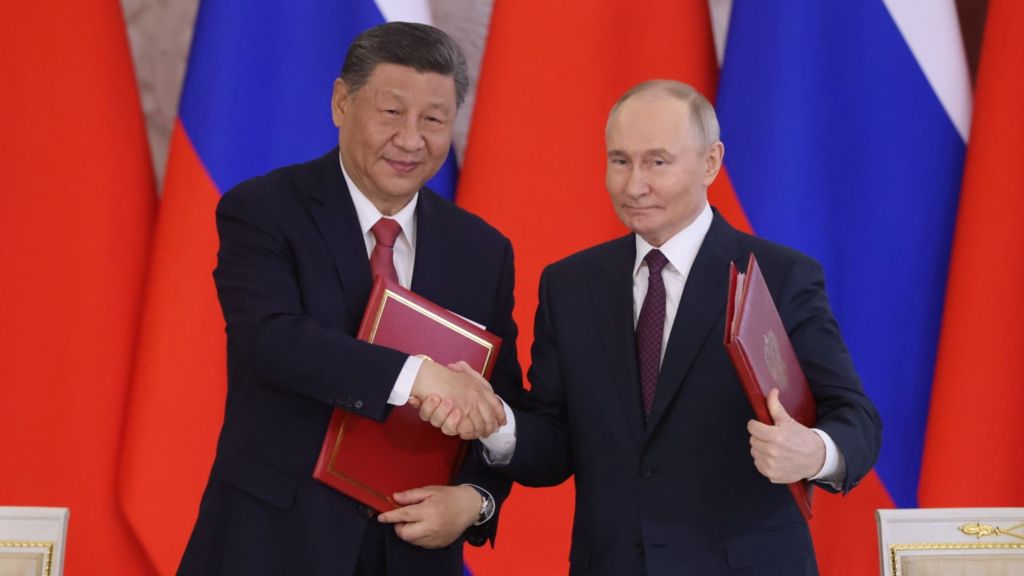
    As top leaders from Russia and China prepare to gather for a high-profile meeting in Beijing, two seasoned BBC journalists have launched a detailed examination of the nuanced, multi-layered connection between President Xi Jinping and President Vladimir Putin, probing whether the core of their partnership is rooted in personal diplomacy or driven by calculated geopolitical strategy.

    Laura Bicker, the BBC’s veteran Beijing correspondent, and Steven Rosenberg, the outlet’s long-serving Moscow-based correspondent, have combined their on-the-ground expertise from both capitals to unpack the evolving dynamic between the two heads of state. The analysis comes at a time of heightened global attention on the Sino-Russian partnership, amid shifting international alliances, ongoing Western sanctions against Russia following its full-scale invasion of Ukraine, and rising strategic competition between China and the United States.

    The correspondents outline a framework that acknowledges both the public rhetoric of “no-limits friendship” that Beijing and Moscow have embraced in recent years, as well as the underlying pragmatic calculations that shape every interaction between the two leaders. Their breakdown explores how domestic priorities, global power dynamics, and shared opposition to what both nations frame as U.S. hegemony have brought the two leaders closer together, while also noting the subtle balancing acts each side maintains to protect their own sovereign interests.

    As the meeting gets underway in the Chinese capital, the analysis offers global audiences a grounded, dual-perspective look at one of the most consequential bilateral relationships shaping 21st-century global order, giving context to what outcomes observers can expect from the latest high-level engagement between the two world powers.

  • AFL 2026: St Kilda coach Ross Lyon on Jack Higgins and Nasiah Wanganeen-Milera injury concerns

    AFL 2026: St Kilda coach Ross Lyon on Jack Higgins and Nasiah Wanganeen-Milera injury concerns

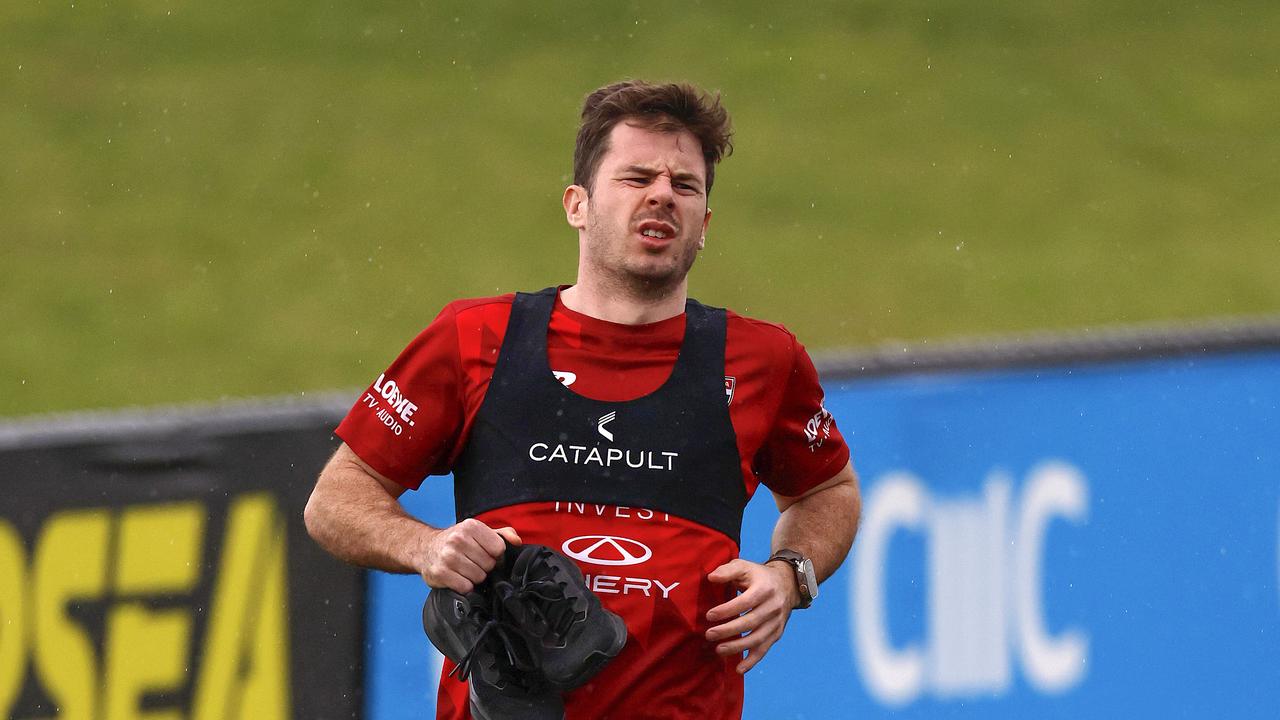
    The St Kilda Saints have suffered another major injury set to their attacking lineup just days before a high-stakes away clash against the red-hot Fremantle Dockers in Perth, with three-time club leading goalkicker Jack Higgins ruled out of the fixture due to a swollen knee injury.

    Higgins picked up the inflammatory knee issue during last weekend’s victory against Richmond, and the club confirmed he would not make the cross-country trip west to face a Fremantle side that has been climbing the AFL ladder in recent weeks. His absence adds to a growing injury crisis for the Saints, who already have key players including Nasiah Wanganeen-Milera, Max King, Mitch Owens and Liam Owen sidelined with different long and short-term injuries.

    Speaking to reporters on Thursday, St Kilda head coach Ross Lyon confirmed the decision to hold Higgins out of the match, noting the knee had flared up unexpectedly after the Richmond win. “(Higgins) won’t play, it’s sort of just flared up a bit, it’s just a bit swollen in the knee… he won’t play,” Lyon said.

    For the club’s other high-profile injured star, Wanganeen-Milera, Lyon confirmed the club is taking a cautious approach to his calf injury, despite the player saying he feels fit enough to return. Wanganeen-Milera is currently listed as a two-week outs, and Lyon said the club would not risk rushing him back to avoid long-term chronic injury, pointing to a string of high-profile examples across the league where early returns from calf injuries derailed entire careers.

    “As far as I know, he’s on track, pretty bubbly, he’d like to be playing, he says, ‘I feel a million dollars’,” Lyon said. “But sports science takes over and calves, you know, there’s been players if you get a chronic calf you’re gone. Like Dan Hannebery, Harley Bennell and Eric Mackenzie here, there’s probably a few others around the league. You’ve got to be cautious with them, which we will be.”

    Heading into the Perth clash, St Kilda will look to replicate a dominant win they recorded against Fremantle last year at Marvel Stadium, when they ran out 10-goal winners thanks to a crushing midfield performance led by Jack Macrae. That day, the Saints won the clearance count 50-22 and dominated contested possessions 151-103 in one of their most complete performances of the 2023 season.

    Lyon said that midfield battle will once again be the defining factor of this weekend’s clash, particularly when it comes to containing Fremantle’s star dynamic ruckman Luke Jackson, who Lyon labeled a “unicorn” for his unique mix of size and skill. Fremantle’s midfield also features star talents including two-time MVP contenders Andy Brayshaw and Caleb Serong, plus dangerous forward-midfielder Shai Bolton, making the Dockers one of the most well-rounded lineups in the competition this season.

    “Our stoppage work is pretty good and clearly Rowan (Marshall) and TDK (Tom De Koning) as a combination are important to that,” Lyon said. “But we come up against the unicorn, right? You look at their midfield, they’re very good either end and well-led by their captain when he’s there. If you want to be the best, then you’ve got to beat the best… it’s an opportunity.”