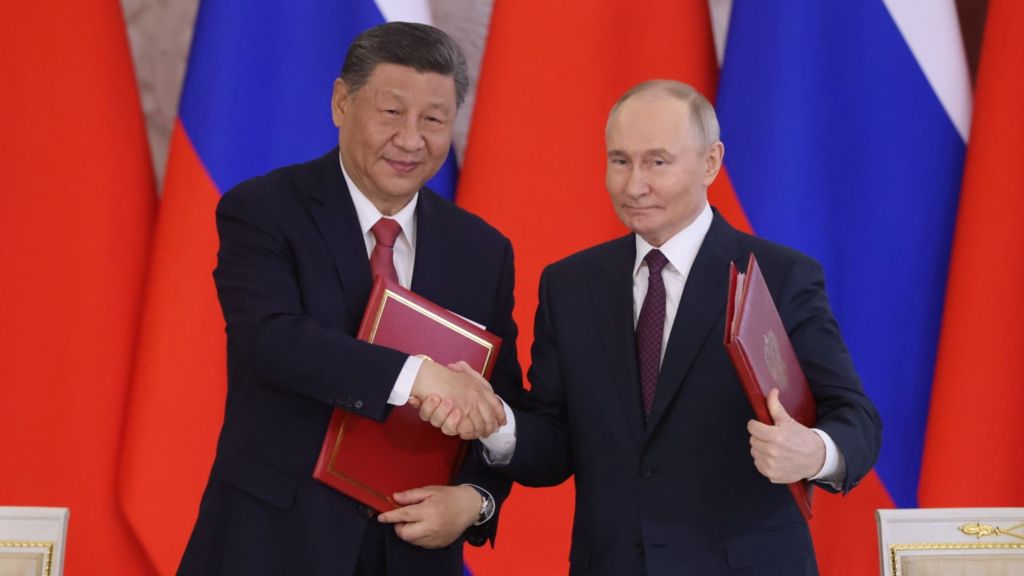
As top leaders from Russia and China prepare to gather for a high-profile meeting in Beijing, two seasoned BBC journalists have launched a detailed examination of the nuanced, multi-layered connection between President Xi Jinping and President Vladimir Putin, probing whether the core of their partnership is rooted in personal diplomacy or driven by calculated geopolitical strategy.
Laura Bicker, the BBC’s veteran Beijing correspondent, and Steven Rosenberg, the outlet’s long-serving Moscow-based correspondent, have combined their on-the-ground expertise from both capitals to unpack the evolving dynamic between the two heads of state. The analysis comes at a time of heightened global attention on the Sino-Russian partnership, amid shifting international alliances, ongoing Western sanctions against Russia following its full-scale invasion of Ukraine, and rising strategic competition between China and the United States.
The correspondents outline a framework that acknowledges both the public rhetoric of “no-limits friendship” that Beijing and Moscow have embraced in recent years, as well as the underlying pragmatic calculations that shape every interaction between the two leaders. Their breakdown explores how domestic priorities, global power dynamics, and shared opposition to what both nations frame as U.S. hegemony have brought the two leaders closer together, while also noting the subtle balancing acts each side maintains to protect their own sovereign interests.
As the meeting gets underway in the Chinese capital, the analysis offers global audiences a grounded, dual-perspective look at one of the most consequential bilateral relationships shaping 21st-century global order, giving context to what outcomes observers can expect from the latest high-level engagement between the two world powers.