博客

  • How ChatGPT is replacing Google search, helping UAE students learn much faster

    How ChatGPT is replacing Google search, helping UAE students learn much faster

    A profound educational transformation is underway across United Arab Emirates universities as artificial intelligence tools fundamentally alter academic practices and student psychology. According to extensive interviews with Emirati students conducted by Khaleej Times, AI platforms—particularly ChatGPT—have largely supplanted traditional Google search methodologies, creating both unprecedented learning efficiencies and new philosophical dilemmas about knowledge acquisition.

    Students report that AI integration has dramatically reduced academic anxiety while accelerating comprehension. Zayed Ahbabi, among those interviewed, revealed that ChatGPT serves as his primary educational tool for rapid concept clarification during fast-paced lectures. The psychological impact appears equally significant, with students describing diminished embarrassment when confronting challenging material and increased confidence in their learning capabilities.

    The technological shift has fundamentally altered study behaviors. Multi-tab Google searching—once synonymous with student research—has substantially declined in favor of AI-driven clarification. Khalifa Ahmed utilizes ChatGPT for structural organization and reading summarization rather than direct answer generation, transforming studying from memorization exercises into conversational learning experiences.

    Yousef AlNaqbi noted the social implications, observing that AI consultation often precedes peer discussion, creating more informed collaborative learning environments. This paradigm shift has enabled students to approach classroom interactions with greater preparedness and confidence.

    Despite overwhelming enthusiasm, students universally expressed caution regarding over-dependence. Concerns about intellectual laziness, reduced critical struggle, and potential social isolation emerged consistently across interviews. UAE academic institutions have responded by incorporating AI into integrity policies while emphasizing student accountability for submitted work.

    The central debate no longer revolves around whether to use AI, but rather how to establish appropriate usage boundaries. Students unanimously agreed that personal judgment and examination performance should remain exclusively human domains, particularly for decisions impacting future trajectories. The emerging challenge has become developing discernment about when AI enhancement serves genuine learning versus when it potentially undermines intellectual development.
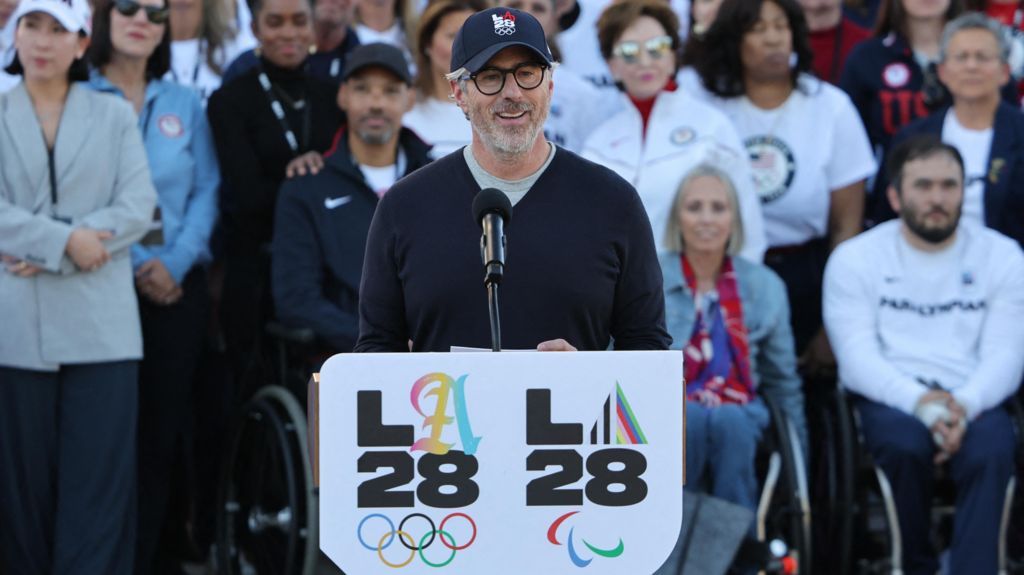

  • LA 2028 Olympics chief ‘deeply regrets’ flirty emails with Ghislaine Maxwell

    LA 2028 Olympics chief ‘deeply regrets’ flirty emails with Ghislaine Maxwell

    Casey Wasserman, Chairman of the Los Angeles 2028 Olympic Games organizing committee, has issued a formal apology following the disclosure of flirtatious email exchanges with convicted sex trafficker Ghislaine Maxwell. The correspondence, dating back to 2003, emerged among millions of documents recently unsealed by the U.S. Department of Justice.

    In one particularly revealing message, Wasserman wrote to Maxwell: ‘I think of you all the time… So what do I have to do to see you in a tight leather outfit?’ These communications occurred years before Maxwell’s criminal activities with financier Jeffrey Epstein became publicly known.

    Maxwell is currently serving a 20-year prison sentence for her role in recruiting and trafficking underage girls for sexual exploitation by Epstein, who died in federal custody in 2019 while awaiting trial on sex trafficking charges.

    Through an official statement obtained by AFP, Wasserman expressed profound regret: ‘I deeply regret my correspondence with Ghislaine Maxwell which took place over two decades ago, long before her horrific crimes came to light.’ He specifically emphasized that he ‘never had a personal or business relationship with Epstein,’ though he acknowledged participating in a single humanitarian delegation trip aboard Epstein’s aircraft in 2002 through the Clinton Foundation.

    The document release has sparked renewed scrutiny of individuals connected to Epstein’s network, despite no evidence of wrongdoing by Wasserman in the published materials. The BBC has sought additional comment from the Olympic executive regarding the revelations.

    Wasserman, who established a prominent sports and entertainment agency in 2002, serves as a trustee for the Clinton Foundation according to Olympic organizational records. The disclosure coincides with Maxwell’s recent agreement to provide sworn testimony before a congressional committee investigating the federal government’s handling of Epstein-related documents. The committee has also summoned former President Bill Clinton and former Secretary of State Hillary Clinton to testify, though Bill Clinton has consistently denied awareness of Epstein’s criminal activities and faces no allegations from Epstein’s survivors.

  • Shanghai celebrates Spring Festival with intl students

    Shanghai celebrates Spring Festival with intl students

    Shanghai transformed into a cultural crossroads on January 29, 2026, as nearly 100 international students joined Chinese educators and peers at Shanghai Library East for a dual celebration. The event simultaneously launched the 8th Shanghai Get-together Writing Contest while welcoming the upcoming Spring Festival with traditional Chinese New Year activities.

    The gathering provided international participants with immersive experiences in Chinese cultural traditions while creating opportunities for deeper cross-cultural understanding. Now entering its eighth consecutive year, the writing initiative encourages foreign visitors to document their Shanghai experiences through both written narratives and short video submissions.

    Marking a significant diplomatic milestone, the 2026 contest introduces a special category honoring the 70th anniversary of China-Africa diplomatic relations. This new award category will specifically recognize stories showcasing Sino-African friendship and cultural exchange within Shanghai’s urban landscape.

    “Shanghai extends its welcome to the global community through openness and cultivates international friendships through inclusiveness,” stated Su Ling, Vice President of the Shanghai People’s Association for Friendship with Foreign Countries. “Our commitment remains firm in building bridges of mutual comprehension and expanding our worldwide network of companions.”

    Previous contest winner Ijaz Ul Haq from Pakistan reflected on his experience, characterizing Shanghai as an educational environment beyond traditional classrooms. “The city itself became my second classroom,” he noted, “where daily interactions and cultural encounters shaped my learning journey far beyond academic settings.”

  • Rare earths and data centres: India pushes local industry as global tensions rise

    Rare earths and data centres: India pushes local industry as global tensions rise

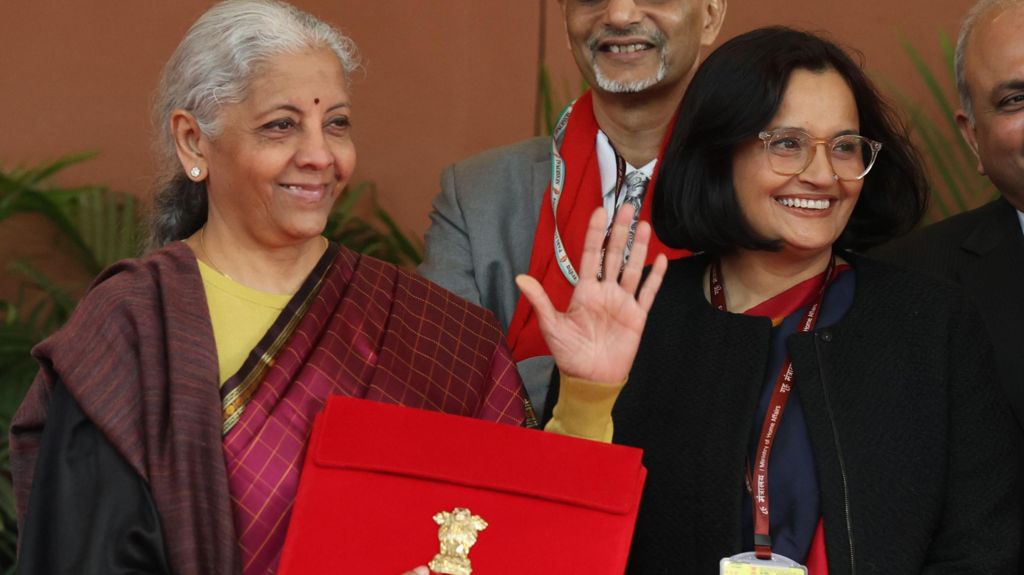
    Indian Finance Minister Nirmala Sitharaman unveiled the nation’s 2026-27 budget on Sunday, implementing a strategic pivot toward fiscal restraint following extensive tax concessions implemented last year. The budget framework emphasizes infrastructure development, domestic manufacturing support, and revised fiscal targets while navigating challenges posed by U.S. tariff policies.

    The budgetary allocations reveal significant increases in capital expenditure, with infrastructure investment rising 9% to ₹12.2 trillion ($133.1 billion). Defense spending witnessed an even more substantial 20% boost, reflecting heightened global geopolitical tensions. These investments continue the Modi administration’s decade-long emphasis on infrastructure-led economic growth.

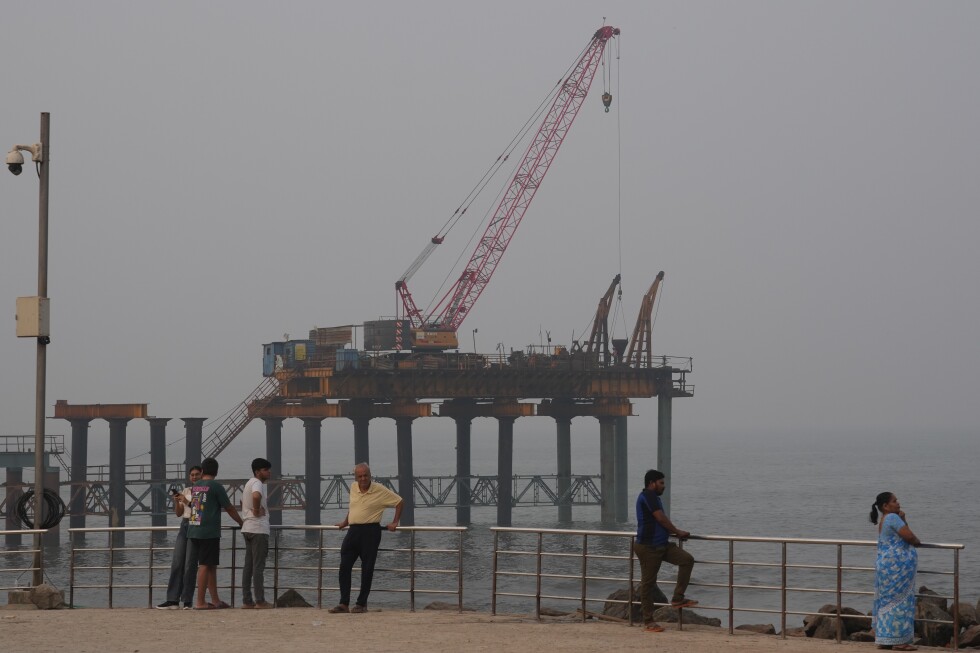
    Seven strategic sectors received targeted manufacturing support, including semiconductors, data centers, textiles, and rare earth minerals. The government announced dedicated rare earth corridors across four states—Tamil Nadu, Kerala, Andhra Pradesh, and Odisha—building upon November’s ₹73 billion rare earth development scheme. A second semiconductor mission received $436 million in funding to advance equipment production and intellectual property development.

    Notably, the budget introduced substantial incentives for foreign cloud companies, offering tax holidays until 2047 for data center investments and global cloud services. This measure aims to accelerate capacity creation in a capital-intensive sector that has already attracted significant investments, including Google’s $15 billion facility announcement.

    The textiles sector gained attention through new mega-parks designed to enhance export competitiveness, particularly following the recent India-EU free trade agreement. Additional support emerged through expanded duty-free input limits for seafood exports and customs duty exemptions for lithium-ion battery manufacturing components.

    Despite these initiatives, financial markets reacted negatively to increased Securities Transaction Tax (STT) on derivatives trading, causing significant declines during special Sunday trading sessions. Market analysts warned this could increase transaction costs and reduce derivative market volumes.

    The budget notably transitioned from rigid annual deficit targets to a broader debt-to-GDP ratio framework, aiming to reduce the ratio from 56% to 50% (±1%) by 2030-31. For the upcoming fiscal year, the deficit is projected at 4.3% of GDP, down from 4.4%, while the debt ratio should ease to 55.6%. This shift provides greater fiscal flexibility while maintaining discipline amid expected GDP growth moderation from 7.4% to a slightly lower pace due to U.S. trade policies.

  • India’s budget boosts infrastructure spending while vowing fiscal discipline

    India’s budget boosts infrastructure spending while vowing fiscal discipline

    NEW DELHI — In a strategic move to navigate global economic volatility, Prime Minister Narendra Modi’s administration unveiled its annual budget to Parliament on Sunday, emphasizing sustained growth through infrastructure investment and manufacturing expansion while maintaining fiscal discipline.

    Finance Minister Nirmala Sitharaman presented the 2026-27 fiscal blueprint against a backdrop of international challenges including elevated interest rates, geopolitical friction, and protectionist trade policies. The budget, effective April 1, aims to position India more prominently within global supply chains while building domestic economic resilience.

    Notably absent were populist measures, with the government instead focusing on structural reforms targeting seven strategic sectors: biopharmaceuticals, semiconductors, electronics components, and rare earth magnets. The budget allocates 12.2 trillion rupees ($133 billion) for capital expenditure—primarily infrastructure—representing an increase from the previous year’s 11.2 trillion rupees.

    The government reaffirmed its commitment to fiscal consolidation, targeting a reduced deficit of 4.3% of GDP for the coming year, down from the anticipated 4.4% for the current fiscal ending March. This restraint comes despite projections from Thursday’s economic survey forecasting 6.8-7.2% growth fueled by rising domestic consumption.

    Key initiatives include establishing three chemical production parks to reduce import dependency, enhancing credit support for small and medium enterprises, and undertaking a comprehensive review of foreign investment rules to attract capital amid competitive global markets.

    Transportation infrastructure received significant attention, with plans for seven high-speed rail corridors connecting major cities, new dedicated freight corridors for rare earths, and the operationalization of 20 waterways over five years. The budget also includes provisions for developing ecological tourism trails in mountainous and coastal regions.

  • Slovakia PM’s national security adviser resigns over Epstein links

    Slovakia PM’s national security adviser resigns over Epstein links

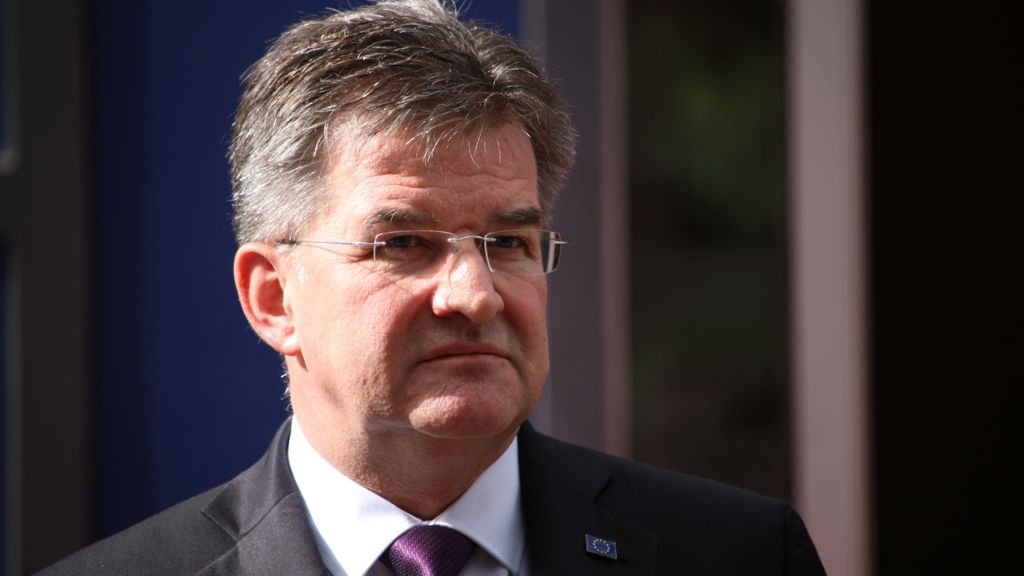
    Slovakia’s National Security Adviser Miroslav Lajčák has tendered his resignation after newly released court documents revealed his communications with convicted sex offender Jeffrey Epstein. The documents, part of a three-million-page release by the U.S. Department of Justice, show exchanges between Lajčák and Epstein that included discussions about women and diplomatic favors.

    Prime Minister Robert Fico confirmed accepting the resignation in a Saturday video address, praising Lajčák as ‘an incredible source of experience in diplomacy and foreign policy.’ The resignation comes amid growing political pressure in Slovakia regarding Lajčák’s association with Epstein, who died in custody in 2019 while awaiting trial on sex trafficking charges.

    The released correspondence includes a October 2018 text exchange where Epstein and Lajčák engaged in banter about women prior to a scheduled meeting with Russian Foreign Minister Sergei Lavrov. Epstein suggested Lajčák could ‘have them both’ regarding unidentified women, while Lajčák jokingly requested an invitation to ‘these games’ and claimed he would ‘take the MI girl.’ The conversation later shifted to Epstein requesting a t-shirt featuring Lavrov and deceased Russian UN ambassador Vitaly Churkin.

    In a separate November 2017 email, Lajčák asked Epstein to assist a female film producer with Oscar consideration for her movie. While the documents don’t indicate illegal activity by Lajčák, they have raised ethical questions about his judgment while serving as Slovakia’s foreign minister.

    Lajčák initially denied discussing women with Epstein when the files surfaced Friday but subsequently opted to resign to prevent political damage to Prime Minister Fico’s government. Fico characterized the criticism as ‘an attack against me’ and denounced what he called widespread hypocrisy in the response.

    The veteran diplomat had served in four Slovak governments, including three under Fico’s leadership, and most recently acted as EU special representative for the western Balkans. His resignation highlights the continuing ripple effects of the Epstein case, which has implicated numerous high-profile figures globally, including business leaders, politicians, and royalty.

  • Pegasus fondant artwork ushers in Year of the Horse in Shanghai

    Pegasus fondant artwork ushers in Year of the Horse in Shanghai

    Shanghai has unveiled a spectacular culinary masterpiece to welcome the upcoming Lunar New Year—a monumental 4-meter-tall Pegasus sculpture crafted entirely from fondant. The breathtaking artwork made its debut on January 30, 2026, representing an extraordinary fusion of traditional Chinese cultural elements, heritage craftsmanship techniques, and contemporary artistic expression.

    The magnificent white winged horse, requiring over one ton of fondant material, stands as a symbolic tribute to the Year of the Horse in the Chinese zodiac cycle. Master sugar artist Zhou Yi, nationally celebrated as China’s ‘Sugar King,’ led the ambitious project utilizing intangible cultural heritage techniques passed down through generations.

    Zhou and his dedicated five-member team invested nearly four months of meticulous work to create the masterpiece from initial concept to final execution. The Pegasus installation forms part of Shanghai’s broader initiative to establish itself as a global cultural metropolis, seamlessly blending commercial appeal with artistic innovation while honoring traditional Chinese cultural motifs.

    The fondant sculpture represents more than seasonal celebration—it demonstrates how ancient craftsmanship can find renewed relevance through modern artistic interpretation, creating cultural dialogue between past and present while captivating public imagination through edible art on a monumental scale.

  • Carlos Alcaraz beats Novak Djokovic to become the youngest man to complete a career Grand Slam

    Carlos Alcaraz beats Novak Djokovic to become the youngest man to complete a career Grand Slam

    MELBOURNE, Australia — In a stunning display of resilience and skill, 22-year-old Spanish phenom Carlos Alcaraz has etched his name into tennis history by becoming the youngest male player ever to complete the career Grand Slam. The world’s top-ranked player achieved this monumental feat at the Australian Open on Sunday, overcoming tennis legend Novak Djokovic in a thrilling four-set final that showcased the dramatic changing of the guard in men’s tennis.

    The championship match began with Djokovic, pursuing an unprecedented 25th major title, dominating the first set 6-2 in just 33 minutes. The 38-year-old Serbian had previously won all 10 of his finals at Melbourne Park, but Alcaraz mounted an extraordinary comeback, winning the subsequent sets 6-2, 6-3, 7-5 in a match that lasted just over three hours.

    “This means the world to me—it’s a dream come true,” an emotional Alcaraz stated during the trophy ceremony. He acknowledged the pivotal moment when the match turned in his favor: “Tennis can change on just one point. One feeling, one shot can completely transform the entire match.”

    The victory was particularly significant as both players entered the final after grueling five-set semifinals. Alcaraz had defeated No. 3 Alexander Zverev, while Djokovic’s win over two-time defending champion Jannik Sinner ended after 1:30 a.m. on Saturday.

    The match reached a critical juncture in the fourth set when Djokovic, despite trailing two sets to one, nearly engineered another of his characteristic comebacks. After fending off six break points and whipping the crowd into chants of “Nole, Nole, Nole!” the Serbian earned his first breakpoint chance since the second set. However, a forehand error proved costly, and Alcaraz seized the opportunity to close out the match.

    Alcaraz paid tribute to his support team, noting recent coaching changes that saw Samuel Lopez step up after his parting with longtime coach Juan Carlos Ferrero. “Nobody knows how hard I’ve worked for this trophy,” Alcaraz revealed. “The preseason was an emotional rollercoaster, but my team pushed me every day to do all the right things.”

    Djokovic graciously acknowledged his opponent’s historic achievement, describing Alcaraz’s performance as “legendary” while joking about their potential rivalry over the next decade. The match carried additional significance with Spanish legend Rafael Nadal, whom both players acknowledged as an inspiration, watching from the stands.

    At 22 years and 272 days, Alcaraz broke the previous record held by Don Budge since 1938 (22 years, 363 days) and became only the ninth man in tennis history to achieve the career Grand Slam. His trophy collection now includes seven major titles: two each at Wimbledon, the French Open, and the U.S. Open, plus his newly acquired Australian Open championship.

  • Mass evictions in Lagos displace thousands including baby twins now living in a canoe

    Mass evictions in Lagos displace thousands including baby twins now living in a canoe

    LAGOS, Nigeria — In the early hours of January 11, Victor Ahansu and his family received their only warning as bulldozers descended upon their Makoko home—the grinding sound of heavy machinery that would leave them homeless. The Ahansu family, including 5-month-old twins, now reside in a wooden canoe shielded from the elements by nothing more than a woven plastic sack, joining thousands displaced in Lagos’ ongoing mass evictions.

    Makoko, one of Africa’s oldest and largest waterfront settlements established in the 19th century, represents a historic community where generations have lived in stilt houses above the lagoon. Known colloquially as the ‘Venice of Africa,’ this distinctive neighborhood has long captured the imagination of urban planners and nonprofit organizations while simultaneously drawing the attention of developers eyeing its valuable waterfront real estate.

    According to local advocacy coalitions, the current demolition wave that began in late December has resulted in the destruction of over 3,000 homes and displacement of approximately 10,000 residents. While authorities cite safety concerns regarding proximity to electrical infrastructure, residents allege the demolitions extended far beyond the mandated 100-meter clearance zone without adequate warning or compensation.

    The Lagos state government, through Governor Babajide Sanwo-Olu, has defended the actions as necessary for urban development and risk mitigation in a rapidly growing megacity of approximately 20 million people. However, critics argue these evictions disproportionately target impoverished communities without providing resettlement alternatives as required by law.

    The human impact is devastating. Basirat Kpetosi, a mother of five, described waking to bulldozers destroying the home she built just last year. ‘We sleep in the open,’ she recounted. ‘When it rained, it rained on my children and me.’

    The situation highlights Lagos’ severe housing affordability crisis, where annual rents for a single room in shared accommodation can reach 700,000 naira ($500)—nearly ten times the city’s minimum wage of 77,000 naira ($55). This economic reality leaves displaced residents with virtually no viable alternatives.

    Recent protests against the evictions were met with tear gas from police, underscoring the growing tensions around urban development strategies in one of Africa’s fastest-growing metropolises. The demolitions continue a pattern observed since 2023, with advocacy groups estimating hundreds of thousands have lost homes under the current administration.

    Legal precedent exists for protecting residents’ rights. A 2017 Lagos High Court ruling viewed by AP specifically found that mass evictions without resettlement arrangements violate constitutional protections against cruel and degrading treatment, raising questions about the current operation’s legality.

  • NATO’s ability to deter Russia has taken a hit with trans-Atlantic infighting

    NATO’s ability to deter Russia has taken a hit with trans-Atlantic infighting

    BRUSSELS — While European allies and Canada have committed substantial financial resources to support Ukraine and pledged significant defense budget increases, NATO’s fundamental credibility as a unified military alliance faces unprecedented challenges. Over the past year, trust within the 32-nation organization has deteriorated markedly, creating vulnerabilities that adversaries could potentially exploit.

    The most visible fracture emerged from former U.S. President Donald Trump’s repeated threats to acquire Greenland, a semi-autonomous territory under Danish sovereignty and NATO membership. This was compounded by his derogatory comments regarding allied troops who served alongside American forces in Afghanistan. Although tensions surrounding Greenland have temporarily eased, security analysts warn these internal conflicts have substantially weakened the alliance’s deterrent capabilities.

    Sophia Besch of Carnegie Europe think tank noted in an assessment: “This episode represents a fundamental breach that cannot be reversed. Even without implemented force or sanctions, this weakening of alliance cohesion has lasting consequences.”

    Russia, identified as NATO’s primary security threat, has observed these transatlantic tensions with evident satisfaction. Russian Foreign Minister Sergey Lavrov commented last week: “It’s a major upheaval for Europe, and we are watching it,” while state media gleefully proclaimed the end of trans-Atlantic unity.

    The core deterrence strategy against Russia relies on convincing President Vladimir Putin that NATO would respond unanimously if he expanded the conflict beyond Ukraine. Current internal divisions make such unified response increasingly uncertain.

    In response to longstanding criticism about inadequate defense spending—particularly intense during the Trump administration—European allies and Canada agreed in July to invest 5% of GDP toward defense. This commitment includes 3.5% for core defense (matching current U.S. expenditure levels) and 1.5% for security infrastructure projects by 2035.

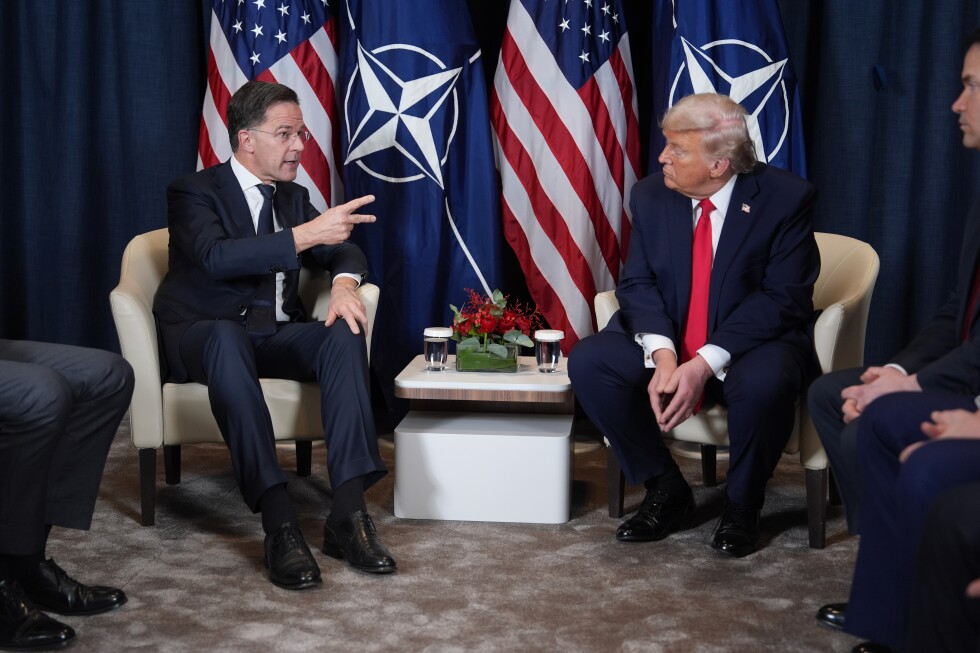
    NATO Secretary-General Mark Rutte has praised these commitments as demonstrating the alliance’s strength, even crediting Trump with reinforcing NATO’s military capabilities. However, Rutte’s diplomatic approach toward the American leadership, including his avoidance of addressing the Greenland controversy, has raised concerns among observers.

    The very foundation of NATO—established in 1949 to counter Soviet threats—rests on Article 5’s collective security guarantee that an attack on one member constitutes an attack on all. Trump’s territorial ambitions toward Greenland fundamentally challenged the principle of inviolable member territories, despite Article 5 not applying to internal disputes.

    U.S. Senators Jeanne Shaheen (D) and Lisa Murkowski (R) warned in a joint statement: “Suggestions that the United States would seize or coerce allies to sell territory do not project strength. They signal unpredictability, weaken deterrence and hand our adversaries exactly what they want.”

    Beyond territorial disputes, Trump’s expressed skepticism about mutual defense commitments has created profound uncertainty among European allies regarding American protection. This doubt extends to potential troop reductions in Europe, with upcoming NATO meetings expected to address Arctic security and possible U.S. troop drawdowns that could further undermine alliance cohesion.

    A recent European Union Institute for Security Studies report cautioned that diminishing certainty about U.S. commitment to European security means “the deterrence edifice becomes shakier,” potentially encouraging adversaries to test NATO’s resolve through sabotage, cyberattacks, and escalation without fearing unified retaliation.