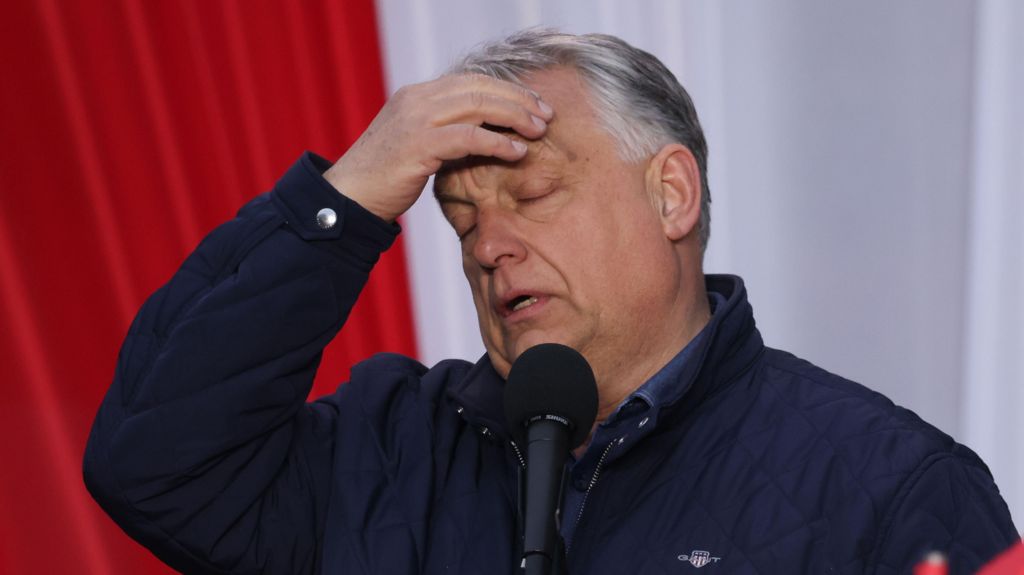
After 16 years at the helm of Hungarian politics, former long-serving Prime Minister Viktor Orbán has announced he will relinquish his newly won seat in Hungary’s national parliament, capping a historic electoral upset that swept his nationalist administration from power. The 62-year-old leader made the announcement in a pre-recorded video address shared on social media Saturday evening, confirming his choice to exit the legislative body to focus on restructuring his right-wing Fidesz party after its stunning defeat in the April 12 general election.
Orbán’s Fidesz, which dominated Hungarian governance for nearly two decades, suffered a catastrophic collapse at the polls: the party saw its parliamentary representation plummet from 135 seats to just 52, falling to opposition after a decisive victory by the Tisza party, led by former Fidesz insider Péter Magyar. Even amid the party’s broad losses, Orbán secured a parliamentary seat via Fidesz’s proportional representation list — a position he now says he will return to the party.
“The mandate I obtained as the lead candidate of the Fidesz-KDNP list is, in fact, a parliamentary mandate of Fidesz. For this reason, I have decided to return it,” Orbán said in his statement. He added that his skills are currently better suited to rebuilding Fidesz’s conservative patriotic movement rather than serving as a sitting legislator. Starting Monday, Fidesz’s parliamentary caucus will be led by Gergely Gulyás, who most recently served as minister in charge of the prime minister’s office, Orbán confirmed following a closed-door meeting of senior Fidesz officials.
Orbán’s political career in Hungary’s parliament stretches back to 1990, when he first won a seat shortly after the fall of communism. He has led Fidesz continuously since that year, and claimed the prime minister’s office in 2010, building an unrivaled grip on Hungarian political life over the next 14 years. But in this year’s election, voters abandoned the incumbent in droves, driven by widespread anger over persistent corruption allegations, stagnant living standards, and the deeply unpopular patronage network known as the NER, which critics say enriched Fidesz loyalists at the expense of public resources.
Magyar’s Tisza party secured a historic two-thirds majority in the 199-seat parliament, a mandate that clears the way for sweeping changes to both Hungary’s domestic agenda and its foreign policy alignment. During the campaign, Tisza supporters frequently chanted “Russians go home,” a sharp rebuke to Orbán’s longstanding close alignment with Russian President Vladimir Putin and his warm ties to former U.S. President Donald Trump that often put Budapest at odds with European Union partners. In contrast, Magyar has pledged to reset Hungary’s relationships with the EU and Ukraine, ending Orbán’s pattern of blocking EU policy initiatives and aid to Kyiv.
Domestically, Hungary’s incoming prime minister has vowed to roll back Orbán-era overhauls to the country’s education and healthcare systems, root out systemic corruption, restore judicial independence, and dismantle the NER patronage system that remains widely unpopular among Hungarian voters. Magyar has pushed for a rapid transition of power, with Hungary’s new parliament scheduled to convene for its inaugural session on May 9.
While Orbán is stepping back from parliament, he has made clear he intends to remain a central figure in Hungarian nationalist politics. The question of whether he will retain his role as Fidesz party leader will be settled at a special party conference scheduled for June, he confirmed, as he commits to reorganizing the movement he has led for more than three decades.