In a landmark ruling that has sent shockwaves across India, nine sitting police officers have received death sentences for the brutal 2020 custodial killing of a father and son in the southern state of Tamil Nadu, a case that reignited national debate over endemic police brutality in the country.
The two victims, 58-year-old P Jeyaraj and his 38-year-old son Benicks, were taken into custody in June 2020 for the alleged offense of violating national Covid-19 lockdown rules by keeping their small mobile phone retail shop open past the mandated curfew. Within days of their detention, both men were dead while still in police custody.
During Monday’s sentencing hearing, the presiding judge laid bare the horrific details of the abuse the pair suffered. The judge confirmed that Jeyaraj and Benicks were stripped naked and systematically tortured in front of each other by the accused officers, in a clear violation of every principle of lawful detention. In scathing remarks directed at the convicted officers, the judge stated that the assault was carried out with explicit intent to kill, calling the incident a blatant abuse of the state authority entrusted to the men.
The judge rejected any calls for leniency, noting that all nine officers are formally educated, and that their age or personal family circumstances could not justify a reduced sentence. “They attacked unarmed civilians who posed no threat to them. They do not deserve forgiveness,” the judge added.
Last month, all nine officers were formally found guilty of murder by the court. Under Indian legal procedure, the convicted personnel retain the right to file an appeal against both the conviction and their death sentences with a higher judicial bench.
In total, 10 police officers were arrested immediately following the deaths in 2020. One of the accused died from complications related to Covid-19 later that same year, leaving nine to stand trial.
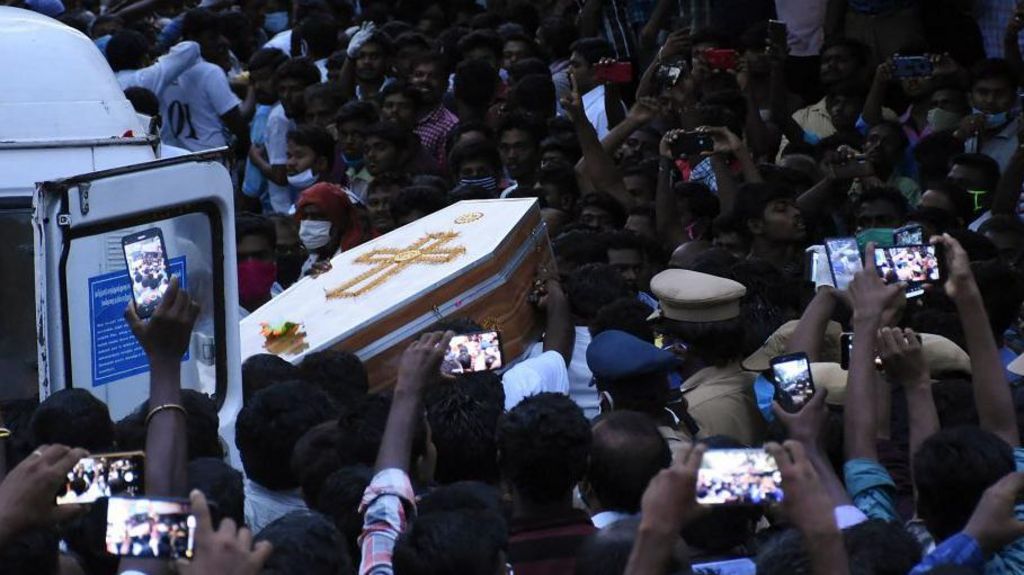
When news of the custodial deaths first emerged four years ago, the incident sparked widespread public protests across Tamil Nadu. State opposition legislators were among the first crowds to take to the streets to demand accountability for the deaths. High-profile public figures, including Congress party opposition leader Rahul Gandhi and star Indian cricketer Shikhar Dhawan, added their voices to the calls for justice via social media platforms, amplifying the national outcry.
Beyond the immediate calls for punishment, the 2020 killings pushed the long-simmering issue of custodial abuse and police brutality in India back to the center of national public discourse. Human rights organizations have documented that hundreds of people die in police or judicial custody across India every year, with many of these deaths linked to systematic torture. Rights advocates note that the use of abuse to force confessions from suspects has become a normalized, entrenched part of policing culture in many parts of the country.
Earlier in 2024, a group of independent United Nations human rights experts issued a public call for India to implement sweeping, comprehensive reforms to bring its national policing practices in line with binding international human rights standards. Tuesday’s sentencing marks one of the most high-profile convictions of police personnel for custodial killing in recent Indian history, with activists watching closely to see whether the ruling will pave the way for broader systemic changes.