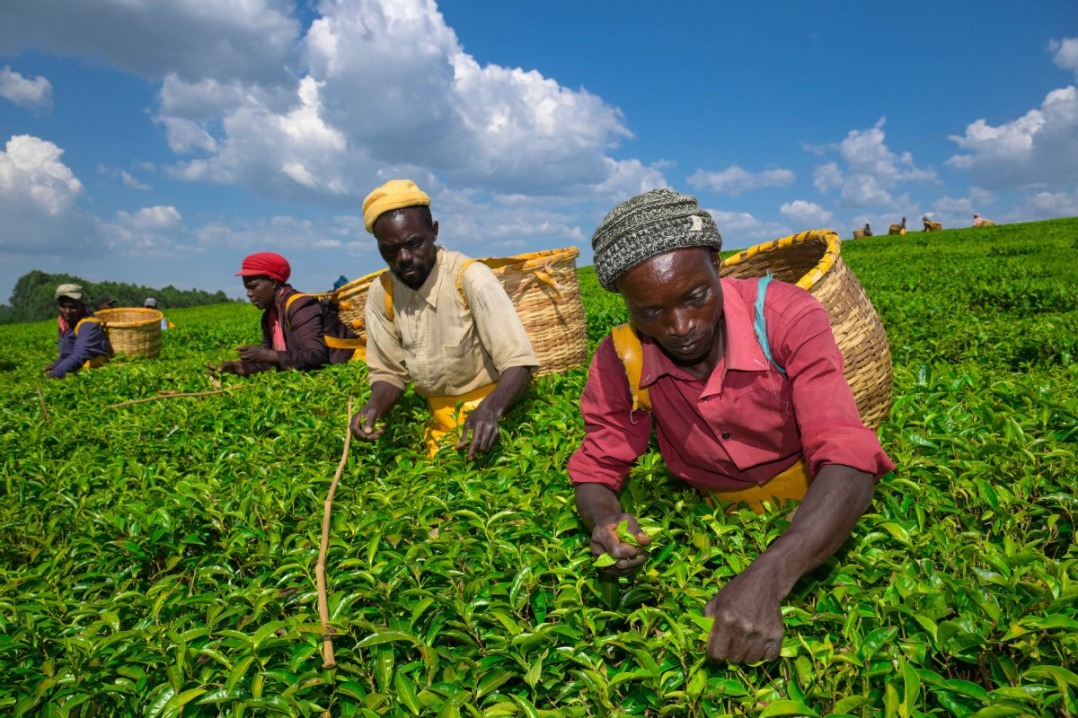
Kenya, the world’s top exporter of black tea, is breaking new ground across the African continent with an ambitious initiative: the launch of the first low-carbon tea certification system, designed to future-proof one of the nation’s most critical agricultural exports and carve out a new premium niche in the competitive global tea market.
The initiative, which is still in its early pilot phase, targets carbon emission reductions across every link of the tea value chain — from smallholder farm cultivation and leaf transportation to factory processing and final packaging. Crucially, the project aims to deliver these sustainability gains without compromising the high productivity and signature quality that have cemented Kenya’s global market leadership.
Piloting the program are two factories based in Nyamira County, western Kenya — a longstanding region celebrated for its abundant, high-quality tea yields: the established Nyansiongo Tea Factory and its newer satellite facility, Matunwa Tea Factory. Both operations are rolling out a suite of climate-friendly production practices to earn low-carbon accreditation, positioning them to capture growing demand from global buyers that now prioritize verifiable sustainability credentials when sourcing agricultural goods.
The three-party triangular cooperation project is backed by funding from China and Germany, and implemented by the United Nations Food and Agriculture Organization (FAO) in partnership with the Kenya Tea Development Agency (KTDA). Its core mission is to support the Kenyan tea sector’s transition to low-carbon production by scaling energy-efficient technologies and普及 climate-smart agricultural methods.
Low-carbon production, defined as practices that cut carbon dioxide emissions — the primary greenhouse gas driving human-caused climate change — addresses an urgent threat to Kenya’s tea industry already facing tangible climate impacts. “Global warming is already affecting tea-growing areas. If we do not take action now, the area under tea could reduce significantly,” explained Daniel Machara, chief executive officer of both Nyansiongo and Matunwa factories. Machara noted that rising average temperatures and increasingly erratic rainfall patterns have gradually shrunk the land suitable for tea cultivation, dragging down yields and pushing up production costs.
Collectively, Kenyan tea supports more than 6 million livelihoods across the country and generates billions of dollars in annual foreign exchange revenue, making this low-carbon transition both an economic and climate priority. Machara framed the certification push as a long-term strategic move that could not only secure the industry’s future but also double Kenya’s tea export earnings over time. The two pilot factories aim to complete their low-carbon certification within the next two years.
Nyansiongo, commissioned in 1974, has grown into one of western Kenya’s leading tea processors, scaling annual green leaf intake from roughly 8 million kilograms in its early years to 25 million kilograms today, a growth Machara credits to ongoing operational efficiency gains, improved farm management and early adoption of new technologies. The facility produces widely traded CTC black tea, while Matunwa — launched in 2021 — specializes in orthodox tea, a premium product growing in popularity across high-end global markets.
Shifting consumer demand for verifiably sustainable products has driven the factories’ adoption of a series of innovative eco-friendly changes. One of the most impactful adjustments has been the introduction of co-firing boilers, which replace 80 percent of traditional firewood with biomass briquettes manufactured from compressed agricultural waste and sawmill byproducts. Production manager Erick Moturi noted this shift has cut pressure on local forests by an estimated 80 percent, with plans to reduce firewood reliance even further to prevent environmental degradation.
Additional decarbonization measures are already in the pipeline: starting in December 2026, the factories will begin phasing out their aging fleet of diesel-powered green tea leaf transport vehicles, replacing them with electric models as diesel units reach the end of their seven-year operational lifecycle. The transition draws on technical expertise from China, which has already built extensive experience integrating electric vehicles into tea production supply chains. The factories have also installed an on-site effluent treatment system that recycles wastewater from processing lines for reuse, cutting pollution discharge, and implemented proactive machinery maintenance to improve energy efficiency and reduce emissions.
Farmers supplying the factories are also receiving training and support to adapt their growing practices. Factory management encourages adoption of drought-resistant, climate-smart tea varieties, trains smallholders to minimize chemical input use, and supports income diversification by encouraging farmers to interplant tea with alternative crops such as avocados to build resilience against climate shocks.
China and Germany are providing free technical support and skills training for both farmers and factory staff, equipping them to adopt climate-smart technologies and practices that boost climate resilience and ultimately increase household incomes. Machara noted that producers are eager to participate in exchange programs to gain on-the-ground experience in China and Germany, bringing back advanced sustainable agricultural expertise to benefit Kenyan smallholders and processors alike.
Monica Orwochi, chairperson of Nyansiongo Tea Factory’s management board, emphasized that the project aligns productivity growth with environmental stewardship: “We educate farmers on proper farming methods so they can produce high-quality tea while protecting the planet.”