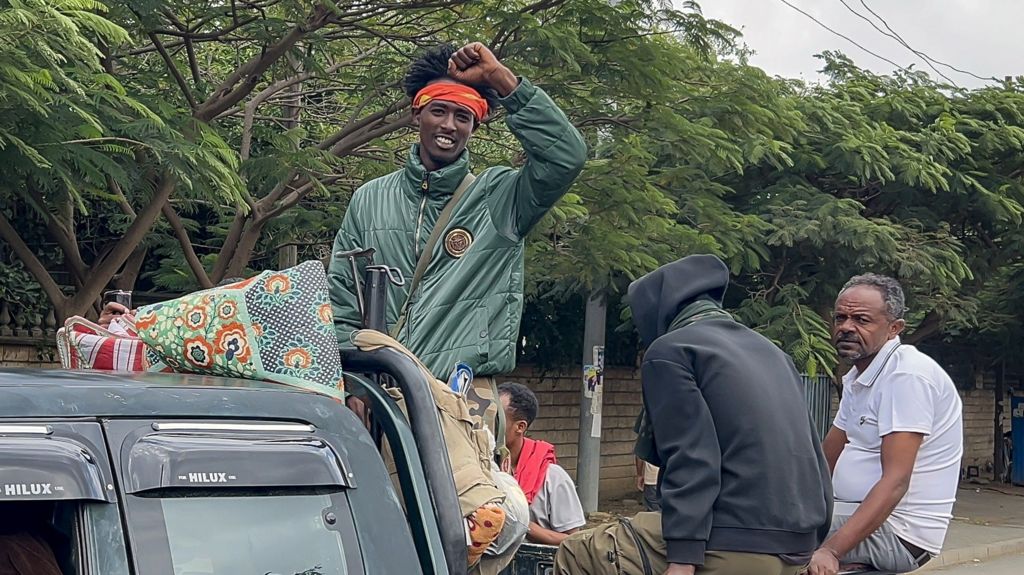
In Mekelle, the capital of Ethiopia’s northern Tigray regional state, small business owner Firut Me’ar, a single mother raising a 10-year-old daughter, struggles to keep her hair salon afloat in the aftermath of a sudden, brief resumption of civil conflict that reignited in late September, breaking a 2022 formal peace deal that had ended two years of brutal war. “Residents here cannot afford to prioritize beauty services when many cannot even put meals on the table for their children,” Me’ar shared in an emotional interview with the BBC, noting that while active frontline combat in the city has ceased since federal forces took control, local purchasing power has collapsed, public morale is at rock bottom, and widespread uncertainty about what comes next hangs over every household. The latest round of fighting pitted the Ethiopian National Defence Forces (ENDF) against the Tigray People’s Liberation Front (TPLF), the political party that governed Tigray for decades. In less than two weeks of combat, federal troops advanced unopposed into Mekelle and all other major urban centers across the region, after the TPLF announced what it framed as a voluntary “strategic withdrawal” rather than a military defeat. The short conflict left hundreds dead, with dozens of civilian casualties attributed to Ethiopian Air Force drone strikes and aerial bombardment campaigns. Federal government officials and Prime Minister Abiy Ahmed’s senior advisors, including former TPLF high-ranking defector Getachew Reda, have publicly declared the war in Tigray effectively over, stating that the only remaining operational task is to clear scattered TPLF remnants from rural areas to pave the way for full regional stabilization. African peace and security analyst Cameroon Hudson outlined multiple structural factors behind the TPLF’s rapid loss of control over urban strongholds: the party has suffered a dramatic erosion of popular local support, crippling internal leadership fragmentation, a severe shortage of advanced military hardware to match the ENDF’s modernized arsenal, and a wave of high-profile defections and arrests that stripped the movement of many of its top generals, strategic planners, diplomats, and veteran fighters. Abraha Hailezgi, a scholar based at Mekelle University, corroborated this assessment, noting that in recent years the TPLF’s armed wing became widely associated with coercive tactics, human rights abuses, forced recruitment drives, and arbitrary governance, leading much of the local population to view it as an occupying force rather than a representative defender of Tigrayan interests. Speaking to the BBC from an undisclosed remote location, TPLF spokesperson Mikael Asgedom rejected all claims of defeat, framing the pullback from urban areas as a deliberate tactical choice to lure ENDF units deep into Tigray’s rugged rural heartland, where federal troops can be isolated and targeted on terrain favorable to guerrilla operations. Asgedom confirmed that TPLF fighters have already launched scattered hit-and-run attacks against federal positions across the region’s hinterland, as part of preparations for a planned large-scale counteroffensive. Independent verification of on-ground developments remains extremely challenging, even though phone and internet services that were cut at the outbreak of fighting have since been restored. Anonymous local residents across central, northern, and northwestern Tigray have reported ongoing skirmishes involving heavy artillery and continued drone strikes, with particularly intense clashes documented near the Eritrean border town of Sheraro, where both sides have deployed heavy military convoys. The resurgence of armed violence has re-opened deep, unhealed wounds from the 2020-2022 civil war, which killed an estimated hundreds of thousands of people, saw widespread documented human rights abuses, and included widely verified allegations of ethnic cleansing in Western Tigray. The renewed presence of Eritrean troops, who were accused of perpetrating some of the worst atrocities during the earlier conflict, alongside Ethiopian federal forces, has triggered widespread panic and deep-seated fear among local residents, many of whom report having no sense of personal safety even in areas formally under government control. A sharp divide has emerged among regional security analysts regarding the long-term trajectory of the conflict. U.S.-based prominent Ethiopian political commentator Yared Tibebu argues that the TPLF, which built its legacy on decades of successful protracted armed insurgency, is already laying the groundwork for a prolonged multi-year conflict, and that the newly formed “Alliance for Survival” – a seven-member rebel coalition led by the TPLF that formed in September to oust Prime Minister Abiy’s administration, including the large Amhara Fano militia estimated to have 70,000 to 80,000 fighters – could provide the movement with the combined manpower and organizational capacity to rebuild its offensive capabilities once internal divisions are resolved. In contrast, analyst Hudson contends that a full-scale return to large-scale war is highly unlikely, predicting instead that the TPLF will only be able to sustain low-level guerrilla insurgency operations, as it no longer has the troop numbers, military hardware, or broad popular support required to directly confront the significantly expanded and modernized ENDF. Hudson also noted that Eritrea, which was briefly rumored to be hosting senior TPLF leaders and potentially providing backing to the group, has expelled TPLF leadership from its territory following a November directive from Eritrean President Isaias Afwerki shortly after his return from a visit to Russia, as Asmara seeks to avoid provoking a military confrontation with Ethiopia, conserve its limited resources, and protect its recently renewed diplomatic outreach to the United States, a longstanding critic of the TPLF. Even as analysts debate future conflict scenarios, Mekelle University academic Abraha Hailezgi emphasizes that no lasting peace can take root in Tigray unless the federal government takes concrete steps to address long-running local grievances of systemic political and economic marginalization. For their part, many Tigrayan community leaders and residents remain deeply skeptical of the federal government’s stated commitment to equitable reconciliation, fearing that Addis Ababa is instead exploiting the TPLF’s current weakened position to consolidate control over the region without addressing its core demands. For ordinary civilians like salon owner Firut Me’ar, all political calculations and military posturing are secondary to a single overriding priority. “People here are exhausted from decades of conflict and endless political turmoil,” she said. “We do not care about power struggles anymore – all we want is lasting peace, and a chance to rebuild our shattered lives.”