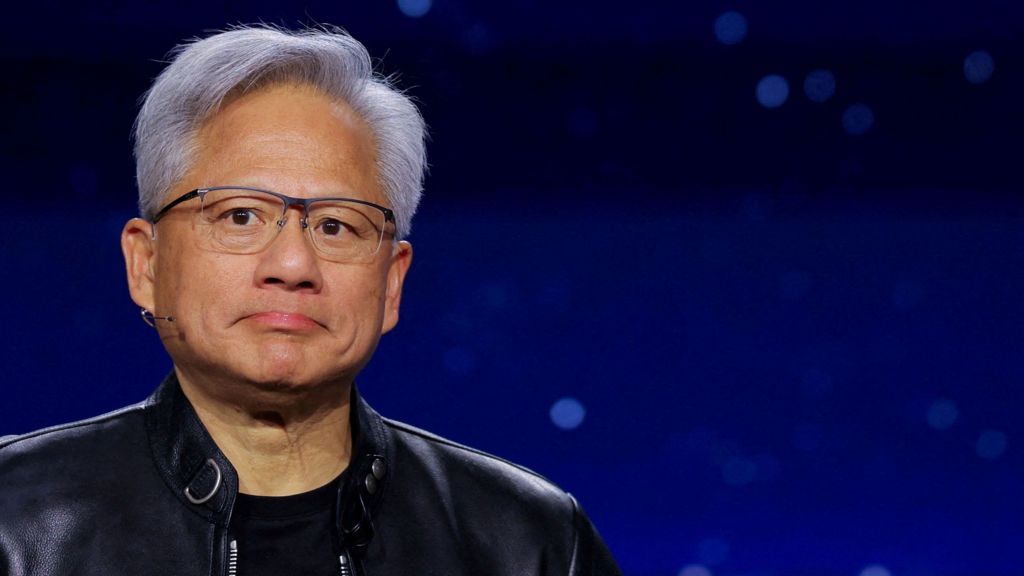
In a seismic upheaval that has sent shockwaves rippling from Silicon Valley’s tech hubs all the way to the halls of the U.S. Capitol, Jensen Huang — the iconic, 30-year public face of global AI chip giant Nvidia — has stepped down abruptly from his post as chief executive, following a cascade of explosive revelations about alleged extramarital relationships, one of which U.S. lawmakers are linking to potential national security risks involving a suspected Chinese intelligence asset.
The scandal first broke into public view on Sunday, when Huang publicly acknowledged he had been “unfaithful” to his wife Lori, his partner of 40 years, after initial reports surfaced of a relationship with Alice Huang, an executive at Singapore-based firm Megaspeed who has no familial relation to the Nvidia leader. Per reporting from the New York Times, U.S. intelligence circles have long flagged Alice Huang as a suspected asset working on behalf of Chinese espionage efforts, a claim Chinese officials have forcefully dismissed as a baseless smear. U.S. Attorney General Todd Blanche confirmed on Thursday that the Department of Justice has not yet reached any formal, conclusive finding on whether Alice Huang was engaged in spying activities for Beijing.
A second, subsequent revelation broke on Wednesday, disclosing that Huang had carried on a separate extramarital relationship with Kimberly Powell, a long-tenured Nvidia executive who reported directly to him. Multiple insiders speaking to the BBC confirmed that rank-and-file Nvidia staff had noticed the unusually close dynamic between the two for an extended period, and the company has since issued a blanket internal ban on all public employee comments or media outreach related to the unfolding crisis.
The sequence of disclosures immediately drew scrutiny from U.S. legislative leadership: prominent senators including Elizabeth Warren and Chris Coons, alongside Democratic members of the House Foreign Affairs Committee, have formally demanded that Huang appear before Congress to answer questions about the alleged national security risks. A senior Senate staffer confirmed that Huang could be issued a congressional subpoena if he declines to appear voluntarily for closed or open hearings.
In the immediate wake of Huang’s sudden resignation, Nvidia’s board installed long-serving Chief Financial Officer Colette Kress as interim CEO, who has already convened an emergency summit of the company’s top executive leadership to chart a path forward and oversee a sweeping independent internal investigation. While company officials have stated publicly that they have “no reason to believe that either national security or Nvidia secrets were compromised” through Huang’s alleged conduct, they have pledged that the independent probe will review every available document, communication and piece of evidence to rule out any unauthorized disclosure of sensitive intellectual property or classified information.
The scandal has dealt an unprecedented blow to Nvidia’s once untouchable market valuation, which had surged more than 470% over the past five years on the back of the global AI boom, as the firm’s high-performance graphics processing units — originally designed for consumer video gaming — became the irreplaceable backbone of large language models, generative AI tools and advanced data processing infrastructure across every major tech sector. Over just five consecutive trading days, the company has shed a staggering $550 billion in market capitalization, marking the steepest five-day decline in its 27-year history as a publicly traded firm. The 31% drop from its recent all-time peak has ripple effects far beyond Silicon Valley: Nvidia now accounts for roughly 7% of the weighting of the S&P 500 index, the most widely held benchmark for U.S. retirement 401(k) accounts, meaning billions of dollars in ordinary Americans’ retirement savings have been directly impacted by the stock’s free fall.
The rapid, stunning downfall of Huang — a beloved industry titan widely credited with single-handedly catalyzing the global AI revolution — has become the dominant talking point across San Francisco Bay Area tech circles, drawing inevitable comparisons to the high-profile infidelity scandals that derailed the personal lives of other iconic tech leaders including Microsoft’s Bill Gates and Amazon’s Jeff Bezos over the past decade. Unlike those cases, however, Huang’s personal conduct has collided directly with intensifying U.S. government anxiety over Chinese access to critical advanced semiconductor technology, turning a personal scandal into a high-stakes national security and market crisis that the $3 trillion firm is still scrambling to contain. Huang’s two adult children, who both hold executive positions within Nvidia, remain employed at the company as the board launches a global search for a permanent, long-term CEO to steer the firm through the ongoing uncertainty. To date, all official Nvidia spokespeople and Huang’s personal legal representative have declined to issue any further public comment on the ongoing investigations.