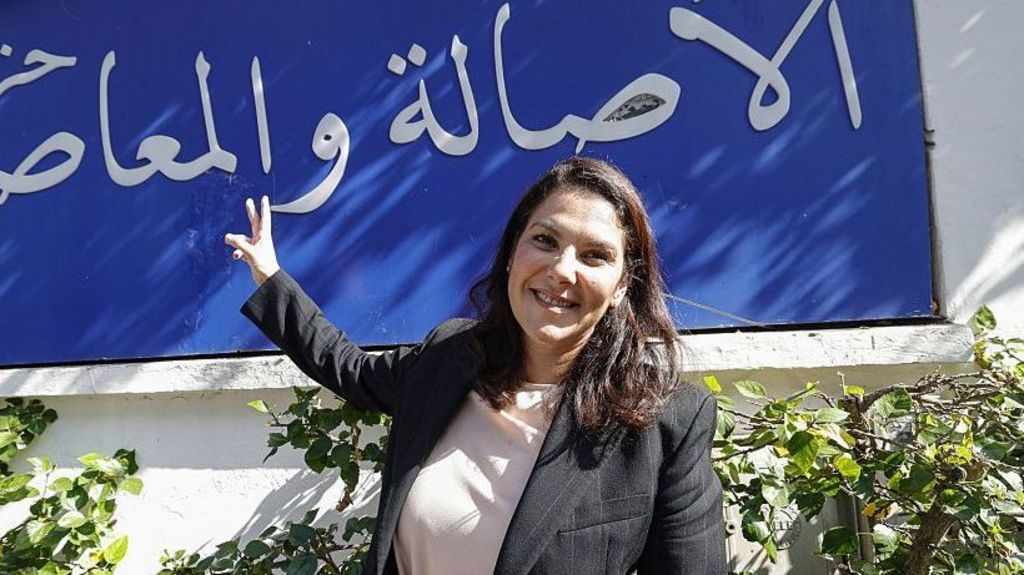
When King Mohammed VI of Morocco named 50-year-old Fatima Zahra El Mansouri as the North African nation’s first female prime minister following September’s parliamentary election, the moment was hailed as a groundbreaking milestone for women in politics by supporters. But the historic appointment has also pulled back the curtain on deep-seated conservative reservations about women holding top leadership roles, reigniting long-running debates over gender equality that have divided Moroccan society for decades. El Mansouri, a veteran politician with more than 20 years of public service experience, led her Authenticity and Modernity Party (PAM) to a plurality of seats in the September vote, and she has since formed a governing coalition with three other parties that commands a 207-seat majority in the 395-member parliament. Before her appointment, she served five years as Minister of National Territory Planning, Urban Planning, Housing and City Policy under the previous administration, and previously held roles as mayor of Marrakech and a member of parliament. In remarks after her royal appointment, El Mansouri framed the moment as a historic win for all Moroccan women, saying, “Being the first female head of government is not just a source of pride for me, but for all the women of the kingdom.” Yet even as many younger Moroccans, particularly women, have celebrated the end of a centuries-long gender barrier to the premiership, prominent conservative and religious voices have pushed back against the appointment, reviving outdated narratives to challenge a woman’s right to hold the office. Earlier this month, Mustafa Ramid, a former justice minister from a previous Islamist-led government, shared a lengthy Facebook post questioning the appointment that cited an ancient Islamic saying: “a people who entrust their affairs to a woman will never succeed.” Ramid argued that Morocco, a majority-Muslim nation, had already struck the right balance between gender equality and state leadership, noting that the monarchy, the country’s most powerful institution, remains exclusively held by men. Morocco functions as a constitutional monarchy on paper, but in practice, executive authority remains concentrated in the hands of 63-year-old King Mohammed VI, who holds sweeping powers over defense, foreign policy and other core governance areas, and retains the right to appoint the prime minister. Street interviews conducted by local broadcaster Chouf TV the day after El Mansouri’s appointment revealed widespread ambivalence among older generations of Moroccan men. Many respondents hesitated to share criticism of the appointment, since open criticism of the monarchy carries criminal penalties under Moroccan law, but several admitted discomfort with a woman leading the government. “It feels strange to have a woman as head of government. I’m not sure if it sits well with me,” one unnamed older man told the broadcaster. Online, bad-faith critics have circulated a viral video of two women fighting by pulling each other’s hair, framing it as a preview of how parliamentary disagreements would play out under El Mansouri’s leadership. The divides exposed by the appointment stretch far beyond the premiership, touching on long-running, contentious debates over gender equality across Moroccan law and society. For decades, women’s rights advocates have pushed for sweeping reform of the Moudawana, Morocco’s core family code that governs marriage, divorce, child custody and inheritance. Current law enshrines multiple unequal provisions for women: daughters typically receive only half the inheritance share of sons in comparable scenarios, and the rule of taasib requires female orphans without brothers to split their inheritance with distant male relatives. The country’s leading body of religious scholars, the Higher Council of Ulemas, has repeatedly rejected calls to reform these unequal inheritance rules, citing traditional Islamic jurisprudence. Polygamy remains legal under specific circumstances in Morocco, and while proposed reforms would allow women to add clauses to marriage contracts banning their husbands from taking additional wives, exceptions still allow polygamy in cases where a first wife is infertile or chronically ill – a provision women’s rights groups have decried as a violation of medical privacy and confidentiality. A broad package of Moudawana reforms was announced in 2024, but the changes have not yet been enacted into law. Morocco’s National Human Rights Council confirmed in a 2022 report that these persistent legal inequalities directly contribute to higher rates of poverty among women across the country. Beyond legal reform, many young Moroccan women are also pushing for progress on access to education for girls in rural areas. Official 2025 data from Morocco’s High Commission for Planning shows that while 100% of girls aged 15 to 17 attend school in urban areas, that figure drops to just 55% in rural regions, where poverty, early marriage, long distances to schools, lack of safe transport, and cultural norms that prioritize keeping daughters at home drive high dropout rates. Young advocate Chifae Laazouzi added that many low-income rural girls also cannot afford menstrual hygiene products, and menstrual health remains a widely stigmatized taboo in many communities. “I would like to see free menstrual products in schools,” Laazouzi told the BBC. While many women’s rights advocates acknowledge that El Mansouri’s appointment breaks a meaningful symbolic barrier, they caution that the milestone does not automatically guarantee progress on gender reform. El Mansouri has not made any high-profile public statements on women’s rights issues throughout her career, and has not yet signaled whether she will push for the long-awaited Moudawana reforms to move forward. Analysts also note that the appointment must be understood within the context of Morocco’s political system, and the low 38% voter turnout recorded in September’s parliamentary election – the lowest turnout in two decades. Dr. Irene Fernandez-Molina, a Global South expert at the UK’s University of Exeter, argues the appointment fits a pattern of what she calls “authoritarian state feminism”, a top-down strategy that leverages women’s rights gains to bolster regime legitimacy. “The latter cannot be understood without the former,” she said, noting that appointing a woman to the premiership allows the monarchy to project an image of modernization and progress, even as the broader political system and pace of social reform remain largely unchanged. Women’s rights advocate Yasmina Benslimane added that El Mansouri’s privileged background – her late father was a senior local official and diplomat – means she has had access to political opportunities most ordinary Moroccan women can only dream of, creating a gap between her experience and that of most women in the country. For many observers, the true test of El Mansouri’s premiership will be whether she delivers on concrete reform, particularly of the Moudawana. Even with a symbolic breakthrough, the new prime minister faces significant structural constraints: she must operate within a political system where the king holds most executive power, and any reform to family law would require confronting the all-male, conservative Higher Council of Ulemas. Many young Moroccan women share the view that El Mansouri’s actions, not her gender, will define her tenure. “I don’t think El Mansouri should be judged by the fact that she is a woman. Being a woman in power doesn’t automatically make someone a champion of women’s rights,” said young activist Sara Zouiten. “Her party presents itself as a modernising political force, so I want to see whether that translates into actual change.”
Morocco’s first female prime minister caught between the king, clerics, and feminists