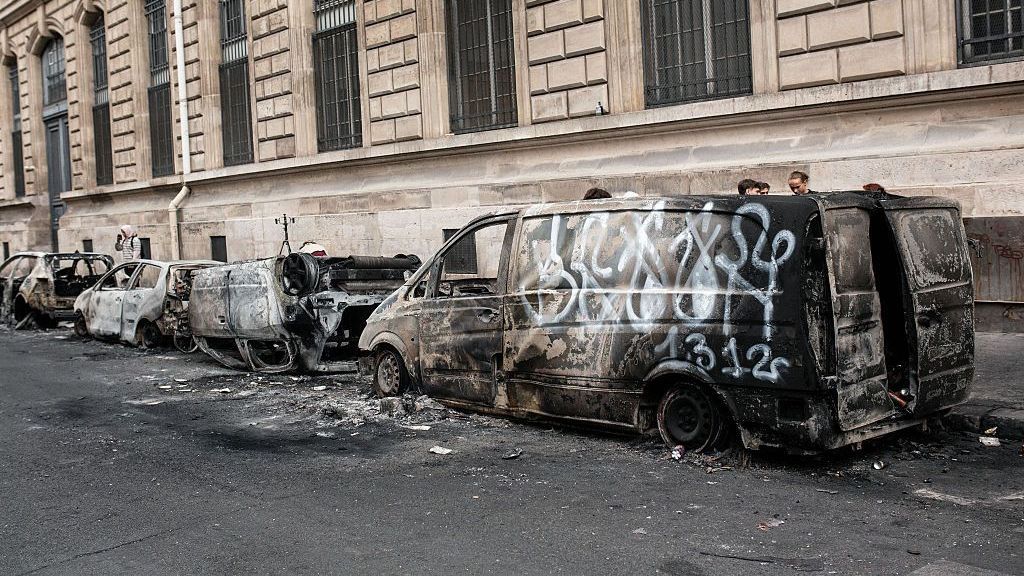
After a chaotic weekend of widespread rioting and looting across France, targeted local curfews have helped restore a measure of calm to the country, Prime Minister Sébastien Lecornu has confirmed. The first phase of post-disorder cleanup operations is now getting underway across affected communities, while law enforcement personnel remain on high alert to prevent a resurgence of unrest.
Curfew restrictions have been rolled out across key districts of central Paris, including the Place de la République — a major gathering point for weekend protesters — and the busy Les Halles shopping district. Additional movement restrictions, including limits on youth travel and public gatherings, have been implemented in major cities across the country, ranging from Marseille, Bordeaux, Nice and Lyon in the south to Lille and multiple smaller towns in the northern region.
Lecornu publicly thanked frontline police officers and gendarmes for their work enforcing the new emergency measures. In a post published to the social platform X, he noted that decisions about extending curfews for Tuesday night would be made on a location-by-location basis, with authority delegated to regional authorities and local mayors to respond to on-the-ground conditions.
The unrest has already exposed deep rifts over government preparedness. Earlier this week, Interior Minister Laurent Nuñez publicly acknowledged that law enforcement had “lost control” of the situation in several affected cities. Facing heavy criticism from opposition political leaders over the government’s failure to anticipate and contain the disorder, Nuñez submitted his resignation on Monday. President Emmanuel Macron rejected the resignation, opting to keep him in his post.
Official government data shows that more than 2,500 people have been taken into custody since the unrest first erupted. According to reports from Agence France-Presse, one protester suffered the amputation of a hand after being hit by a police crowd-control grenade. Roughly 1,000 police officers have also been injured across the country during clashes with demonstrators.
The current wave of unrest traces its origins to protests that began last month, when university and high school students first took to the streets to demand improved learning and campus conditions. Since then, the demonstrations have expanded dramatically, drawing in trade unions and a wide range of activist groups that have brought broader social and political grievances to the movement, swelling the size of crowds at protests across the nation.