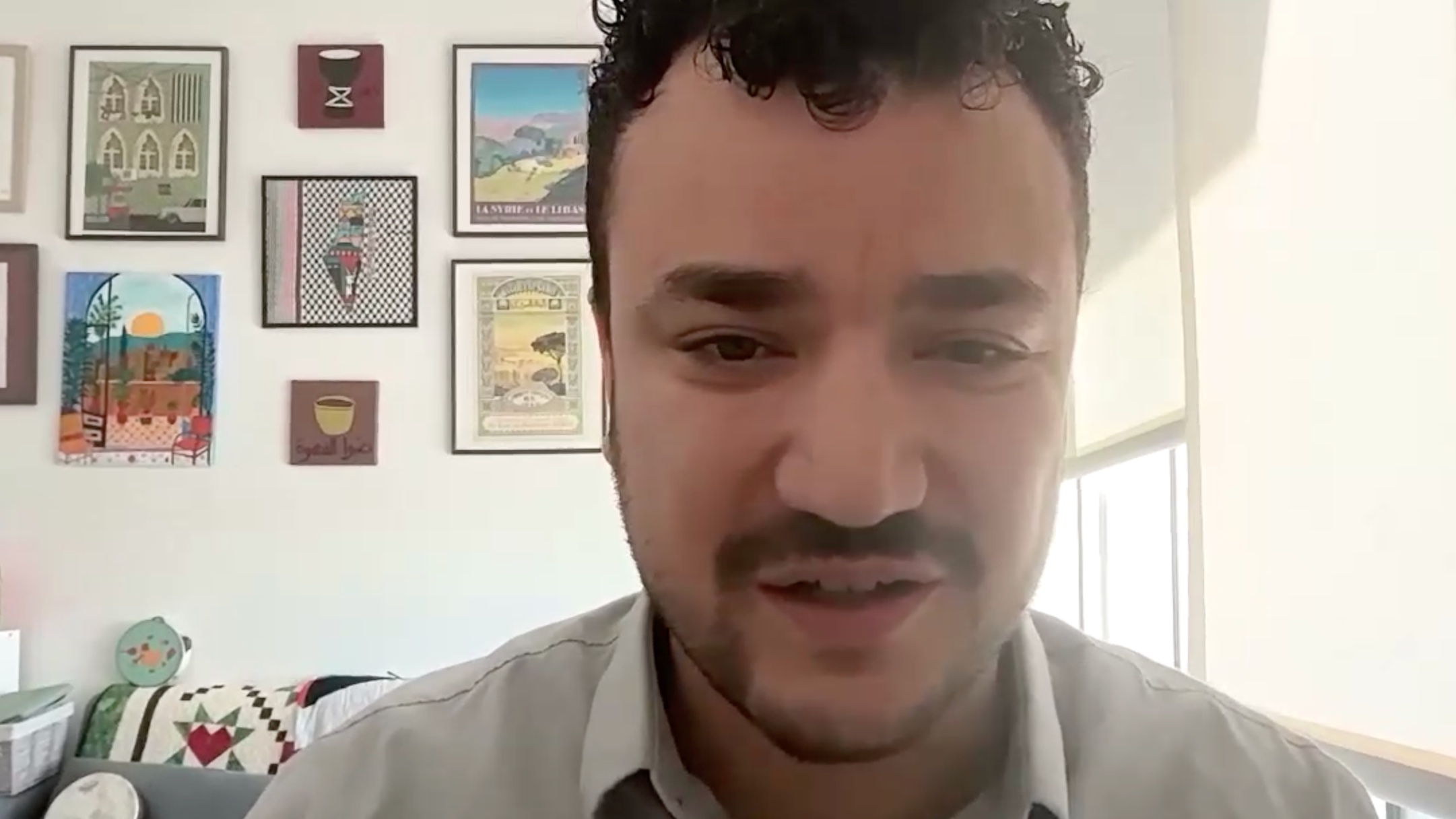
A former Columbia University graduate student at the center of a high-profile clash over free speech and immigration policy has taken his fight to the nation’s highest court, arguing the federal government is moving to strip independent federal judges of their ability to intervene when First Amendment rights are violated.
Mahmoud Khalil, a Palestinian-Algerian activist and former U.S. green card holder, submitted his petition to the U.S. Supreme Court this week, asking the justices to review a legal dispute stemming from his 2025 arrest by Immigration and Customs Enforcement (ICE) under the Trump administration’s sweeping crackdown on pro-Palestine speech among non-citizen residents. If the Supreme Court agrees to hear the case, legal experts say it will set a landmark precedent with far-reaching consequences for dozens of other non-citizen scholars and activists targeted in that crackdown—including Georgetown University researcher Badar Khan Suri.
At the core of Khalil’s legal argument is a challenge to the federal government’s claim that the Immigration and Nationality Act bars independent federal courts from reviewing habeas corpus petitions for immigrants facing deportation. Khalil’s petition maintains the law does not exclude such challenges, and even if it were interpreted to do so, that application would be unconstitutional in his case.
Habeas corpus, a legal principle dating back to 13th-century England created to prevent unlawful detention by the state without due process, remains a foundational check on executive power for all people on U.S. territory, regardless of citizenship. In June 2025, a New Jersey federal judge invoked this principle to order Khalil’s release after 104 days of immigration detention, ruling the Trump administration’s use of a rarely invoked foreign policy threat provision to arrest him was unconstitutionally vague, and that Khalil posed neither a danger to the community nor a flight risk.
The federal government immediately appealed the ruling, arguing that independent federal courts have no authority to intervene in deportation proceedings. Unlike immigration judges, who operate under the umbrella of the Department of Justice, federal judges are constitutionally independent— a key distinction at the heart of the legal fight. Currently, the Department of Justice is led by Todd Blanche, former personal lawyer to President Donald Trump.
Speaking to reporters during a virtual press briefing on Monday, Baher Azmy, a constitutional attorney representing Khalil, framed the case as a fundamental test of executive overreach and judicial oversight. “The question before the court is not directly about the obvious unconstitutionality of this unprecedented weaponisation of immigration power. It’s kind of hard to imagine how anyone could say it is legal for the government to lock up dissenters in order to silence them and others,” Azmy said. “Instead, the question is whether the federal courts, through the great writ of habeas corpus, can address this egregiously unlawful executive action.”
Khalil, who is married to a U.S. citizen and had his student visa and green card revoked at the time of his arrest in March 2025, missed the birth of his first child during his 104 days in ICE custody. He has already received a formal order of removal from the U.S., but is appealing that decision, and remains free from detention pending the outcome of his legal challenges thanks to the lower court’s earlier ruling. His case has drawn global attention for its implications for free speech and immigrant rights.
Beyond his fight against the federal government, Khalil recently launched a separate lawsuit against his former institution, Columbia University, accusing the school of enabling systemic discrimination against pro-Palestine student activists. He is joined as a plaintiff in the suit by the Palestine Working Group, a student organization within Columbia’s School of International and Public Affairs, and the group’s president, Mohammed Ibrahim Zubairi, a Pakistani Muslim non-citizen. The lawsuit alleges Columbia showed “deliberate indifference towards and failure to respond to instances of severe, persistent, and coordinated harassment” targeting the men because of their pro-Palestine advocacy, their identity as Arab and Muslim students, their national origin, and their non-citizen immigration status.