A devastating tragedy has unfolded on one of the world’s most dangerous migration routes, where dozens of people — including an infant — are now presumed dead after a packed migrant vessel spent 27 days adrift in the Atlantic Ocean off Spain’s Canary Islands.
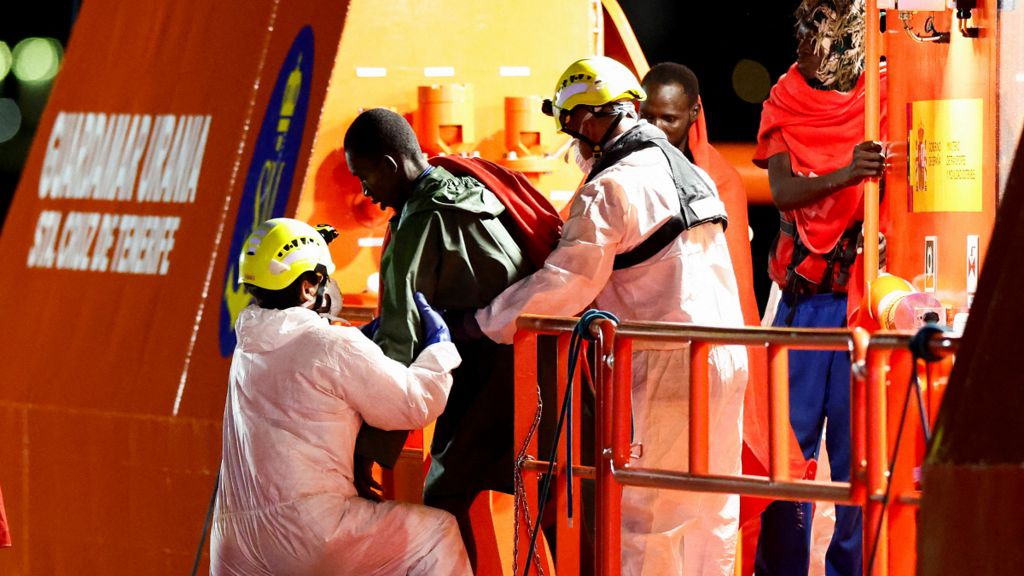
Spanish Maritime Rescue teams located the stricken boat on Wednesday around 65 nautical miles southwest of Arguineguín, a coastal town on the island of Gran Canaria. When rescuers reached the vessel, they found 44 alive survivors and five corpses already on board. Based on accounts of the boat’s departure, human rights defenders estimate that a total of 83 people have died in the incident.
According to early reports, the overcrowded vessel departed The Gambia, West Africa, in early August carrying an estimated 127 people. Helena Maleno Garzón, a prominent human rights activist and founder of the Spanish NGO Caminando Fronteras, confirmed the projected death toll that includes an infant. While the exact number of original passengers has not been independently verified by Spanish rescue authorities, the gap between the known 49 people found (44 survivors + 5 deceased) and the reported 127 initial occupants leaves 83 people unaccounted for, leading to the widespread presumption of their deaths.
Tough sea conditions forced rescue teams to make a devastating decision: they were unable to retrieve the five recovered bodies from the boat before departing the area. In an official statement, Maritime Rescue explained that severe adverse weather, marked by 20-knot winds and 2.5-meter-high swells, made body recovery operation unsafe to carry out after the survivors were evacuated.
All 44 survivors identified as men from across sub-Saharan Africa. Three of the survivors were airlifted to a local hospital in serious, critical condition, while the remaining 41 were transferred by rescue vessel to Gran Canaria. The group disembarked on the island in the early hours of Thursday morning to receive medical care and processing.
Fernando Clavijo, the president of the Canary Islands regional government, publicly condemned the ongoing loss of life in a post to the social platform X. “It is intolerable that lives continue to be lost,” he wrote. “The Canaries cannot get used to or accept as normal the fact that the Atlantic continues to be a death trap.”
The migration route stretching from West Africa across the Atlantic to the Canary Islands has long been recorded as one of the deadliest migrant crossings on the planet. Every year, thousands of people fleeing conflict, poverty, and instability in their home countries undertake this extremely perilous journey in the hopes of reaching Spanish territory, even though the route is known for its unforgiving conditions, including rough open seas, powerful unpredictable currents, and extremely long voyages that often stretch for weeks with limited food or water supplies. This latest incident once again highlights the deadly human cost of unmanaged irregular migration across the Atlantic.