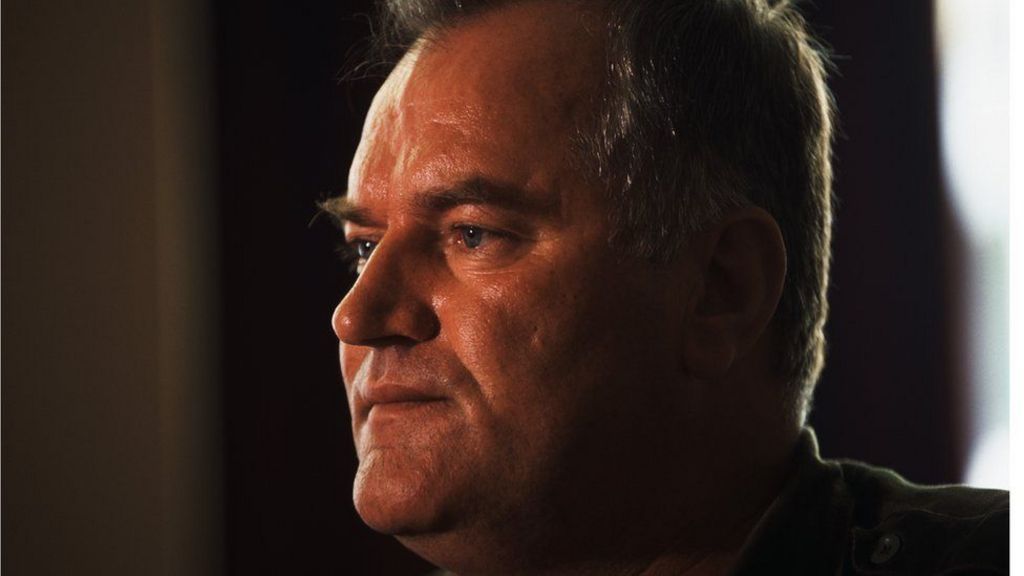
Ratko Mladić, the former Bosnian Serb army commander convicted of orchestrating the worst European atrocities since World War II, has died at age 84 while serving a life sentence for genocide and crimes against humanity. Infamously dubbed the “Butcher of Bosnia” for his brutal campaign of ethnic cleansing during the 1990s breakup of Yugoslavia, Mladić leaves behind a legacy of unresolved trauma and deep division across the Balkan region.
Born in March 1942 in a small mountain village near Sarajevo, Mladić grew up shaped by early loss: his father was killed fighting for Tito’s anti-Nazi partisans when Mladić was just two years old. After a brief stint as an apprentice tinsmith, he pursued a military career, graduating from officer training school in 1965. A driven and capable soldier, he rose quickly through the ranks of the Yugoslav People’s Army, earning command postings in Macedonia and Kosovo.
The 1980 death of Josip Broz Tito, the unifying leader of Yugoslavia’s fragile multi-ethnic confederation, unlocked decades of simmering nationalist tensions. When Croatia declared independence in 1991, Mladić was deployed with Yugoslav federal forces to reassert control, where he gained a reputation for reckless frontline courage that won him fierce devotion from his troops. As conflict spread to Bosnia-Herzegovina in 1992, Mladić defected to lead the army of the self-declared breakaway Republika Srpska, embracing a radical nationalist agenda to create an ethnically pure Greater Serbia.
Mladić viewed Bosnia’s Muslim Bosniak population as illegitimate “interlopers” descending from Ottoman-era occupation, and framed his campaign as a mission to correct historical injustice. His first major act of aggression was the 1,425-day siege of Sarajevo, the longest continuous city blockade in modern warfare. Holed up on the hills surrounding the multi-ethnic capital, Mladić’s forces pounded civilian neighborhoods with daily artillery barrages and sniper fire. On a single day in July 1993, nearly 4,000 shells rained down on the city. By the time the siege ended, more than 13,000 Sarajevo residents were dead, thousands of women were systematically raped, and the vast majority of the city’s buildings lay damaged or destroyed. Declassified command communications from Mladić’s headquarters revealed his deliberate strategy of terror: “Shoot at slow intervals until I order you to stop. Target Muslim neighborhoods… Shell them until they are on the edge of madness.”
Even as he waged war, Mladić kept his wife and two children in relative safety in Belgrade. His life was rocked by personal tragedy in the 1990s, when his 23-year-old daughter Ana, torn between her love for a human rights activist who demanded she renounce her father and her family loyalty, died by suicide with Mladić’s own service weapon. Mladić never accepted responsibility for her death, instead blaming the tragedy on foreign conspiracies.
In 1995, NATO finally intervened to end the siege, launching devastating airstrikes against Mladić’s positions around Sarajevo that broke the blockade. But the worst atrocity of the Bosnian war was still to come. That summer, more than 40,000 Bosniak civilians fled to Srebrenica, a small eastern Bosnian mountain town designated a UN-protected “safe area.” Mladić’s forces surrounded and bombarded the town, then seized control. In front of international television cameras, Mladić greeted residents with false assurances of safety, handing out sweets to children and promising no harm would come to them. Within days, his troops rounded up every Bosniak man and boy they could find, from 12-year-old children to elderly men in their 70s. In a coordinated, industrial-scale mass killing, 8,000 people were executed and dumped in unmarked mass graves. The Srebrenica massacre remains the worst act of genocide on European soil since 1945, and a widely cited failure of the international community to protect vulnerable civilians.
After the massacre, Mladić was immediately indicted for war crimes by the International Criminal Tribunal for the former Yugoslavia (ICTY), with the U.S. offering a $5 million reward for information leading to his capture. For 16 years, he evaded arrest, protected first by Serbian dictator Slobodan Milošević, who allowed Mladić to live openly in Belgrade, hunt deer, attend public events, and even maintained a dedicated military unit for his personal protection. Mladić remained a celebrated folk hero among many Serbian nationalists, who viewed him as a defender of Serbian national interests.
The net began to close after Milošević was ousted from power and arrested in 2000, with Serbia’s bid for European Union membership tied to its cooperation with the ICTY. Mladić went on the run, moving between hidden safe houses for nearly a decade, protected by a shrinking circle of loyal bodyguards and eventually his own family. After his former political partner Radovan Karadžić was arrested in Belgrade in 2008, Mladić became the tribunal’s top priority fugitive. In May 2011, Serbian police tracked Mladić to a squalid remote farmhouse, where he was found suffering from multiple strokes and in poor health, 16 years after his indictment.
Mladić’s ICTY trial lasted four years, with the court sitting for more than 500 days, hearing testimony from nearly 600 witnesses, and reviewing more than 10,000 pieces of evidence. In 2017, he was convicted on all counts: genocide, crimes against humanity, and war crimes, and sentenced to life in prison. A defiant and unrepentant Mladić smiled and gave a thumbs-up to cameras upon entering the courtroom, but erupted in rage when the verdict was read, shouting that the ruling was “all lies” before being forcibly removed from the chamber. While survivors and victim relatives hailed the conviction as a long-delayed victory for justice, the ruling deepened divisions across the Balkans: Serbian nationalist leaders condemned the trial as an anti-Serbian plot, and many Serbs continue to view Mladić as a national hero.
In his final years, Mladić, who suffered from multiple heart attacks and strokes, repeatedly applied to be transferred to a Serbian prison to serve out his remaining sentence, a request supported by both Serbia and Russia, but repeatedly rejected by the court. As of January 2026, the regional divide over Mladić’s legacy remains raw: a Bosnian opposition politician was sentenced to three years in prison just months ago for publicly glorifying Mladić and Karadžić. While the 1990s Bosnian war has long ended, the tension and division sown by Mladić’s campaign of ethnic cleansing persist, with Bosniaks and much of the international community remembering him as one of the worst war criminals in modern European history, and segments of the Serbian public continuing to view him as a patriot and defender of their nation.