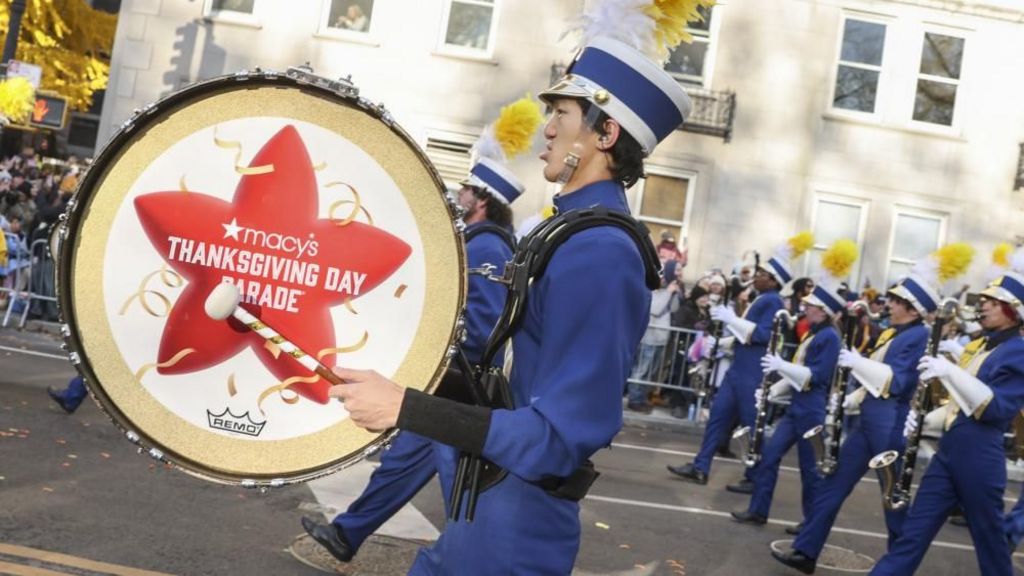
For the first time in its nearly 100-year continuous run (excluding full suspensions during World War II), the iconic Macy’s Thanksgiving Day Parade was pushed back two days from its traditional Thursday slot to a Saturday staging this year, a decision organisers confirmed was driven largely by safety concerns over gusty winds that posed a critical risk to the event’s signature giant character inflatables. The last-minute adjustment upended travel plans for dozens of marching bands that had traveled thousands of miles from across the United States to perform for the millions of in-person spectators and global television audience that tune into the annual holiday spectacle.
Among the groups caught off guard was Pearland High School’s Pride of Pearland Marching Band, a 500-member ensemble based just outside Houston, Texas. What initially looked like a financially crippling unplanned extended stay in New York City quickly turned into a showcase of community solidarity, as local businesses, individual supporters, and well-wishers mobilised via social media to raise more than $350,000 to cover extra hotel stays, meals, and transit costs. Band director Ryan Demkovich told CBS News that navigating the sudden logistical crisis had been draining, but the overwhelming outpouring of support left him deeply humbled, noting every donation came from people invested in making sure his students did not miss the once-in-a-lifetime performance opportunity.
Even further from home, the Nā Koa Aliʻi Hawaiʻi All-State Marching Band — a collective of hundreds of student musicians representing dozens of Hawaiian schools that had traveled nearly 5,000 miles to reach the East Coast — faced an even tighter timeline to secure additional funding. Director Rickey H Badua, who himself marched in the parade as a drum major in 2003, recalled that the initial news of the postponement left his students heartbroken, but the group refused to abandon their long-awaited shot at the national stage. A rapid fundraising drive backed by family, friends, and community supporters pulled in over $500,000 to cover all unplanned extra expenses, ensuring the ensemble would still make its parade debut. Badua noted the palpable excitement among his students, who were eager to bring Hawaiian musical flair to the New York holiday celebration.
A third traveling ensemble, the University of Illinois Marching Illini, also launched a $175,000 crowdfunding campaign to cover additional hotel nights, meal costs, and revised transit arrangements back to Champaign, with director Prof Barry Houser noting that generous public support had already put the drive well on track to meet its goal.
Beyond the displaced performers, the severe storm that prompted the parade delay wreaked widespread havoc across the U.S. Eastern Seaboard, leaving hundreds of thousands of households without power, triggering coastal flooding, and tearing roofs off residential structures. The U.S. National Weather Service projected that harsh wind and rain conditions would steadily ease by Friday, clearing the way for the rescheduled Saturday parade to proceed safely, allowing both performers and local attendees to make the most of the rearranged holiday tradition.