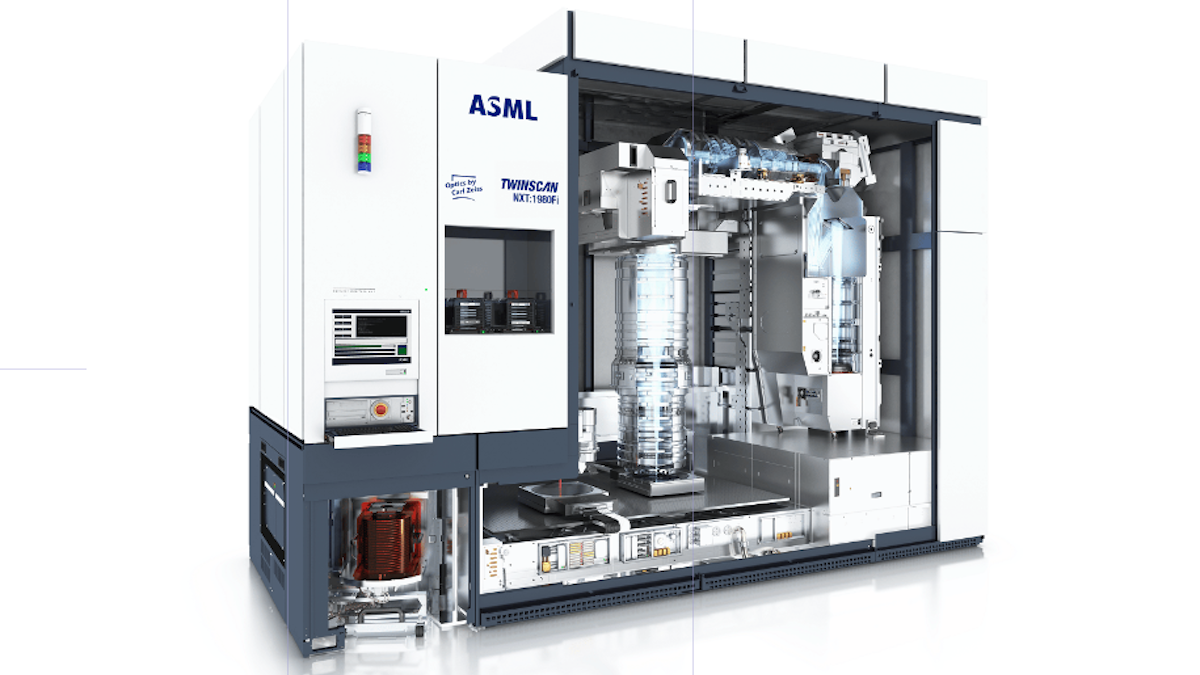
The Dutch government has publicly committed to mounting coordinated pushback against a pending U.S. legislative proposal that would cut off critical maintenance and servicing of ASML’s semiconductor manufacturing equipment operating in China, even as leading Chinese policy and industry analysts express widespread skepticism that European opposition will be robust enough to alter Washington’s current legislative trajectory.
During a parliamentary address on Thursday, Dutch Trade Minister Sjoerd Sjoerdsma outlined a multi-pronged diplomatic strategy aligned with the European Commission, Germany and France to block the passage and enforcement of the U.S. Multilateral Alignment of Technology Controls on Hardware (MATCH) Act. He emphasized that the proposed legislation would inflict cascading harm not just on ASML, the world’s dominant lithography equipment maker, but on the broader European high-technology industrial ecosystem. “We will not accept being dictated to on our sovereign regulatory choices. If this act is enacted, our clear message to the U.S. administration will be to refrain from enforcing it,” Sjoerdsma stated, adding that Dutch officials are exploring all available bilateral and EU-level policy instruments to counter the measure.
The diplomatic push comes on the heels of a Wednesday meeting in Beijing, where Dutch Foreign Minister Tom Berendsen reaffirmed that the Netherlands retains full autonomy over its export control decision-making, with both sides agreeing to launch dedicated bilateral dialogue on semiconductor-related trade restrictions. ASML’s leadership has previously warned that overly sweeping restrictions would backfire by accelerating China’s domestic development of competing lithography tools, though the firm declined official comment on the MATCH Act developments on Thursday.
First introduced as a bipartisan bill in the U.S. House of Representatives in April, the MATCH Act cleared the House Foreign Affairs Committee by a 36 to 8 vote on April 22. U.S. congressional negotiators are currently debating whether to attach the legislation to the must-pass Fiscal Year 2027 National Defense Authorization Act, with a final decision expected in mid-December. If enacted, the bill would give U.S. allies including the Netherlands and Japan 150 days to align their export control regimes with new U.S. standards, or face secondary U.S. restrictions on their own semiconductor equipment exports.
The far-reaching provisions of the MATCH Act would impose a full national ban on all exports of deep ultraviolet (DUV) immersion lithography machines to China, and designate all fabrication facilities operated by major Chinese semiconductor firms including SMIC, Huawei, Hua Hong, CXMT and YMTC — along with all their global subsidiaries and affiliates — as restricted entities. Under the rules, any on-site servicing, repair or technical support for equipment at these facilities would require explicit U.S. government licensing, effectively cutting off ASML’s existing maintenance contracts for hundreds of machines already deployed in China.
Dutch Prime Minister Rob Jetten confirmed on Friday that he plans to raise objections to the MATCH Act directly with U.S. President Donald Trump during the upcoming G20 Summit in Miami next month, describing the legislation as disproportionate and fundamentally unacceptable. He noted that a mutually agreeable pragmatic path forward serves the interests of both nations, as preserving ASML’s global market leadership delivers tangible economic value to the United States as well.
The high-stakes diplomatic showdown is set to unfold alongside a series of parallel high-level engagements: Chinese President Xi Jinping and U.S. President Trump are scheduled to hold bilateral talks on the sidelines of the G20 summit on December 14-15, with semiconductor controls, the ongoing bilateral trade truce, critical mineral access and tariff arrangements all on the official agenda. Two key deadlines will follow in January 2027: the current U.S.-China trade truce is set to expire on January 10, while China’s temporary suspension of export restrictions on gallium, germanium and antimony will end on January 27.
Leading Chinese Sino-European relations analysts argue that the Dutch government’s public pushback is largely a calculated bargaining tactic rather than a signal of sustained, high-stakes resistance. Jian Junbo, director of the Center for China-Europe Relations at Fudan University, noted in an interview with the Global Times that the Netherlands’ heavy reliance on the United States for national security guarantees and core economic linkages leaves it with extremely limited maneuvering room to defy Washington’s policy demands. “We cannot afford to be overly optimistic about whether the Netherlands can fully exercise the policy autonomy it publicly emphasizes. That capacity depends not just on its willingness to withstand U.S. pressure, but its ability to absorb potential retaliatory measures Washington might impose,” Jian explained. He added that cutting off ASML’s maintenance services — a high-margin, core segment of the firm’s revenue — would harm both parties simultaneously, eroding ASML’s earnings while leaving Chinese chipmakers unable to operate equipment they have already purchased and deployed.
Jian further outlined the core Dutch economic interests at risk: China remains one of ASML’s largest regional markets, and a full ban on servicing would only accelerate China’s domestic investment in homegrown lithography technology, rapidly eroding the decades-long competitive lead the Netherlands has built in the sector. The new restrictions proposed in the MATCH Act go far beyond the 2023 Dutch export control rules, which took effect in January 2024 and only required licenses for new shipments of ASML’s most advanced NXT:2000i and subsequent DUV immersion systems. Current rules allow Chinese firms to purchase the older NXT:1980 series DUV machines, which can produce 38-nanometer chips via single exposure and down to 7-nanometer chips via multi-exposure processing.
Data from the Washington-based non-partisan Center for Technology & Statecraft shows that Chinese semiconductor manufacturers spent more than $13 billion to acquire 90 NXT:1980i systems in 2024, followed by another 89 units in 2025. As of early 2026, Chinese fabs had taken delivery of an estimated 343 ASML immersion DUV systems in total, including 270 NXT:1980i units, 28 of the more advanced NXT:2050i or NXT:2100i models, and 45 older NXT:1970i or earlier variants. A prominent Chinese industry commentator framed the MATCH Act as a radical escalation of prior U.S. restrictions, noting that earlier rules acted as a roadblock to stop new equipment shipments, while the new proposal targets machines already in operation by cutting off access to spare parts, technical support and qualified service engineers.
Industry observers note that lithography machines require highly specialized, regular calibration and maintenance from original manufacturer engineers to preserve the nanometer-level precision of their optics and alignment systems. A full service ban would cause far more severe damage to Chinese chip production than a new sales ban, driving up equipment failure rates, reducing production yields and cutting total output. Chinese industry analysts have also assessed the domestic technical capacity to perform independent maintenance on imported ASML equipment, noting that local chip fabs already employ in-house engineering teams to handle routine cleaning, consumable replacement and basic fault diagnosis, while a growing domestic service sector specializes in chip equipment repair, parts supply and system refurbishment. However, they acknowledge that restoring a machine to the original manufacturer’s strict specifications for overlay accuracy, throughput and long-term operational stability — rather than simply getting it to turn on — requires mastery of proprietary core components, embedded software and long-term calibration protocols that are currently tightly controlled by ASML. While a full, immediate shutdown of all deployed systems is unlikely even if the MATCH Act passes, gaps in technical support, spare parts and software updates would drive up production costs significantly. Many observers also note that a total ban on servicing would cause massive disruptions to global semiconductor supply, driving up consumer electronics prices and contributing to global inflation, which would likely push the Trump administration to issue limited, targeted licenses for ASML service engineers to operate in China, creating a new U.S. leverage point to negotiate for expanded access to China’s critical mineral resources.