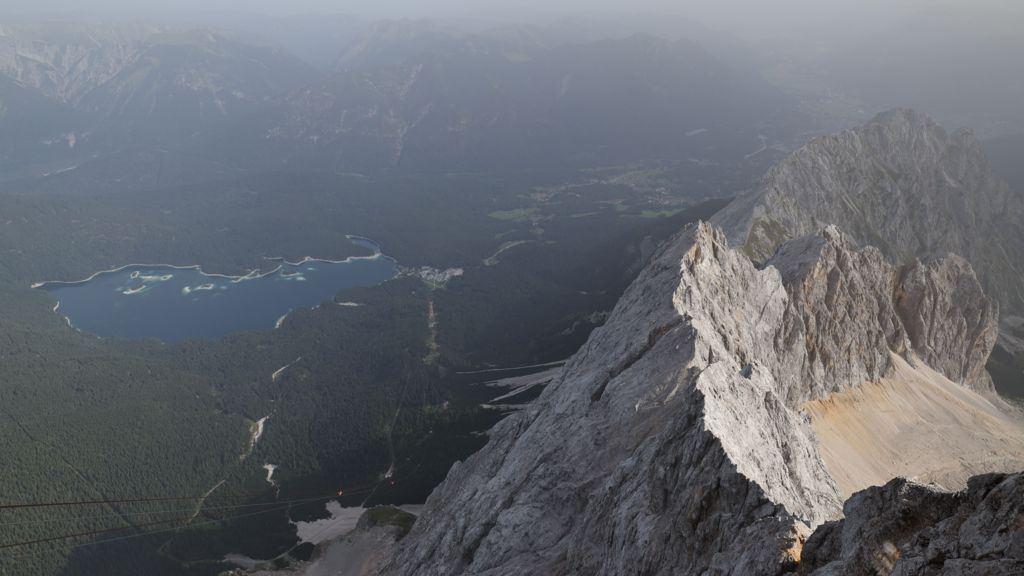
Nestled on the border of southern Bavaria and Austria’s Tyrol region, the 2,962-metre (9,718-foot) Zugspitze draws thousands of casual hikers, seasoned mountaineers, and family excursionists annually for its sweeping alpine vistas, but a recent ill-fated pre-dawn trip has sparked a formal criminal probe by Austrian law enforcement. The incident unfolded in the early hours of a Sunday, when a 21-year-old German man and his 17-year-old female travel partner departed the Austrian alpine resort town of Ehrwald with the shared goal of reaching the Zugspitze summit to watch the sunrise. Local mountain rescue officials confirmed to the German Press Agency DPA that temperatures that morning plummeted to a frigid -12°C, and heavy, drifting snow quickly swallowed the pair’s lower legs, making forward progress far more treacherous than the two had anticipated. What exactly prompted the two to separate mid-ascent remains unconfirmed, as Austrian police spokespersons have declined to release additional details about the split, citing the active, ongoing investigation. The 21-year-old man ultimately chose to descend the mountain alone, leaving the teenage girl stranded at roughly 2,500 metres (8,200 feet) elevation, with no shelter, no immediate support, and sub-zero conditions rapidly worsening around her. The stranded teen managed to place an emergency call to local rescue services, prompting a seven-person mountain rescue deployment supported by an alpine helicopter team that airlifted her to safety. Suffering from acute hypothermia, she was transported across the nearby German border to a medical facility in the popular Bavarian resort town of Garmisch-Partenkirchen, where she received treatment and was later released without life-threatening injuries. The case has drawn immediate parallels to a high-profile fatal mountaineering incident that took place on Austria’s highest peak, the 3,798-metre Grossglockner, in January 2025: in that tragedy, a 33-year-old woman froze to death after her more experienced climber boyfriend left her stranded on the slopes, a choice he claimed was made in a panicked bid to seek outside help. He was ultimately convicted of grossly negligent manslaughter, a ruling that sent shockwaves through the global alpine mountaineering community, as prosecutors successfully argued that as the trip’s de facto guide, he bore a clear legal and moral responsibility to call for emergency support far earlier rather than abandoning his less experienced partner. Under current Austrian criminal code, any individual found to have intentionally or recklessly endangered another person’s physical safety in alpine terrain can face a maximum penalty of three months of imprisonment. Austrian police officials have stated that once they wrap up all witness interviews, evidence collection, and scene reconstruction for the Zugspitze incident, their full case file will be forwarded to public prosecutors in Innsbruck, who will make a formal determination on whether to press formal criminal charges against the 21-year-old suspect.