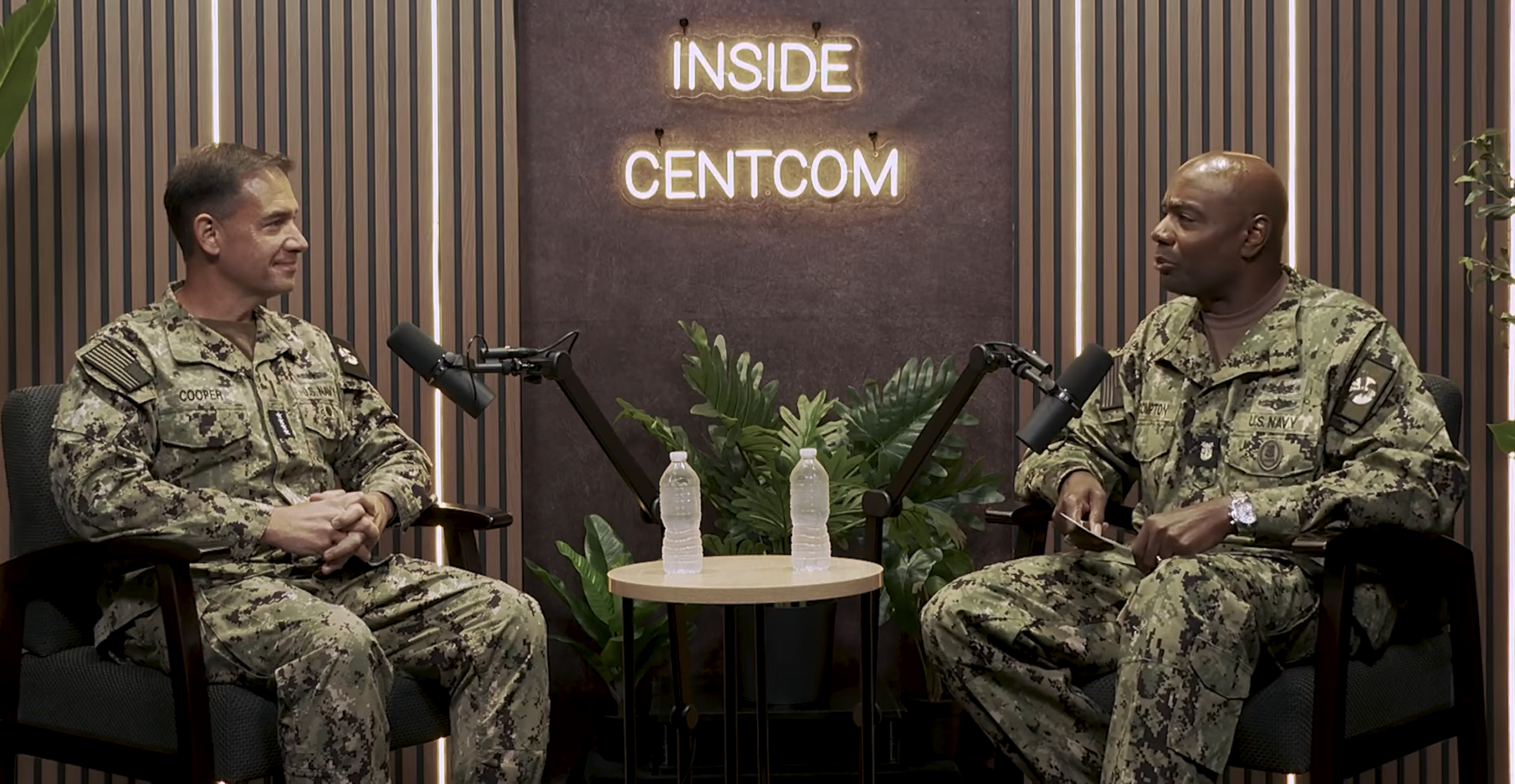
As the U.S.-led military campaign against Iran stretches into its ninth month, with cumulative costs for American taxpayers mounting steeply to a Pentagon-estimated $47.1 billion and an additional $153 billion in excess fuel expenses for U.S. consumers per Brown University calculations, U.S. Central Command (Centcom) rolled out its first official audio production, titled *Inside Centcom*, on a Thursday in early November 2026. The 12-minute debut episode, hosted on YouTube, pairs Admiral Brad Cooper, the top U.S. commander overseeing the Iran war theater, with Fleet Master Chief Lateef Compton, leaning into a laid-back, casual conversational style that mirrors popular independent Gen Z-focused podcast formats. The pair spends significant airtime on light, trivial banter, including Cooper joking about stealing French fries from Compton’s lunch, while offering only passing, vague references to the ongoing, deeply unpopular conflict: Compton opens the episode with a throwaway line noting “it’s been a busy year,” and Cooper makes no explicit mention of the February 28, 2026 U.S. airstrike on the Shajareh Tayyebeh primary school in Minab, southern Iran, the very first day of the war. That strike, per Amnesty International, killed 156 people including 120 children, with the human rights group concluding the U.S. violated international humanitarian law by failing to take all feasible precautions to shield civilian populations. UN human rights experts further stated in September 2026 that there are “reasonable grounds” to believe U.S. forces committed war crimes during the Iran campaign. The episode’s release appears to be a deliberate outreach effort targeting young American men who may be eligible for future military service in U.S.-led Middle East operations, though Centcom opted to disable public comment functions on its YouTube upload of the production. The public reception on social media platform X has been overwhelmingly scathing: the clip has amassed more than 2 million views, with users deriding the production as a “shitshow,” mocking the military for abandoning somber professional conduct for trendy podcast tropes, and sarcastically suggesting future episodes could feature celebrity guests ranging from influencer Jake Paul to pop star Nicki Minaj and Israeli Prime Minister Benjamin Netanyahu. High-profile figures across policy, journalism and veteran military circles have also condemned the move. Veteran journalist Murtaza Hussain called the production “completely undignified,” noting Cooper avoided addressing the Minab school attack that killed dozens of children and school staff. Former U.S. deputy assistant secretary of defense for intelligence Christopher K. Mellon argued the American public has no interest in learning the personal quirks of Centcom’s top leadership, and instead expects commanders to execute their duties “somberly, professionally, and excellently.” U.S. Democratic congresswoman-elect Elaine Luria echoed the criticism, stating Cooper’s core responsibility is “to win wars, not record podcasts” and urging Centcom to “read the room.” Prominent U.S.-based Iran expert Trita Parsi quipped sarcastically that he would fully support Centcom abandoning its decades-long track record of launching needless Middle East wars to pivot entirely to full-time podcast production.