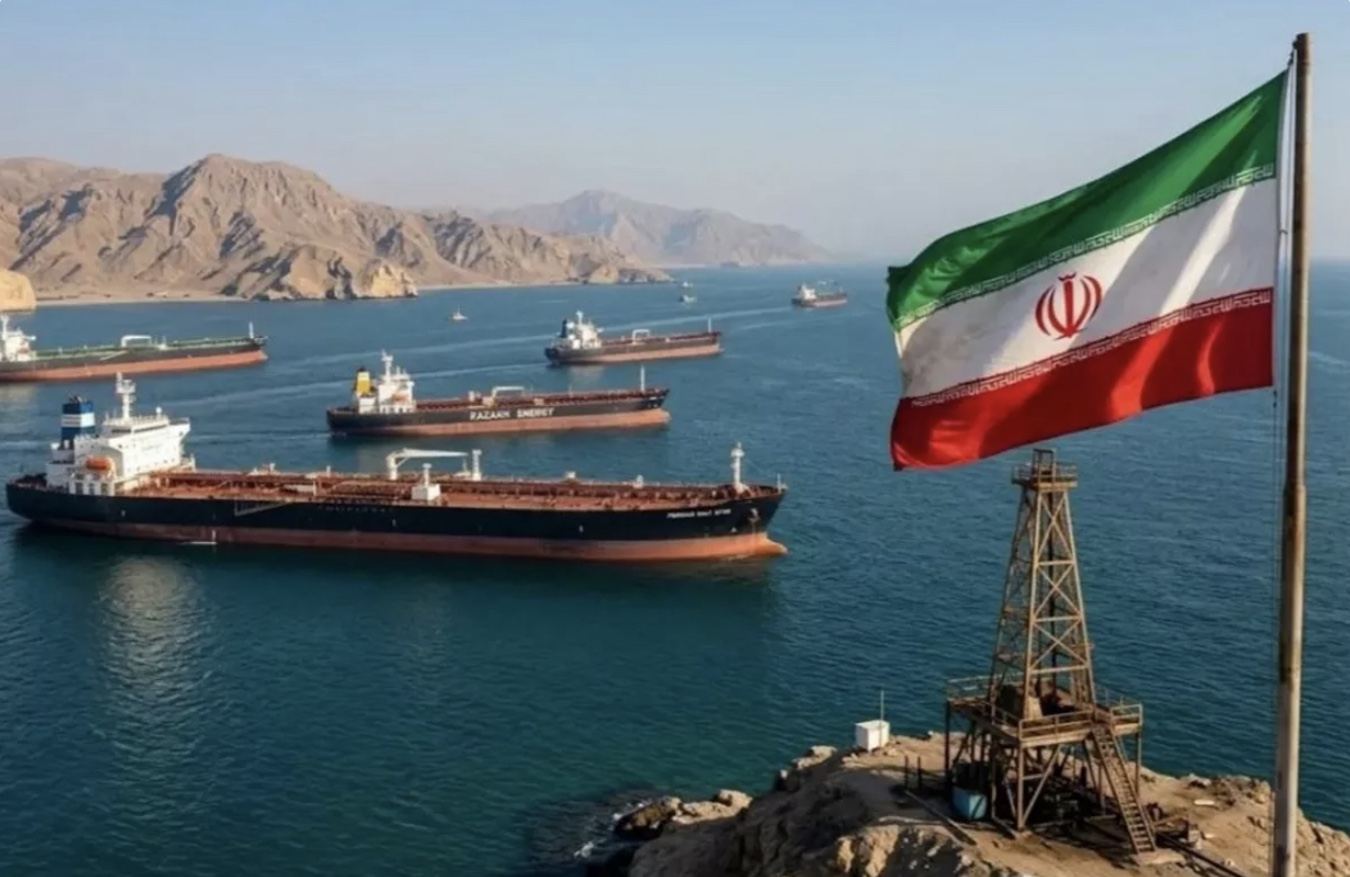
As U.S. voters cast their ballots in the November 3 midterm elections, Iranian parliament’s National Security and Foreign Policy Committee deputy head Amir Hayat Moqaddam made a notable public statement during a legislative interview, outlining a selective exemption framework for vessels transiting the strategic Strait of Hormuz. He confirmed that ships flagged by India, China, Iraq and Qatar would face no movement restrictions through the chokepoint, noting these vessels “pass freely” and that U.S. forces were not intercepting them, even though the remarks did not carry the weight of a formal government decree. This announcement extended a pattern first established back in March, when Iranian Foreign Minister Abbas Araghchi designated China, Russia, India, Iraq and Pakistan as “friendly nations” eligible for unimpeded Hormuz transit.
The announcement landed on the heels of fresh U.S. military strikes against Iranian targets, a development that came during a month when shipping attacks around the strait hit an all-time recorded high. Then-U.S. President Donald Trump had previously pledged that the ongoing conflict with Iran would end “immediately after” the midterm elections, even as domestic U.S. gasoline prices had remained above $4 per gallon consistently since June, a major pain point for voters. The day after the Iranian announcement, November 4, Brent crude futures dipped 0.7% to settle at $102.87 per barrel, as global markets weighed the Democrats’ sweep of both houses of Congress against the persistent risk of renewed U.S. strikes on Iranian infrastructure. The front-month Brent contract had already fallen roughly 6% shortly after a public tweet from Vice President JD Vance, who attributed the Republican midterm losses primarily to public anger over the Iran conflict, signaling a potential policy shift in Washington toward de-escalation rather than further military escalation.
This set of developments left Asian governments facing a critical strategic dilemma that extended far beyond the binary choice of U.S. military escalation or diplomatic negotiation: securing reliable access to the Strait of Hormuz in the interim. Iran’s publicly stated national exemptions had effectively converted what was once a full wartime blockade into a nationality-based licensing system, administered by the country’s Persian Gulf Strait Authority since May, which required vessels to pay transit fees as high as $2 million per passage, with payments processed predominantly in Chinese yuan. Tehran frames these levies as legitimate compensation for navigation support and environmental protection services, drawing a comparison to the regulatory framework governing the Turkish Straits. Most international legal analysts reject this analogy, as the Turkish Straits regime is governed by the multilateral Montreux Convention that strictly limits permitted service fees, while the Strait of Hormuz falls under the UN Convention on the Law of the Sea (UNCLOS)’s unrestricted transit passage rules – a treaty Iran has signed but never formally ratified. Washington, Gulf Cooperation Council states and European governments uniformly dismiss the Iranian transit fees as unlawful, though former President Trump once described the proposed toll arrangement as a “beautiful thing” and even floated the idea of a joint U.S.-Iran management venture for the chokepoint at one stage.
Moqaddam’s remarks laid out the clear political quid pro quo attached to each exemption for Tehran: the Indian transit waiver facilitates critical humanitarian medicine imports into Iran, while the Chinese exemption is explicitly designed to lock in Beijing’s political support for Iranian positions. Indian and Chinese flagged vessels are required to pay the mandatory transit fees, while Qatari vessels are granted completely free passage. This tiered access structure creates uneven economic and security burdens across Asian energy importers, even as total Gulf crude and condensate exports averaged 14 million barrels per day in October, roughly 86% of pre-war levels, with the vast majority of these shipments flowing eastward to Asian markets.
China lost access to its previously discounted Iranian crude supplies after all Iranian oil floating outside U.S. blockade zones dropped to zero by mid-October, making the Hormuz exemption especially critical as China’s total Gulf crude imports were on track to top 5 million barrels per day in October. India’s Ministry of External Affairs confirmed on November 3 that 23 Indian nationals, including 15 merchant seafarers, had been killed in the ongoing Iran-U.S. conflict, and Tehran quickly moved to reaffirm India’s transit exemption, allowing New Delhi to frame the transit fee payments as a pragmatic crisis management measure even as the arrangement binds India to a fee regime that its closest U.S. defense ally has deemed illegal. Qatar’s free Hormuz passage, meanwhile, protects uninterrupted LNG exports that supply critical energy supplies to India and wider East Asian markets, though Iraq’s exemption has not translated to a recovery in its crude export volumes, which fell further in October.
Japan and South Korea, two of East Asia’s most energy import-dependent economies, remain conspicuously absent from Iran’s exempted nations list. Tokyo had already released national petroleum reserves equivalent to roughly one month of total national supply in March, followed by an additional 20 days of reserve supply starting in May. Between April and July, Japan’s crude imports from Saudi Arabia dropped 41.2%, while South Korea saw a 21% decline in the same period. Both governments signed on to a joint March statement condemning Iran’s initial move to partially close the Strait of Hormuz, and their alignment with Washington’s hardline stance has imposed steep energy costs that competing neutral Asian importers do not face. The gap in outcomes is not absolute, however: Seoul secured priority access to 200 million barrels of Saudi crude for the period from June through the end of the year, and has locked in October and November supply contracts at 2025’s average monthly prices. The real divergence between aligned and exempt nations lies in cost stability, supply certainty, and political exposure to the ongoing U.S.-Iran standoff: neutral importers pay a predictable, fixed toll for guaranteed passage, while U.S. allies are forced to rely on emergency reserves, costly cargo rerouting through alternative ports in Yanbu and Fujairah, and ad-hoc, case-by-case bargaining with Gulf suppliers.
Neither Tehran nor Washington holds as strong a negotiating position as the current licensing regime might suggest. Iran itself cannot export its own crude due to the sweeping U.S. naval blockade, meaning the transit fees collected from foreign vessels serve as a critical partial replacement for lost national oil revenue. Tehran’s seven preconditions for fully reopening the Strait of Hormuz – including full relief from longstanding international sanctions – make clear the permit system is a temporary bargaining chip, not a permanent governing arrangement for the waterway. For its part, Washington maintains the official public position that the Strait of Hormuz remains fully open under international law, even as it enforces a strict naval blockade on all Iranian ports. The decision to allow exempted foreign vessels to pass through the strait unimpeded keeps global oil markets adequately supplied for an administration that just lost control of Congress in large part due to widespread voter anger over persistently high domestic fuel prices.
If Moqaddam’s public account is fully accurate, all China-bound Gulf crude is currently moving through the strait under explicit Iranian licenses, with implicit U.S. acquiescence. U.S. treaty allies that backed Washington’s hardline stance on Iran are left bearing the disproportionate economic cost of this pragmatic compromise. The midterm election results have raised the stakes of this policy ambiguity for Tokyo and Seoul: one week before polling day, Brent crude closed at $115.32 per barrel after reports emerged that Washington had advised Gulf Arab states to prepare for expanded military strikes immediately after the election. Market analysts now place the probability of new U.S. military action against Iran above 50% by late November, a scenario that could push global crude prices above $120 per barrel.
A successful negotiated U.S.-Iran settlement would force both Japan and South Korea to pursue their own separate bilateral passage deals with Tehran, while a military escalation would leave them bearing the full economic brunt of a conflict they had no hand in choosing. Either outcome creates strong incentives for individual nations to strike separate bilateral agreements, and a single unilateral concession by a major importer could completely unravel the international coalition advocating for fully open Hormuz navigation.
A full, universal reopening of the strait to all vessels under UNCLOS rules remains the most favorable outcome for all stakeholders, and a diplomatic pathway to this end already exists: Iranian Foreign Minister Araghchi has proposed a Qatar-mediated “two-day plan” to end the standoff, under which the U.S. would implement mutually agreed confidence-building measures on the first day, and Iran would restore completely normal, unrestricted navigation for all ships on the second. On November 3, however, senior Iranian official Mohsen Rezaei dismissed Washington’s preliminary response to Iran’s seven preconditions as “not convincing.” Mediators Qatar and Pakistan are currently working to bridge the remaining gaps between the two sides, with outstanding disputes focused primarily on the sequencing of actions and the scope of sanctions relief, rather than fundamental disagreement over whether the strait should eventually be reopened.
Asian energy importers hold the largest economic stake in resolving the standoff, and possess far greater collective negotiating leverage than they have chosen to exercise to date. Iran’s transit fee licensing system can only function as long as major importers including China, India, Japan and South Korea negotiate separate bilateral passage deals, and longstanding Sino-Japanese geopolitical rivalry and New Delhi’s longstanding commitment to strategic autonomy make a unified joint negotiating front highly unlikely in the near term. Even so, a minimal common position among Asian importers is entirely achievable: all governments currently utilizing Iranian transit exemptions could publicly state that they do not recognize any unilateral Iranian legal right to levy transit fees on vessels in the international strait. The most import-dependent Asian economies could also pool their collective supply security resources, building on existing frameworks such as South Korea’s national crude swap system and coordinated international emergency reserve releases, which had collectively delivered roughly 330 million barrels of crude to markets by mid-October. Major industrialized Asian importers still hold approximately 1.1 billion barrels of public emergency petroleum stocks, giving them significant collective capacity to push back against Tehran’s licensing terms. China, India, Japan and South Korea should also throw their full weight behind the ongoing Qatar-Pakistan mediation efforts, on the explicit condition that any final settlement restores free, unimpeded passage for vessels of every national flag.
A Strait of Hormuz that is open only to vessels from selected friendly nations is not a truly open international waterway. Every unilateral transit exemption accepted by a major importer today sets a dangerous precedent for future coercion at other critical global maritime chokepoints, from the Bab el-Mandeb Strait to the Strait of Malacca. Asian governments must therefore insist that the ongoing U.S.-Iran conflict concludes with the Strait of Hormuz fully open to all shipping, to prevent Tehran from continuing to dictate the terms of regional energy security for decades to come.