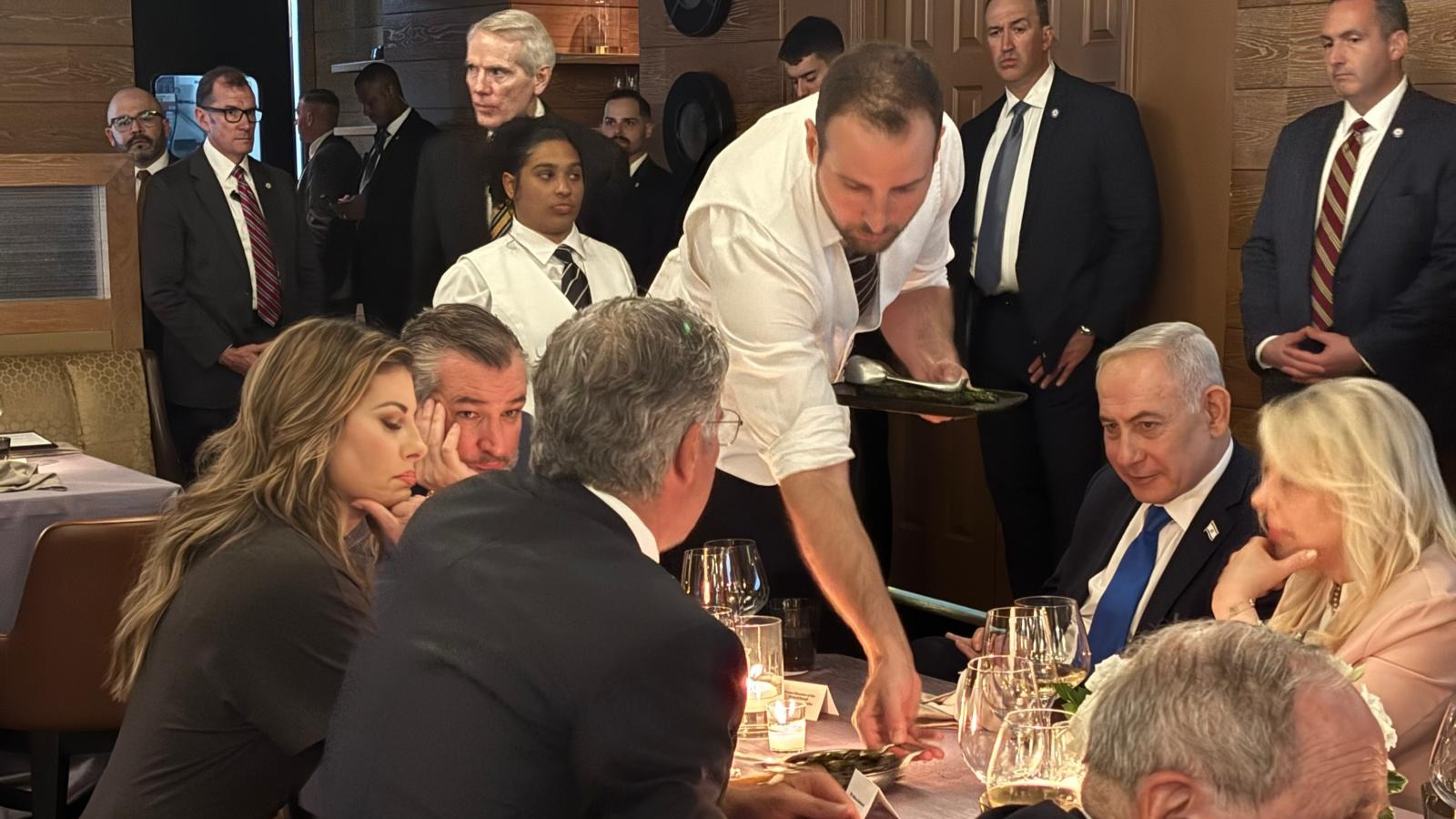
A high-profile closed-door dinner in Washington D.C. has thrown regional tensions and cross-border legal norms into the spotlight, after a controversial Lebanese billionaire and banking executive hosted Israeli Prime Minister Benjamin Netanyahu at an event honoring U.S. Senator Lindsey Graham. The gathering, which took place Monday at the upscale Four Seasons Hotel, was co-hosted by Antoun Sehnaoui — chief executive of Lebanon’s Societe Generale de Banque au Liban (SGBL) and wealth management firm Fidus — and former U.S. State Department spokesperson Morgan Ortagus.
According to independent Israeli journalist Barak Ravid, the guest list extended far beyond ceremonial attendees, drawing a cross-partisan mix of sitting U.S. senators, Graham’s immediate family, and prominent figures from U.S. political and business circles. Attendees included Stephen Miller, the far-right senior advisor to former U.S. President Donald Trump; current U.S. Homeland Security Secretary Markwayne Mullin; Dina Powell McCormick, a senior Meta (Facebook) executive and former White House advisor; Katie Miller, a former advisor to the U.S. Department of Government Efficiency; and Yechiel Leiter, Israel’s sitting ambassador to the United States.
The event is far more than a routine Washington social gathering, however: Sehnaoui has long been a polarizing figure in his home country, and the decision to openly host the leader of a state that Lebanon has no formal diplomatic relations with violates existing Lebanese law, which prohibits any formal contact between Lebanese citizens and Israeli individuals or officials. The dinner also comes at a moment of extreme escalation between Israel and Lebanon: since March 2, Israel’s ongoing bombing campaign across southern Lebanon has killed more than 4,300 Lebanese people, and Israeli military forces continue to occupy swathes of territory in southern Lebanon amid a months-long escalation of cross-border conflict.
Sehnaoui’s legal troubles in Lebanon stretch back to the 2019 national financial collapse, which plunged millions of Lebanese into poverty and collapsed the value of the national currency. Lebanese national prosecutors have filed formal charges against both Sehnaoui and SGBL, alleging the pair engaged in large-scale money laundering connected to illegal currency trading amid the 2019 crisis and its aftermath. SGBL has issued a formal statement denying all wrongdoing in the case.
Beyond the corruption allegations, Sehnaoui has long faced public accusations of ties to extreme right-wing Christian organizations within Lebanon, and has been publicly described as an open advocate for Zionist causes. While Lebanon officially maintains no diplomatic or official ties to Israel, observers have long noted that a small subset of Lebanese political groups — primarily drawn from the country’s Maronite Christian community — have maintained covert, unofficial connections to Israel and publicly advocated for the establishment of formal bilateral relations between the two states.
This report was sourced from independent coverage by Middle East Eye, a outlet that produces original, independent reporting and analysis on the Middle East, North Africa and global affairs connected to the region.