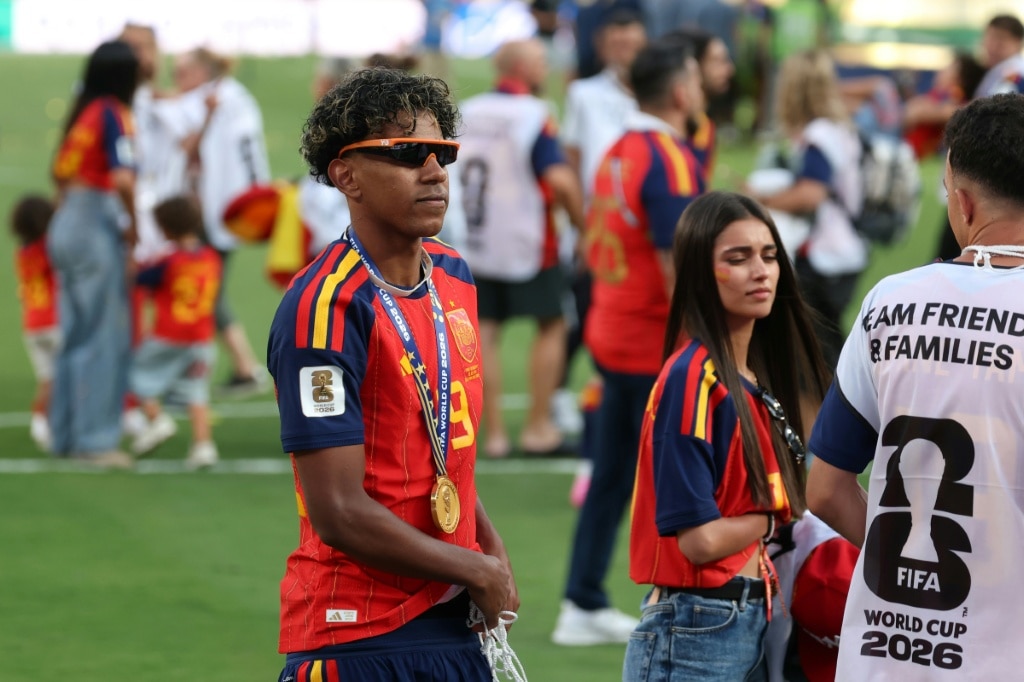
The 2026 FIFA World Cup, the first edition of men’s football’s flagship competition expanded to 48 participating nations, will be remembered as a tournament dominated by the sport’s biggest global superstars. Yet when the final whistle blew on Sunday’s title decider at MetLife Stadium, it was a disciplined, defensively ruthless Spanish side that lifted the trophy, capping off a campaign that delivered what many analysts agree is a fully deserved world championship.
This expanded tournament delivered record offensive output, with an average of 2.96 goals per match – the highest goals per game average recorded at a World Cup since the 1970 edition in Mexico. Many of the sport’s highest-profile attacking talents lived up to their billing, with France’s Kylian Mbappe claiming the Golden Boot after netting 10 tournament goals, Argentina’s Lionel Messi finishing second with eight, and elite forwards including Erling Haaland, Jude Bellingham, Ousmane Dembele, and Harry Kane all ranking among the top scorers.
But Spain’s path to glory was built not on free-scoring attacking flair, but on unprecedented defensive solidity. La Roja conceded just a single goal across their eight matches, with their only blemish coming in a quarter-final clash against Belgium. That stout backline was anchored by captain Rodri, who was named the tournament’s best player – an honor that went to the defensive anchor rather than the global attacking superstars who dominated pre-tournament headlines. The result echoes Spain’s 2010 World Cup triumph in South Africa, where a similarly water-tight defense carried the side to their first ever world title.
In the final, Spain faced defending champions Argentina, who were aiming to become the first team since Brazil in 1962 to successfully defend a World Cup crown. Spain completely outclassed the defending champions, holding Messi and his teammates to zero shots on target throughout the entire 120 minutes of play. It took a 106th-minute strike from substitute Ferran Torres to break the deadlock and secure a 1-0 extra-time win, giving Spain their second World Cup title.
The result continues a remarkable 20-year run of success for Spanish men’s international football. Since 2008, Spain has now claimed two World Cups, three European Championships, and one UEFA Nations League title, fully shaking off its historic reputation as underachievers on the global stage. The current side also boasts a bright long-term future: 19-year-old winger Lamine Yamal – one of the tournament’s most talked-about young talents despite struggling with fitness and only scoring one group-stage goal against Saudi Arabia – and fellow 19-year-old defender Pau Cubarsi are now among only 10 players in history to win a World Cup before their 20th birthday.
Spain’s success also reflects the steady leadership of head coach Luis de la Fuente, who took over the role following Spain’s disappointing round-of-16 exit at the 2022 World Cup. The 65-year-veteran has guided the side to rapid, impressive results and holds a contract through Euro 2028, with many of his high-profile peer coaching counterparts falling short of expectations at the tournament: Carlo Ancelotti’s Brazil, Thomas Tuchel’s England, Mauricio Pochettino’s United States, and Julian Nagelsmann’s Germany all exited earlier than predicted.
“These players are exceptionally talented and it is an honour to accompany them,” De la Fuente said, crediting his squad for the historic win. Spanish full-back Marc Cucurella, who recently completed a high-profile transfer from Chelsea to Real Madrid, summed up the side’s collective philosophy: “When you don’t concede I think it is much easier to win. We attack together and defend together, and that is one of the key things about this team.”
Goalkeeper Unai Simon joked of his underworked gloves through the tournament: “If you could speak to all the gloves I have worn in this World Cup, I think they would tell you they didn’t have much work to do.”
With the title secured, Spain now has the unique opportunity to defend their crown on home soil in 2030, a historic first for World Cup holders. Before that, the side will return to action in just two months for Nations League fixtures against England and Croatia, but for now, the squad can savor their place as the new rulers of world football.