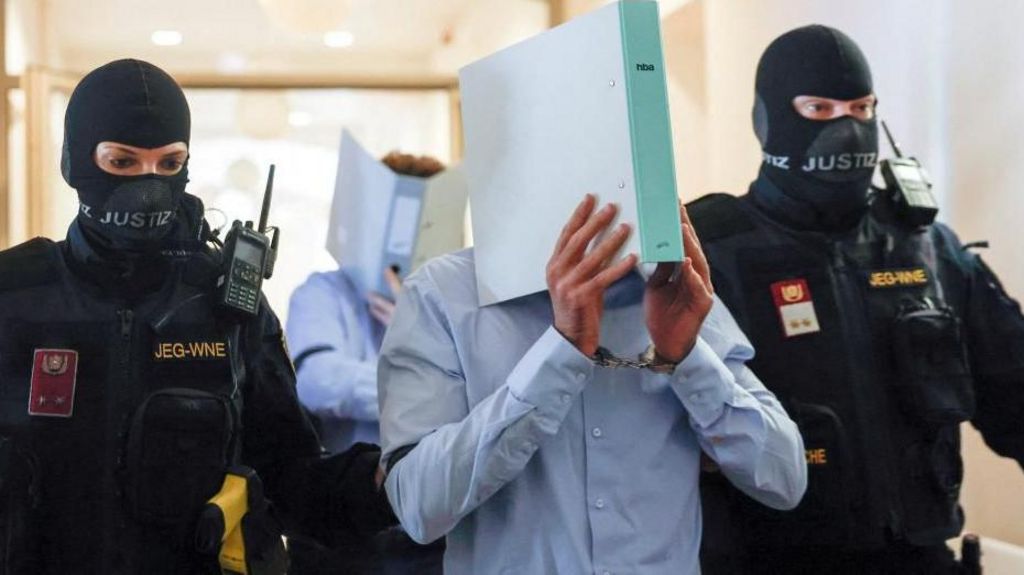
A jury in Austria has begun closed-door deliberations to reach a verdict in the high-profile trial of two young men linked to the Islamic State (IS) terrorist group, one of whom has confessed to plotting a deadly mass attack on a 2024 Taylor Swift concert in Vienna.
In accordance with Austria’s strict privacy regulations for criminal defendants, the primary accused, a 21-year-old Austrian national, is publicly identified only as Beran A. He has publicly admitted to two core charges: plotting the jihadist attack on the sold-out Taylor Swift shows at Vienna’s Ernst Happel Stadium, and formal membership in a designated terrorist organization. However, he has refuted additional charges connected to an alleged secondary plot targeting the Islamic holy city of Mecca in Saudi Arabia.
Beran A stands trial alongside 21-year-old Slovakian national Arda K, who prosecutors allege was a fellow member of the same IS-aligned cell. Court records confirm Arda K was not involved in planning the Taylor Swift attack, but is accused of complicity in the broader Mecca plot.
The plot was foiled just hours before the first of three scheduled Swift concerts, after counterterrorism authorities received a critical tip from the U.S. Central Intelligence Agency (CIA) that led to Beran A’s arrest. With the threat confirmed, event organizers canceled all three performances, disappointing nearly 200,000 ticketed fans and leaving Swift herself devastated. In a subsequent documentary about her record-breaking Eras Tour, Swift shared that she learned of the planned attack mid-flight en route to Vienna, describing the moment as a near-miss that avoided an outright “massacre situation.”
Prosecutors laid out their case outlining how Beran A became radicalized online and swore a formal oath of allegiance to IS. Court documents show he attempted to illegally obtain weapons including a fully automatic machine gun and a hand grenade, though those efforts ultimately failed. He also allegedly attempted to build an explosive device using step-by-step instructions pulled from an IS propaganda video posted to public online platforms.
A court-appointed psychiatric expert, Peter Hoffmann, testified during the trial that Beran A shows no clinical signs of mental illness, and told the court there is “no psychiatric explanation” for his radicalization into violent extremism.
In closing arguments, lead prosecution counsel pushed the jury to return guilty verdicts on all charges against both defendants, noting Beran A’s own admissions of guilt for the core Taylor Swift plot charges. Prosecutors also emphasized that the two men acted as accomplices in planning multiple additional attacks across Mecca and other unnamed cities months before the Vienna plot.
That broader plot links the two defendants to Hasan E, a former high school classmate who is currently in Saudi Arabian custody facing charges for a stabbing attack that wounded five people, including a security guard, in Mecca. Both Beran A and Arda K admit they traveled to Istanbul and Dubai respectively as part of the early plot planning, but both deny providing material support to Hasan E for his subsequent attack.
The prosecutor told the jury the trial presented a critical opportunity to send a clear message to would-be terrorists: “anyone who prepared a terrorist attack should face consequences.”
Beran A’s defense attorney, Anna Mair, acknowledged her client has admitted guilt to the crimes he committed, but argued he should only face penalties for the acts he actually took part in. She told the court Beran A was not the ringleader of the cell, and had been manipulated by more radicalized actors. “My client is not innocent; he has committed serious crimes. But you can only convict him for what he has done,” Mair stated.
Both young men offered apologies to the court during the trial. Beran A expressed remorse for his actions, while Arda K also said he regretted the plot ever progressed so far, asking the jury for a chance to eventually “integrate into society” if convicted.
If both defendants are found guilty on all charges filed against them, they face a maximum sentence of 20 years in prison.