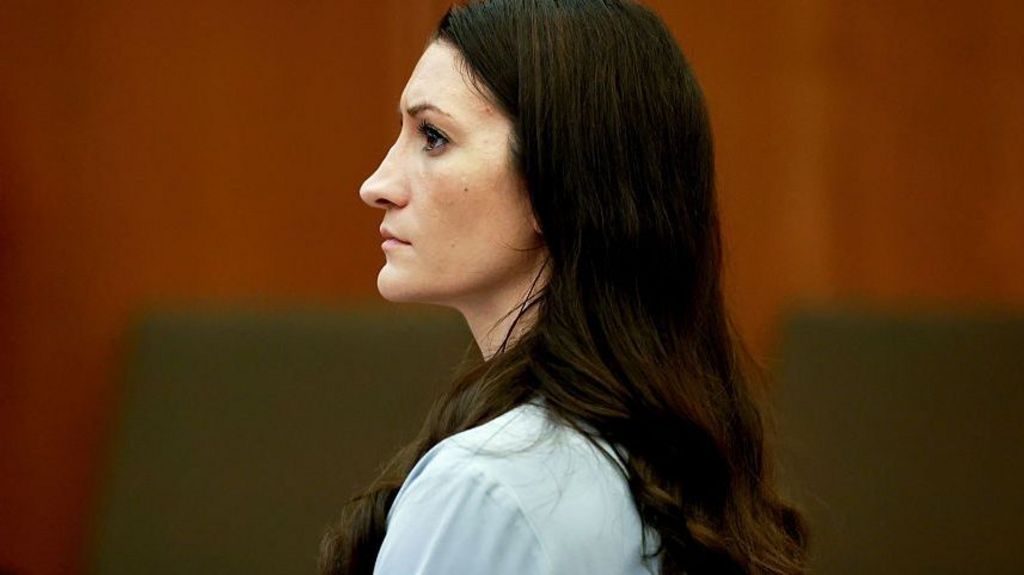
After three full days of closed-door deliberations, the jury hearing the high-profile triple murder case against Massachusetts resident Lindsay Clancy has failed to reach a unanimous verdict, leaving the court in shock on Tuesday. Despite the impasse, the presiding judge has instructed the panel to continue their deliberations in an effort to resolve the deadlock.
Clancy, a 36-year-old former nurse, stands accused of killing her three young children at the family’s Massachusetts home in 2023, and faces three counts of first-degree murder. Prosecutors with the commonwealth’s legal team have argued that Clancy carried out the killings in a premeditated, intentional act that meets the legal standard for first-degree homicide. Her defense team does not contest that Clancy caused the deaths of her children, but has centered its entire case on the argument that she was suffering severe, untreated postpartum psychosis at the time of the incident. This condition, the defense argues, left Clancy unable to distinguish right from wrong, negating the criminal intent required for a first-degree murder conviction.
The 12-member jury, made up of nine women and three men, began deliberations last week, wrapping up weeks of testimony from more than 50 witnesses called by both the prosecution and defense. When Judge William Sullivan read the jury’s note announcing the deadlock to the court, audible gasps from spectators filled the courtroom. Clancy, who appeared in court seated in a wheelchair beside her legal counsel, remained stoic as the announcement was made.
Legal experts note that jury deadlocks are a far from uncommon outcome in high-stakes, emotionally fraught criminal cases, and the court system has established long-standing protocols for addressing such impasses. Heather Cucolo, a professor at New York Law School and a leading expert in mental health law, explained to media outlets that hung juries are particularly typical of what she described as “complex and emotionally charged trials” such as Clancy’s.
“If the deadlock does not break, the judge may issue what is commonly called a ‘dynamite instruction’ – known as a Tuey-Rodriguez charge in Massachusetts state courts – which encourages jurors to reconsider opposing perspectives in an effort to reach a consensus, while still upholding each juror’s right to their own honest conviction,” Cucolo explained. She added, however, that this kind of additional instruction is typically only deployed as a last-ditch effort to avoid a mistrial.
If the jury ultimately convicts Clancy on all three first-degree murder charges, Massachusetts state law requires a mandatory sentence of life in prison without any possibility of parole. If no verdict can be reached, the case will result in a mistrial, leaving open the possibility that prosecutors would have to try Clancy again at a later date.