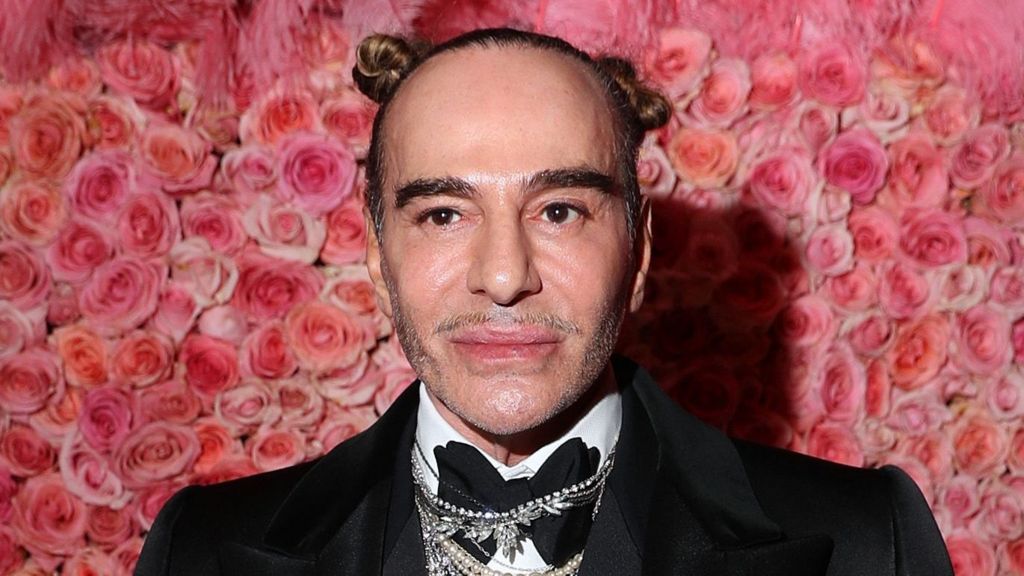
In a decision that has sent ripples through the global fashion industry, iconic British designer John Galliano has called off a major retrospective of his decades-long career at New York’s The Metropolitan Museum of Art, following widespread public backlash sparked by his 2011 criminal conviction for hateful antisemitic and racist remarks.
The Met had originally unveiled plans for the exhibition *John Galliano: Horizons*, scheduled to open to the public in May 2027. The show was also set to serve as the official thematic centerpiece for the 2026 Met Gala, the annual high-profile fundraising gala for the museum’s Costume Institute, scheduled to kick off on May 3 — a date that directly coincides with Yom HaShoah, the global day of remembrance for victims of the Holocaust.
In a public statement released Monday, Galliano confirmed the cancellation, saying: “After much reflection and discussion with the Met and all those involved, I have decided, with great sadness, that it is best for the exhibition not to take place at this time.” The designer acknowledged the enduring harm of his past actions, taking full accountability for the pain his words inflicted on Jewish and South Asian communities more than a decade prior. “I remain deeply sorry for it,” he wrote. “I understand that meaningful atonement is not achieved through an exhibition, institutional recognition or a single public gesture. It is a continuing responsibility, demonstrated through listening, learning and one’s conduct over time.” He added that he recognized a career retrospective honoring his work would remain triggering for many, and had no desire to draw attention away from the transformative work carried out by the Met’s Costume Institute. He also noted his 15 years of continuous sobriety and recovery from alcohol and drug addiction, which he says has shaped his personal journey of growth over the past decade and a half.
The controversy dates back to 2011, when Galliano was arrested and convicted in a Paris court for verbally abusing a Jewish curator at a local restaurant, hurling racist insults at her South Asian companion, and declaring admiration for Adolf Hitler in a separate incident. The outburst led to his immediate dismissal from his role as creative director of luxury fashion house Dior, a position that had cemented his status as one of the most influential designers of his generation. In the years following his conviction, Galliano gradually returned to the industry, serving 10 years as creative director of avant-garde label Margiela before stepping down in 2024.
Vogue global editorial director Anna Wintour, a long-standing Met trustee and core organizer of the Met Gala, publicly expressed her full backing for Galliano’s decision. “John’s decision that the exhibition devoted to his work should not take place at this time is very courageous and a measure of the man he is,” Wintour said. “I believe this is the right decision, and both he and the Museum have my full support.”
Despite Wintour’s support, opposition to the exhibition had mounted rapidly in recent weeks, particularly amid a documented nationwide surge in antisemitic incidents across the United States. New York City Council Speaker Julie Menin, who had led local pushback against the plan, praised the cancellation in a statement Monday. “From the beginning, I have told them that I strongly disagreed with this decision, and at this rising time of antisemitism, it had served as a gut punch to the Jewish community,” Menin said. “This is the correct decision, as the harm and pain this was causing was simply unacceptable.”
Jonathan Greenblatt, CEO of the Anti-Defamation League — a leading organization dedicated to countering antisemitism and hate speech — also welcomed the outcome, noting that the current wave of antisemitism across the country made honoring Galliano a deeply misguided choice. “Even Galliano ultimately recognised what the Met should have done from the start,” Greenblatt said. “This was the wrong move at the wrong moment. Timing matters.”