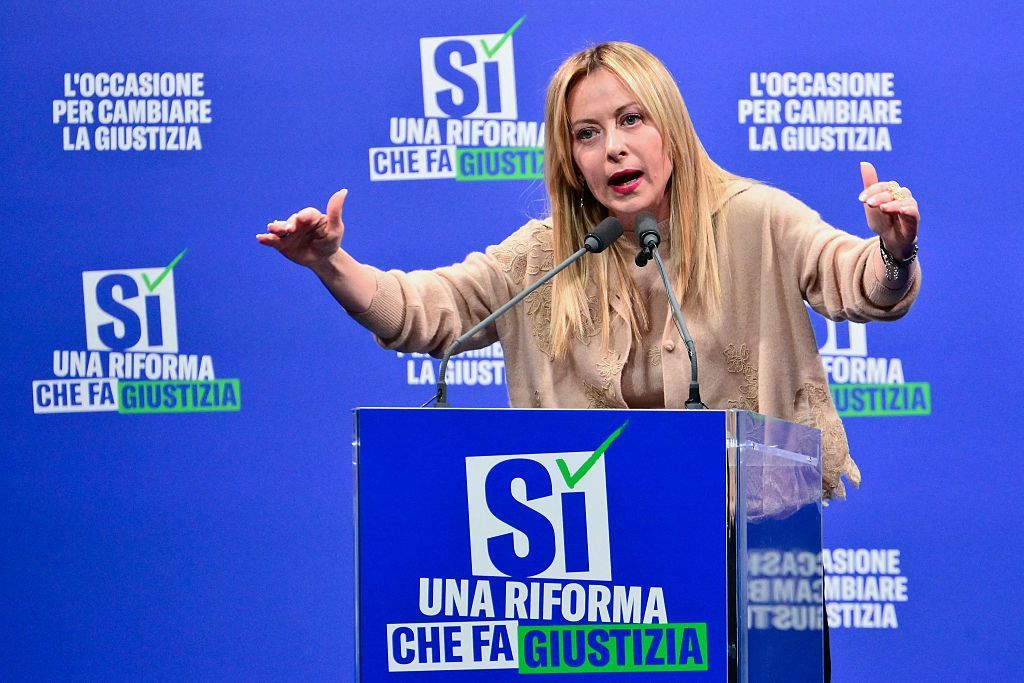
Italian Prime Minister Giorgia Meloni faces a critical political showdown as the nation prepares for a constitutional referendum this weekend that has transformed into a de facto plebiscite on her leadership. The proposed judicial reforms, which would separate career paths for judges and prosecutors while establishing distinct governing bodies, have ignited fierce debate across Italy’s political spectrum.
In an unprecedented outreach effort, Meloni appeared on the popular Pulp podcast alongside rapper Fedez and co-host Luca Marra, exchanging her customary formal attire for casual wear to connect with younger voters. During the hour-long discussion, she vigorously defended the reforms as essential for creating a “more meritocratic, more responsible, more efficient” justice system while dismissing opposition claims as politically motivated attacks.
The referendum has polarized the nation, with trade unions and opposition parties staging large demonstrations in Rome’s Piazza del Popolo, where protesters spelled out “Vote No” in white tape on cobblestones. Opposition forces frame the reform as a dangerous threat to democratic balances established in Italy’s post-fascist constitution, warning it could subject the judiciary to political control.
Meloni’s government maintains that the changes address longstanding issues within Italy’s overloaded judicial system, which suffers from some of Europe’s longest trial durations. However, critics point to the proposal’s origins in Silvio Berlusconi’s Forza Italia party—which frequently clashed with courts during his leadership—and express concern about Meloni’s own adversarial relationship with the judiciary.
The prime minister has employed dramatic rhetoric, claiming without evidence that rejecting the reforms would lead to “more immigrants, rapists, paedophiles, and drug dealers being freed.” Such statements have intensified concerns among opponents who note Meloni’s political beginnings as an admirer of Mussolini.
With recent polls suggesting low turnout might benefit the “no” campaign, and amid economic pressures from global uncertainty and rising energy prices, the referendum has become a vessel for broader public discontent. Political analysts suggest that while Meloni would not resign following a defeat, her political standing would be significantly weakened, potentially shaking the stability she has brought to Italy’s traditionally volatile governance.