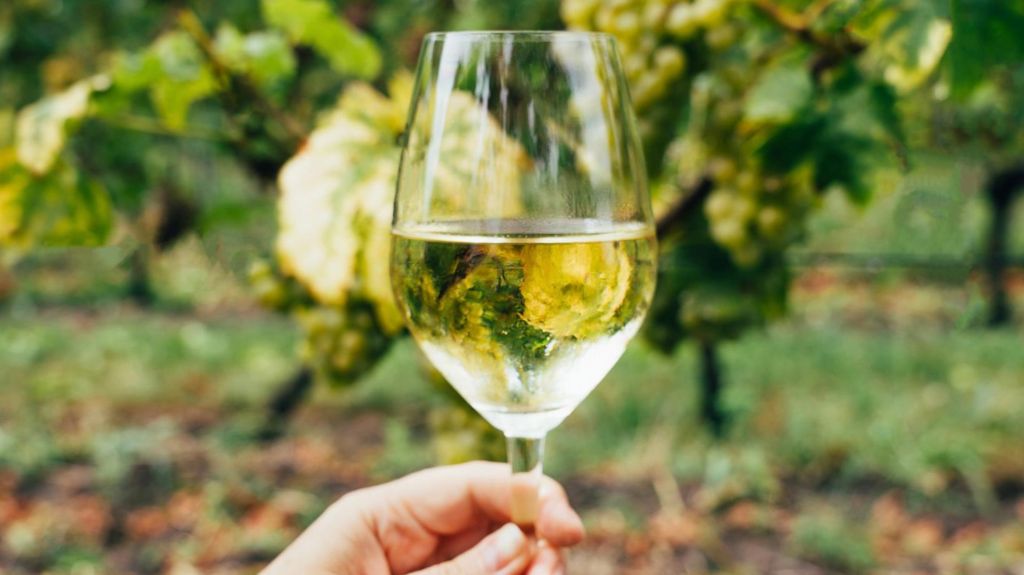
For centuries, Ireland has been globally synonymous with two iconic alcoholic beverages: creamy, rich stouts and smooth, amber-hued whiskey. When asked to name a signature Irish drink, few people around the world would immediately reach for a glass of local wine. That narrative is now shifting, however, after the European Commission formally granted the Republic of Ireland official recognition as a wine-producing country – a milestone that caps decades of slow, steady experimentation by local grape growers and winemakers.
Today, Ireland remains home to only a small handful of commercial vineyards, alongside dozens of small-scale hobbyists testing growing conditions across the country. But the total area of land dedicated to viticulture has expanded consistently year over year, with a major new development near Slane in County Meath marking the largest single vine planting in Irish history: roughly 36,000 grape vines spread across 30 hectares of land.
David Llewellyn, one of the pioneers of modern Irish winemaking, first entered the sector in the late 1980s, when he began testing dozens of different grape varieties to identify which strains could survive Ireland’s cool, wet maritime climate. He founded Lusca Vineyard in County Dublin in 2002, and today the small operation produces between 1,500 and 2,000 bottles of wine annually. For most consumers, Llewellyn notes, Irish wine is still viewed as a curious novelty, not a serious commercial product.
After decades of trial and error, Llewellyn has settled on two grape varieties that he says are uniquely suited to Irish conditions: the red grape Rondo and the white variety Madeline Angevine. He explains that very few grape types can be grown reliably in Ireland, and that Irish viticulture faces far more challenging conditions than its counterpart across the Irish Sea in the United Kingdom. “It’s less marginal than we are – we are really the extreme,” Llewellyn says. Classic European grape varieties that thrive in southern England, such as Pinot Noir and Chardonnay, cannot survive in Ireland’s climate, he warns, even as some new growers continue to attempt to plant these ill-suited strains.
Llewellyn now makes a point of connecting with emerging Irish winemakers to share his decades of hard-won knowledge, arguing that successful Irish wine production is achievable for any grower who selects the right grape varieties for the right location, and builds the necessary skills to work with Ireland’s unique conditions. He hopes the domestic industry grows in a thoughtful, sustainable way, rather than rushing to expand at the cost of quality, warning that the spread of substandard “fake Irish wine” made with incorrectly grown grapes or imported bulk product poses the biggest threat to the young sector’s credibility.
Further south in County Waterford, David Dennison launched Viking Winery in 2009, starting with just 30 Rondo vines. Today, his operation spans 3.5 hectares, growing 14 different grape varieties to produce red, white, and pet nat sparkling wine. All of Dennison’s grapes are hybrid varieties, cross-bred from multiple distinct grape species to combine disease resistance with favorable flavor profiles.
Dennison is convinced hybrid grapes hold the key to the future of Irish winemaking. “The flavours you get from the wines are just spectacular,” he says. As an certified organic producer, he does not use any chemical sprays, a practice made possible by the natural disease resistance of hybrid grapes that aligns perfectly with Ireland’s cool, damp climate. His winery currently produces between 2,500 and 3,000 bottles annually, and he projects output will reach 4,500 bottles this year, with a long-term target of 15,000 bottles once all his vines reach full production.
Unlike many Irish producers who look to the UK for industry benchmarks, Dennison follows developments in Scandinavian viticulture in Sweden and Denmark, where growers are facing the same cool climate challenges that define Irish wine production. Like all agricultural crops in Ireland, grape growing is heavily dependent on weather conditions, with late spring frost posing one of the biggest annual threats to early white grape harvests, requiring growers to deploy protective candles and burners to save crops.
Dennison is currently organizing a new Irish Winemakers’ Association, which has already attracted nearly 30 prospective members who agree to adhere to shared production and labeling rules. The need for clearer industry standards was highlighted recently, when a large County Louth winery was dropped by its distributor after its labeling failed to disclose that it used imported French grapes for some of its production.
Climate change expert Professor John Sweeney says he is not surprised by the emergence of a commercial Irish wine industry, and expects viticulture will become increasingly viable as average summer temperatures in Ireland continue to rise. “Viticulture benefits from relatively dry summers and again the models are predicting summers will become drier in Ireland,” he explains. Most existing Irish vineyards are located on the country’s east coast, where well-drained, sandy soils provide ideal growing conditions, and Sweeney does not expect the industry to expand rapidly across the whole country. However, by the end of the century, shifting temperatures could open up new areas to commercial viticulture, including parts of Northern Ireland, where well-drained sandy areas around Dundrum could become viable growing regions. At present, he notes, the wetter, cooler climates of western and northwestern Ireland are unlikely to become suitable for commercial grape growing.
For the sector’s pioneers, the road ahead remains long. Dennison notes that most consumers still do not even know Ireland produces wine, and low overall output means the product rarely reaches a mass audience. But as the new official recognition from the European Commission paves the way for future growth, producers are optimistic that Irish wine will eventually carve out its own unique space in the global market, as long as growth remains rooted in quality and transparency.