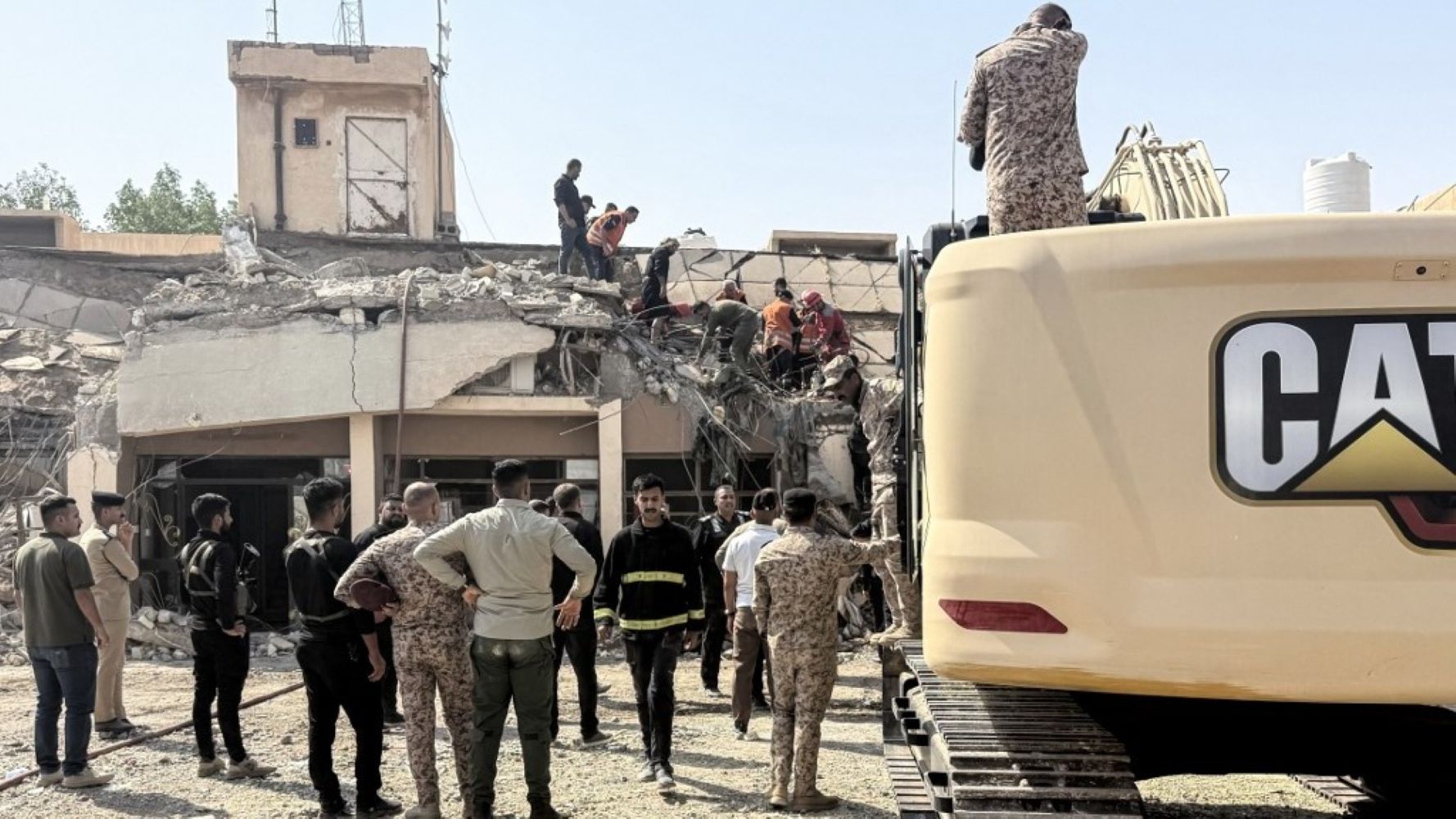
Escalating cross-border hostilities across the Middle East reached a new flashpoint this week, after the United States and Saudi Arabia launched coordinated precision attacks against Iran-aligned militant groups in Iraq, prompting Iraq’s prime minister to convene an emergency national security gathering for Wednesday.
The US Central Command (Centcom) confirmed earlier this week that it carried out the targeted air operations in partnership with Saudi Arabian Armed Forces, striking positions held by factions aligned with Tehran. The joint strike comes on the heels of a series of drone assaults on Saudi energy infrastructure launched by Iranian-aligned groups operating in Iraq over the past seven days.
Two senior members of Iraq’s Popular Mobilisation Forces, a state-aligned military grouping made up of mostly pro-Iranian factions, told Agence France-Presse that at least 10 fighters from the organization were killed in the cross-country strikes. One official added that multiple additional casualties have been reported across other Iraqi provinces, and warned that the confirmed death toll is likely to climb as rescue teams access remote strike locations.
The broader regional escalation traces back to mid-July, when Saudi warplanes bombed Sanaa International Airport in Yemen to block an Iranian aid flight from landing. Despite the attack, the aid flight successfully touched down, but the airstrike prompted Yemen’s Houthi administration—officially the Ansarallah movement—to retaliate. On Monday, the Houthis launched their own drone attack on Saudi oil infrastructure, and have paired these strikes with a partial blockade of the strategic Bab al-Mandeb Strait. The critical waterway links the Indian Ocean to the Red Sea and the Mediterranean Sea via the Suez Canal, a key global trade route for energy exports. The Houthi blockade only targets Saudi shipping, but it has compounded existing energy export challenges for Riyadh. Tehran currently enforces its own restrictions on shipping through the Strait of Hormuz, another pivotal chokepoint that carries Gulf energy exports to the Arabian Sea and global markets.
Iran has pushed back against claims of its involvement in cross-border attacks on Saudi targets. A senior Iranian military source denied accusations that Tehran organized projectile strikes launched from third countries into Saudi territory, according to Iranian state media.
Riyadh has long taken a cautious stance on open conflict between the US and Iran, agreeing to limited support for American operations—including opening its airspace and providing logistical backing for strikes—but avoiding full-scale military participation in tensions with Tehran. Prior to the recent wave of attacks, Iran had also focused its own military actions on US military assets deployed in the Middle East, rather than prioritizing strikes on Saudi infrastructure.