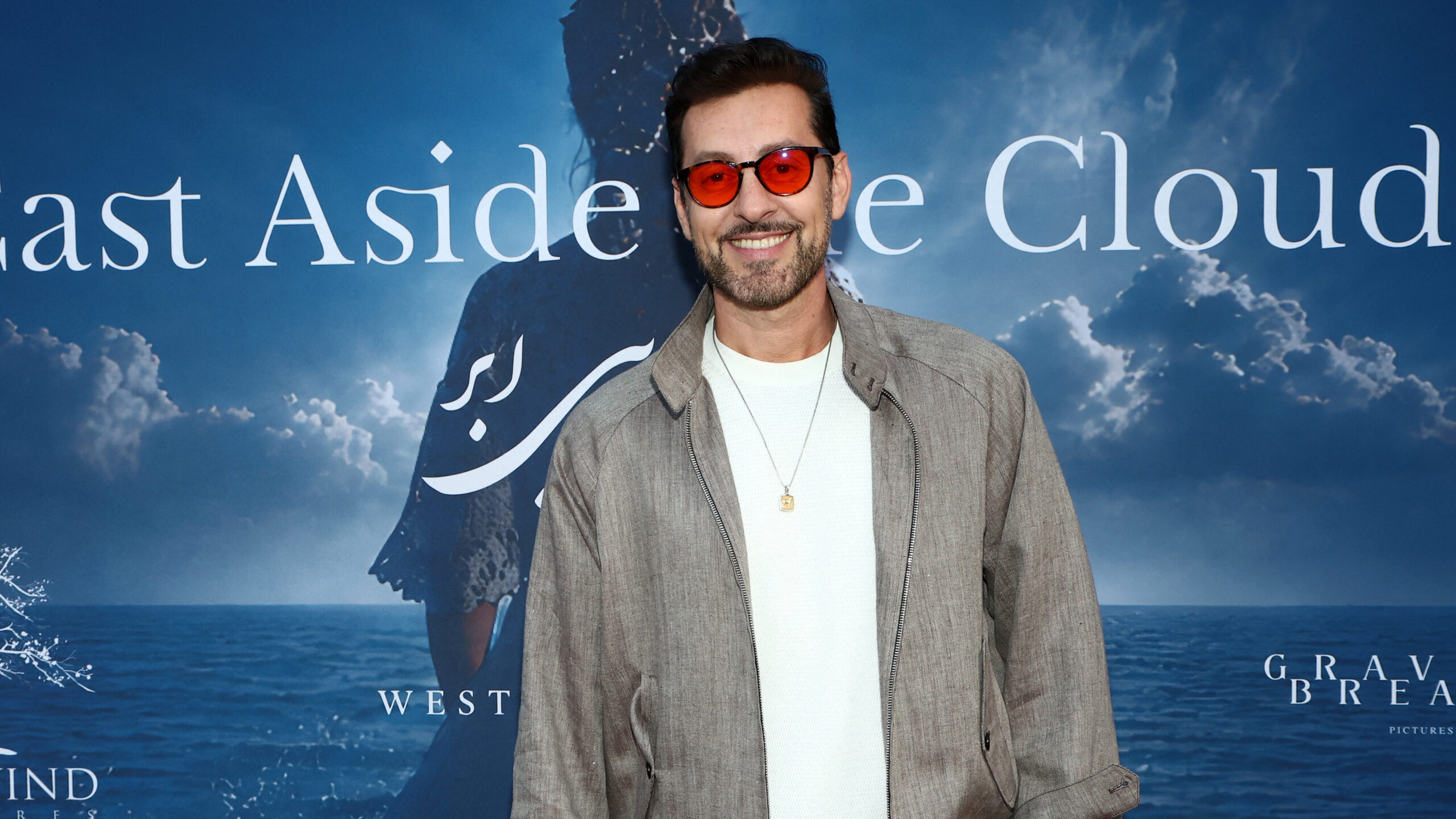
A controversial public appearance on Bill Maher’s popular podcast *Club Random* has landed Iranian-American comedian Max Amini at the center of a heated online firestorm, after his dehumanizing comments about groups fighting the United States and Israel sparked widespread outrage across social media platforms.
In the episode, which was released to the public on August 17, Amini attempted to draw a sharp line between Iran’s ruling government and the country’s general population, claiming that ordinary Iranian citizens bear no connection to the leadership’s policies. “We are not our government. Those are not our people… because the people that are fighting today against the US and Israel are not the Iranians. They are this species that have no sense of morals,” Amini stated during the conversation. He also echoed former U.S. President Donald Trump’s framing of the ongoing conflict, asserting that Washington’s military campaign targets only Iran’s governing establishment, not its civilian population.
Clips of Amini’s remarks spread virally across major social media platforms within hours of the episode’s release, drawing angry pushback from Iranian users and other commentators across the globe. Many critics accused the comedian of dehumanizing Iranians and implicitly legitimizing U.S. and Israeli military strikes that have killed thousands of civilians in Iran. Online critics have labeled Amini a “sellout” to Western interests, with many calling for widespread boycotts of his work. Some commentators also pointed out that Amini has barely maintained proficiency in Farsi, the official language of Iran, and has not visited the country for decades, questioning his credibility to speak on behalf of Iranian people.
The controversy also renewed scrutiny of the podcast host, Bill Maher, who has a long track record of making inflammatory and controversial statements about Islam and Muslim communities. Maher has repeatedly argued that core Islamic beliefs are fundamentally incompatible with modern liberal values, a position that has sparked major public confrontations for years. One of the most high-profile clashes occurred during a 2014 episode of Maher’s HBO show *Real Time*, when Maher and author Sam Harris faced pushback from guest Ben Affleck after they claimed Western liberals were overly hesitant to criticize Islam over topics including women’s rights, LGBTQ+ rights, and freedom of expression. Affleck publicly denounced the pair’s comments as “gross” and “racist” overarching generalizations about Muslims. Maher has continued to defend his views over the years, claiming his criticism targets only religious doctrine rather than Muslims as an ethnic or cultural group. Even so, his repeated remarks have drawn consistent condemnation for promoting broad, harmful stereotypes about Muslim people and majority-Muslim nations.
The backlash to Amini’s comments comes against the backdrop of an ongoing active conflict that has roiled the Middle East. The United States and Israel launched a joint military campaign against Iran on February 28, carrying out extensive airstrikes across Iranian territory, which prompted retaliatory strikes from Iran against Israeli targets and U.S. military positions across the region. While Trump has repeatedly framed the military operation as targeting only Iran’s government and military forces, not civilian populations, the assault has already caused massive civilian casualties, contradicting that framing.
By March 23, just under a month after the war began, the U.S.-based Human Rights Activists News Agency recorded that at least 1,407 Iranian civilians had been killed in the strikes. Iranian authorities later released an overall death toll of 3,468 people across all categories since the start of the conflict on February 28. Civilian infrastructure and public spaces have been repeatedly hit in strikes, with one of the deadliest incidents being the bombing of the Shajareh Tayyebeh primary school in the southern Iranian city of Minab on the first day of the war. Middle East Eye originally reported that at least 175 people, the vast majority of them children, were killed in that attack, which has been investigated by both the United Nations and the U.S. military. U.S. investigators reportedly concluded that an American strike was most likely responsible for the bombing, and Iranian authorities later revised the official death toll from the attack to 155.
The heavy civilian death toll has undermined repeated claims from U.S. and Israeli officials that the military campaign is limited exclusively to Iranian leadership and military assets, as ordinary Iranians continue to account for a large share of those killed and injured in strikes across the country.