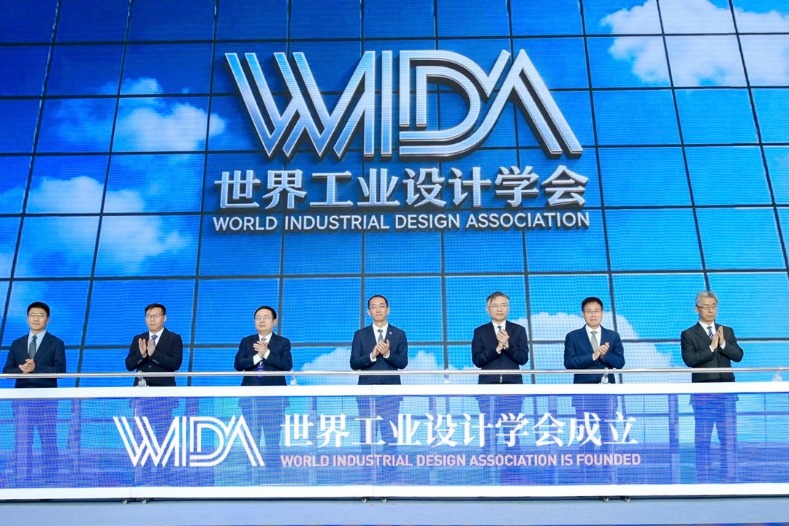
In a landmark move for global industrial design collaboration, the World Industrial Design Association (WIDA) officially launched its operations in Shanghai, marking a new chapter for cross-border innovation and industry-academia partnership in the global design sector.
Approved by China’s State Council, the new global body is co-founded by a diverse coalition of stakeholders, including the University of Shanghai for Science and Technology, the China Industrial Design Association, Shanghai Jiao Tong University, alongside a wide range of design organizations, private enterprises, academic institutions, and industry experts from across the globe. The association’s permanent secretariat will be hosted at the University of Shanghai for Science and Technology.
The inaugural general assembly of WIDA was convened at the University of Shanghai for Science and Technology on Friday, one day ahead of the official launch. During the founding meeting, members confirmed that Zhu Xinyuan, president of the host university, would serve as the first chairman of the global association.
As of its launch, WIDA has attracted 168 founding members – both institutional and individual – hailing from 23 countries and regions worldwide, with existing collaborative networks extending to more than 60 nations across every inhabited continent. This broad international base underscores the global demand for a unified platform to advance industrial design development.
Outlining the organization’s core mission, Chairman Zhu emphasized that WIDA’s overarching vision is to leverage industrial design as a connecting link to drive the shared development and prosperity of global industrial civilization. Beyond fostering professional growth, the association is structured to act as a critical bridging force across geographic boundaries, academic disciplines, industry sectors, and cultural backgrounds.
Its core stated objectives include advancing deeper integration between global industrial design practice and industry-academia-research collaboration, lifting the overall development standards of industrial design worldwide, and cultivating an open, collaborative, and high-efficiency global innovation ecosystem. The association will also prioritize facilitating open dialogue, joint innovation projects, and collective progress among members of the global industrial design community, creating new opportunities for knowledge sharing and co-creation that benefit both developed and emerging economies.